
November 20, 2026
A fence defect can become an access problem before it becomes an obvious security failure. For Auckland commercial sites, security fence maintenance Auckland starts with knowing which signs need prompt attention and which can be added to a planned upkeep list.
Loose fixings, leaning posts, damaged mesh, changes in gate movement and vegetation pressing against the perimeter can affect site access or security. The challenge is not simply spotting wear. It is recording what you find, setting sensible priorities and fitting follow-up work around daily operations and wider property maintenance.
This guide explains what to look for during routine visual checks, how to keep a useful inspection record and how to prioritise issues that may need faster attention. It also covers how to coordinate perimeter observations with grounds and exterior maintenance. Service King supports wider Auckland property upkeep through its Integrated Facility & Maintenance Service, helping businesses bring maintenance planning together. A clear routine gives site teams a practical basis for scheduling work and tracking recurring issues.
Key Takeaways
- Use security fence maintenance Auckland planning to set clear priorities for visible defects, access points and nearby obstructions.
- Recognise that fence materials and gate systems have different components, and separate visual observations from technical assessment.
- Keep a simple record of each issue, including its location, date observed and any effect on site operations.
- Bring perimeter observations into wider property maintenance records to help coordinate follow-up with scheduled maintenance and facility support.
Table of Contents
- Security fence maintenance in Auckland: what commercial site managers should monitor
- How fence materials, gates and site conditions shape maintenance priorities
- A practical Auckland security fence inspection and reporting routine
- Coordinate commercial site maintenance in Auckland around fence observations
Security fence maintenance in Auckland: what commercial site managers should monitor
Security fence maintenance means checking the visible condition of the perimeter, its access points and anything nearby that could obstruct or affect them. A damaged section can leave a boundary exposed or interfere with staff, deliveries and vehicle access. Early attention helps site managers record changes and arrange appropriate follow-up before a small issue disrupts operations.
Set priorities according to the fence type, how the site is used, the manufacturer’s guidance and the condition observed. A visual check can identify signs of change, but it is not a substitute for technical assessment when a component or access system needs closer attention. For a useful comparison, note whether the issue is new, getting worse or recurring in the same place.
Which visible signs deserve attention first?
Walk the boundary and compare sections with their usual appearance. Look for leaning posts, loose connections, damaged panels or a fence line that has shifted. At gates and other access points, note visible damage, sticking or movement that seems different from normal operation. Do not force a gate that appears damaged.
- Record vegetation or debris that hides the fence or blocks access.
- Note nearby work or stored items that could affect a boundary section.
- For chain-link fencing, use this overview of chain-link fencing to understand its mesh, posts and protective finishes.
Why Auckland site conditions matter
Conditions vary across Auckland. Coastal sites may have different exposure from inland properties, so record where visible deterioration appears and whether it is concentrated on a particular boundary. Industrial activity, vehicle movements and frequent deliveries can also make some sections more vulnerable to knocks or obstruction.
Include the site context in your notes. Identify the affected section, its proximity to vehicle routes or work areas, and any change in access. This helps distinguish a recurring operational pressure from general wear. A routine that suits a quieter property may miss issues at a busy loading entrance.
Keep checks proportionate to the site. Use manufacturer guidance where available, and adjust priorities when observed conditions or site use change. This makes security fence maintenance Auckland more practical than applying one fixed approach to every commercial property.
How fence materials, gates and site conditions shape maintenance priorities
Different perimeter systems have different visible parts, so a useful check focuses on the components present at your site. Separate what can be observed safely from faults that need technical assessment. Inspection frequency should reflect site conditions and relevant manufacturer guidance. Note changes against previous records to help identify whether a concern is isolated or recurring.
What to observe on different fence types
For chain-link fencing, note gaps, sagging mesh and loose connections. On solid panels, look for impact damage, leaning sections and changes at joins or supports. Record the location and appearance of any issue rather than attempting an adjustment during a routine walk-round.
Electric fences and automated gates need particular care. Note apparent damage, unusual movement or visible warning signs, but do not touch conductors, bypass sensors or test moving equipment as part of a visual check. Arrange appropriate technical assessment when a fault is suspected, and follow the site’s procedures for any immediate concern.
How local exposure changes the maintenance picture
Coastal exposure, vegetation, impact risks and access frequency can shift which sections deserve closer attention. Record visible corrosion or other material deterioration, especially where the site is exposed to coastal conditions. Do not assume a particular cleaning method or treatment suits every finish. Follow the product’s manufacturer instructions and record where deterioration appears.
Vegetation and stored debris can hide the fence line or obscure damage. Note where growth, delivery routes, loading areas or frequent vehicle movements coincide with vulnerable sections. This context helps distinguish an isolated defect from recurring exposure that may need attention in maintenance planning.
For boundary questions involving adjoining properties, refer to the relevant provisions of the Fencing Act 1978. Keep legal responsibilities separate from the visual condition record, and use the legislation for the details that apply to the property.
These distinctions make security fence maintenance Auckland more site-specific. For wider commercial upkeep planning, Service King’s scheduled maintenance support can complement your site’s perimeter observations as part of a broader property maintenance plan.
A practical Auckland security fence inspection and reporting routine
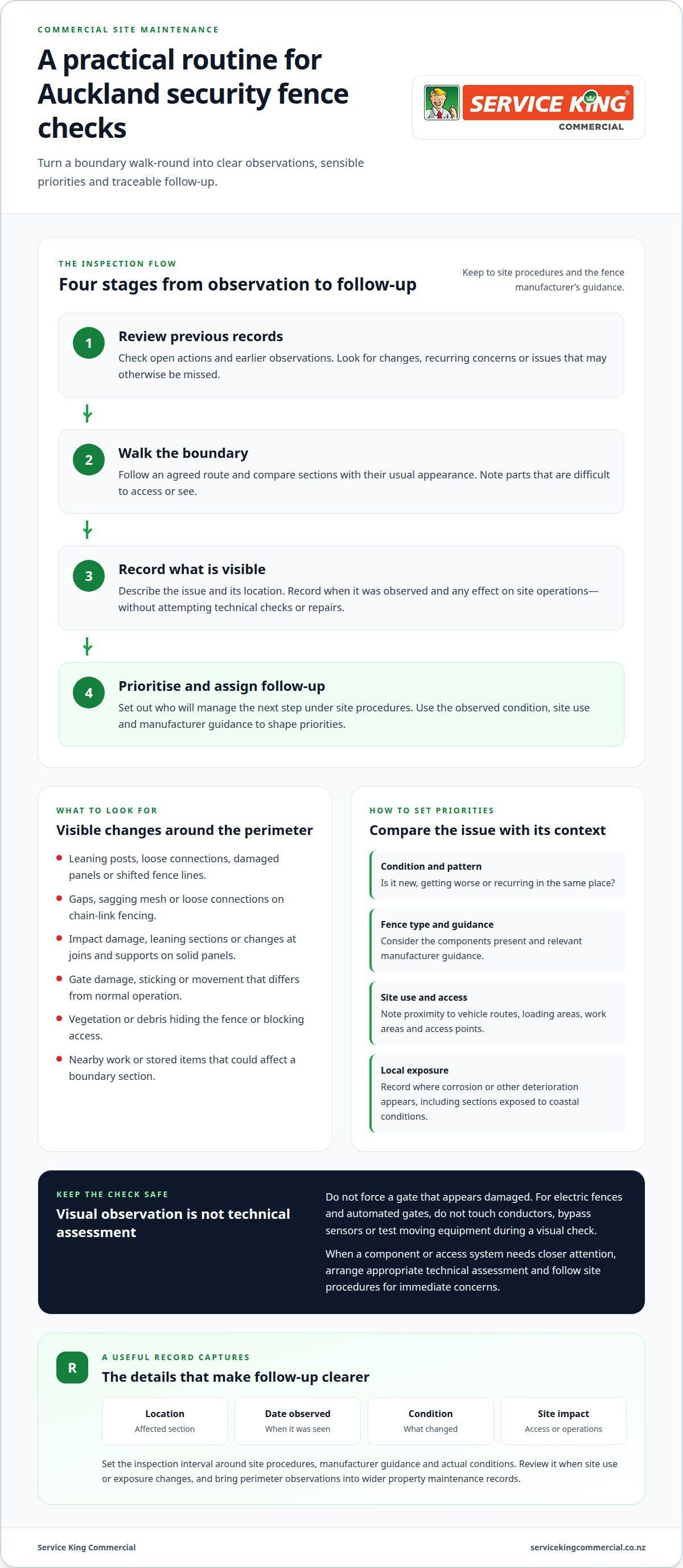
A consistent process turns a walk-round into a useful maintenance record. Set the routine around your site’s procedures and the fence manufacturer’s guidance. The right interval depends on those requirements and actual site conditions, so review it when use or exposure changes.
- Review previous records. Check open actions and earlier observations so recurring problems or changes are not missed.
- Walk the boundary. Follow an agreed route and note any section that is difficult to access or see.
- Record visible issues. Describe what you observed without attempting technical checks or repairs.
- Prioritise and assign follow-up. Set out who will manage the next step under the site’s maintenance process.
What should a fence inspection record include?
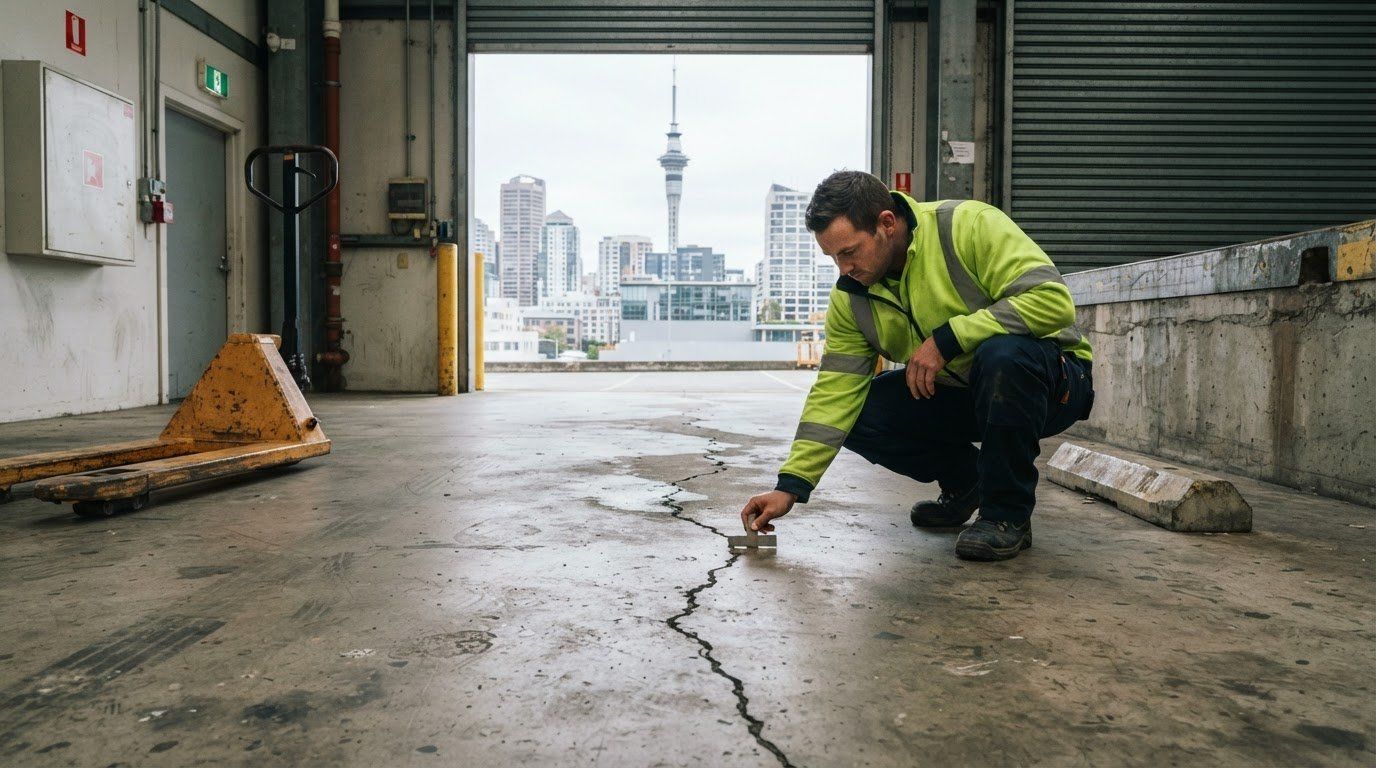
Use a site plan or clear location description, such as “loading entrance” or “boundary beside the vehicle route”. Record the fence section, visible issue, date observed and any operational impact. Add concise notes and photographs where site procedures allow. Track the action owner and follow-up status, keeping the original observation available for comparison.
Checklist: Record the location, section, visible issue, date, operational impact and next action.
When should an observation be escalated?
Prioritise visible damage that appears to interrupt the boundary, affect access or create a concern for safe site operation. Record the operational impact and follow the site’s established safety procedures for urgent concerns. Avoid treating a visual note as a technical assessment. Keep the record clear enough for the person responsible for follow-up to understand what was seen and where.
Link these records with broader exterior upkeep planning, so relevant observations sit alongside other property maintenance actions. This supports a joined-up approach to security fence maintenance Auckland. For wider commercial maintenance planning, discuss your site requirements with Service King.
Coordinate commercial site maintenance in Auckland around fence observations
Fence observations are more useful when they sit within the site’s wider maintenance records. Keep perimeter notes alongside relevant grounds, exterior and building maintenance items. This gives managers one view of site priorities, recurring issues and follow-up actions, while keeping visual observations distinct from repair instructions.
Bring perimeter observations into wider property upkeep
Use the inspection record to explain what was seen, where it occurred and how it affects site operations. For example, a note about vegetation obscuring a boundary can help identify a grounds maintenance priority. A damaged fixture recorded near a building can be considered alongside other building maintenance requirements. Keep ownership of each follow-up clear, including any work that requires a separate technical assessment.
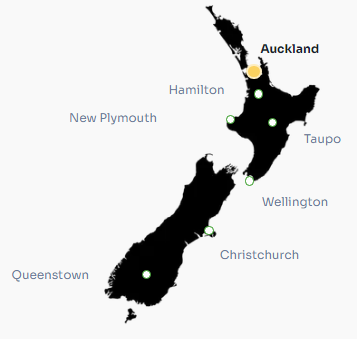
This approach can support an Integrated Facility & Maintenance Service. Service King provides scheduled maintenance, building repairs and facility support across Auckland. Its service delivery teams are located across Auckland and can help coordinate wider commercial property requirements. Managers planning broader trade requirements can also refer to the Commercial Trade Services in Auckland: A Practical Buying Guide.
Discuss your site’s maintenance requirements
A clear record gives you a practical starting point for discussing wider property upkeep. Service King offers a Free site assessment and an itemised proposal for commercial maintenance requirements. The discussion can cover scheduled maintenance, building repairs and facility support across the site.
For security fence maintenance Auckland planning, keep perimeter observations documented and coordinate related property tasks through the appropriate maintenance records. To discuss broader commercial building maintenance and facility support, arrange a Free site assessment.
Make perimeter upkeep part of your wider site plan
Turn fence observations into clear maintenance decisions. A recorded issue can help managers decide what needs attention, who will coordinate the next step and how the work fits around site operations. Keep responsibility clear, especially where a fence concern affects access or needs a separate technical assessment. This makes security fence maintenance Auckland part of practical property planning, rather than a record that sits apart from other site needs.
Service King supports commercial properties with Scheduled Maintenance and Building Repair and Maintenance, with service delivery teams located across Auckland. A Free site assessment and itemised proposal provide a starting point for discussing wider property requirements and priorities.
Use the next planning conversation to identify how broader maintenance support could fit your site. Arrange a Free site assessment to discuss your commercial property requirements.
Frequently Asked Questions
How often should a commercial security fence be inspected?
There is no universal inspection interval for every commercial fence. For security fence maintenance Auckland, set a routine around site exposure, fence type, use, observed condition and manufacturer instructions. Record observations consistently so changes are easier to spot. Review the schedule if site conditions or operational needs change, such as when delivery routes or activity near the boundary are altered.
What are the common signs that a security fence needs maintenance?
Common signs include leaning sections, loose connections, damaged mesh or panels, changes in gate movement, vegetation and visible material deterioration. The significance of each issue depends on the fence design and how the site operates. For example, a change at a gate beside a busy delivery entrance may affect access. Record the location and operational impact, and follow site procedures if access or safe operation is affected.
Does coastal exposure affect security fence maintenance in Auckland?
Yes. Coastal exposure can be a relevant factor when recording visible corrosion or other material deterioration. Auckland sites do not all have the same exposure, so avoid applying one assumption across the property. Consider the fence material, manufacturer guidance and actual site conditions when setting priorities. A visible change is useful information to log, but it does not by itself determine which treatment or maintenance method is suitable.
What should a commercial fence maintenance log include?
Record the fence section, observation date, visible issue, operational impact and follow-up status. A site plan or clear location description helps another team member find the same spot, such as the boundary beside a loading entrance. Add concise notes and photographs where site procedures allow. Keep the record updated as actions progress. Choose a format your site team can use consistently, without relying on a particular software system.
Can building maintenance records help manage security fence issues?
Yes. A shared property maintenance record helps managers keep observations, priorities and follow-up actions together. For instance, it can show how a perimeter concern relates to other site maintenance needs. Assign fence-specific tasks according to site requirements and relevant technical guidance. Service King supports wider commercial property upkeep through Scheduled Maintenance and Building Repair and Maintenance.
Recent Posts