
October 26, 2026
Commercial premises need more than repairs after something breaks. Maintenance services for commercial tenants in Auckland can include building repairs, scheduled upkeep, exterior maintenance and trade work. The right approach helps tenants report faults, coordinate repairs and plan routine work around the needs of the site.
Maintenance can seem straightforward until a problem disrupts staff, customers or daily operations. Clear processes help separate urgent faults from planned work, keep tasks organised and clarify responsibilities.
This guide explains what commercial maintenance can include, how repair requests and facilities coordination work, and how planned maintenance supports a premises. It also covers the factors that shape maintenance needs and when Service King Commercial’s building repair and maintenance, scheduled maintenance, exterior building maintenance and trade services can help.
Key Takeaways
- Separate urgent faults from routine repairs, then record the issue, location and impact to help organise the response.
- Map maintenance needs across the building, including internal systems, shared areas and the exterior.
- Coordinate access, responsibilities and updates so maintenance work fits around how the premises is used.
- Use planned inspections and scheduled upkeep to identify work early; consider building repair and maintenance or exterior building maintenance when support is needed.
Table of Contents
Commercial building maintenance and repairs
Commercial upkeep includes repairs, cleaning, servicing and exterior work. The lease helps define which tasks belong to the tenant and which belong to the landlord.
For a commercial tenancy in New Zealand, responsibilities depend on the lease terms and the repair involved. Read the repair and maintenance clauses to identify each party’s duties before arranging work.
Tenant Cleaning and Maintenance Responsibilities
Check the lease for cleaning duties, routine servicing and care of areas used only by your business. For example, a tenant may need to keep its work area clean and report a leaking tap promptly. Record the issue’s location, date and effect on operations. Clear details help the landlord understand the problem and distinguish routine upkeep from a repair request.
Maintenance Services for Commercial Tenants
Common tasks include fixing doors, taps, lighting and damaged interior finishes, as well as servicing building systems and maintaining exterior areas. The right response depends on the fault, the affected space and the lease’s allocation of responsibility. At Spark Arena, roof and exterior washing included soft washing roof areas and pathways, canopy cleaning, and water blasting front-facing windows. This example shows how exterior work can cover several building surfaces.
If the landlord hasn’t completed a necessary repair, notify them in writing and describe the fault, its location and its impact. Include dated photographs where useful, keep copies of messages and request a repair plan. These records establish what was reported and when, without confusing a repair request with routine tenant cleaning.
If a repair affects access or the safe use of the premises, state that clearly in your written notice. Document the affected area and any temporary measures. Specialised exterior services such as roof washing, window cleaning and water blasting must also suit the specific surface and site access—an approach demonstrated by property maintenance providers like JBM Custom Contracting. A clear scope helps define the work before it begins.
Commercial maintenance coverage in Auckland
Commercial maintenance responsibilities depend on the premises, the work required and the lease. For an Auckland tenancy, use the lease to identify responsibilities, safety-related tasks and how maintenance charges are allocated.
Lease Maintenance Obligations
Check the lease clauses covering cleaning, servicing, repairs, exterior areas and shared facilities. Note the distinction between tenant-controlled spaces, landlord-maintained building systems and common areas. A shop tenant, for example, may have different duties for its interior than for a shared entrance or roof. Record who arranges each task and how faults must be reported.
There is no single allocation that applies to every commercial tenancy. The lease sets each party’s obligations, so compare its maintenance terms with the area and asset that needs work.
Premises Safety and Accessibility Maintenance
Include safe access, fire equipment, exit routes and accessible paths in your premises maintenance review. Check that entrances remain clear, doors work properly and faults affecting movement through the building are reported. A damaged access ramp or blocked exit route, for example, needs prompt attention because it can affect people using the building.
Identify who inspects, reports and arranges work on shared systems. The lease and building procedures help clarify responsibilities. Keep records of faults, actions and follow-up, especially when a repair affects access or a fire-safety feature.
Repair and Building Maintenance Charges
Commercial leases can allocate repair costs, call-out fees and shared building charges in different ways. Read the outgoings and maintenance clauses to understand which costs tenants may need to contribute to and how work is approved. A blocked drain inside a leased unit may be treated differently from a fault in shared plumbing.
Before work proceeds, match the reported fault to the relevant lease clause and keep the work description, invoice and approval together. For recurring building charges, compare the stated calculation method with the charge breakdown. These steps help distinguish a tenant’s direct repair responsibility from a shared maintenance expense.
Use a simple lease checklist covering each space, system, reporting route and charge type. This gives Auckland tenants a practical basis for planning maintenance and discussing unclear responsibilities with the landlord.
Facilities maintenance coordination
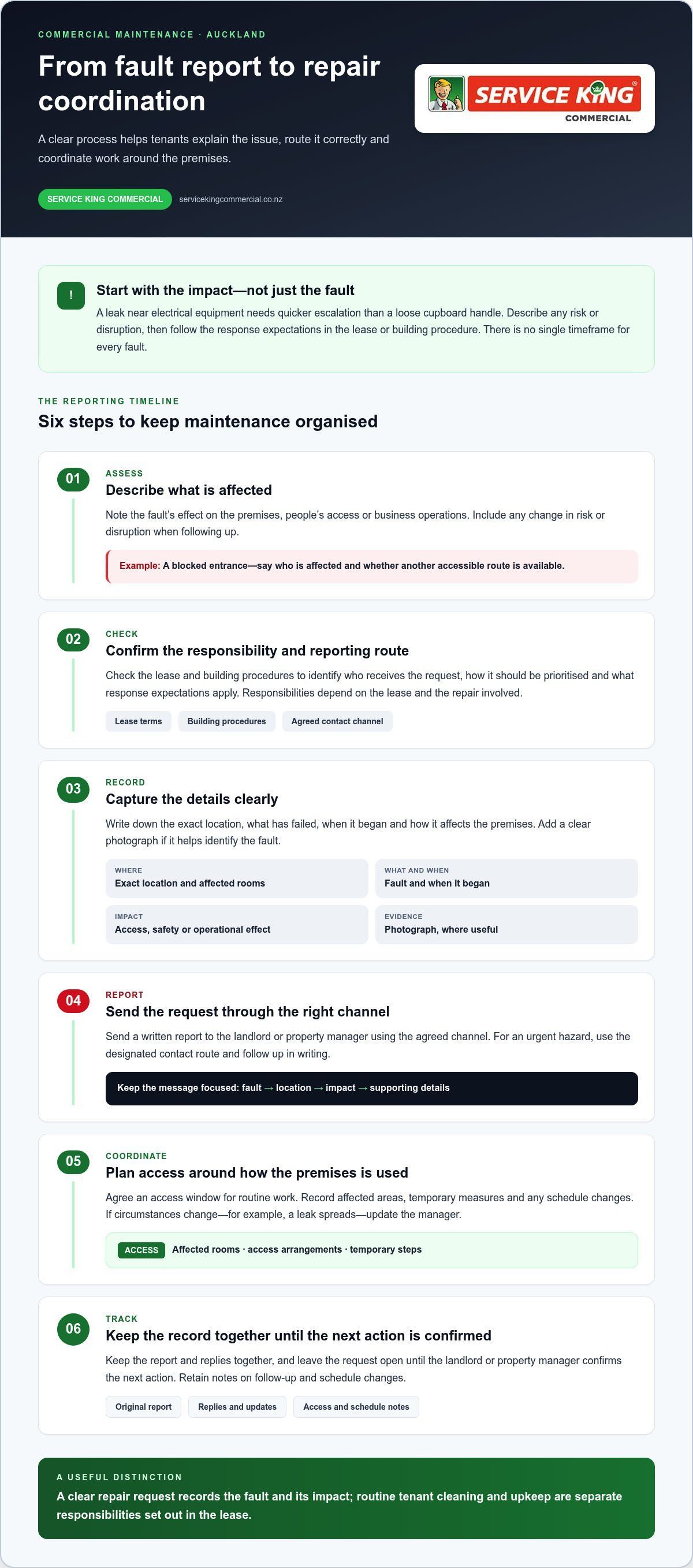
A clear request process supports maintenance services for commercial tenants in Auckland. The lease and building procedures help identify who receives each request and how it should be prioritised.
Urgent and Routine Response Times
Follow the response expectations in the lease or building procedure for urgent and routine requests. There is no single timeframe for every fault. Describe urgency by its impact: a leak near electrical equipment needs quicker escalation than a loose cupboard handle. Include any change in risk or business disruption in follow-up messages.
Keep each request open until the landlord or property manager confirms the next action. For a blocked entrance, state who is affected and whether another accessible route is available. For routine work, agree an access window and record any schedule changes. This keeps maintenance services for commercial tenants in Auckland organised around the fault and its impact.
Reporting Repairs and Maintenance Issues
Send the landlord or property manager a written report through the agreed channel. State the exact location, what has failed, when it began and how it affects the premises. Attach a clear photograph if it helps identify a damaged fitting or water leak. For an urgent hazard, use the designated contact route and follow up in writing.
Keep the report and replies together. Note access arrangements, affected rooms and temporary steps taken. If a leak closes part of a shop, identify the area and update the manager if it spreads.
A work-request record can track the issue, priority, contact person, access details and status. The property manager can use this information to assign a trade and arrange entry. Before a technician arrives, confirm which door to use, who will provide access and whether the work affects staff or customers. This gives maintenance services for commercial tenants in Auckland a clear operational record.
After the visit, record the work completed and any follow-up. If the fault returns, refer to the original request and describe what has changed. This history can help identify recurring problems, such as a door that sticks again after adjustment.
Planned preventative maintenance
A planned maintenance schedule turns recurring building tasks into assigned work. Start with an asset register for the premises, including doors, drainage, lighting, ventilation and exterior surfaces. Record each item’s location, condition and service history. For example, note whether a loading-bay door sticks during daily use or closes smoothly.
Use inspection findings and the way each asset is used to set task frequency. A heavily used entrance may need more frequent checks than a low-traffic storeroom. Check roof areas and exterior cladding when visible debris, staining or damage appears. Match the work to the asset and site conditions rather than applying one schedule to every surface.
A useful maintenance register can track:
- The asset and its precise location
- The inspection or service task
- The person responsible for arranging access
- The finding, action and next review date
Prioritise items according to their condition and the consequences of failure. A leaking roof above stock may need attention sooner than scuffed paint in a back office. Record the reason for each priority, then assign the next step. This gives tenants and building managers a practical basis for discussing work and arranging access.
Review the schedule after a repair, tenant fit-out or change in how a space is used. If a room becomes a storage area, check whether airflow, access or equipment use has changed. Repurposed spaces may also require dedicated pest prevention, with commercial solutions from providers such as Pestrol helping to keep facilities protected. Add any new task to the register and update responsibility details. Keep completed work records with inspection notes to make recurring faults easier to identify.
For Auckland premises, planned exterior checks can include roof drainage, cladding and window condition. Record visible issues with photographs and locations. Building repair and maintenance can address identified defects, while scheduled maintenance helps organise recurring tasks. Set a next step for every finding, even if it is simply a further inspection.
Service King Commercial: Commercial Cleaning Services
Service King Commercial provides building repair and maintenance, exterior building maintenance and end-of-lease services for commercial properties. Use these services when a building fault needs repair, exterior areas require attention or a tenancy is approaching handover.
A damaged building component may need repair, while an exterior maintenance task can be scoped around the surface and site. End-of-lease services can help prepare premises for handover as tenants plan their exit. Match the work to the property’s condition and the task required.
Contact Service King Commercial to discuss the maintenance work required at your premises.
Set a clear next step for your premises
Choose one maintenance priority to address first. Describe the affected area, the work needed and the outcome you want. A defined scope gives your facilities team a practical starting point and keeps the next action focused. For longer-term planning, note which tasks need to recur and who will organise access.
For maintenance services for commercial tenants in Auckland, match the next step to the work ahead. Service King Commercial provides End of Lease Service for tenancy handovers and Exterior Building Maintenance for building exteriors. These services can support specific property tasks as part of a broader maintenance plan.
Bring your task details together before making an enquiry. Include the location, visible issue and any access considerations. Contact Service King Commercial today to discuss the work required. A clear starting point can help you move your premises maintenance forward with purpose.
Frequently Asked Questions
Which Auckland companies provide commercial property maintenance services, and what do they cover?
Service King Commercial provides commercial property maintenance in Auckland, including building repairs, exterior maintenance, scheduled upkeep and trade services. Its End of Lease Service supports commercial property handovers. Match the service to the task: a damaged fixture calls for repair work, while a tenancy handover needs end-of-lease support. Share the affected area and required work when you enquire.
Recent Posts