
October 28, 2026
A maintenance budget should cover more than routine upkeep. To manage commercial building maintenance, document the building’s systems and equipment, prioritise HVAC, electrical and safety systems, then schedule preventive work and allow for corrective repairs. This gives routine tasks, planned work and unexpected faults a clear place in the annual plan.
Recurring checks are only part of the picture: buildings also need a clear response to problems that arise between inspections. In New Zealand, maintenance planning can include health and safety procedures and coordination of a building’s Warrant of Fitness and fire evacuation requirements. The work and budget depend on the building’s systems, condition and operational needs.
This article explains what commercial property maintenance covers and how routine schedules, planned repairs and emergency allowances fit together. It also sets out practical ways to prioritise work, track progress and build a maintenance budget that supports daily operations without treating every repair as an emergency.
Key Takeaways
- Separate planned repairs from urgent work in the budget so unexpected faults don’t displace essential maintenance.
- Map each asset’s condition and operational impact to decide which maintenance needs attention first.
- Set out the work scope, standards, materials and timing in a plan that covers the full maintenance cycle.
- Keep clear work records and communicate planned disruption to tenants to support smoother building operations.
Table of Contents
Budgeting for planned and emergency repairs
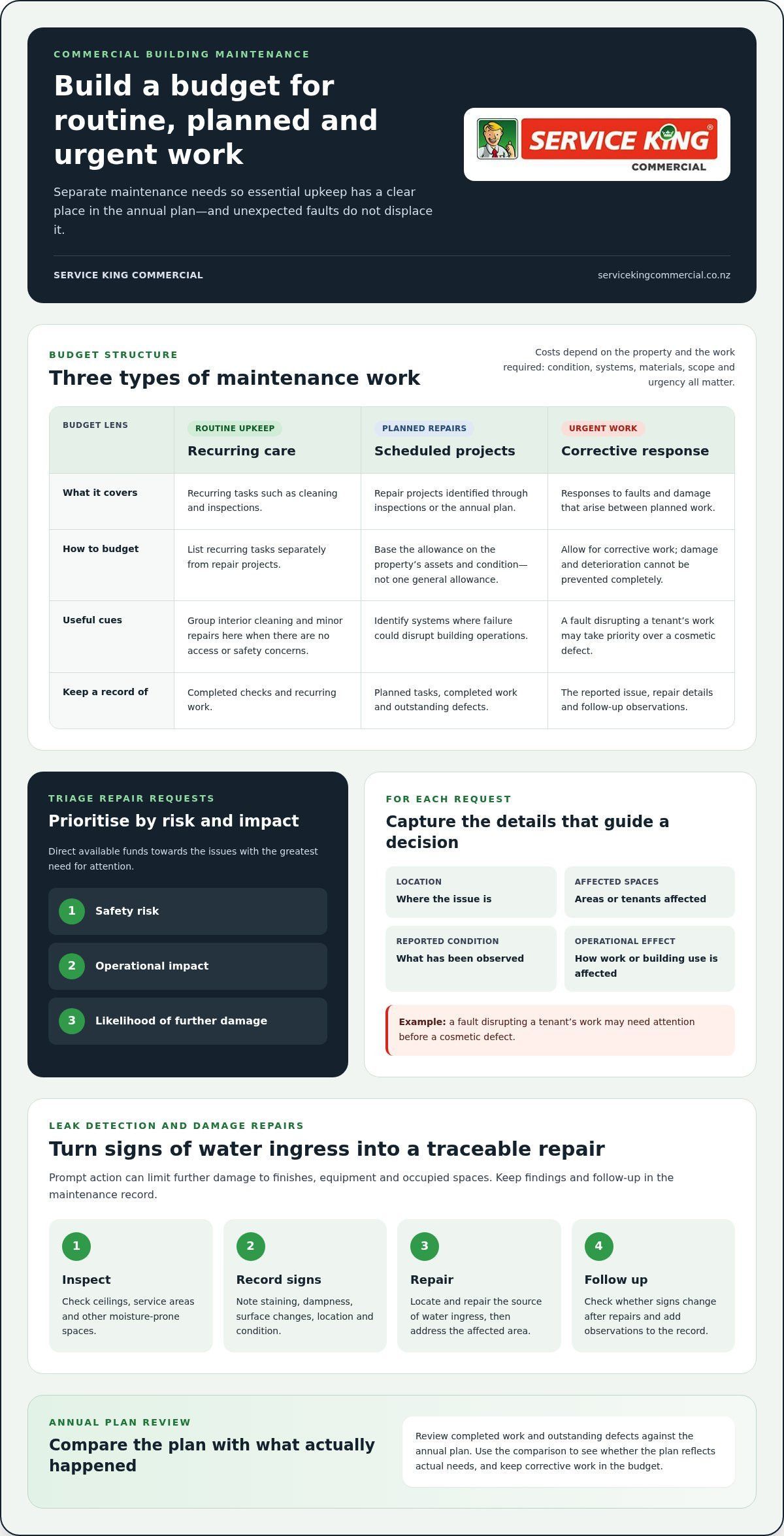
Commercial building maintenance costs in New Zealand depend on the property and the work required. Condition, systems, materials, scope and urgency all affect repair costs. If you’re deciding how to manage commercial building maintenance, separating routine upkeep from planned repairs and urgent work gives the budget a clearer structure.
Prioritising repair requests
Prioritise repair requests by safety risk, operational impact and the likelihood of further damage. This helps direct available funds towards the most pressing issues. Record each request’s location, affected spaces, reported condition and effect on operations. For example, a fault disrupting a tenant’s work may need attention before a cosmetic defect. Group interior cleaning and minor repairs into routine work when they create no access or safety concerns. An annual maintenance plan helps budget for recurring tasks and reduce reliance on emergency repairs.
Leak detection and damage repairs
Leak detection involves locating water ingress, repairing its source and addressing the affected area. Inspect ceilings, service areas and other moisture-prone spaces for staining, dampness or changes to surfaces. Record the location and condition, then check whether the signs change after repairs. Prompt action can limit further damage to finishes, equipment and occupied spaces. Add findings, repair details and follow-up observations to the maintenance record. This history can reveal recurring faults and inform future repair decisions.
Commercial building maintenance costs
Maintenance costs include routine work, planned repairs and urgent responses. Build the budget around the property’s assets and condition, rather than relying on a single general allowance. Separate routine cleaning and inspections from repair projects, then identify systems where failure could disrupt operations. Poor maintenance followed by HVAC failure can lead to substantial downtime and emergency repair costs. Compare completed work and outstanding defects with the annual plan to see how well it reflects actual needs. Allow for corrective work too, since damage and deterioration cannot be prevented completely.
What is commercial property maintenance?
Commercial property maintenance combines planned upkeep with responses to faults and damage. In New Zealand, it can also include health and safety procedures, building compliance coordination and communication with tenants.
Maintenance benefits for buildings and tenants
A maintenance programme preserves a building’s condition through regular care of its structure, equipment and shared spaces. Addressing defects promptly can limit further damage, protect asset life and help maintain property value. Clean, usable spaces and working facilities support tenants’ daily operations. To manage energy use, keep building equipment in good working order and address faults affecting its operation. A maintenance plan helps organise this work and control avoidable repair costs.
Building codes and safety inspections
Building inspections assess key areas and identify work that needs attention. In New Zealand, facilities management can include coordinating a building’s Warrant of Fitness and fire evacuation requirements. Keep inspection findings with the maintenance checklist, then record the required action and its status. Review electrical systems, access routes and safety equipment. Clear records help property managers track defects and follow up on planned work.
Health and safety procedures
Health and safety procedures guide how maintenance is planned and carried out around occupants. Commercial property facilities management includes procedures intended to meet landlords’ obligations under the Health and Safety at Work Act. Before work begins, identify affected areas, equipment and access needs. For example, isolate a work zone and notify tenants if repairs could disrupt a shared corridor. Include checks of safety and security systems in the site’s maintenance routine.
Maintenance responsibilities and delivery options
Commercial lease terms set out how landlords and tenants divide maintenance responsibilities. Review the lease to identify who handles building structure, shared spaces, tenant areas and equipment, then document who reports faults and arranges work. In-house maintenance suits properties with suitable staff and a manageable workload; a facilities management contractor can support broader or specialised requirements. Choose the delivery approach that matches the building’s needs and available oversight. For repair work, building repair and maintenance can address defects identified through inspections or tenant reports.
What does building maintenance consist of?
Start by documenting building systems and equipment, then prioritise HVAC, electrical and safety systems. A useful inventory links each asset to inspections, maintenance tasks and relevant records.
Building maintenance asset inventory
An asset inventory is a working list of building systems, equipment and their locations. It helps facilities teams assign preventive work and identify gaps in maintenance coverage. Record each asset’s type, location, condition and available service history. Include HVAC units, electrical equipment, plumbing, lifts and safety systems. Add shared spaces and exterior elements that need upkeep. Use consistent asset names in work orders and checklists to match reported faults with the right equipment.
Asset audits and inspections
An asset audit compares the inventory with the equipment and systems actually in the building. Walk through each area, confirm listed assets and note missing items, visible damage or access issues. Then prioritise inspections according to operational importance and condition. HVAC, electrical and safety systems warrant early attention because faults can affect building use or safety. Include plumbing and other systems in the inspection route. Record findings against the relevant asset so the next maintenance decision reflects observed condition, not assumptions.
Asset records and lifecycles
Asset records track condition, inspections, maintenance and changes over an asset’s working life. Keep dates, findings, completed work and outstanding defects together with relevant compliance records. This history supports preventive maintenance planning and helps assess recurring problems. For example, repeated plumbing repairs in the same area may point to a wider issue that needs investigation. Review records when updating the maintenance plan. Clear, current details help facilities teams decide whether an asset needs further repairs, closer monitoring or replacement planning.
Building maintenance planning and budgeting
A useful maintenance plan connects asset needs with work schedules and budget decisions. Review requirements across a 12-month period, then separate preventive tasks, planned repairs and corrective work. Include the work scope, standards, documentation, timelines, materials and processes for maintaining building systems. Record applicable regulations and operational constraints alongside each task. This gives teams a clear basis for assigning work, tracking progress and managing spend. A practical approach to how to manage commercial building maintenance starts with linking each budget item to a defined task.
Build schedules using manufacturer recommendations and the building’s maintenance history. Set routine tasks across daily, weekly, monthly and yearly cycles. For example, schedule quarterly HVAC checks and monthly elevator tests. Plan inspections and preventive work every quarter, then record completion and follow-up actions. Past work orders can reveal recurring problems, missed tasks or assets needing closer attention. Use those patterns to adjust the next schedule instead of carrying tasks forward without review. This helps managers adapt their maintenance approach as building conditions and operational needs change.
Separate predictable running costs from repairs that depend on asset condition. Assign budget categories to routine upkeep, planned projects and corrective work. A Jones Lang LaSalle study covering 14 million square feet of commercial real estate found structured HVAC preventive maintenance delivered over 500% ROI. Treat that finding as support for planned upkeep, not a guaranteed result for every building. Review the property’s own work history when setting priorities.
Track work orders, scheduled clean-ups, appointments and inspections in property management software. Annual reconciliation of property outgoings can help keep tenant charges aligned with leases. Reporting dashboards can reveal overdue work and recurring problems. Review budget assumptions as the year progresses, especially when inspection findings change priorities. Discuss a maintenance plan to organise scheduled building work.
Service King Commercial: Commercial Cleaning Services
Service King Commercial helps property teams address building repair and maintenance needs identified through inspections, tenant reports or scheduled reviews. Its services also include exterior building maintenance to address defects affecting a building’s outside condition. For properties with recurring upkeep needs, scheduled maintenance can organise work around the asset plan and operational priorities.
Use these services when repair tasks need follow-through, exterior issues require attention or planned work needs coordinating. They turn identified maintenance needs into practical action, alongside your budgeting and record-keeping. Include interior cleaning in the wider upkeep plan, with responsibilities and tasks clearly documented.
Contact Service King Commercial to discuss building maintenance for your property.
Turn the maintenance plan into action
Make ownership of maintenance clear. Assign responsibility for each work item, record its status and keep decisions with the relevant property records. This makes handovers easier when staff, tenants or building use changes. It also helps managers identify issues that need attention before they become part of a wider project.
Managing commercial building maintenance means keeping the process active, not treating the plan as a document to file away. Review it when an inspection finds a defect, a repair changes an asset’s condition or a tenant’s needs shift. For a property transition, Service King Commercial’s End of Lease Service can support the handover process.
Take the next step for your building. Contact Service King Commercial to discuss the maintenance work your property needs. A clear plan gives your team a practical starting point.
Frequently Asked Questions
What should a commercial building maintenance plan include?
Name the person responsible for each task, set a completion window and record any access limits. Define how to report faults, approve work and close completed jobs. For example, an office manager might report a damaged door, while the facilities lead records approval and confirms the repair. Clear responsibilities help maintain continuity when staff or tenants change.
How do you create a preventive maintenance schedule for a commercial building?
Use manufacturer recommendations and past service records to set maintenance intervals for each asset. Add tasks to a calendar with the responsible role, access needs and completion record. Separate fixed-date servicing from checks triggered by operating hours, visible wear or fault reports. For an Auckland property, consider tenant access and busy operating periods when scheduling work.
Which building systems need regular inspection and servicing?
Prioritise HVAC, electrical, plumbing, lifts and safety systems, then include roofs, façades and other assets relevant to the site. Match the inspection to each system: check HVAC operation, look for plumbing leaks and record visible damage to exterior elements. Include equipment that supports essential building operations so faults in one system can be assessed alongside related assets. Where diagnostic tools, gauges or sensors are used to evaluate these critical systems, instrumentation specialists such as Zenith Sales & Calibrations Pty can assist with routine testing, servicing and equipment calibration.
How often must commercial building systems and safety equipment be inspected in New Zealand?
There is no single inspection interval for every building system. Use the relevant system requirements and manufacturer guidance to set inspection timing. Schedules may include quarterly HVAC checks, monthly elevator tests and monthly safety equipment checks. Treat these as examples, not universal legal frequencies. Keep required compliance checks distinct from routine condition inspections, and record each completed check.
What records and software help manage commercial building maintenance?
Keep asset identifiers, inspection findings, service records, approvals and follow-up actions together. A computerised maintenance management system (CMMS) can store work orders, procedures and checklists in one place. Set stock alerts for essential maintenance materials so teams can act before supplies run out. Consistent asset names make it easier to find a fault’s history.
How can building managers prioritise urgent repairs and maintenance risks?
Assess each issue by immediate safety risk, disruption to building operations and the likelihood of damage spreading. Record who reported it, the affected area and any temporary controls already in place. A fault blocking an exit needs urgent escalation; a cosmetic defect can usually follow the planned queue. Review open, high-priority jobs at each facilities meeting until their resolution is recorded.
Recent Posts