
October 3, 2026
What if the repair itself isn’t the biggest risk, but the disruption caused by an unclear scope or poor coordination? Choosing commercial building repair Auckland services means looking beyond the visible defect. The work needs to address the site’s needs and fit around its day-to-day operations.
It’s difficult to plan work or compare proposals when the problem, access requirements and trades involved aren’t clear. Repairs can also affect tenants, staff, customers and essential site activities. A practical plan starts with useful site information, then weighs the repair scope against safety, continuity and operational impact.
This guide sets out a clear framework for scoping commercial repairs, comparing service options and arranging work around your Auckland site. You’ll learn what details help define a job, how to assess proposals against your requirements and when repairs may call for coordination across trades. It also explains how Service King Commercial’s building repair and maintenance services can support a clear route from assessment to completion, tailored to your premises.
Key Takeaways
- For commercial building repair Auckland, start by recording the defect, its location and its effect on site use.
- Separate visible symptoms from the repair work required and any further investigation needed.
- Compare proposals for clear work descriptions, trade coordination, communication and site planning.
- Plan access, timing and updates around tenants, staff, customers and areas that need to stay operational.
- Service King Commercial tailors building repair and maintenance to your premises and operational requirements.
Table of Contents
- Commercial Building Repair in Auckland: Define the Problem Before Choosing a Service
- How Commercial Building Repairs Are Scoped and Assessed in Auckland
- How to Compare Commercial Building Repair Services in Auckland
- Plan Commercial Building Repairs Around Auckland Site Operations
- Arrange Commercial Building Repair in Auckland with Service King Commercial
Commercial Building Repair in Auckland: Define the Problem Before Choosing a Service
An unresolved building defect can affect safe use, tenants and daily operations. A leak near an occupied office, a damaged entry door or a recurring fault in a shared area each creates different access and planning needs. The right commercial building repair Auckland starts with understanding the issue, where it is and how it affects the site.
Commercial building repair is work to address damage, deterioration or a fault in a commercial premises so the affected building element or area can function as required. The scope depends on the issue and its location. A defect in a public entrance may need a different work plan from one in a restricted plant area.
Repair work is distinct from routine upkeep, which helps maintain premises through planned care. Exterior building maintenance relates to the outside of the property and its envelope. Lease handover work focuses on preparing a space for a change in occupancy. These needs can overlap, but recording the problem first helps clarify the task. This sits within the wider practice of Facility management, which covers the operation and maintenance of buildings.
Which building issues call for a repair assessment?
Group the issue by function. Building fabric concerns may include a damaged roof area, a leak or a loose external component. Internal finish issues can include cracked wall linings, damaged flooring or peeling paint. Service-related faults may involve doors, fixtures or other building elements that no longer work as expected.
A visible mark is a symptom, not a diagnosis. A ceiling stain, for example, shows where a problem is apparent, but not necessarily where moisture is entering. Recurring faults, new damage or any concern affecting safe use warrant prompt professional assessment. Don’t assume the cause from appearance alone.
What should an Auckland repair brief include?
A useful brief gives the repair team practical details before assessment. Record the following:
- Location: identify the building, floor, room or external area.
- Symptoms: describe what you can see or observe, without guessing at the cause.
- Timing: note when it appeared and whether it has changed or returned.
- Operational impact: explain any effect on access, occupants, customers or daily work.
Also note access arrangements, occupancy patterns and areas that must remain in use. Add photographs or relevant maintenance records if available. They can help show the extent or history of the issue, but they don’t replace an assessment. A clear brief gives repair planning a practical starting point.
How Commercial Building Repairs Are Scoped and Assessed in Auckland
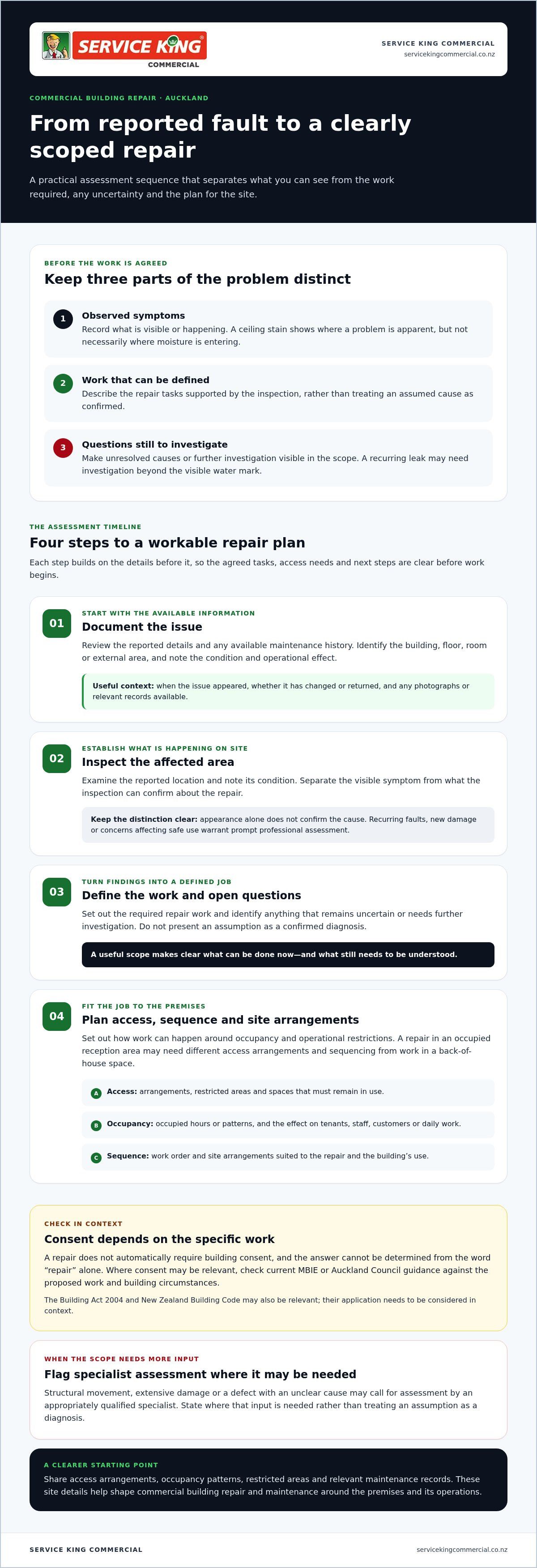
A clear assessment turns a reported fault into a defined job. It helps distinguish what is visible from what needs repair, what remains uncertain and how the work can fit the site. A repair assessment should establish the scope before work begins, so the agreed tasks, access needs and next steps are clear.
For commercial building repair in Auckland, the process should account for the affected area and the building’s daily use. A repair in an occupied reception area may need different access arrangements and sequencing from work in a back-of-house space.
What happens during a commercial repair assessment?
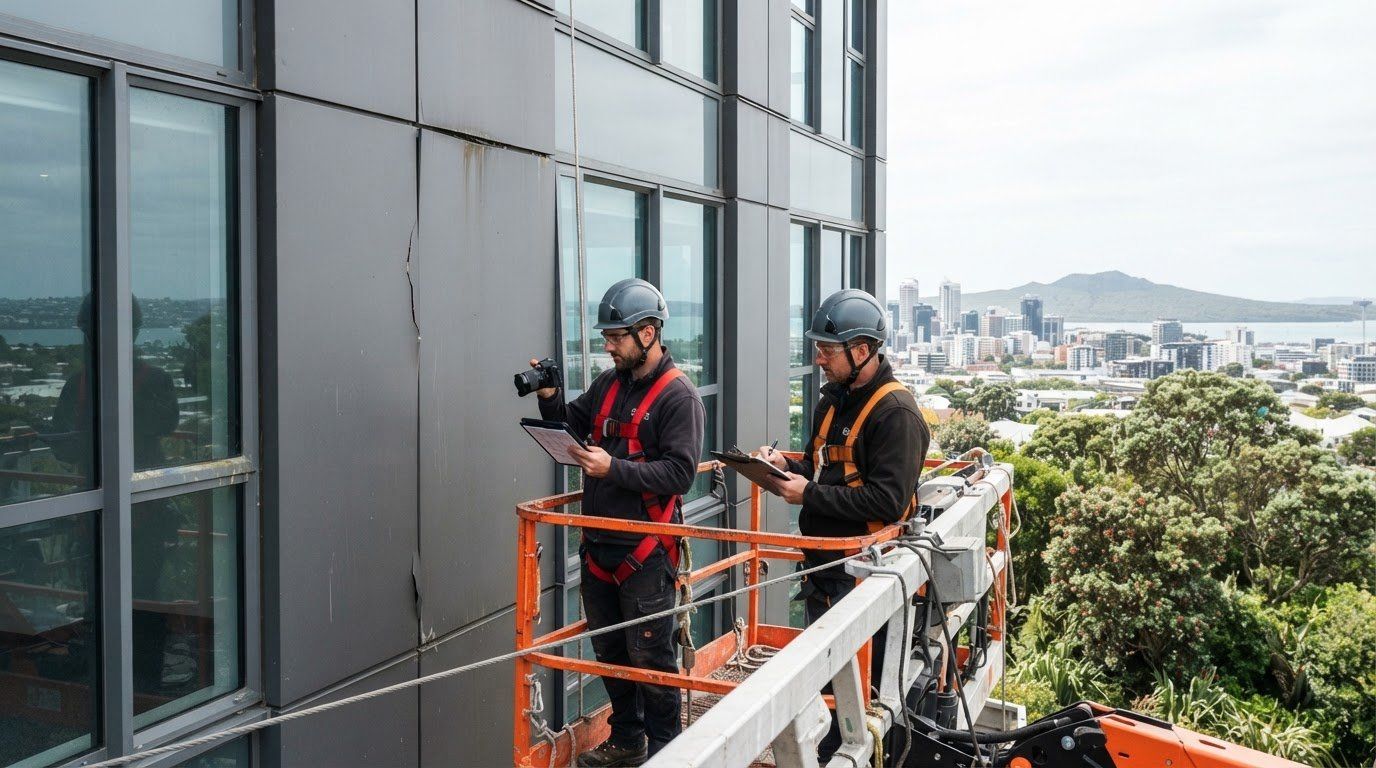
The assessment records the reported location, condition and operational effect of the issue. It then separates three things: observed symptoms, work that can be defined from the inspection, and any further investigation needed to understand the cause. A recurring leak, for example, may require investigation beyond the visible water mark before the repair scope is settled.
A practical sequence is:
- Document: review the issue details and available maintenance history.
- Inspect: examine the affected area and note its condition.
- Define: describe the required work and identify any unresolved questions.
- Plan: set out access, work sequence and site arrangements around occupancy and operational restrictions.
Scope and sequencing should reflect the repair itself and the site. Where materials or building systems need closer consideration, resources from the Building Research Association of New Zealand (BRANZ) can provide relevant building research context.
When could building consent or specialist input matter?
Consent requirements depend on the specific work. A repair does not automatically require building consent, and the answer can’t be determined from the word “repair” alone. Where consent may be relevant, check current MBIE or Auckland Council guidance against the proposed work and building circumstances. The Building Act 2004 and New Zealand Building Code may also be relevant to the project, but their application needs to be considered in context.
Structural movement, extensive damage or a defect with an unclear cause may call for assessment by an appropriately qualified specialist. The scope should state where that input is needed rather than treating an assumption as a confirmed diagnosis.
Site details help make the plan workable. Share access arrangements, occupied hours or patterns, restricted areas and relevant maintenance records. Service King Commercial uses these requirements to shape commercial building repair and maintenance around your premises and its operations.
How to Compare Commercial Building Repair Services in Auckland
Repair proposals can sound similar, but they may define different work. Compare the deliverables, not just the service label. For commercial building repair in Auckland, a useful proposal connects the identified defect with the planned work and the way it will be managed on your site.
What should a commercial repair proposal make clear?
Look for the affected areas, the tasks included, any assumptions and any exclusions. An itemised proposal might identify a damaged wall section, describe its repair and finishing, and state whether adjacent areas are included. A broad phrase such as “repair wall damage” gives less clarity about what will be done or what falls outside the scope.
Check that relevant access arrangements, work sequencing and site communication are addressed. These details help property teams plan approvals, inform occupants and understand how the work relates to ongoing operations.
| Evaluation area | What to compare | Why it matters |
|---|---|---|
| Scope clarity | Named areas, described tasks, assumptions and exclusions | Shows what the proposed work covers |
| Trade coordination | How related trade work is identified and arranged | Helps clarify responsibilities across connected tasks |
| Communication | Who provides updates and how site contacts are involved | Supports timely decisions and occupant information |
| Site planning | Access, sequence and operational constraints | Shows how delivery fits the premises |
Use the same checklist for each proposal. Providers may describe similar outcomes, but the defined work can differ in area covered, preparation, finishing or coordination. Those differences affect what the property team can approve and what to expect during delivery. A clear scope also makes it easier to identify unresolved details before work starts.
How do specialist repairs differ from general building repairs?
Some defects need a focused assessment. Concrete cracking or deterioration, for example, may call for specialist investigation to establish the nature and extent of the issue before a repair method is set. Broader building repairs can cover different areas and needs across commercial premises. The appropriate scope depends on the defect, not a generic label such as “building repairs”.
Service King Commercial provides building repair and maintenance tailored to commercial site requirements, with trade services supporting coordination across relevant work. Review the proposed scope against your site needs and learn more about commercial building repair and maintenance.
Plan Commercial Building Repairs Around Auckland Site Operations
A repair plan should fit the agreed scope and the way the premises are used. Before setting a work date, identify affected areas, entry points, access routes and activities that need to continue. A repair beside a customer entrance may need a different sequence from work in a back-of-house area. Planning helps manage foreseeable disruption, but it can’t guarantee that a live site will be unaffected.
How can repairs minimise disruption to an occupied site?
Agree practical arrangements with the property manager and relevant site contacts before work starts. Set out when access is needed, which areas may be affected, how occupants will be informed and who will share updates if arrangements change. Consider tenants, staff, customers, deliveries and any areas that must stay operational. For exterior work involving the building envelope, refer to the Auckland commercial exterior building maintenance guide alongside the repair plan.
- Confirm access: identify entry points, routes, restricted areas and any arrangements needed for occupants or deliveries.
- Set timing and sequence: plan work around site activities and prioritise tasks according to the agreed scope and operational needs.
- Agree communication: name the relevant contacts and decide how site users will be told about affected areas or changes.
For commercial building repair Auckland projects, agreeing access, timing, sequencing, communication and completion checks before work starts helps property teams coordinate people, protect continuity and track the agreed scope.
What should happen at repair completion?
Review the completed work against the agreed scope. Record any outstanding items and agree how they will be followed up. Add relevant repair details, photographs or maintenance information to the property file. Before normal use resumes, confirm that affected areas are ready for their intended purpose and that site contacts know the work is complete.
Clear planning is especially useful when repairs involve several areas or trades. It gives the property team a shared sequence to work from and makes it easier to identify when access or communication arrangements need attention. Service King Commercial tailors building repair and maintenance to commercial site requirements, with the plan shaped around your premises and operations.
Arrange Commercial Building Repair in Auckland with Service King Commercial
Once the issue and site requirements are clear, the next step is to arrange repair work that matches the premises. Service King Commercial provides commercial building repair and maintenance in Auckland. Work is tailored to the repair needs, affected areas and operational requirements of each site.
That site-specific approach connects the agreed scope with practical delivery. A repair in an occupied workspace may need different access and sequencing from work in a less-used area. Where the work involves several trades, Service King Commercial’s trade services provide access to licensed tradespeople. Qualified personnel support work planned around safe, operational commercial premises.
What commercial repair support can Service King Commercial provide?
Commercial building repairs and maintenance can address identified faults across a property, with trade services supporting relevant work. The scope is shaped around the building issue and the site, rather than a standard package. For example, a repair involving an external wall or another part of the building envelope may also relate to exterior building maintenance.
This gives property teams a practical route to describe the problem, consider related work and plan around site use. Share what is affected and how the issue influences operations. That information helps shape a repair response to the actual premises and its requirements.
What information should you share when requesting repair support?
A concise request gives the assessment a useful starting point. Include the building or site location, the affected area, what you have observed and when the issue began. Note whether it has changed or occurred before. Describe any impact on staff, tenants, customers, access or areas that need to remain operational.
- Issue and location: identify the defect and the specific area involved.
- Known history: share relevant maintenance records or previous repair details, if available.
- Site arrangements: explain access requirements, occupancy patterns and operational restrictions.
- Supporting information: include photographs where useful, along with preferred communication arrangements.
These details help connect the reported concern with the site’s practical needs. Photographs and records can add context, but they don’t establish the cause on their own. Service King Commercial can discuss the issue and the appropriate next step for your Auckland premises.
For commercial building repair Auckland support, discuss your building repair needs with Service King Commercial and outline the issue, affected area and site requirements.
Set Up Your Next Building Repair with a Clear Plan
A well-defined repair starts with a clear record of the issue and its effect on the site. Use that information to set the scope, compare proposals by their actual deliverables, and plan access, timing and communication around tenants, staff and daily operations.
For commercial building repair Auckland , Service King Commercial provides locally based building repair and maintenance tailored to each commercial site’s needs and operating requirements. A practical plan gives your property team a clear route from identifying the defect to reviewing completed work.
Share the affected area, any known history and the operational impact to start a focused discussion. Discuss your Auckland building repair with Service King Commercial and take the next step towards work planned for your premises.
With the issue clearly described and site needs in view, you can move forward with greater confidence.
Frequently Asked Questions
What does commercial building repair include?
Commercial building repair covers work to address damage, deterioration or a fault in a commercial property. It can include repairs to building fabric and internal finishes, alongside functional work supported by relevant trade services. The scope depends on the issue, its location and its effect on site use. This differs from scheduled maintenance, which is planned upkeep, and end-of-lease work, which prepares premises for handover.
How do I arrange commercial building repairs in Auckland?
To arrange commercial building repairs in Auckland, share the site location, affected area, symptoms, when they began and any known repair history. Explain the impact on occupants or operations. Photographs and details about access restrictions can also help. Service King Commercial provides building repair and maintenance tailored to commercial site requirements, with trade services supporting relevant work. These details give the repair discussion a practical starting point.
How much do commercial building repairs in Auckland cost?
The cost depends on the repair scope and the conditions at the site. Factors can include the affected area, the work required, access arrangements, trade coordination and whether further investigation is needed. A clearly defined proposal helps show what work is included and which assumptions or exclusions apply. Share site details to support an assessment and a proposal suited to your commercial premises.
Can commercial building repairs be completed while a site is operating?
Repairs may be planned around an operating site, depending on the work, access needs and areas affected. The plan can set out work sequencing, restricted areas and communication with tenants, staff or customers. For example, work near a main entrance may need a different access plan from work in a back-of-house area. Planning helps manage foreseeable impacts, but can’t ensure there will be no disruption.
Do commercial building repairs require building consent in New Zealand?
Not every commercial repair requires building consent. Requirements depend on the nature and extent of the proposed work and the building. Check current MBIE or Auckland Council guidance for the specific project before work begins. The Building Act 2004 and New Zealand Building Code may be relevant, but don’t assume the same consent requirements apply to every repair. Structural or complex defects may also need specialist assessment.
When should a commercial building defect be assessed urgently?
Arrange prompt professional assessment if a defect may affect safe use, is worsening or is disrupting essential site operations. Examples include a loose building element, sudden damage or active water ingress that appears to be spreading. Record what you’ve observed and where it is. If an area may be unsafe, restrict access in line with your site procedures while arranging an assessment.
What should I check before agreeing to a commercial repair proposal?
Check that the proposal identifies affected areas and describes the work, assumptions and exclusions. Review how access, sequencing, trade coordination and site communication will be handled where relevant. Make sure any further investigation or outstanding questions are clear before agreeing to the scope. A defined proposal helps property teams understand the intended deliverables, plan around operations and manage internal approvals.
Recent Posts