
October 2, 2026
A small change in a cladding panel can be easy to dismiss, but an unchecked defect may allow moisture to reach areas that are harder to inspect. Effective cladding maintenance commercial Auckland sites need starts with recorded condition checks, not guesswork.
It’s reasonable to want clear signs of what needs attention, especially when work must be planned around tenants and daily operations. This guide explains how to inspect commercial cladding, recognise common signs of deterioration and prioritise follow-up. It also covers when to seek a competent assessment, as the right response depends on the cladding system and the condition behind it.
Use this guidance to establish a practical inspection routine, record changes over time and coordinate maintenance. When findings call for repairs or planned upkeep, a commercial building maintenance provider can help organise the next steps. Service King Commercial provides exterior building maintenance, building repairs and scheduled maintenance for commercial properties in Auckland.
Key Takeaways
- Effective cladding maintenance commercial Auckland sites need begins with recorded checks from safe, accessible viewing points.
- Note visible changes such as cracks or loose panels, but don’t assume a crack confirms water ingress.
- Match the response to the evidence, from routine monitoring to localised repair or specialist investigation.
- Set inspection timing around the building’s condition, exposure, access and previous findings, with clear responsibility for records and follow-up.
- Before agreeing to work, confirm its scope, exclusions, access arrangements and how findings or urgent concerns will be reported.
Table of Contents
- What commercial cladding maintenance in Auckland should cover
- How to inspect commercial cladding on Auckland properties
- Routine maintenance, repair or remediation: choosing the right response
- How to create a practical Auckland commercial cladding maintenance plan
- Choosing commercial cladding maintenance support in Auckland
What commercial cladding maintenance in Auckland should cover
Cladding maintenance is the planned process of checking a building’s exterior, carrying out appropriate upkeep and referring defects for further assessment when needed. Cladding forms part of the building envelope and may use different materials and systems. A general overview of cladding explains its role, but it can’t identify the requirements of a particular property.
Keep routine maintenance distinct from repair, replacement and specialist remediation. Checks and upkeep help track condition; repair addresses a specific defect. Replacement involves removing or renewing cladding, while remediation may require investigating issues beyond visible surfaces. These responses aren’t interchangeable. The right next step depends on the cladding type, site history and evidence found during checks.
For cladding maintenance commercial Auckland properties need, plan checks around each building’s exposure and previous findings. Rain, wind and UV can affect exterior components, but the impact varies with location, orientation, shelter and material. Avoid applying the same schedule or response to every site.
Which parts of a commercial cladding system need attention?
Look beyond the visible panels. Checks should include joints, coatings, flashings and interfaces around windows, doors and other openings. These connected details contribute to the exterior system, so a concern at an edge or junction may need attention even when the panel itself appears unchanged.
Record what is visible and where it appears. A photograph or surface mark can document a change, but it can’t confirm the condition of hidden materials or establish the cause of a defect. Refer uncertain or concerning findings for an appropriate assessment rather than diagnosing them from appearance alone.
Why does Auckland exposure matter to maintenance planning?
Consider each elevation separately. A sheltered wall and a façade exposed to prevailing wind or coastal conditions may need different levels of attention. Coastal exposure can affect exposed components, so factor in the site location and seek a site-specific assessment if the condition or risk is unclear.
Connect cladding checks with wider exterior upkeep, including the building’s repair history and other recorded observations. The Auckland commercial exterior building maintenance guide provides a related starting point for planning exterior care. Service King Commercial provides exterior building maintenance, building repairs and scheduled maintenance for commercial properties in Auckland. Confirm the required cladding scope before arranging a specific inspection or repair.
How to inspect commercial cladding on Auckland properties
A repeatable visual check helps site managers spot changes and decide what needs follow-up. A practical approach to cladding maintenance commercial Auckland properties require starts from safe, accessible areas. BRANZ explains the role of normal maintenance for durability, but a visual check is not a technical assessment and can’t confirm what is happening behind the cladding.
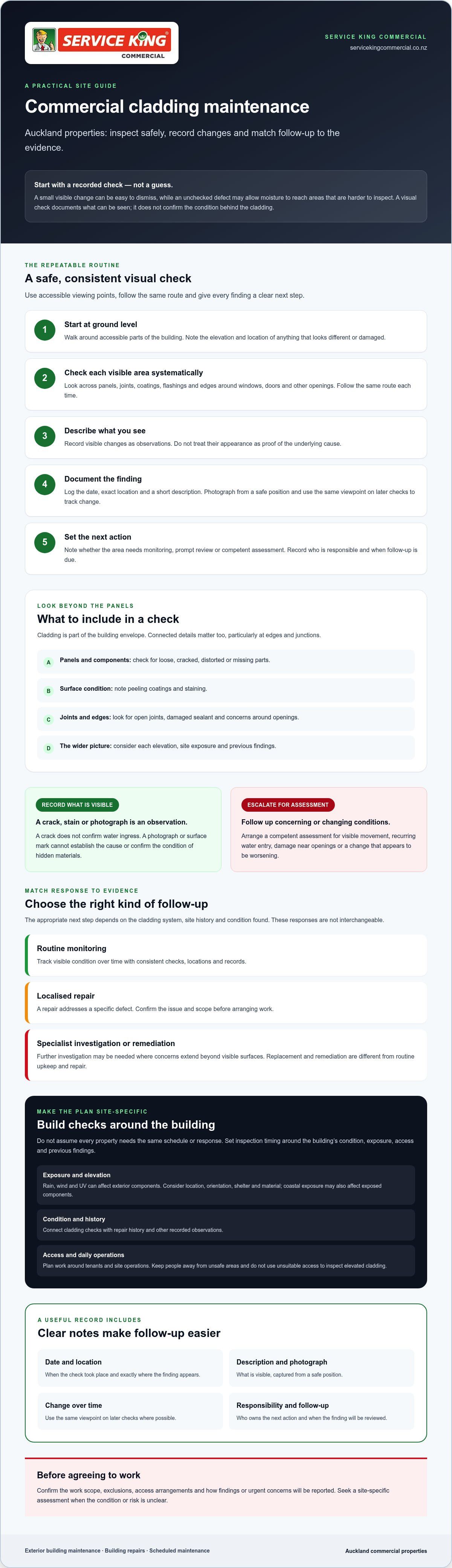
A safe, consistent visual-check sequence
- Start at ground level. Walk around accessible parts of the building. Note the elevation and location of anything that looks different or damaged.
- Check each visible area systematically. Look across panels, joints, coatings, flashings and edges around openings. Follow the same route each time to keep records consistent.
- Describe what you see. Record loose, cracked, distorted or missing components, peeling coatings, open joints, damaged sealant or staining. These are observations, not proof of the underlying cause.
- Document the finding. Log the date, exact location and a short description. Take photographs from a safe position, then use the same viewpoint on later checks to track change.
- Set the next action. Note whether the area needs monitoring, prompt review or competent assessment. Include who is responsible and when the finding will be followed up.
Don’t assume a crack means water has entered the building. It may warrant attention, but appearance alone can’t establish the cause or extent of a problem.
What signs should be escalated?
Arrange a competent assessment for visible movement, recurring water entry or damage near openings. Record when and where water has been noticed, if known, without treating staining as confirmation of a particular defect. A change that appears to be worsening also warrants follow-up.
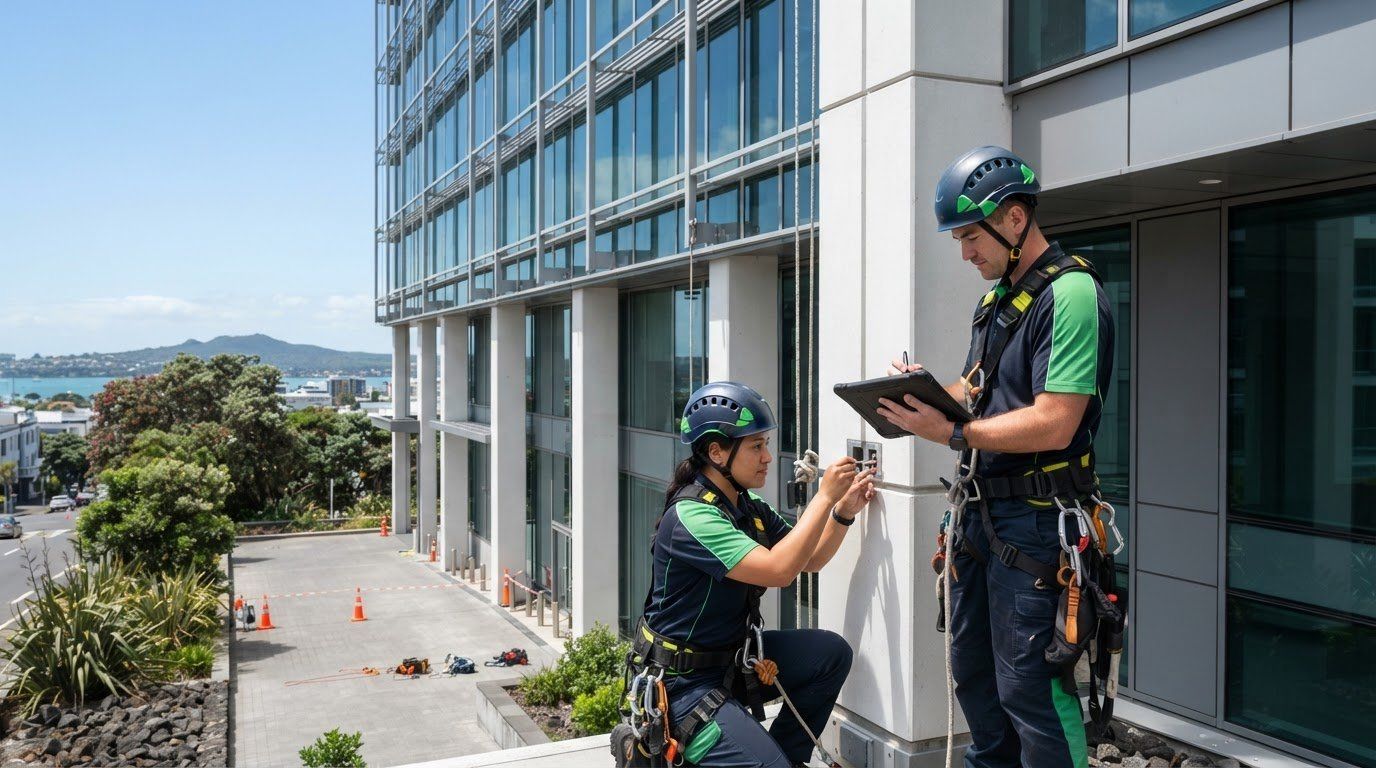
Keep people away from unsafe areas. Don’t climb, lean out of windows or use unsuitable access equipment to inspect elevated cladding. Work at height needs suitable access arrangements and competent people. If a finding may affect the building’s compliance, check the specific circumstances with an appropriately qualified professional or the relevant council. Building Code or consent implications depend on the building and the work involved.
Clear records make it easier to brief a contractor and coordinate follow-up. For help organising wider exterior upkeep, consider commercial exterior building maintenance from Service King Commercial. Confirm the scope before arranging any cladding-specific inspection or repair.
Routine maintenance, repair or remediation: choosing the right response
Choose the response that fits the evidence. A change that appears minor may need monitoring, while recurring water entry or widespread deterioration calls for further assessment. This framework helps Auckland site managers distinguish routine upkeep from repair and specialist investigation without guessing at the cause or prescribing work too early.
| Response | Observed condition | Uncertainty | Urgency and expertise |
|---|---|---|---|
| Routine monitoring | No significant change or immediate safety concern is evident. | Observations are consistent with previous checks, with no clear sign of an active defect. | Record the condition and set a follow-up check based on exposure, condition and maintenance history. Use suitable care for the material and follow manufacturer guidance. |
| Localised repair | A specific area shows visible damage or deterioration. | The extent and cause may not be clear from a visual check alone. | Have the work assessed and scoped by someone competent for the task. Confirm the repair approach before work begins. |
| Specialist investigation | There is recurring water entry, widespread deterioration, movement or concern about damage that may extend beyond the visible surface. | There is material uncertainty about the cause, extent or condition of the wider system. | Escalate for an appropriate specialist assessment. Confirm any consent or compliance implications for the specific work. |
When is routine cladding maintenance appropriate?
Use routine monitoring when checks show no significant change and there’s no immediate safety concern. Keep the findings in the site log, then plan the next check around the building’s exposure, current condition and past maintenance records. Avoid setting one interval for every property.
Cleaning or surface care may form part of upkeep, but only where it suits the cladding material and follows the manufacturer’s guidance. Maintenance can help reduce avoidable deterioration, but it can’t guarantee that defects won’t develop.
When does a concern need further assessment?
Recurring leaks, deterioration across multiple areas or uncertainty about underlying damage are reasons to seek a competent assessment. Repeating a cosmetic patch may alter the visible surface without resolving the underlying cause. Don’t select a repair method based on appearance alone. The cladding system and its condition need to be understood first.
Before work proceeds, confirm who will assess and carry it out, what the agreed scope covers, and whether the proposed work has consent or compliance implications. Requirements depend on the building and the work involved, so check with an appropriately qualified professional or the relevant council. A practical framework for cladding maintenance commercial Auckland teams can use is simple: record the evidence, consider the uncertainty, then assign the next step.
How to create a practical Auckland commercial cladding maintenance plan
A useful plan sets out what gets checked, how findings are recorded and who is responsible for follow-up. Set inspection frequency for the individual building. Consider cladding condition, site exposure, safe access and previous findings rather than applying a universal interval. Review the schedule when the building’s condition or maintenance history changes.
Set ownership and priorities
Name the people responsible for checks, approvals, records and contractor follow-up. Make sure each observation has an action owner and review date. Prioritise immediate safety concerns and active water entry. Schedule other work according to the condition, likelihood of change and potential effect on building operations. If access or the nature of a defect is uncertain, arrange a competent assessment before assigning repair work.
What should the maintenance record include?
Use one site log so successive checks can be compared. Record the cladding type where known, areas inspected, inspection date and any limits on what could be viewed safely. Attach dated photographs and note whether each observation has changed since the last check.
For every finding, add the recommended next action, who owns it, its review date and evidence of completion. If work is deferred, record the reason and when the decision will be reviewed. This creates a clear trail from observation to action without treating a visual note as a diagnosis.
Coordinate work around an occupied site
Before contractor attendance, agree on access arrangements, tenant communication and work timing. Identify affected entrances or areas and share relevant site requirements with the people organising the work. Keep the plan current if access conditions or building operations change.
Coordinate cladding checks with related exterior upkeep where practical. Roof and gutter observations may inform the same maintenance plan, but each should be assessed within its own scope. Refer to the commercial roof maintenance guide for NZ and the Auckland commercial gutter maintenance practical guide when planning roofline work. These are guide titles, not substitutes for a site-specific assessment.
A consistent process makes cladding maintenance commercial Auckland sites can manage easier to track across inspections and follow-up work. Service King Commercial provides scheduled maintenance and exterior building maintenance for commercial properties. Discuss scheduled maintenance planning, and confirm the required cladding scope before arranging a specific inspection or repair.
Choosing commercial cladding maintenance support in Auckland
Before agreeing to work, make sure the scope matches the issue identified. A provider may be able to coordinate general exterior upkeep or building repairs without offering specialist cladding inspection or remediation. Confirm the cladding-specific scope directly. This helps avoid gaps between an initial observation, any further assessment and the work that follows.
What should property managers clarify before work starts?
Agree which areas are included and what cannot be inspected from the planned access points. Confirm the reporting format, nominated site contact and how observations will be recorded. Clarify who is responsible for arranging specialist assessments, obtaining any required approvals and authorising work outside the agreed scope.
Plan for the occupied site as well. Discuss access, tenant communication, site safety arrangements and potential disruption before attendance. Ask how urgent concerns will be raised, who will receive them and how recommended follow-up will be tracked. These details make it easier to respond consistently if an assessment identifies an issue outside the original scope.
How can a maintenance provider support ongoing cladding care?
A commercial maintenance provider can help organise scheduled exterior upkeep and coordinate agreed building repairs. That support can make recurring checks and follow-up easier to manage across a site. It doesn’t replace a specialist assessment where the cladding system, defect or proposed work requires expertise beyond the agreed maintenance scope.
Service King Commercial provides exterior building maintenance, scheduled maintenance and building repairs for commercial properties in Auckland. Confirm whether the required cladding inspection or repair work falls within the agreed scope before proceeding. Ask what will be reported, what needs a separate specialist and how completed work will be documented.
For cladding maintenance commercial Auckland property managers can coordinate with confidence, keep the scope, responsibilities and follow-up process clear. Discuss commercial exterior maintenance requirements with Service King Commercial and outline your site’s needs.
Keep your cladding plan practical and consistent
Effective upkeep depends on clear records and a response that matches the evidence. For cladding maintenance commercial Auckland property managers should set checks around the building’s condition, exposure and history. Record visible changes, then seek a competent assessment when concerns are recurring, widespread or uncertain. This helps teams prioritise work without assuming a surface mark confirms a hidden defect.
Make the plan workable for your site. Assign responsibility for checks, approvals and follow-up, and agree how contractors will report observations and urgent concerns. Service King Commercial provides exterior building maintenance and scheduled maintenance for commercial properties. The business also offers building repair and trade services across Auckland and New Zealand. Confirm the cladding-specific scope before arranging any inspection or repair.
Ready to organise planned exterior upkeep or discuss follow-up work? Discuss your Auckland commercial exterior maintenance requirements with Service King Commercial. A clear maintenance process gives your team a practical basis for managing the next steps.
Frequently Asked Questions
How often should commercial cladding be inspected in Auckland?
Set inspection frequency according to the building’s condition, exposure, access and maintenance history. There isn’t one interval that suits every Auckland property. A sheltered building with a stable history may need a different schedule from an exposed site with previous defects. Review the timing when conditions change or checks identify deterioration. A practical approach to cladding maintenance commercial Auckland sites need is to document the reason for the chosen schedule.
What are the signs that commercial cladding needs maintenance?
Look for loose, cracked, distorted or missing components, peeling coatings, open joints, damaged sealant and staining. Record where each sign appears and whether it has changed since the last check. These observations can indicate that follow-up is needed, but they don’t confirm the cause or prove that water has entered the building. Use safe, accessible viewing points, and refer uncertain or worsening conditions for competent assessment.
Can commercial cladding maintenance prevent water leaks?
Regular checks and suitable upkeep can help identify deterioration before it becomes more extensive, but they can’t guarantee that leaks won’t occur. Cladding type, connected details, exposure and past repairs all affect how a building performs. Treat water entry as a reason to investigate, especially if it recurs. A surface patch may not resolve the underlying cause, so seek an appropriate assessment before deciding on repairs.
When should a cladding issue be repaired rather than monitored?
Arrange further assessment when damage is worsening, water entry recurs, components appear to have moved or deterioration affects multiple areas. Monitoring may suit observations that show no significant change and present no immediate safety concern. Don’t decide on repair from a photograph or surface appearance alone. The cladding system and condition need to be understood first, and any consent or compliance implications should be checked for the specific work.
Does commercial cladding maintenance require a specialist contractor?
Not every visual check needs a specialist. Site staff can record visible changes from safe, accessible areas, but elevated or unsafe locations need suitable access arrangements. Seek competent assessment when the cause or extent of a defect is unclear, or when there are recurring leaks or widespread deterioration. Before engaging a contractor, confirm their relevant experience, the agreed scope, exclusions and whether specialist assessment is required.
What should a commercial cladding maintenance record include?
Record the inspection date, cladding type where known, areas checked and any limits to what could be viewed safely. Add each observation’s location, a clear description and dated photographs. Compare images with earlier records to identify changes. Track the recommended action, the person responsible, a review date and completion evidence. This gives property managers a practical history for prioritising follow-up and briefing contractors.
Can cladding maintenance be scheduled around tenants and business operations?
Yes. Plan work around access needs, tenant communication and the site’s operating requirements. Agree in advance which areas are covered, how access will be managed and how potential disruption will be communicated. Confirm the site contact and how urgent concerns or recommended follow-up will be reported. For occupied Auckland premises, clear coordination helps maintenance work fit the site while keeping safety and access arrangements central.
Recent Posts