
November 14, 2026
Commercial interior wall repair in Auckland involves more than fixing visible damage. Opening a wall may reveal further issues, and the work may need to fit around other repairs and daily business operations. Planning these factors early helps establish a practical sequence.
Wall damage can disrupt staff, customers and how a space is used, so it helps to have a clear plan before work begins. The repair approach depends on the wall’s condition, nearby interior work and which areas need to remain in use. This guide explains how those factors shape the scope, what hidden damage can mean and how to stage repairs to limit disruption.
You’ll also see how professional building repair and maintenance fits into wider commercial interior work, and what information helps shape a workable plan. The focus is practical: identify what needs repairing, how the work connects with other tasks and how to keep business operations in view throughout the job.
Key Takeaways
- Plan wall repairs alongside fit-out work so connected tasks, finishes and access needs are considered together.
- Allow the repair scope to account for damage that may only become visible once affected wall areas are opened.
- Stage work around business operations by identifying areas that need to remain accessible and sequencing repairs accordingly.
- Assess cost from the repair area, wall condition, finish requirements and staging needs; consent requirements can also depend on the work involved.
Table of Contents
Commercial interior fit-outs and repairs in Auckland
Interior wall repairs can form part of a wider Auckland fit-out or be handled as a separate maintenance job. The scope depends on the damage, nearby finishes and whether alterations affect building systems.
Contractor services, warranties and reviews
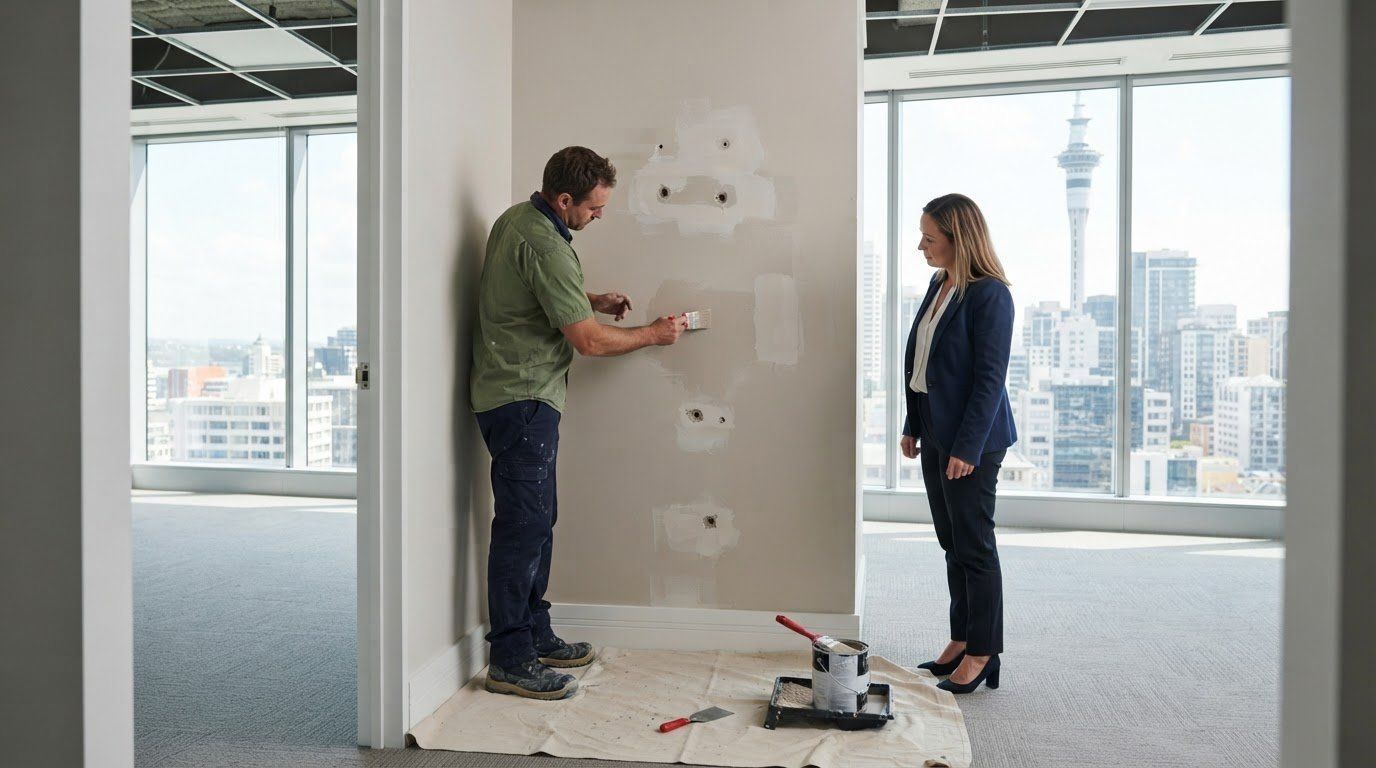
When choosing a commercial repair service, compare the work covered, how the scope is defined and how completed work is documented. For example, a plasterboard patch may need stopping, sanding and repainting to blend with the existing wall. Read any written warranty terms carefully, including exclusions and how to report defects. Reviews can offer insight into communication, scheduling and finish quality. Look for feedback about commercial interiors, not just general building work.
Commercial wall repair costs
The cost of commercial wall repair in Auckland depends on the damaged area, wall condition, access and required finish. A small dent in an accessible partition involves different work from water-damaged plasterboard beside a doorway. Repairs may also need to be coordinated with painting or other interior tasks. The quote reflects the specific scope, including the damage, access and finish.
Cost per square metre
A single per-square-metre rate cannot describe every commercial wall repair. Surface area matters, but so do preparation, damage depth, access and matching the surrounding finish. A small repair may need careful setup and finishing, while work across a larger area may be grouped. The quote should describe the repair area and the preparation and finishing included. That makes the scope clearer than comparing a rate alone.
Professional plasterboard repair steps
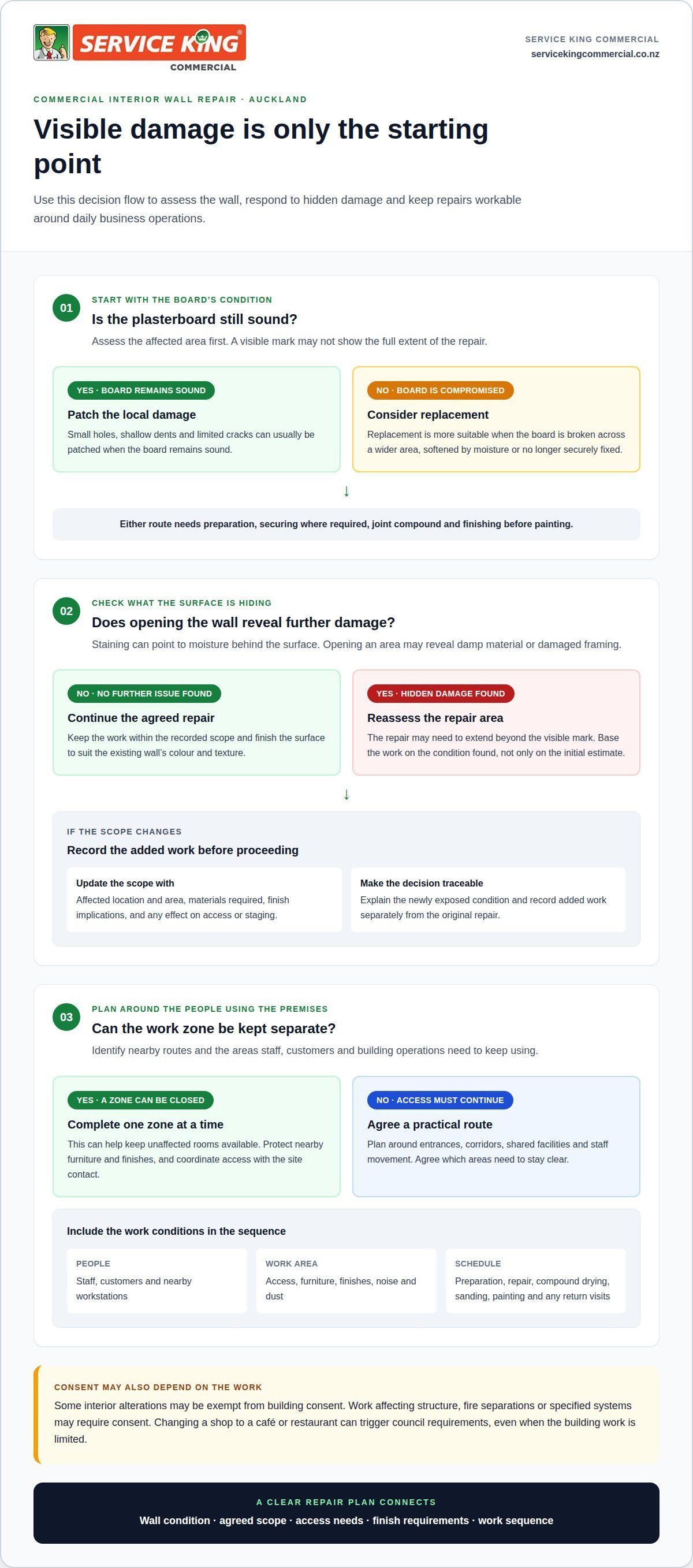
For plasterboard repairs, the damaged section and nearby surfaces are assessed first. The board may need patching or replacement, followed by preparation and securing the repair. Joint compound and finishing create a smooth surface for painting, with the final colour and texture suited to the existing wall. Some interior alterations may be exempt from building consent, but work affecting structure, fire separations or specified systems may require consent. Changing a shop to a café or restaurant can trigger council requirements, even when the building work is limited.
Managing hidden damage and changes to scope
A visible mark may not reveal the full extent of a wall repair. A dent in plasterboard may be localised, while staining can point to moisture behind the surface. Assessing the affected area helps establish whether the repair is a surface patch or needs opening up. For commercial interior wall repair in Auckland, this assessment also helps coordinate repairs with nearby finishes.
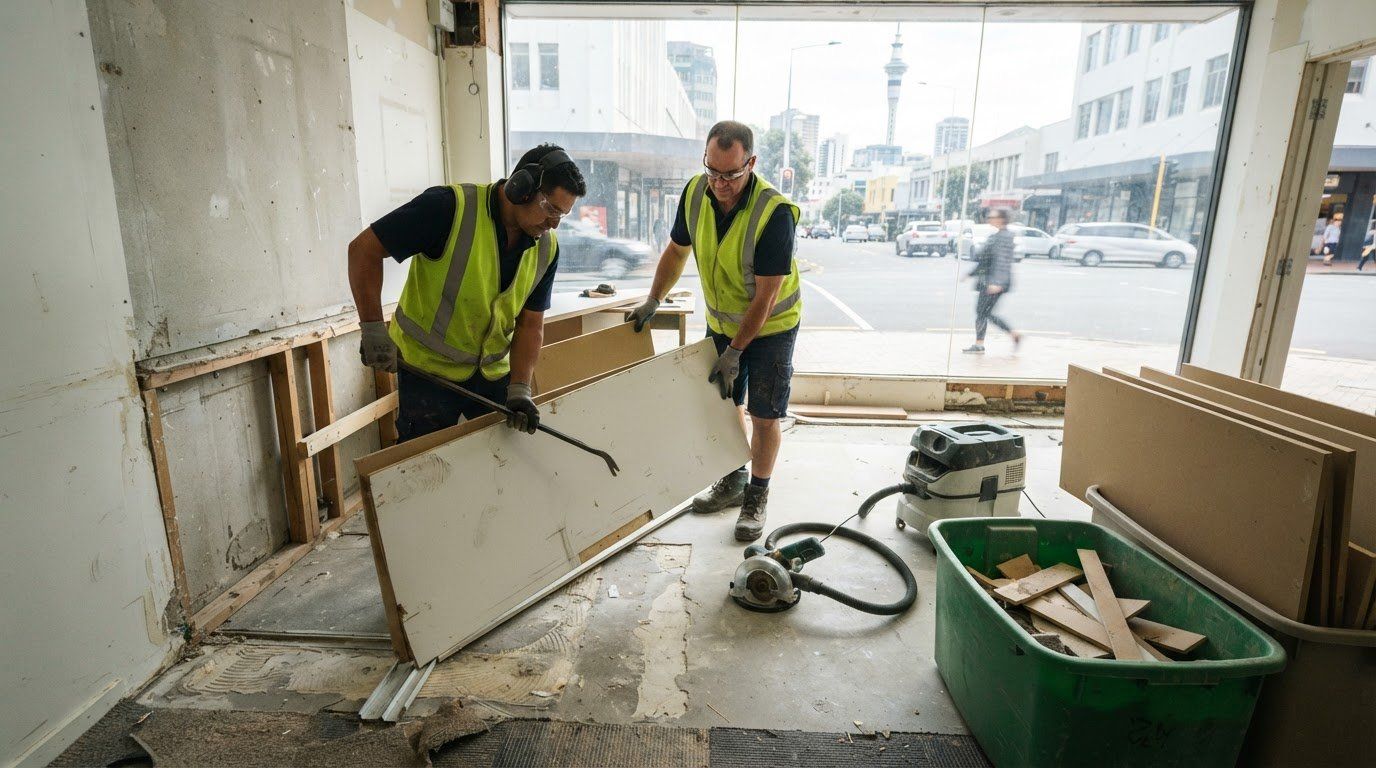
Small holes, shallow dents and limited cracks can usually be patched if the board remains sound. Replacement is more suitable when plasterboard is broken across a wider area, softened by moisture or no longer securely fixed. If opening the wall reveals damaged framing or damp material, the repair may need to extend beyond the visible mark. The work should reflect the condition found, not just the initial estimate.
A clear scope records the affected location, visible damage, proposed repair and finish. During the work, newly exposed conditions can be compared with the agreed scope. For example, a patch may reveal damp board extending behind a skirting edge. Documenting the finding and explaining the additional work before proceeding gives the building manager a clear record of why the repair changed.
Record any added work separately from the original repair in an updated scope. Note the affected area, materials required, finish implications and any effect on access or staging. A larger repair may also need coordination with painting or nearby fit-out tasks. Clear records make decisions traceable and ensure newly discovered issues are explained rather than assumed to be part of the original work.
For a planned repair, provide the site contact with the damage location, access limits and any known history, such as a previous leak near the wall. Contractors can use these details to plan assessment and identify areas needing closer inspection. building repair planning can help organise the next steps when visible damage may involve a wider repair scope.
Work staging and operating occupied premises
Occupied Auckland premises need a repair sequence that preserves access and keeps essential areas usable. Plan work zones around staff, customers and building operations.
Work staging in occupied premises
Start by identifying the wall sections to repair and the routes people use nearby. Work areas can be separated from reception desks, customer seating and staff workstations. For example, a repair beside a busy corridor may need a different sequence from work inside a closed meeting room. Protect nearby furniture and finishes, and coordinate access with the site contact.
Staging should also account for noise, dust and access to shared facilities. Completing one zone before moving to the next can keep unaffected rooms available. Agree which entrances, corridors or work areas need to stay clear. If staff move between rooms during the day, plan a safe, practical route around the repair area.
Commercial wall repair timelines
There is no single timeframe for every commercial wall repair in Auckland. A localised plasterboard patch involves fewer stages than replacing a damaged section and finishing a larger surface. Preparation, repair, compound drying, sanding and painting all affect the schedule. Access restrictions and work around occupied rooms also shape the sequence.
The repair schedule should show the work stages, affected zones and any return visits needed for finishing. Opening a wall may reveal hidden damage and add work. Updating the sequence when the scope changes helps the site contact plan room use and staff access around the revised work.
Before work begins, align the repair plan with business activity. For instance, a meeting room booked for staff use may need to be cleared during its scheduled repair stage. Clear staging details help the site contact manage access and organise the work around agreed operating needs.
How much does commercial interior wall repair cost in Auckland?
The price depends on the condition and scope of each Auckland repair. The quote reflects the damaged area, access, preparation and finish. A surface mark on an accessible wall involves different work from plasterboard that needs to be removed and replaced. The quote should clearly describe the included work and repair boundaries.
Several details affect the estimate. Consider the damage’s size and location, the wall material, the condition beneath the surface and the required finish. A repair beside a doorway, for example, may need careful work around the trim. A patch in a painted office may also need a finish that blends with the surrounding wall. If opening the area reveals hidden damage, the additional work changes the scope.
- Assessment: record the location, visible damage and likely repair area.
- Preparation: include protection and access arrangements for nearby business areas.
- Repair: describe patching or replacement work and any added material.
- Finishing: state whether sanding, stopping and painting form part of the work.
Use the written scope to understand what the quote covers. Check that it distinguishes the visible repair from related work, such as painting a larger wall area. If a new condition is uncovered, the revised scope should identify the change and its effect on the work. This gives the building manager a clear basis for approving the next stage.
Share practical site details with the contractor, including the damage location, access limits and whether the premises remain occupied. These points help shape the repair plan and the quote. For commercial wall repair in Auckland, request a scoped assessment that sets out the repair and finish requirements. Request a commercial wall repair quote.
Service King Commercial: Building Repair and Maintenance
Service King Commercial provides building repair and maintenance for commercial properties, including interior wall repairs. Use this service when wall damage needs professional assessment and repair as part of wider building upkeep. A clear scope helps coordinate the wall work with related repairs and site requirements.
For example, a damaged plasterboard section may need repair alongside nearby interior work. If the assessment identifies broader building maintenance needs, those can be included alongside the wall repair. The work plan can also account for access and continued use of business areas.
Share details of the damaged area, known site constraints and related repair needs to help define the work. Contact Service King Commercial to discuss your commercial wall repair.
Set the next maintenance priority
Make the next step a clear facilities decision. Identify the interior area needing attention first and who will coordinate access and approval. For commercial interior wall repair in Auckland, a focused brief gives the discussion a practical starting point. It also helps align the repair with wider property priorities without adding unrelated work to the scope.
Before approving work, identify who is responsible for decisions, which areas are involved and any other property requirements to consider. Service King Commercial also provides Commercial Cleaning Services, End of Lease Service and Exterior Building Maintenance. Keep each requirement distinct so the wall repair can be assessed on its own terms.
A clear starting point helps move the decision forward. Contact Service King Commercial to discuss the repair and its next practical step.
Frequently Asked Questions
How can businesses minimise disruption during commercial wall repairs?
Give staff and visitors a simple notice before work starts, stating which rooms or routes are affected. For example, move a booked client meeting away from a room scheduled for wall repairs. Assign one site contact to share changes with the repair team and update staff. This keeps access decisions and day-to-day communication organised.
What risks should Auckland businesses consider, such as asbestos or lead paint?
Older wall linings or painted surfaces may contain asbestos or lead, and cutting or sanding them can create hazardous dust. If a building’s age or records raise concerns, identify the material before disturbing the surface. Do not treat an unknown coating or lining as ordinary plasterboard. An assessment can establish what material is present and inform a safe repair approach.
What building code and consent requirements apply to interior wall repairs in New Zealand?
Some interior alterations may be exempt from building consent, but the conditions are specific. Work affecting structure, fire separations or specified systems may require consent. Changing a shop to a café or restaurant can trigger council requirements, even when the building work is limited.
Recent Posts