
November 11, 2026
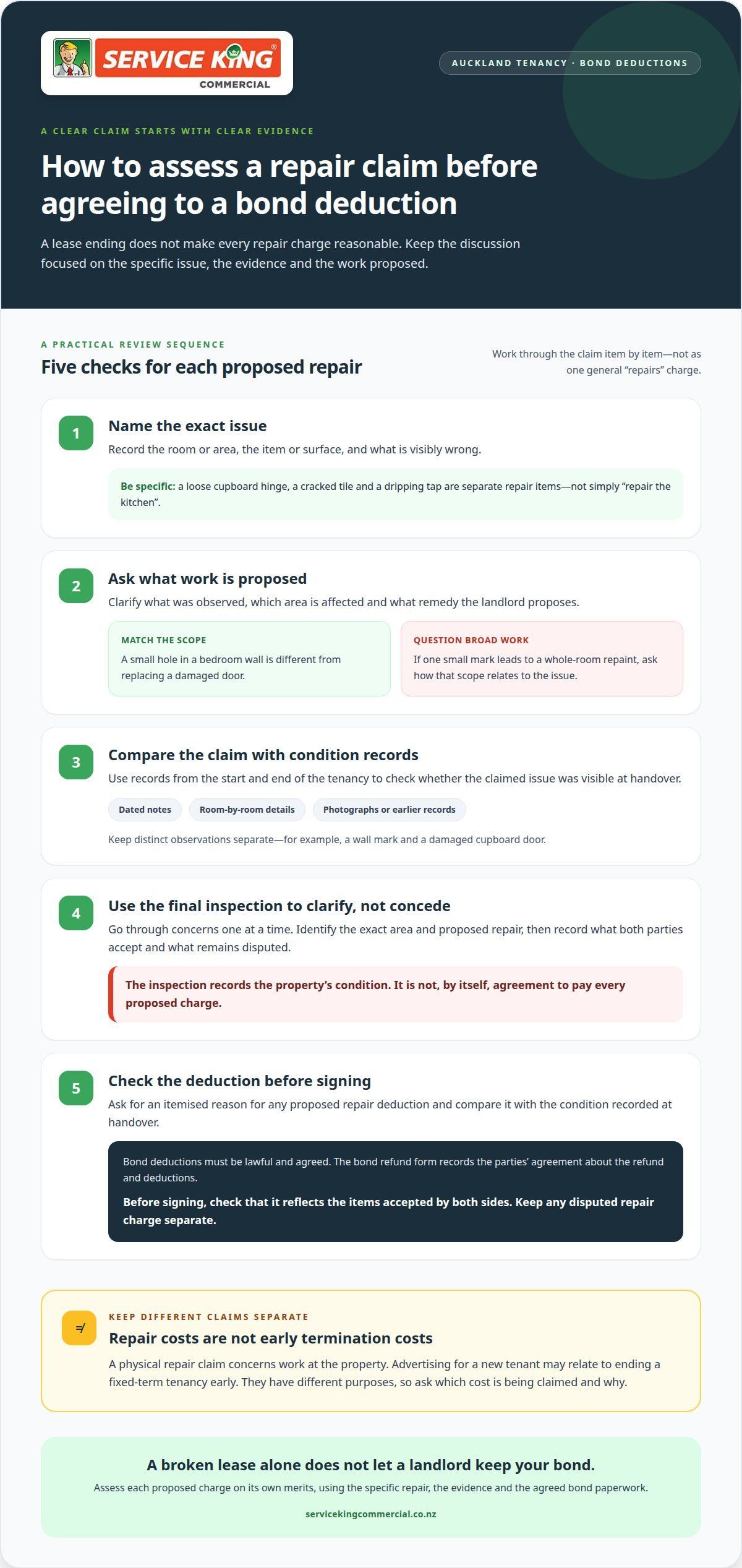
A broken lease alone does not let a landlord keep your bond. For lease exit repairs in Auckland, review any proposed bond deduction carefully and ask for an explanation if you think a charge is unreasonable.
It’s understandable to want a clear account of what needs fixing and why. A final inspection helps record the property’s condition at the end of the tenancy, but it does not make every proposed charge reasonable or automatically payable.
This article explains how final inspections and bond refunds work in New Zealand, what to consider when a landlord claims repair costs, and how to respond if a charge seems unfair. It also explains how early termination costs differ from repair deductions, so you can assess each claim on its own merits.
Key Takeaways
- A fixed-term tenancy generally cannot be ended early by notice alone. Early-ending options include mutual agreement, assignment or a Tenancy Tribunal application.
- If everyone agrees to end a fixed-term tenancy early, put the agreement in writing and get consent from the landlord and every tenant named in the agreement.
- Assess an early-ending fee against actual, reasonable costs, such as advertising for a new tenant.
- Rent remains payable until a new tenant takes over, the agreed end date arrives or the Tenancy Tribunal ends the tenancy. A landlord cannot collect rent from both tenants for the same period.
Table of Contents
Bond deductions and final inspections
In Auckland, a landlord cannot keep your bond solely because you broke the lease. Ending a tenancy involves a final inspection, lawful and agreed deductions, and a bond refund form signed by both parties.
The inspection records the property’s condition at the end of the tenancy. It helps identify specific repair claims and gives both parties a reference point for discussing the bond.
Repairs before ending a tenancy
Repairs before a tenancy ends are work needed to address damage or problems identified at the property before handover. The key is to distinguish a specific repair claim from a charge based only on the fact that the tenancy is ending.
For example, a landlord may identify a damaged door during the final inspection. The inspection can record the damage, but the charge must still be lawful and agreed before it is deducted from the bond. If the landlord says an early lease end means you must pay repair costs, assess the repair claim separately. You can challenge charges you consider unreasonable.
Documenting the property's condition
Documenting the property’s condition means creating a clear record of its state as the tenancy ends. A dated record can help establish whether a claimed repair relates to an issue visible at handover.
Record each room and any specific item that may come up during the final inspection. For example, note a wall mark separately from a damaged cupboard door. Keep the records together so you can refer to the relevant area during the inspection discussion, rather than relying on a general description such as “the property needs repairs”. A clear record keeps the bond discussion focused on identified work and supporting evidence.
The final property inspection
The final property inspection reviews the rental home’s condition when the tenancy ends. It provides an opportunity to identify repair concerns before the bond refund is agreed.
Use the inspection to go through concerns item by item. If the landlord points to a damaged surface, clarify which area they mean and what repair they propose. A cracked window and a scuffed wall are different observations, so recording them separately keeps the discussion precise. The inspection is not, by itself, agreement to pay every proposed charge. Record what both parties accept and note any disputed item before completing the bond refund form.
Bond deductions at tenancy end
A bond deduction is an amount taken from the bond for a claim connected with the tenancy. In New Zealand, deductions must be lawful and agreed, and both parties sign the bond refund form when the tenancy ends.
A landlord cannot treat the bond as an automatic penalty for ending a lease early. If the landlord proposes a repair deduction after the inspection, ask for an itemised reason and compare it with the condition recorded at handover. If you dispute the amount or basis for the charge, you can challenge an unreasonable claim rather than signing agreement to it. Keep the discussion focused on the repair, the evidence and whether you accept the deduction.
Do not treat a proposed deduction as agreed if it remains disputed. A signed bond refund form records the parties’ agreement about the refund and deductions. Before signing, confirm that the form reflects the items accepted by both sides. Keep any unresolved repair charge distinct from deductions both parties have accepted. This gives the inspection and bond paperwork a clear purpose: recording the property’s condition, agreed claims and the amount to be refunded.
Repairs required before ending an Auckland tenancy
A repair bill does not arise simply because a tenant is ending a lease. In New Zealand, a landlord cannot keep the bond solely because the tenant broke the lease. Focus on specific repair issues identified at the property, and separate them from costs connected with ending the tenancy early.
Start by listing the requested repairs and the exact location of each issue. “Repair the kitchen” is too broad to guide a practical discussion. A loose cupboard hinge, cracked tile and dripping tap are separate items. Describe each one so the proposed work and any charge can be considered clearly.
Before arranging work, establish what the landlord says needs repair. Ask which area is affected, what problem was observed and what remedy is proposed. Filling a small hole in a bedroom wall, for example, is different from replacing a damaged door. A clear description helps prevent unrelated work from being bundled into one general claim.
Use the property’s recorded condition as your reference point. If a landlord raises a repair after the tenancy, compare the claim with any records from the start and end of the tenancy. A photograph of a marked wall, for instance, can help clarify whether the mark was already there. Keep descriptions factual and identify the room, surface and visible issue.
Separate physical repair claims from early termination costs. Advertising for a new tenant, for example, may relate to ending a fixed-term tenancy early rather than repairing the property. The two claims have different purposes. Ask the landlord to explain which cost relates to repair work and which relates to finding a replacement tenant.
For each proposed repair, keep a short record of the following:
- The room or area where the issue appears.
- The specific item or surface requiring attention.
- The work proposed to address that issue.
- Any photographs or earlier records that show its condition.
This record gives both parties a concrete basis for discussing the work. If the landlord proposes repainting a whole room because of one small mark, ask how the full repaint relates to the identified issue. If a cupboard door is damaged, distinguish it from repairs elsewhere in the kitchen. You can challenge unreasonable charges when ending a tenancy early.
Not every repair request needs the same response. A loose handle may need a straightforward adjustment, while a broken fitting may need replacement. The proposed repair should match the problem described. If the scope seems broader, ask for a clear breakdown before agreeing to the work or a deduction.
Keep messages, photographs and repair details together. For example, save the landlord’s description of a damaged door alongside the photograph of it. This makes it easier to discuss whether the suggested work addresses the recorded issue. Avoid relying on a verbal summary when the exact repair remains disputed.
The practical test is straightforward: identify the issue, connect it to the proposed work, and distinguish it from early termination costs. If you are facing lease exit repairs in Auckland, use that sequence to assess each request. If the explanation remains unclear or the amount seems unreasonable, challenge the claim rather than treating the end of the lease as automatic agreement to pay.
Service King Commercial: End of Lease Service
Service King Commercial provides an End of Lease Service for commercial property handovers that need maintenance or repair work. It can help when a property requires attention before it is returned, such as addressing identified damage or preparing areas for handover. Building Repair and Maintenance is also available for specific repair needs.
Keep the work separate from any bond decision. A maintenance service can address a property’s physical condition, but it does not determine whether a landlord’s proposed bond deduction is lawful or agreed. Use the inspection findings to identify the work required, then arrange the relevant service for the property.
For end-of-lease maintenance or repairs, contact Service King Commercial.
Plan a clear handover
Use the handover as a practical dividing line. Set out which property work needs attention, which items remain under discussion, and who will handle each next step. This keeps repair arrangements separate from tenancy decisions and gives the outgoing tenant and landlord a clear record to work from.
For lease exit repairs in Auckland, a concise work list can turn inspection findings into manageable tasks. Group related items by room, describe the work plainly, and keep relevant messages and records together. This gives the property handover a defined next step instead of leaving repair questions open after the tenancy ends.
Where maintenance work is needed for a commercial property, Service King Commercial’s End of Lease Service can support the physical handover. Choose work that matches the property’s requirements and keep any bond discussion separate.
Contact Service King Commercial to discuss the end-of-lease work. A clear plan helps you move towards a more organised handover.
Frequently Asked Questions
What Costs Can a Landlord Charge?
A landlord may seek payment for valid tenancy costs, but cannot keep the bond solely because a tenant broke the lease. If a fixed-term tenancy ends early, a fee should cover actual, reasonable costs, such as advertising for a new tenant. Rent may remain payable until a new tenant takes over or the agreed end date arrives, but the landlord cannot charge both tenants rent for the same period.
What repairs and maintenance are landlords responsible for when a tenant moves out in New Zealand?
Responsibility depends on whether the issue is property upkeep or damage linked to the tenant. A tenancy ending does not by itself make the tenant responsible for every repair or refurbishment. For example, distinguish a landlord’s maintenance task from a breakage caused by the tenant. Identify the item, its condition and the proposed work before treating it as a tenant charge.
What does New Zealand tenancy law require for fair wear and tear at the end of a tenancy?
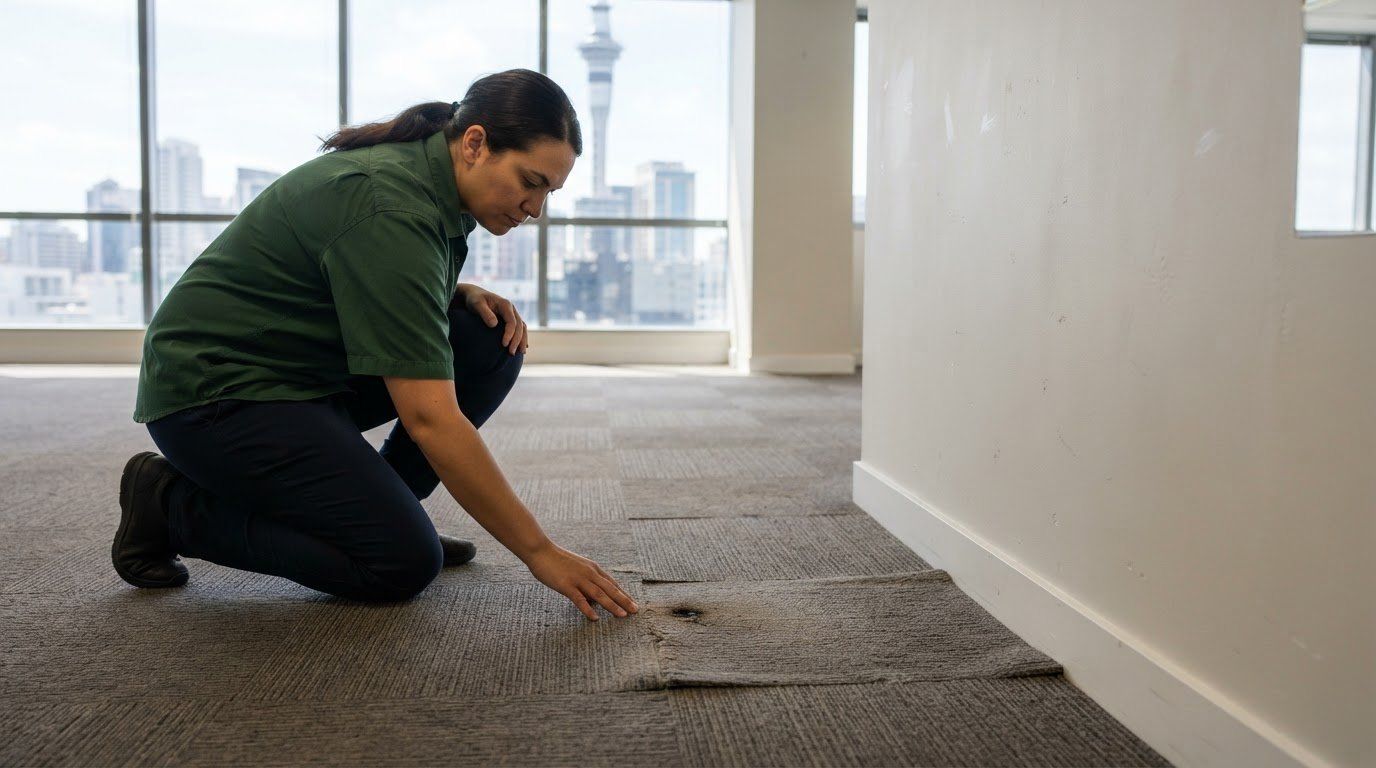
Fair wear and tear means gradual deterioration from ordinary use, rather than damage caused by an incident or misuse. Carpet fibres may flatten along a regular walkway, for example, while a burn mark is a specific damage claim. The condition, cause and location matter. Routine ageing should not be treated as equivalent to a repairable breakage.
Can a landlord charge tenants for damage or repairs after they move out in New Zealand?
A landlord can raise a repair claim after a tenant leaves, but the charge is not automatically payable simply because it has been requested. The claim should identify the damaged item and the work involved. For example, consider a later-reported broken fitting against the property’s recorded condition. You can challenge charges you consider unreasonable rather than accepting every invoice.
How are end-of-tenancy repair costs deducted from a bond in New Zealand?
Treat a proposed bond deduction as a matter to discuss and resolve with the other party. At the end of a tenancy, both parties sign the bond refund form, which records the agreed refund and deductions. Keep a disputed repair item separate from amounts both parties accept. Do not sign a form that records agreement to a deduction you dispute.
What are typical Auckland costs for carpet cleaning, painting, and minor tenancy repairs?
Costs depend on the scope of the job and the property’s condition. Carpet cleaning varies with the area and work required; painting depends on the surfaces and preparation; minor repairs depend on the item, materials and access. For work arranged through Service King Commercial, the price is provided after a quote request. A clear description helps define the work to be priced.
Recent Posts