
November 10, 2026
A commercial tenant’s repair bill depends on more than the premises’ condition. For end of tenancy repairs in commercial Auckland leases, the lease terms and cause of the damage matter: careless damage may be treated differently from deterioration through ordinary use.
It’s understandable to want a clear line between damage you must put right and wear that comes with using a property. Residential tenancy rules, including limits on liability for careless damage, do not automatically determine obligations under a commercial lease. Start with the agreement for the premises.
This guide explains how repair obligations are allocated, what fair wear and tear means in practice, and how to assess worn flooring, stains and breakages at handover. It also covers the records and condition evidence that can help clarify a dispute. Use these distinctions to identify what may be the tenant’s responsibility, what may remain the landlord’s, and what maintenance or repair work to arrange before the tenancy ends.
Key Takeaways
- Start with the commercial lease: its repair and make-good wording helps determine who is responsible for damage and reinstatement.
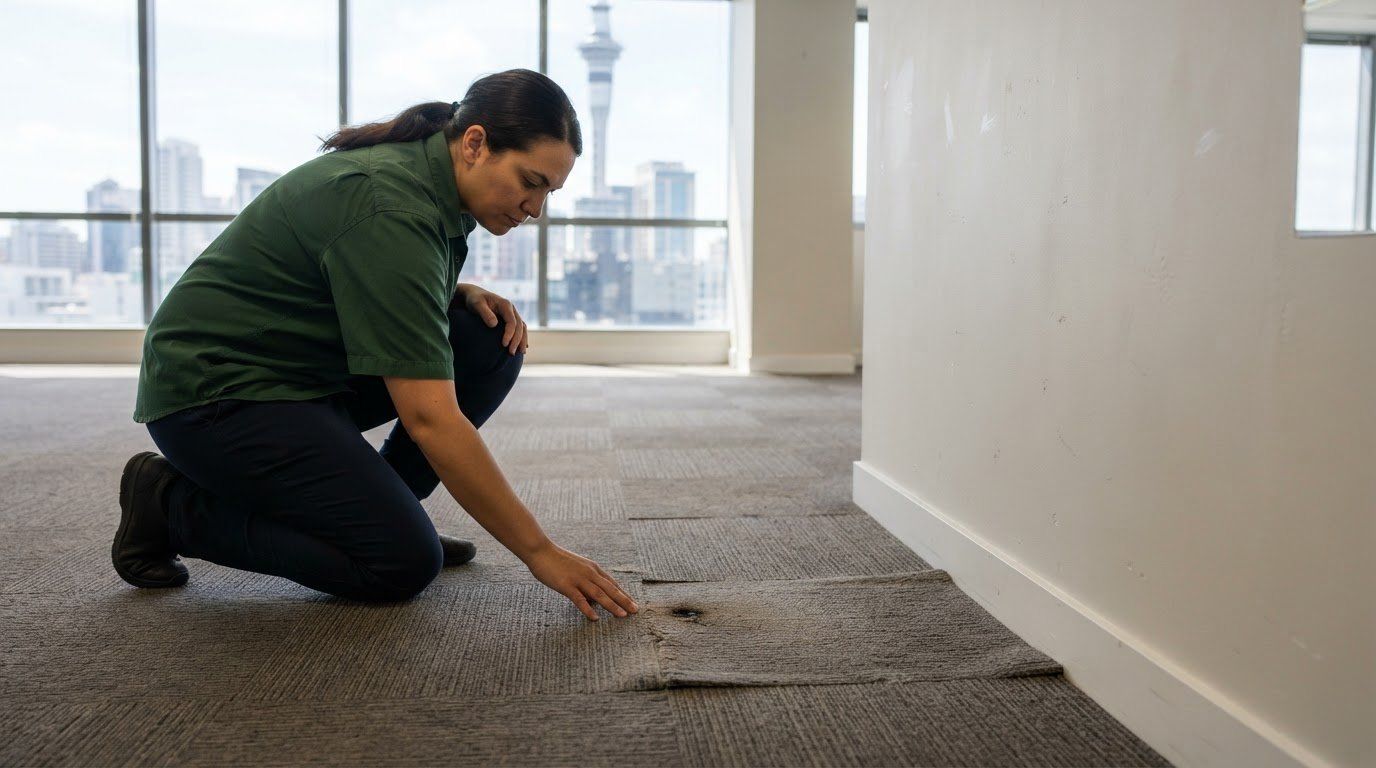
- Separate careless damage from ordinary use. Worn flooring is usually fair wear and tear, while carpet burn marks or drink stains are not normally treated that way.
- Residential tenancy limits on liability for careless damage do not automatically set the rules for a commercial lease.
- When repairs or end-of-lease work are needed, Service King Commercial provides building repair and maintenance and end-of-lease services for commercial properties.
Table of Contents
- Tenant responsibility for careless damage
- Fair wear and tear
- How does a commercial lease define repair, maintenance, and reinstatement obligations in New Zealand?
- What commercial lease clauses cover make-good, reinstatement, and removal of fit-outs?
- Service King Commercial: Building Repair and Maintenance
Tenant responsibility for careless damage
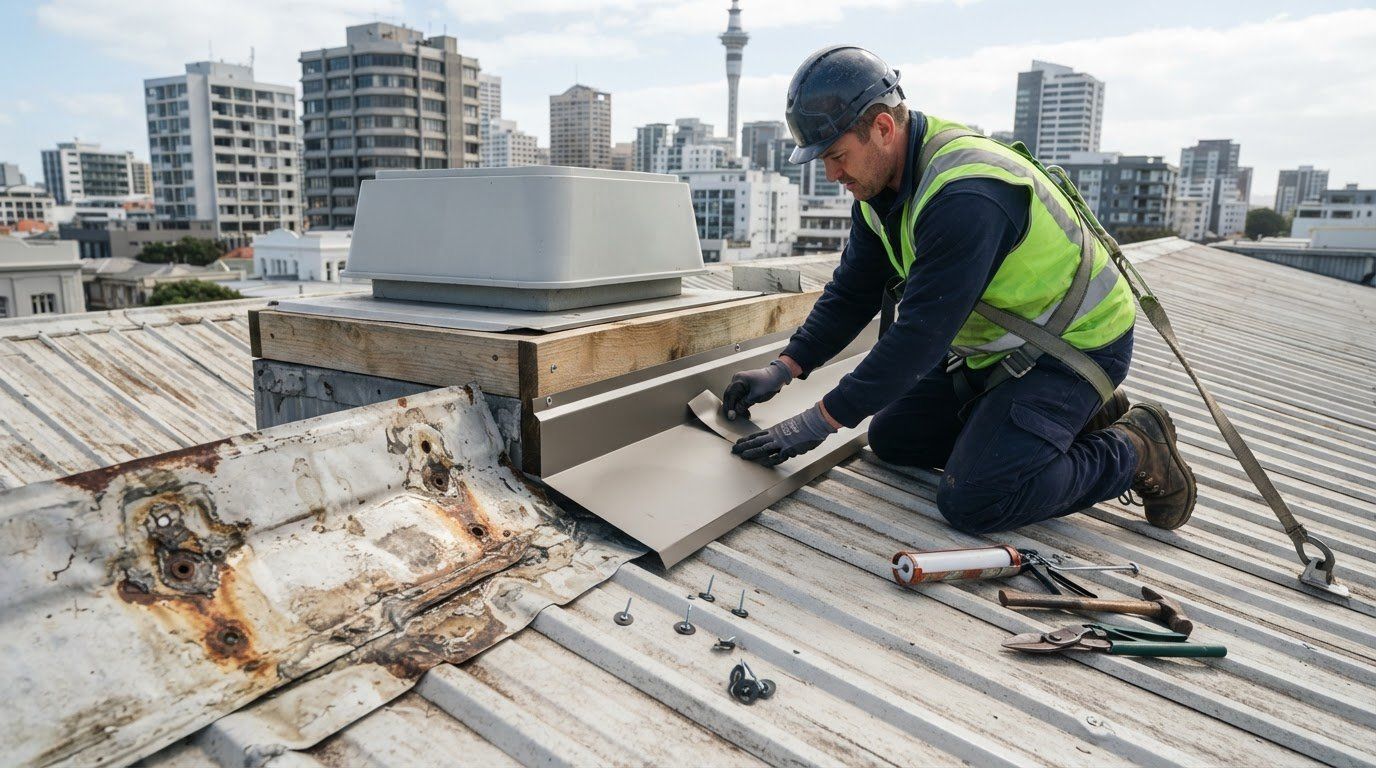
Commercial lease terms and evidence help establish responsibility for damage. A roof leak, for example, needs prompt reporting and a clear record of its cause.
Repair and maintenance obligations
A commercial lease divides repair and maintenance duties between landlord and tenant. Its wording may distinguish tenant-caused damage from building defects or routine upkeep. If the roof leaks, notify the landlord promptly, record the affected area and keep dated photographs. Delayed reporting can allow water to damage ceilings, stock or equipment, making the repair assessment more complicated.
New Zealand residential rules are different: Tenancy Services, Ministry of Business, Innovation and Employment says tenants responsible for careless damage may owe up to 4 weeks’ rent or the landlord’s applicable insurance excess, whichever is lower. That residential limit does not automatically determine liability under a commercial lease.
Make-good and reinstatement requirements
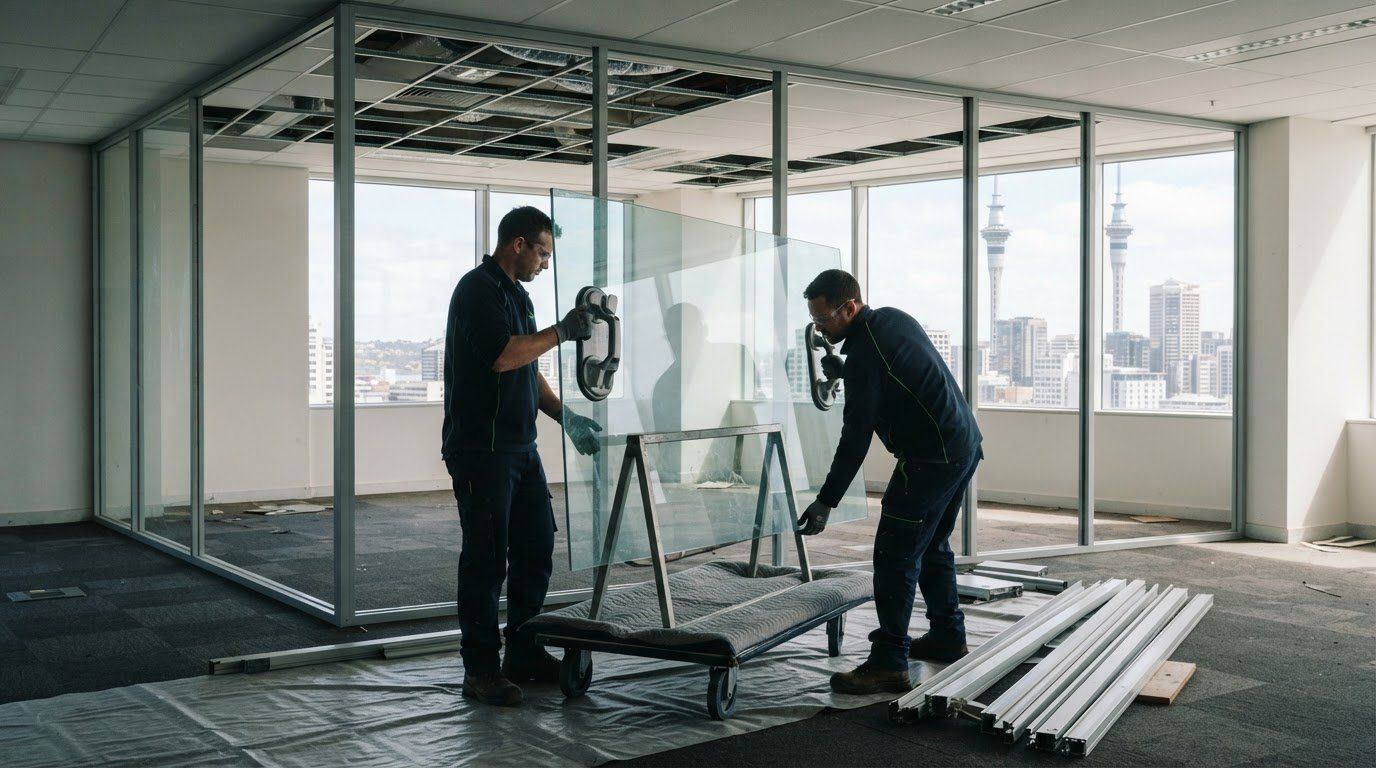
Make-good clauses set out the condition required at handover, including whether tenant-installed fit-outs must be removed. A partition, sign or altered floor finish may be treated differently under each lease. Read the clause alongside any written approval for the work to establish whether removal, repair of fixing points or reinstatement is required before the premises are returned.
A landlord may seek repair costs from a bond or bank guarantee only as permitted by the lease and the guarantee’s terms. The damage, supporting evidence and stated drawdown process all matter.
Repairs after lease expiry
If required work remains incomplete at expiry, the lease may allow the landlord to arrange it and seek costs or other remedies. The outcome depends on the repair clause, make-good wording and evidence of the outstanding work. If repairs are incomplete, document progress and communicate the status before handing back the keys.
Being in Auckland does not by itself determine whether building consent or a particular contractor qualification applies. The scope matters: a minor roof patch differs from structural replacement. Establish the applicable requirements before work begins.
Repair and make-good costs vary according to the work, materials, access and extent of damage. Ask for a quote based on the specific work required.
Before expiry, compare the lease obligations with the premises’ current condition, photograph defects, report roof leaks promptly and schedule required repairs early. Keep approvals, repair records and handover communications together to help reduce disputes.
Fair wear and tear
Surface changes can result from ordinary use rather than careless damage. In a commercial tenancy, the lease and condition evidence help distinguish between them.
Assessing repair disputes
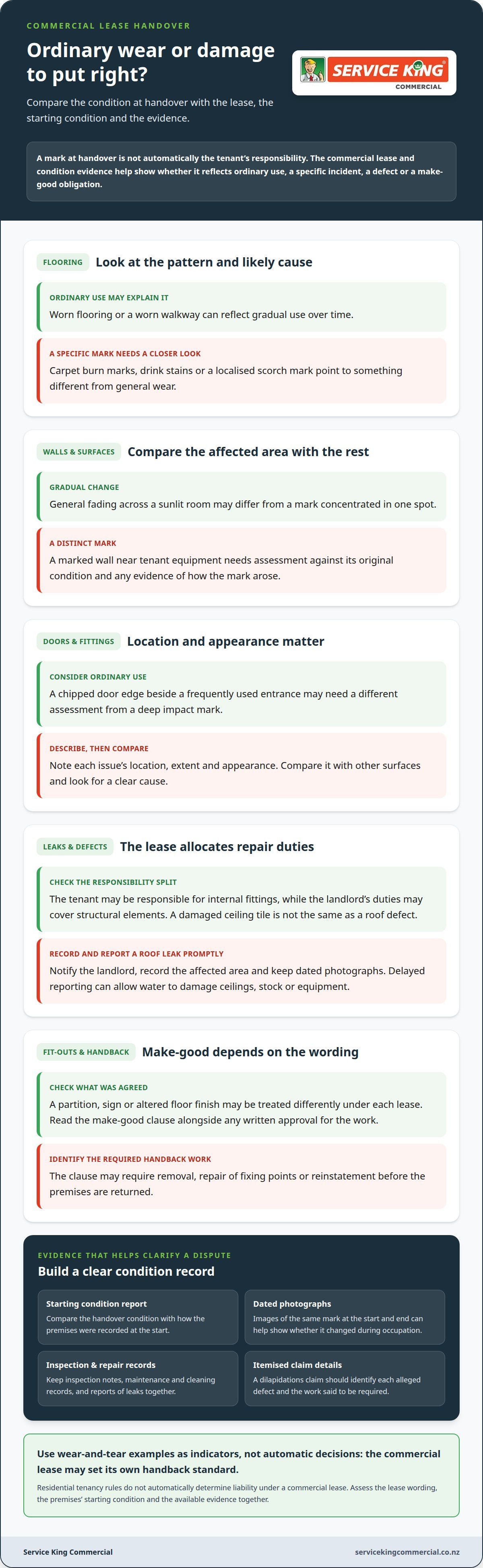
A repair dispute compares the claimed damage with the lease obligations and the premises’ condition. This matters because a defect is not automatically the tenant’s responsibility simply because it appears at handover. Assess the original condition report, dated photographs, inspection notes and repair records together. For example, a marked wall near a tenant’s equipment may need a different assessment from general fading across a sunlit room.
A dilapidations claim should identify each alleged defect and the work said to be required. Compare every item with the lease wording and available evidence. A photograph showing the same mark at the start and end of a tenancy can help establish whether it changed during occupation. Cleaning and maintenance records, or reports of leaks, can also help explain how the condition arose.
Wear-related repair responsibility
Fair wear and tear describes deterioration associated with ordinary use over time. Normal ageing may not be treated like a specific accident or careless act. In a New Zealand rental property, worn flooring is usually considered fair wear and tear, while burn marks or drink stains on carpet are not normally considered fair wear and tear.
These examples are useful indicators, not an automatic decision for a commercial lease. A commercial lease may set its own handback standard, so assess flooring against the agreed obligations and starting condition. A worn walkway may show gradual use, while a localised scorch mark points to a distinct incident.
Apply the same approach to paint, fittings and doors. Compare the affected area with other surfaces and look for a clear cause. A chipped door edge beside a frequently used entrance differs from a deep impact mark. Note each issue’s location, extent and appearance, then compare those details with the lease and condition records. This keeps repair discussions focused on evidence, rather than assumptions that every mark is damage.
How does a commercial lease define repair, maintenance, and reinstatement obligations in New Zealand?
A commercial lease allocates responsibility for maintaining the premises and returning them at expiry. Its clauses matter because the tenant’s duties may cover different items from the landlord’s, such as internal fittings rather than the roof.
Read the repair clause alongside the maintenance, damage, alterations and handback provisions. One clause may require the tenant to maintain internal surfaces, while another reserves structural elements to the landlord. For example, the tenant may be responsible for a damaged ceiling tile but not a roof defect. The exact wording, schedules and plans help show how the duties fit together.
Look for the distinction between routine upkeep and putting damage right. A maintenance clause might cover servicing a door closer or replacing a broken light fitting; a repair clause may cover damage to a wall or floor. Check whether the duty applies during the tenancy, at handover, or both. The timing affects what work the parties can require.
- Repair: Identify the item, its condition standard and who must put defects right.
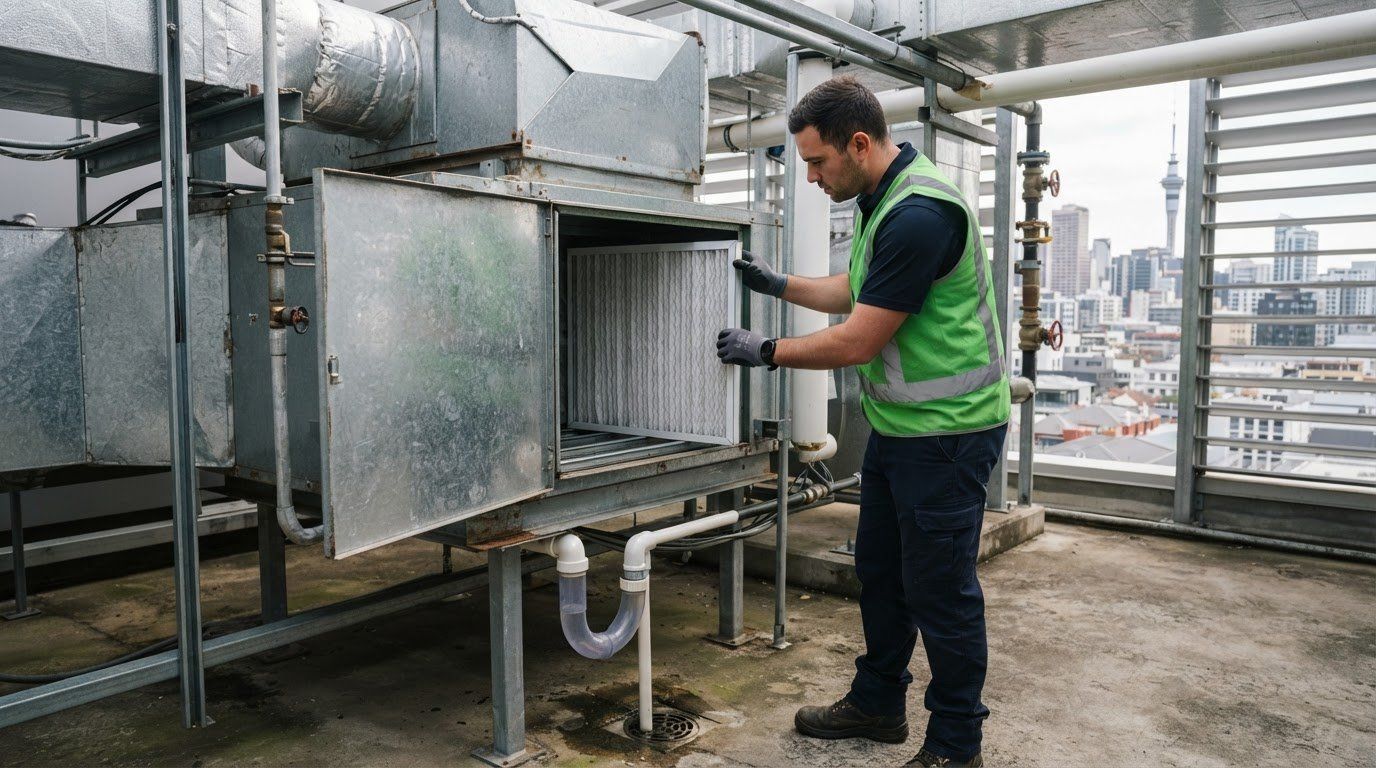
- Maintenance: Note recurring tasks, access arrangements and responsibility for equipment.
- Reinstatement: Check whether approved alterations must be removed or restored.
A tenant-approved partition, for example, may trigger a reinstatement duty if the lease requires the original layout at handover. Written landlord consent records the approved work, but does not by itself settle whether it must be removed. Compare the consent with the lease’s alterations and make-good wording.
For each disputed item, match the lease clause to the evidence: the premises schedule, alteration consent, maintenance records and inspection photographs. A schedule describing vinyl flooring, for instance, provides a clearer baseline than a general handover note. This clause-by-clause approach helps separate routine upkeep from damage and reinstatement work, and shows which party must arrange each task.
What commercial lease clauses cover make-good, reinstatement, and removal of fit-outs?
Make-good clauses set the condition in which a tenant must leave the premises at handover. Reinstatement clauses may require alterations to be removed or previous layouts restored. Read these provisions alongside fit-out approvals. Consent for a meeting-room partition, for example, may explain the approved work without saying whether the partition must remain.
Check which specific items the lease covers. A clause may refer to partitions, signs, floor coverings, cabling, fixtures or tenant equipment. It may also state whether removal includes filling screw holes, repainting walls or making good floor surfaces. A general phrase such as “return in good condition” is less specific than a list of required tasks.
Compare three records: the lease, written approvals for alterations and the premises condition report. If a tenant installed shelving with consent, check whether the approval or lease requires its removal. Then identify any resulting repairs, such as filling anchor holes or replacing damaged plasterboard. A documented exception may affect the required handback condition.
- Removal: Identify each tenant-installed item and whether it must be taken away.
- Reinstatement: Note any requirement to restore the earlier layout or finish.
- Make-good: Record repairs needed after removing fittings, such as patching or repainting.
Treat removal, disposal and repair as separate tasks. Taking down a sign may leave fixing holes; removing a partition may expose unfinished flooring. The lease may treat each task differently. When multi-trade work is needed to remediate or refresh a commercial space, specialists like Synergized Tradesman demonstrate the benefit of having a single accountable partner coordinate multi-trade scopes. A handover schedule listing each item makes the scope easier to discuss and assess.
Plan the work around the lease expiry date. Allow time to remove approved fit-outs, complete specified repairs and record the final condition. Keep dated photographs of the empty premises and retain invoices or completion records. If the lease requires landlord approval for a proposed method, document that approval before work starts.
For premises requiring practical end-of-lease work, arrange end-of-lease service around the agreed handback scope.
Service King Commercial: Building Repair and Maintenance
Service King Commercial provides building repair and maintenance for commercial premises, including repairs identified during a tenancy handover. Use this service when agreed work involves damaged fittings, surfaces or building components. The repair scope can be aligned with the lease obligations and the premises’ condition.
For handback tasks, Service King Commercial also provides an End of Lease Service. It suits premises that need practical end-of-tenancy work alongside repairs. Exterior building maintenance is available for external building issues, including repairs to exterior surfaces.
When arranging the service, set out the outstanding work and relevant handover requirements. Contact Service King Commercial to discuss commercial building repair or end-of-lease work.
Set up the next handover with a clear scope
Before arranging commercial end-of-tenancy repairs in Auckland, match the work scope to the lease and handover date. Separate repair tasks from fit-out removal. Record access arrangements, work dependencies and the expected handover condition. This gives everyone involved a clear basis for scheduling work and documenting completion.
Several tasks may need coordinating during a commercial handover in Auckland. Note how each task affects the next. Completing a surface repair before later work that could damage it may mean doing the job twice. Keep completion records with the handover file for future reference.
Service King Commercial provides building repair and maintenance for commercial properties. For work connected with a tenancy handover, discuss the repair requirements and practical scope directly. Contact Service King Commercial to talk through the work and plan the next step.
Frequently Asked Questions
What repairs must a commercial tenant complete at the end of a tenancy in Auckland?
A tenant must complete the repairs and handback work required by the commercial lease. The exact scope depends on its clauses, written variations and approved fit-out arrangements. For example, a lease may require tenant-installed equipment to be removed, while another may allow it to remain. Create a handover schedule that matches each task to the relevant clause and records its completion.
What are the tenant's repair obligations under the Property Law Act 2007 in New Zealand?
Use the lease to identify the tenant’s specific repair covenants, and read them alongside the Property Law Act 2007 where relevant. The Act’s name alone does not tell you which repair tasks apply to a particular premises. Look for clauses covering damage, maintenance, alterations and handback. A written lease variation can also affect the work expected, so include any signed changes when establishing the repair scope.
Who is responsible for fair wear and tear versus damage in a commercial tenancy?
Responsibility depends on the lease, the premises’ condition and the cause of the change. Gradual deterioration through ordinary occupation differs from a distinct incident, such as a door damaged by a trolley impact. Compare the affected area with entry records and later inspection notes. The change’s extent and location can help show whether it arose through normal use or a specific event during the tenancy.
Recent Posts