
September 28, 2026
A spotless premises won’t, on its own, secure a smooth commercial lease handover. To pass final lease inspection commercial NZ tenants need to match the work completed with the make-good terms in their specific lease, then keep clear evidence of the result.
It’s easy to be unsure which repairs, cleaning or reinstatement tasks apply. Unresolved issues can also complicate handover, especially when trades, records and site access need to be organised before the inspection.
This guide sets out a practical way to prepare. You’ll learn how to review your lease, plan a room-by-room check and record the property’s condition. It also covers how to identify work that needs attention and build a schedule for completing it before the landlord’s inspection. Use the checklist to keep tasks, photographs and handover records together. Where a lease clause is unclear, check its meaning with a qualified New Zealand property professional before arranging work.
Key Takeaways
- Check the signed lease, variations and agreed records to confirm which handover requirements apply to your premises.
- To pass final lease inspection commercial NZ tenants should base preparation on documented obligations, not a generic checklist or assumptions about fair wear and tear.
- Plan site work around contractor coordination, access and time for the landlord to review proposed work.
- Bring photographs, task records, correspondence and access details together in one indexed handover folder.
- Compare self-managed preparation with commercial end-of-lease support based on your confirmed scope, available time and coordination needs.
Pass final lease inspection commercial NZ: Table of Contents
- What a final commercial lease inspection in NZ checks
- How to prepare commercial premises for a final lease inspection
- Common inspection disputes: lease obligations, damage and fair wear
- Final inspection checklist: records, access and handover readiness
- When to arrange commercial end-of-lease support in Auckland
What a final commercial lease inspection in NZ checks
A final inspection is a review of the premises against the handover requirements that apply to that tenancy. It gives the tenant and landlord, or their representatives, a chance to record the property’s condition and identify items that may need follow-up. There isn’t one checklist that applies to every commercial tenant.
The signed lease sets the starting point. Variations and later written agreements may also affect what needs to be done. A lease agreement describes the relationship between a lessor and lessee, but the specific documents for your tenancy determine its relevant terms. A partition, sign or floor mark, for example, may need different treatment depending on the agreed requirements and records.
Use this guide to organise your preparation, not as a legal interpretation of your lease or a promise of a particular inspection result. If a clause or disputed item is unclear, ask a qualified New Zealand property professional to review it before deciding what work to arrange.
Which documents should you review before the inspection?
Gather the signed deed of lease, all variations, relevant schedules and any documented make-good agreement. Check the clauses covering premises condition, alterations, fixtures, repairs, cleaning and vacant possession. Note what each clause actually requires, rather than relying on a general expectation of what tenants usually do.
Compare those terms with the entry condition report, photographs, inspection records and relevant correspondence. These records can help clarify the agreed starting condition or show that a later change was approved. Keep written approvals and any agreement about reinstatement with the lease documents. If the records appear inconsistent, flag the issue for clarification rather than assuming which version applies.
Who takes part in a commercial lease inspection?
The inspection may involve the tenant’s representative, the landlord or the landlord’s agent, and a property manager where applicable. Confirm who is authorised to approve access, agree the scope of work or discuss a proposed resolution. An attendee may be able to note an issue without having authority to settle it.
Before the inspection, confirm the attendees, timing, access arrangements and how findings will be shared. Record any agreed next steps in writing, including who will respond to an item and by when. This creates a clear working record for handover and helps keep inspection observations separate from decisions about disputed obligations.
How to prepare commercial premises for a final lease inspection
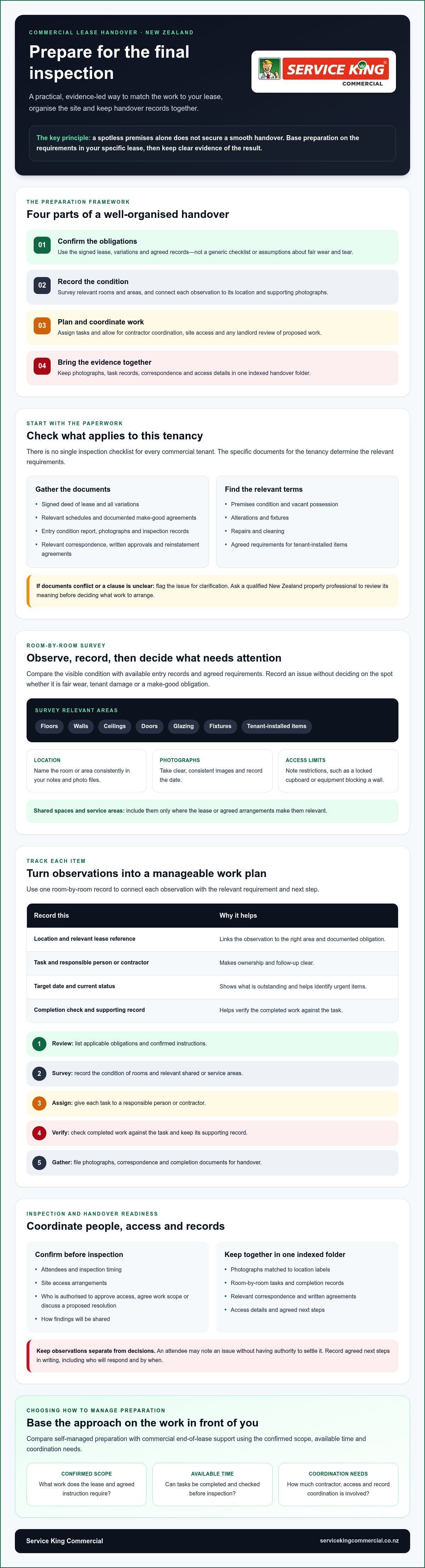
A clear preparation plan reduces last-minute decisions. If your goal is to pass final lease inspection commercial NZ, work from the lease requirements and confirmed landlord instructions, then track each task through to completion. Allow time for site access, contractor coordination and any landlord review of proposed work. Don’t assume a repair or alteration can be completed without approval if the lease or agreed process requires it.
Use a room-by-room record to connect each observation with an action. Include the location, relevant lease reference, task owner, target date and current status. This makes it easier to see what’s outstanding and raise unclear items before they become urgent.
- Review: List the applicable obligations and any confirmed instructions.
- Survey: Record the condition of rooms and relevant shared or service areas.
- Assign: Give each task to a responsible person or contractor.
- Verify: Check completed work against the task and keep the supporting record.
- Gather: File photographs, correspondence and completion documents for handover.
How should you survey each room and shared area?
Check floors, walls, ceilings, doors, glazing, fixtures and tenant-installed items against the available entry records and agreed requirements. Note visible issues, such as a damaged door or a removed fixture, without deciding on the spot whether they are fair wear, tenant damage or a make-good obligation. Include service areas and shared spaces only where the lease or agreed arrangements make them relevant.
Take clear, consistent photographs. Record the room or area, date and any limits on access, such as a locked cupboard or equipment obstructing a wall. Use the same location labels in your photo files and room-by-room record so each image can be matched to the relevant task.
How do you organise make-good work before inspection?
Prioritise tasks linked to written lease obligations and confirmed landlord instructions. Assign a responsible person, contractor or property contact to each item, then set a completion date that leaves time to check the work. If a task depends on access or landlord approval, record that dependency and follow it up early.
Use qualified trades for technical work or repairs that need specialist assessment. Don’t make unsupported assumptions about building systems or compliance. Keep relevant completion records and note any work that remains unresolved. If coordinating make-good tasks is taking time away from handover planning, commercial end-of-lease services may be worth considering. Confirm the service scope and location coverage before arranging work.
Common inspection disputes: lease obligations, damage and fair wear
A generic checklist can help you survey a site, but it can’t decide every commercial inspection outcome. The result depends on the requirements recorded for that tenancy and the evidence available. A mark on a wall, worn flooring or a tenant-installed fixture may prompt different views. Don’t treat a common industry expectation as a substitute for checking the lease and any later written agreement.
Keep three things distinct: what the lease or a variation requires, what condition the records show at the start, and what you can observe now. Ordinary use, damage and a pre-existing issue aren’t interchangeable descriptions. Record the facts first. Avoid presenting a visual observation as a legal conclusion about who is responsible.
This careful approach can help tenants who want to pass final lease inspection commercial NZ prepare a clear response to disputed items without assuming that every difference requires repair.
How can you distinguish damage from existing condition?
Compare the item with the entry condition report and dated photographs, if available. For example, check whether a floor mark appears in an entry photo or whether the record already notes wear in that area. Describe what the evidence shows, including any gaps. If you don’t have a clear baseline, say so rather than guessing when the issue arose.
Ask the landlord or property manager to confirm a disputed finding in writing. Keep the description specific, such as the room, surface and location, and attach relevant records. This creates a useful basis for discussion without deciding whether the condition is damage, normal use or an existing issue.
What should you do when the lease requirement is unclear?
Identify the exact clause, schedule or variation that creates uncertainty. Note the item in question and ask the landlord or property manager for written clarification before commissioning work that depends on their interpretation. Keep the request and response with your handover records. A verbal discussion can be useful, but written confirmation helps prevent different understandings later.
If the disagreement affects your obligations or the work required, seek advice from a qualified New Zealand property adviser or lawyer. Don’t rely on a general checklist or a contractor’s view to interpret a contested lease clause. Resolve the scope first, then organise any confirmed site work and retain the related records.
Final inspection checklist: records, access and handover readiness
A tidy handover folder makes it easier to answer questions on site and follow up afterwards. To pass final lease inspection commercial NZ tenants should have key records ready, know who can provide access and agree how inspection findings will be documented. Keep one indexed folder, digital or printed, with clear labels by area or task.
Use this checklist to prepare:
- Lease records: Signed lease, relevant variations, condition records and written make-good instructions.
- Work evidence: Dated photographs, contractor documentation and relevant maintenance records, grouped by area or task.
- Open items: A list of unresolved issues, the person responsible for responding and any agreed follow-up date.
- Handover items: Keys, access cards and any other items the lease or agreed arrangements require you to return.
- Inspection arrangements: Confirmed attendees, access details, site availability and any operational restrictions.
Make the folder easy to use. Add an index that points to the relevant clause, photograph or completion record for each item. That way, you can find the right information without searching through unrelated emails during the inspection.
What records should you have ready on inspection day?
Include documents that show both the agreed requirements and the work completed. File photographs with their dates and location labels. Keep contractor records beside the related task, rather than in a separate folder with no clear link. For any open item, note what remains to be confirmed and who will provide the response. Don’t mark a task complete if the evidence is still outstanding.
How should you manage access and the inspection record?
Confirm site access, attendees and any areas that will be unavailable before the visit. Note operational restrictions that may affect the inspection, such as equipment or business activity in a particular area. During the walk-through, record observations and distinguish agreed actions from items that still need clarification. Request a copy of the written findings and confirm how, and by when, each party should respond to outstanding points.
If inspection preparation involves coordinating end-of-lease work or building repairs, contact Service King Commercial about handover support. Confirm the work scope and service coverage for your location before arranging work. Practical site support can help organise property tasks, but it doesn’t replace advice on how to interpret a lease requirement.
When to arrange commercial end-of-lease support in Auckland
Choose between managing preparation yourself and arranging practical support based on the work required, the time available and the number of tasks to coordinate. Self-management may suit a tenant with clear lease obligations, staff who can organise the work and only a small number of site tasks. You can keep control of the schedule and records directly.
External support may be useful when several repairs, trades or handover tasks need coordination. A commercial end-of-lease provider can help with relevant property work, while building repair and trade services may suit specific site requirements. The aim is to reduce the coordination load, not to interpret the lease or guarantee an inspection result.
Should you manage inspection preparation yourself or get support?
Start with a confirmed task list. Compare each proposed job with the lease, any variations and written landlord instructions. Separate work that’s clearly required from items that need clarification. If the scope is small and responsibilities are clear, your team may be able to manage it. If different trades, access arrangements or completion records need to be coordinated, external support may be worth considering.
Before work begins, confirm the proposed scope and responsibilities in writing. This helps prevent work being arranged on the basis of an assumption about what the landlord expects. If a lease requirement is disputed or unclear, seek advice from a qualified New Zealand property professional rather than relying on a service provider to decide its meaning.
What information should you share when requesting end-of-lease support?
Give the provider enough information to assess the practical work involved. Include:
- the premises location and intended handover date
- relevant lease clauses, make-good instructions or written landlord requests
- known defects, work already completed and any outstanding items
- site access requirements or operational restrictions
- relevant landlord or property manager correspondence
Ask which services are available for your location and confirm the scope, responsibilities and timing in writing. Service King Commercial provides end-of-lease services, building repairs and trade services, with an Auckland focus and service across New Zealand. Confirm the current coverage and exact work scope for your premises before arranging support.
If you need help coordinating property work before handover, discuss your premises, location and required work scope with Service King Commercial. Share the confirmed lease requirements and any relevant records. This can help establish whether the requested site work fits the available service scope as you prepare to pass final lease inspection commercial NZ.
Prepare the handover with a clear plan
To pass final lease inspection commercial NZ tenants need to work from their own lease, not a generic checklist. Confirm the make-good requirements, compare the premises with available entry records, and allow time to complete agreed work. Keep photographs, task records and inspection notes together so you can respond clearly to any follow-up.
Where several repairs or trades need coordinating, practical support may help reduce the workload. Service King Commercial provides commercial end-of-lease and handover services, alongside building repair, exterior maintenance and trade service capability, with an Auckland-focused local service.
Discuss your commercial end-of-lease requirements with Service King Commercial. Share your premises location, intended handover date and the work scope confirmed against your lease. With the right records and a workable schedule, you can approach the inspection prepared and move towards a more organised handover.
Frequently Asked Questions
What does a final commercial lease inspection in New Zealand involve?
It involves reviewing the premises against the handover requirements that apply under the tenancy documents. The landlord, agent or property manager may walk through the site with the tenant’s representative, note its condition and record outstanding work. The signed lease, variations and written agreements determine the relevant requirements. A general checklist can help organise the visit, but it can’t establish every tenant’s obligations or guarantee a particular inspection outcome.
How do I prepare for a commercial lease final inspection?
Start by checking the signed lease, variations and any written make-good instructions. Survey the premises area by area, compare visible conditions with entry records, then list tasks with an owner and completion date. Allow time for access and any required landlord review of proposed work. To pass final lease inspection commercial NZ tenants should also organise dated photographs, work records and handover documents so they can respond clearly to inspection findings.
Can a landlord require commercial make-good work in New Zealand?
A landlord may seek make-good work where the applicable lease terms or a documented agreement require it. The work involved depends on the signed lease, any variations and the circumstances of the tenancy. Don’t assume every tenant has the same reinstatement duties, or that every change must be removed. Check the exact clause and related records. If the requirement is unclear or disputed, ask a qualified New Zealand property adviser or lawyer for guidance.
What happens if I disagree with a final lease inspection report?
Record the specific finding you dispute and explain why, using relevant lease clauses, entry reports, dated photographs or written approvals. Ask the landlord or property manager to clarify the finding in writing, and keep your response with the inspection report. Separate facts you can verify from conclusions about responsibility. If the disagreement affects your lease obligations, seek advice from a qualified New Zealand property professional before agreeing to disputed work.
Should I hire a contractor before a commercial lease inspection?
Not always. You may be able to manage preparation yourself if the requirements are clear and your team has time to organise the work. A contractor or trade service may help coordinate several repairs or handover tasks. Confirm each proposed task against the lease and landlord instructions before work starts. In Auckland, Service King Commercial provides commercial end-of-lease services, building repairs and trade services. Confirm the service scope and location coverage for your premises.
How much notice should I give before a commercial final inspection?
There isn’t one notice period that applies to every commercial lease inspection. Check the lease and any agreed handover process for timing or notice requirements, then confirm the proposed date with the landlord or property manager. Allow enough time to arrange access, coordinate any contractors and prepare the premises. If the lease is silent or the timing is unclear, agree the arrangements in writing rather than relying on an assumed standard notice period.
What records should I keep after a commercial lease inspection?
Keep the inspection report, follow-up correspondence, dated photographs and records of completed or outstanding work. File any agreed actions with the name of the person responsible and the response or completion date. Retain relevant lease documents, variations and written approvals alongside these records. An indexed digital or printed handover folder makes it easier to locate evidence if questions arise later. Keep the records together with your other tenancy documents.
Recent Posts