
September 29, 2026
Exterior defects are easier to manage when they’re found during routine checks, not after they disrupt a site. For Auckland property managers, exterior building maintenance Auckland planning means keeping an eye on weather exposure, coastal air where relevant and wear across the building envelope. A small crack, loose fitting or blocked outlet may need assessment before it leads to more extensive repairs.
It’s not always clear which visible issues need prompt attention. Maintenance also has to fit around tenants, site access and daily operations. A repeatable checking process helps you record changes, decide what needs attention first and plan follow-up work instead of relying on isolated repairs.
This guide explains what exterior building maintenance covers and how to spot developing issues across key parts of a commercial property. You’ll learn when to seek professional assessment and how to organise inspections and scheduled upkeep around your Auckland site. Service King Commercial provides exterior building maintenance, building repairs and scheduled maintenance, with plans tailored to site requirements.
Key Takeaways
- Use an asset list to give each exterior element a clear place in your inspection and follow-up process.
- Visible signs can flag a concern, but they don’t confirm its cause. Seek a qualified professional’s assessment when the issue is unclear.
- Prioritise exterior building maintenance Auckland work by considering building condition, materials, exposure and the effect on site operations.
- Set inspection frequency to suit the property and professional advice, then record findings and assign follow-up actions.
- When considering external support, clarify the scope, site coordination, communication and reporting you need.
Table of Contents
- What exterior building maintenance covers on an Auckland commercial property
- How exterior defects develop and what building checks can reveal
- Exterior maintenance or repair: how to prioritise Auckland building issues
- How to organise a practical exterior maintenance plan for an Auckland site
- When Auckland businesses may need commercial exterior maintenance support
What exterior building maintenance covers on an Auckland commercial property
Exterior building maintenance is the planned inspection, upkeep and remediation of a property’s external elements. It helps keep those elements functional, maintain a presentable site and identify developing defects before they become harder to manage. The work may include routine checks, recording changes and arranging suitable follow-up. It is not limited to cosmetic improvements, and it doesn’t mean every defect needs immediate repair.
Maintenance can be preventive or corrective, depending on whether the work aims to reduce the chance of a problem or address one already identified. The types of building maintenance provide a useful overview of these approaches. For a commercial property, the right scope depends on its design, materials, condition, exposure and the responsibilities set out for the site.
Which exterior elements should property managers include?
Take a whole-building view. Include roofs and rainwater goods in regular visual checks, along with façades, cladding, joints and exterior finishes. Also consider external doors, windows and access areas where their condition could affect how people enter or use the building. The asset list will vary by property. Record what is present, where it is and any visible changes so findings can be followed up.
Why Auckland site conditions matter
Conditions vary across Auckland. Consider the property’s exposure, surrounding buildings and site-specific weather when deciding what to monitor. Wind-driven rain, coastal air and dense urban surroundings may be relevant for some sites, but shouldn’t be treated as universal conditions. Note which parts of the building appear more exposed and seek professional advice if you’re unsure how that should affect inspection or upkeep.
Responsibilities also need to be clear. A property manager may coordinate checks, while a landlord, tenant or building owner may hold particular upkeep duties under the site’s arrangements. Review the lease and existing maintenance records before setting the scope. This helps avoid overlooking an element or assigning follow-up to the wrong party.
For exterior building maintenance Auckland planning, start with the building rather than a generic checklist. Match checks to the materials and features on site, then record concerns for assessment. Service King Commercial provides exterior building maintenance, building repairs and scheduled maintenance for commercial properties, with plans tailored to site requirements.
How exterior defects develop and what building checks can reveal
Exterior defects can become visible before their cause is clear. Water staining near a window may point to water entry, but it doesn’t show exactly where moisture is getting in. Peeling or cracked finishes can signal deterioration, while blocked drainage may contribute to overflow or pooling. Record these signs and arrange follow-up, particularly if they change between inspections.
A visible symptom is evidence of a change, not a diagnosis of the underlying cause. Treat observations as a prompt to investigate, not proof of what has failed or whether a building element is safe. If the concern is uncertain, seek assessment from a suitably qualified professional.
What signs should a routine visual check record?
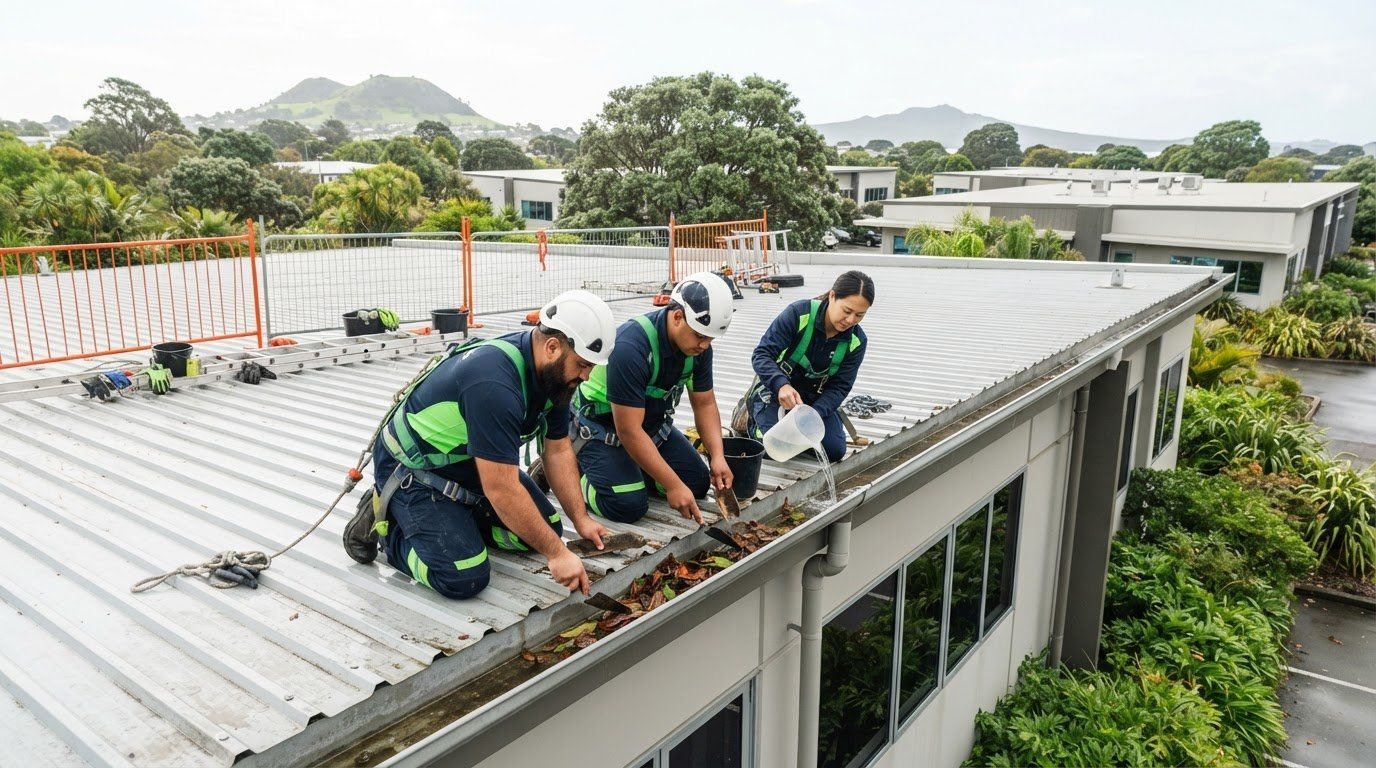
From safe, accessible areas, note visible damage, loose or deteriorated finishes, staining and changes around doors or windows. Look for signs of water overflow or pooling. Record gutter or downpipe blockages only where they can be observed safely from the ground or another approved access point. Don’t climb onto roofs or enter unsafe areas to complete a check.
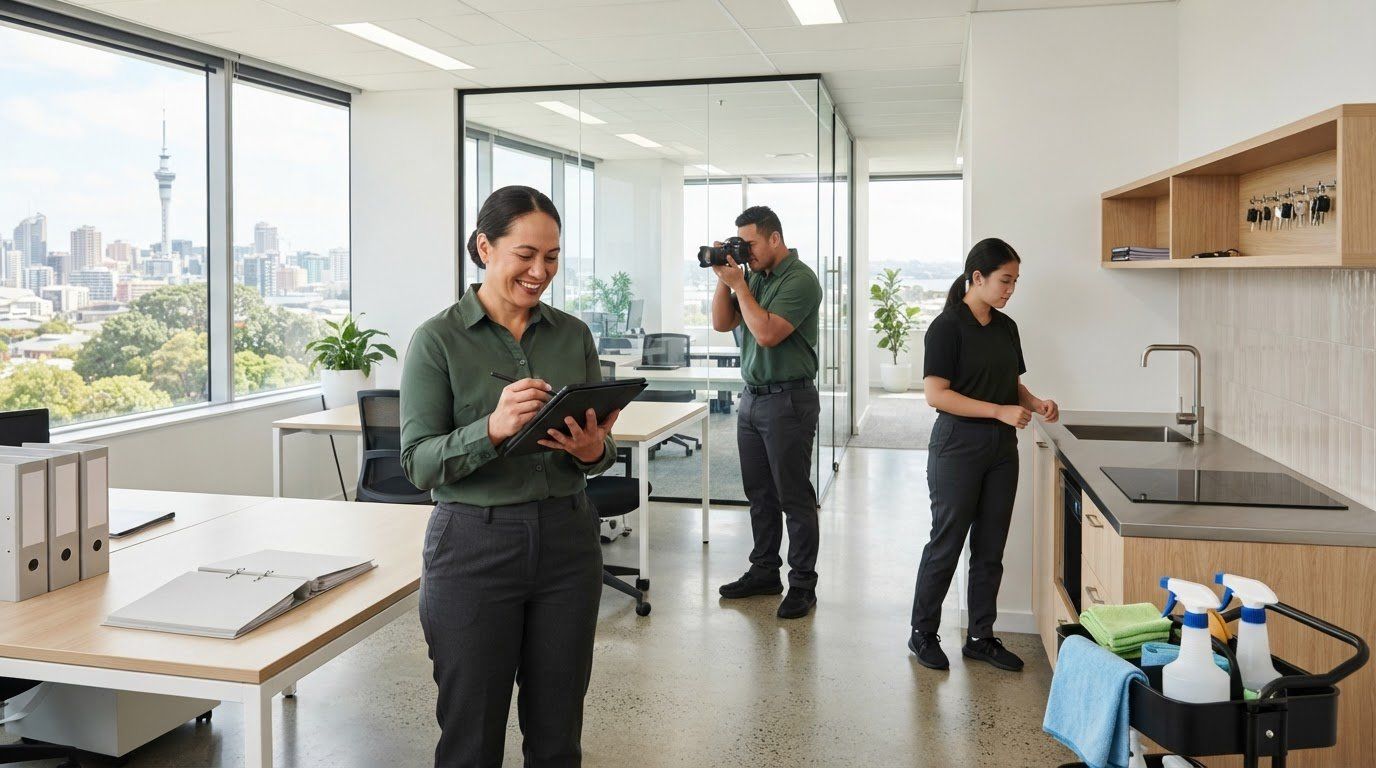
Make each record useful for comparison. Include the date, exact location, what you observed and whether it looks different from an earlier check. A photograph taken from a safe position can help show the change. Keep the original image and link it to the relevant inspection note.
When does an observation need professional assessment?
Arrange prompt assessment for an active leak, material that may fall or a defect that is changing rapidly. Water entering indoors, a growing area of staining or a finish becoming visibly detached can all require timely follow-up. If the concern affects a public or tenant access area, manage access around the observed hazard while arranging advice.
Photographs support clear communication, but they don’t replace an on-site diagnosis. A professional can consider the location, surrounding materials and likely pathways of water or movement. Don’t label a defect compliant, non-compliant or structurally safe without qualified assessment. For guidance on requirements relating to building work, consult the Ministry of Business, Innovation & Employment’s New Zealand Building Code information.
Keep inspection notes with maintenance records. A recurring stain in the same location, for example, gives a professional useful context that a single photograph may not. This makes exterior building maintenance Auckland planning more informed and helps managers distinguish a new observation from an ongoing issue. If you need support with commercial exterior building maintenance or repairs, review Service King Commercial’s maintenance services.
Exterior maintenance or repair: how to prioritise Auckland building issues
Exterior maintenance isn’t only about appearance, and it doesn’t always mean arranging major work. Some findings call for routine follow-up. Others need prompt assessment because they may affect safety, allow water entry or disrupt the site. A clear priority process helps property managers decide what to raise first and what can be scheduled.
Planned maintenance means arranging checks and upkeep according to the property’s condition and site needs. Reactive repair responds to a fault or damage once it’s identified. Both have a place. Planned checks can help reveal changes, but they can’t prevent every failure or remove the need for repairs.
Planned maintenance compared with reactive repairs
| Consideration | Planned maintenance | Reactive repair |
|---|---|---|
| Timing | Scheduled around site needs and inspection findings. | Started after a fault or damage is reported or observed. |
| Purpose | Check condition and organise appropriate upkeep. | Address a known issue. |
| Disruption | Work can be coordinated with site operations where practical. | Timing may depend on the issue’s urgency and access needs. |
| Follow-up | Record findings and assign any actions. | Confirm the repair has addressed the reported issue and note any further assessment needed. |
Neither approach guarantees that defects won’t develop. Scheduled upkeep gives teams a structure for checking assets and tracking work, while repairs address specific faults. The New Zealand's building regulatory system is useful context when considering building work and relevant requirements. Seek appropriate professional advice for your situation.
Which exterior issues need attention first?
Use a consistent order to triage observations. Treat immediate safety concerns and active water entry as priorities for prompt assessment. Then consider whether the defect is worsening or affecting tenants, customers or normal operations. A cosmetic change may still need recording, but it won’t necessarily take precedence over a leak or a possible falling hazard.
- Prompt assessment: A safety concern, active leak or material that appears loose.
- Prioritise for follow-up: A defect that is changing or affecting access and everyday site use.
- Schedule and monitor: A stable appearance issue with no apparent effect on safety or use, subject to professional advice.
These categories help organise the queue; they don’t diagnose severity. If the risk is uncertain, ask a qualified professional to set the technical priority. For exterior building maintenance Auckland sites, record the reason for each priority and who will follow up. This keeps decisions clear for property teams and supports practical coordination around building use.
How to organise a practical exterior maintenance plan for an Auckland site
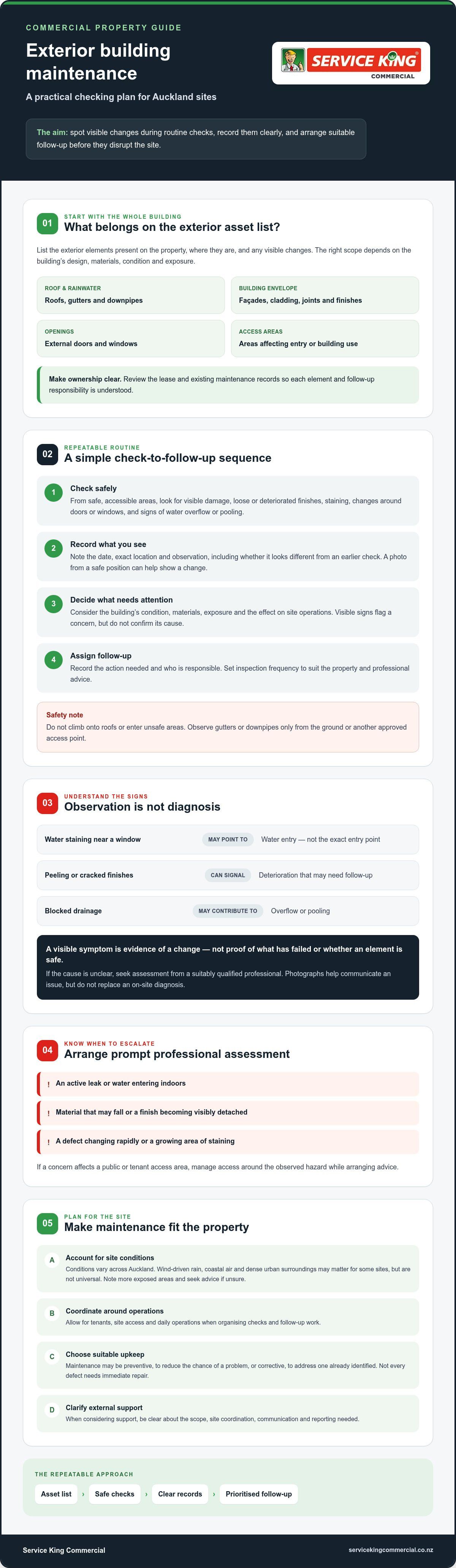
A useful maintenance plan turns observations into assigned follow-up. Keep the process simple enough to repeat, but specific to the property. List the assets, inspect safely, record what you find, set priorities and assign the next action. Adjust the schedule to the building rather than relying on a standard timetable.
- Establish an asset list. Record exterior elements and their locations. Use consistent names or reference points, such as “north entrance” or “roof area above loading bay”, so different people can identify the same place.
- Inspect safely. Carry out visual checks only from safe, accessible areas. Arrange suitable professional support where an element can’t be checked safely or needs specialist assessment.
- Record findings. Note the date, location, observation and any change since the previous check. Add photographs where they can be taken safely and help explain the issue.
- Prioritise and assign. Set urgency according to safety, water entry, changes in condition and impact on site use. Name the person responsible for arranging assessment or follow-up.
- Track actions to an outcome. Keep open items visible until they’ve been assessed, completed or formally deferred. Record the reason for deferral and the next review.
Build an inspection record that supports follow-up
A shared log gives property managers and contractors a consistent reference. Include the asset name, location, date, observation, relevant photograph, responsible contact and next action. Update the record when work is assessed or completed. If an item is deferred, note who agreed and when it should be reviewed. This helps prevent concerns from disappearing between inspections or changes in site personnel.
Set inspection frequency according to the building’s condition, materials and exposure. A property with known recurring concerns may need a different checking rhythm from one in stable condition. Use professional advice to set or revise intervals. There isn’t one schedule that suits every building.
Coordinate checks and work around commercial operations
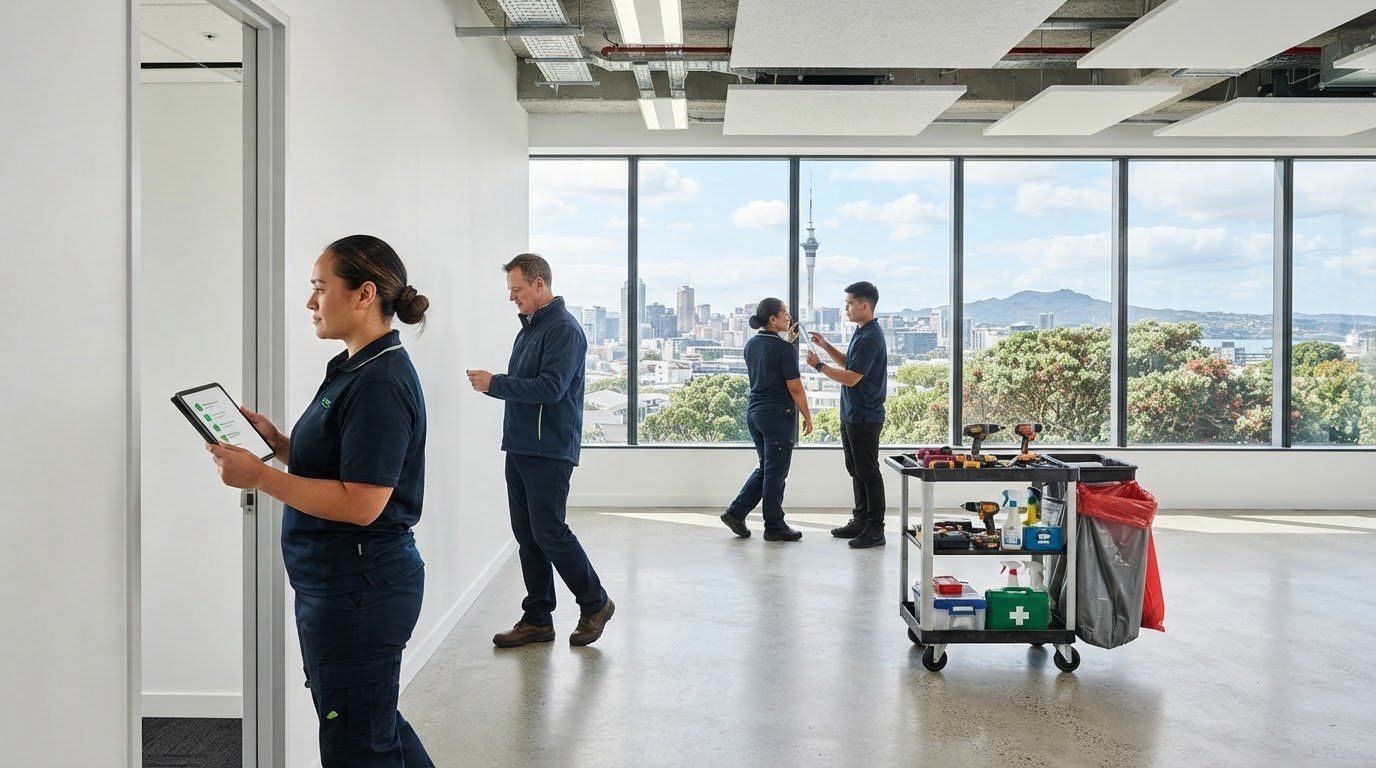
Before work begins, confirm site access, safety arrangements, affected areas and tenant notifications. Agree how staff or visitors will be directed around any work area. Where practicable, time disruptive work around business hours or busy site activity. Clear communication helps tenants prepare and gives the site contact a practical way to raise access issues.
Use the asset list to plan separate checks for relevant areas, such as roofs, gutters, façades or cladding. Record what each check covers and link findings to the same location references. This makes an exterior building maintenance Auckland plan easier to manage as work is scheduled and completed.
Service King Commercial provides scheduled maintenance and building repair services, with plans tailored to commercial site requirements. Discuss a tailored maintenance plan for your Auckland property.
When Auckland businesses may need commercial exterior maintenance support
External support can help when the same concerns keep returning, the property has several exterior assets to track, or in-house staff don’t have capacity to manage inspections and follow-up. A provider may also be useful when work needs to be coordinated across tenants, access points and normal site activity. The aim is to clarify responsibilities and turn known maintenance needs into an organised scope of work.
Before engaging a provider, define what you need help with. Share the building’s basic details, relevant maintenance records and any observed concerns. Be clear about site access, operating constraints and who can approve work. This gives both parties a practical basis for discussing scope and planning site activity.
What to clarify before arranging exterior maintenance
- Building and concerns: Describe the property, the areas of concern and any recurring or previously assessed issues.
- Access and operations: Identify access requirements, tenant activity, restricted areas and any timing considerations.
- Scope and responsibilities: Confirm what work is included, who authorises it and how additional findings will be raised.
- Communication and records: Ask how observations, recommended actions and completed work will be documented, and who will receive updates.
- Timing: Agree the proposed sequence and timing before work is scheduled, allowing the site contact to notify affected tenants.
Clear records matter. Ask how open items will be tracked and how you’ll be told if an assessment identifies work beyond the agreed scope. A defined reporting process helps property managers make decisions and keep site records current.
How Service King Commercial supports Auckland properties
Service King Commercial provides commercial exterior maintenance, building repair and scheduled maintenance for Auckland properties. Its maintenance programmes are tailored to individual commercial site requirements. This can provide a structure for recurring upkeep and follow-up, with the proposed scope considered against the property’s needs. Confirm the specific tasks when discussing the work, rather than assuming every exterior element is included.
For exterior building maintenance Auckland planning, a useful provider discussion should cover site priorities, communication, access and reporting, as well as the work itself. Share your asset information and known concerns, then confirm how the proposed arrangements fit with tenant and business operations.
Contact Service King Commercial to discuss your Auckland site’s exterior maintenance needs and the scheduled maintenance or building repair support that may suit your property.
Make exterior upkeep part of your site plan
Effective exterior building maintenance Auckland planning starts with a clear view of the property’s condition and responsibilities. Keep an asset list, record visible changes and arrange professional assessment when the cause or urgency of a defect is unclear. These records help your team make informed decisions and keep follow-up work visible.
Prioritise safety concerns, active water entry and defects that are worsening or affecting site operations. Then set inspection frequency to suit the building’s materials, condition and exposure. A repeatable process helps organise upkeep, but it should reflect the needs of your specific property rather than rely on a one-size-fits-all schedule.
Service King Commercial provides exterior building maintenance and commercial building repairs. Its scheduled maintenance programmes are tailored to individual commercial site requirements. If you’re ready to discuss a practical approach for your property, discuss exterior maintenance for your Auckland property.
Clear records and suitable support help you manage exterior issues with greater confidence and keep maintenance moving in the right direction.
Frequently Asked Questions
What does exterior building maintenance include?
Exterior building maintenance covers planned inspection, upkeep and remediation of a commercial property’s external elements. The scope may include roofs, rainwater goods, façades, cladding, joints, exterior finishes, windows, doors and access areas. It depends on the building’s design, materials, condition and exposure. Checks help record visible changes and organise follow-up. They don’t replace professional assessment when the cause or seriousness of a defect is uncertain.
How often should a commercial building exterior be inspected?
There isn’t one inspection frequency that suits every commercial building. Set a schedule based on the property’s condition, materials, exposure and any known recurring issues. Follow professional advice for elements that need specialist assessment. Review the schedule when inspections identify changes, after repair work or when site conditions and responsibilities change. Record inspection dates and findings so the property team can track open issues and adjust the plan sensibly.
What are common signs that a commercial building exterior needs maintenance?
Common signs include visible damage, loose or deteriorated finishes, staining, changes around windows or doors, blocked drainage and signs of water pooling or overflow. These observations can signal a developing issue, but they don’t confirm its cause. Record the location and date, and compare them with earlier notes or photographs. Arrange professional assessment if the defect is worsening, water is entering or the observation raises a safety concern.
Can regular exterior maintenance prevent expensive building repairs?
Regular checks can help identify visible changes earlier and organise timely assessment or follow-up, but they can’t prevent every defect or guarantee lower repair costs. A recorded stain, for example, gives a property manager a reason to investigate before the condition changes further. Prioritise safety concerns and active water entry, and seek professional advice when the cause or severity is unclear. Treat maintenance as a planning process, not a promise that repairs won’t be needed.
What should be included in an exterior building maintenance plan?
Include an asset list with consistent location references, a safe inspection process, a record of findings and dates, and a way to assign and track follow-up actions. Set inspection frequency to suit the building’s condition, materials, exposure and professional advice. Also document access needs, tenant communication, site constraints and who is responsible for approvals. Keep open items visible until they’re assessed, completed or formally deferred with a next step recorded.
When should I call a professional about exterior building damage?
Arrange prompt professional assessment for active water entry, material that may fall or a defect that appears to be changing quickly. Seek advice if the cause is uncertain or the issue may affect tenants, customers, access or normal site use. Photographs and inspection notes can help explain what you’ve observed, but they don’t replace an on-site assessment. Don’t make assumptions about compliance or structural safety without a qualified professional’s advice.
How do I choose an exterior building maintenance provider in Auckland?
Choose a provider whose proposed scope matches your Auckland property’s needs. Discuss known concerns, access requirements, operating constraints, responsibilities and timing before work is arranged. Ask how observations, recommended actions and completed work will be recorded, and who will communicate updates. Check the provider’s relevant experience, qualifications and insurance for the proposed work. Service King Commercial provides exterior building maintenance, building repairs and scheduled maintenance tailored to individual commercial site requirements.
Recent Posts