
October 19, 2026
A storm-damaged commercial site needs more than a list of repairs. Early decisions affect safety, access and how soon tenants, staff or customers can use the building again. If you’re arranging storm damage repair commercial property Auckland, it can be difficult to distinguish urgent hazards from work that can be planned, particularly when roof or exterior damage affects occupied areas.
It’s understandable to want repairs started quickly, but a clear sequence helps prevent missed damage, trade clashes and unnecessary disruption. Make the site safe first, record visible damage, then define the repair scope around the building’s condition and day-to-day use. Work may need to be staged to maintain access or keep key areas operating.
This guide explains how to assess storm damage, set safety-led repair priorities and organise a practical plan for your Auckland property. It covers what to include in the scope, how building repairs, exterior maintenance and trade services can fit together, and how to coordinate work around site access and business operations. You’ll have a clearer basis for deciding what needs attention first and what follow-up maintenance may be needed.
Key Takeaways
- Prioritise safe access and steps to limit further exposure, then identify which parts of the building need attention.
- Record damage with dated photos and notes showing locations and observed changes. Use these records to support, not replace, a professional assessment.
- Compare repair plans by scope clarity, trade coordination, communication and how work will be sequenced around an occupied site.
- Arrange site access and internal updates early so tenants, staff and customers know about affected areas and planned work.
- Use this guide to shape a practical storm damage repair commercial property Auckland plan around the building’s condition and business requirements.
Table of Contents
- Storm damage repair for Auckland commercial property: what needs attention first?
- How to assess storm damage and organise commercial repairs
- How to compare storm damage repair options for an Auckland business
- Auckland storm damage repair: prepare the site and manage next steps
- Storm damage repair for Auckland commercial property with Service King Commercial
Storm damage repair for Auckland commercial property: what needs attention first?
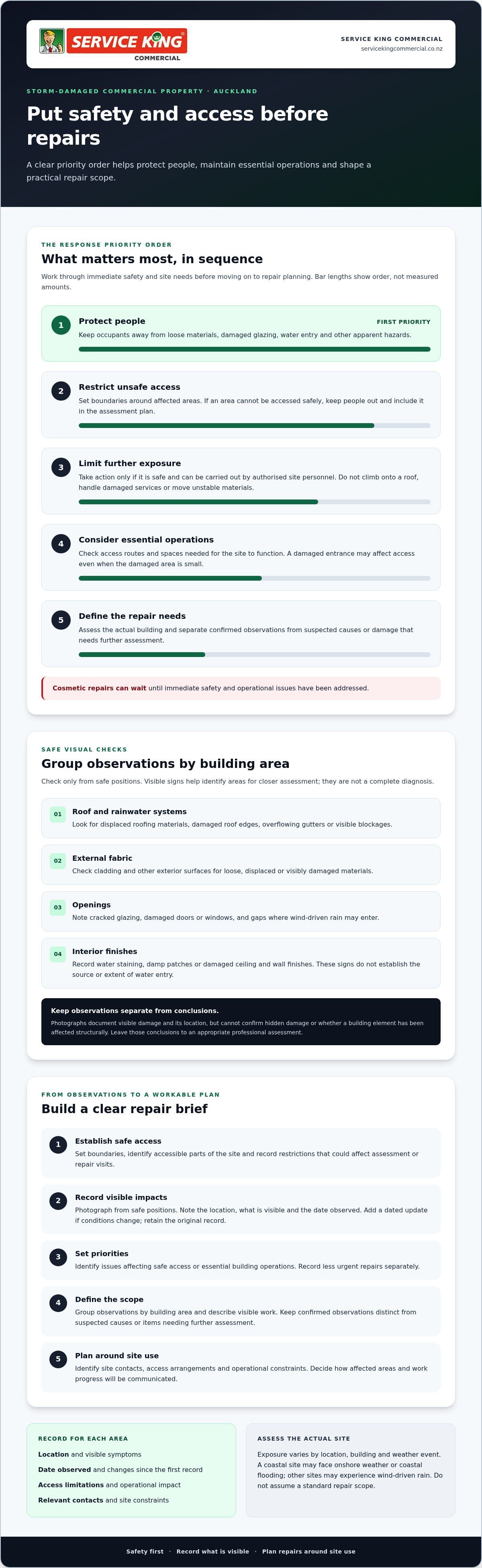
After severe weather, set priorities in this order: protect people, restrict unsafe access, limit further exposure where it’s safe to do so, then define the repair needs. Storm damage repair involves assessing and repairing weather-related damage to a property. For a commercial building, work may involve the roof, rainwater systems, exterior materials, openings or affected interior finishes, depending on the damage sustained.
Auckland properties face different conditions. A coastal site may be exposed to onshore weather or coastal flooding, while other sites may experience wind-driven rain. Storm surge describes a rise in coastal water level associated with a storm. Exposure and damage vary by location, building and weather event, so assess the actual site rather than assume a standard repair scope.
Which storm impacts can affect a commercial building?
Check the building in groups, without entering unsafe areas or treating visible signs as a complete diagnosis:
- Roof and rainwater systems: Look for displaced roofing materials, damaged roof edges, overflowing gutters or visible blockages. These may indicate areas that need closer assessment.
- External fabric: Check cladding and other exterior surfaces for loose, displaced or visibly damaged materials.
- Openings: Note cracked glazing, damaged doors or windows, and gaps where wind-driven rain may enter.
- Interior finishes: Record water staining, damp patches or damaged ceiling and wall finishes. These may indicate water entry, but don’t establish its source or extent.
Photographs help document what is visible and where. They can’t confirm hidden damage or show whether a building element has been affected structurally. Leave those conclusions to an appropriate professional assessment.
What should property teams prioritise after severe weather?
Start with people and safe access. Keep occupants away from areas with loose materials, damaged glazing, water entry or other apparent hazards. Next, consider essential building operations, including access routes and spaces needed for the site to function. Cosmetic repairs can wait until immediate safety and operational issues are addressed.
Limit further exposure only when the action is safe and can be carried out by authorised site personnel. Don’t climb onto a roof, handle damaged services or move unstable materials to make a temporary fix. If an area can’t be accessed safely, keep people out and include it in the assessment plan.
Keep immediate site decisions separate from the repair scope. For example, restrict access to an affected area while recording the issue and arranging an assessment. Note the location, visible condition and any changes over time. Consider how the building is used: a damaged entrance may affect access even if the damaged area is small. Check current MetService alerts and Auckland Emergency Management updates for official local information, and adjust site arrangements as conditions change. This gives your team a practical starting point for storm damage repair commercial property Auckland, without treating visible symptoms as confirmed causes.
How to assess storm damage and organise commercial repairs
A consistent process turns storm observations into a repair plan the property team can manage. The steps below help clarify what is known, what needs assessment and how work can fit around the building’s daily use. For storm damage repair commercial property Auckland, the scope should account for both affected areas and operational constraints.
- Establish safe access. Set boundaries around areas that may be unsafe and identify which parts of the site can be accessed. Record restrictions that could affect an assessment or repair visit.
- Record visible impacts. Photograph affected areas from safe positions. Note the location, what you can see and the date observed. If a condition changes, add a dated update rather than replacing the original record.
- Set priorities. Identify issues affecting safe access or essential building operations. Record less urgent repairs separately so they aren’t lost among immediate site decisions.
- Define the scope. Group observations by building area and describe the visible work required. Keep confirmed observations separate from suspected causes or damage that needs further assessment.
- Plan the work. Identify relevant site contacts, access arrangements and operational constraints before scheduling repairs. Decide how affected areas and progress will be communicated.
How should you record storm damage for a repair brief?
Use the same record format for each affected area. Include its location, visible symptoms, date observed, access limitations and any changes since the first record. Add relevant site contacts and constraints, such as a busy entrance or a tenant area that needs continued access. A useful repair brief records location, observed damage, operational impact and priority.
Keep observation and interpretation distinct. “Water staining visible on the ceiling near the western corridor” records what was seen. It doesn’t establish where the water entered, how far it travelled or whether concealed parts of the building are affected. Photos and notes inform an assessment, but don’t replace one.
How do you sequence assessment, trades and repair work?
The assessment and trade requirements depend on the observed damage and site conditions. List each affected area and the work it may need, then group related tasks where practical. For example, related exterior repairs may be planned together, while the scope still specifies which building areas are included. Clear boundaries help ensure separate observations aren’t treated as one unverified issue.
Before scheduling, map access routes, occupied spaces and business-hour constraints. Identify who needs updates, including tenants, staff, customers and property stakeholders, and agree how changes to access or work sequencing will be communicated. A repair plan should show the order of work and affected areas, not just list tasks. Service King Commercial provides commercial building repair and maintenance services tailored to site requirements.
How to compare storm damage repair options for an Auckland business
Compare repair options against your site’s needs, not just a broad service label. Terms such as “building repairs” describe a general category. A useful proposal links the work to affected areas, observed damage, site access and the way the property operates. This makes it easier to judge whether the proposed scope addresses the storm impacts identified at your site.
Use the same criteria to review each option. This framework helps compare proposals, while the right fit depends on the building, assessment findings and operational requirements.
| Criterion | What to look for |
|---|---|
| Scope clarity | Does the scope identify affected building areas, observed issues and proposed repair tasks, rather than relying on a general service description? |
| Relevant commercial repair work | Does it address the repair needs identified for the property, such as exterior building maintenance, building repairs or relevant trade services? |
| Trade coordination | Does the plan explain how related tasks will be organised and how the boundaries of each work area will remain clear? |
| Site access | Does it account for entry routes, restricted areas, tenant requirements and customer-facing spaces? |
| Work sequencing | Does it show how work will be staged around occupied areas and essential site operations? |
| Communication | Does it set out how work stages, access changes and expected disruption will be shared with relevant stakeholders? |
What should a clear storm repair scope include?
A clear scope names the affected areas, describes observed issues and sets out proposed repair tasks. It also records relevant access constraints, such as a shared entrance or a tenant area. These boundaries help the property team understand what work is included, where further assessment may be needed and what information trades and site contacts should use when planning and sharing updates.
A fixed package may not reflect conditions across different buildings. Match the scope to the site and assessment findings instead. For storm damage repair commercial property Auckland, clear descriptions help align the repair plan with the building’s use without assuming every site needs the same work.
How can repair work fit around an occupied commercial site?
Map access routes, business hours, tenant needs and customer-facing areas before setting the work sequence. For example, repairs near a public entrance may need different access arrangements from work in a back-of-house area. Identify who needs updates, then communicate planned stages and expected disruption clearly.
Service King Commercial works with Auckland commercial properties, tailoring building repairs, exterior maintenance and trade services to site requirements. Discuss your Auckland commercial repair requirements as you shape a scope around the property and its operations.
Auckland storm damage repair: prepare the site and manage next steps
Once immediate site decisions are in hand, organise the information needed to assess and plan the work. Keep records together and make access arrangements clear. This helps property teams distinguish current site controls, such as restricting an affected area, from the later repair and reinstatement scope.
What information should be ready before repair work is arranged?
Prepare a concise site brief before arranging work. Include the property address, affected areas, access details, operating hours and main property contact. Add dated photographs and observations where they can be taken safely. State which routes or spaces are restricted, and flag any tenant, staff or customer access needs that could affect planning.
- Site details: Address, building or tenancy names, and the contact responsible for site access.
- Damage records: Affected locations, visible observations, dates and relevant photographs.
- Operational needs: Operating hours, busy periods, essential routes and customer-facing areas.
- Communication contacts: Relevant tenants, staff, property stakeholders and the person responsible for updates.
Keep messages, site notes and updated observations in the same record. Mark what changed and when, rather than relying on memory or scattered email threads. These records support planning and communication, but don’t establish the cause or full extent of damage and aren’t a substitute for an assessment.
How can teams plan follow-up after storm repairs?
Keep immediate site management separate from the longer repair scope. Access restrictions and other site controls address current conditions. Repair planning sets out the work required based on assessment findings, while reinstatement covers the work needed to return affected parts of the property to use. The appropriate sequence depends on the building and the damage identified.
After work is completed, record what was done, which areas were addressed and any remaining items. Add this information to the property’s maintenance records so future decisions can refer to the repair history. If findings point to exterior upkeep that needs ongoing attention, scheduled maintenance may be relevant. The Auckland commercial exterior building maintenance guide provides related guidance for managing planned exterior work.
Where the repair scope involves several trades, note how tasks relate to each other and who needs access to each area. A commercial trade services buying guide can help property teams consider coordination as they organise work. For storm damage repair commercial property Auckland, keeping site records, follow-up items and access planning together gives the team a useful reference beyond the initial repair.
Service King Commercial provides commercial building repairs, exterior maintenance and trade services in Auckland, with work tailored to site requirements. Discuss your commercial repair requirements and plan next steps around your property’s use.
Storm damage repair for Auckland commercial property with Service King Commercial
Storm-related repairs need to suit the building, the damage observed and the way the site operates. Service King Commercial provides commercial building repairs, exterior building maintenance and trade services in Auckland. Work is tailored to the property’s requirements, so the repair scope can reflect affected areas and practical constraints such as occupied spaces or site access.
There’s no single repair package for every storm-affected building. One site may need attention to exterior areas, while another may have different repair needs. A clear description of what has been observed helps shape the next steps and keeps the work focused on relevant requirements. This practical approach supports storm damage repair commercial property Auckland property teams can plan around their building’s use.
Which Service King Commercial services may fit storm-related repair needs?
The right service depends on the repair requirements identified for the property. Commercial building repairs and maintenance address relevant building repair needs. Exterior building maintenance fits work involving the building’s exterior or ongoing upkeep. Trade services support a defined repair scope where trade work is required for the commercial property.
These services work best as part of a site-specific plan, not as assumptions about what every property needs. For example, visible exterior damage may call for exterior maintenance or repairs, while other findings may require a different building repair scope. The work is tailored to the property, observed damage and operational requirements.
What should Auckland property teams include in an enquiry?
Keep the first enquiry straightforward. Share the site location, affected areas and a concise description of what you’ve observed. Include photographs taken from safe positions, if available, along with relevant access details and operating constraints. Note whether tenants, staff or customers use the affected areas, and describe any access limits that could affect work planning.
This information gives a useful starting point for discussing commercial repair requirements. Separate what you’ve directly observed from assumptions about the cause or extent of damage. A brief note such as “water staining visible on the ceiling in the reception area” is more useful than an unverified conclusion about where water entered.
Service King Commercial’s Auckland commercial property focus means repair planning can account for the building’s use and site requirements alongside the observed damage. Share the practical details, including location, affected areas and operational constraints. Contact Service King Commercial about your Auckland property repairs to discuss your site’s repair needs.
Set a practical repair plan in motion
Turn the site’s current findings into a repair scope that works for the building and the people who use it. Clear priorities keep decisions grounded as conditions are assessed and work is planned. A site-specific approach also gives property teams a practical basis for coordinating repairs around operational needs.
For storm damage repair commercial property Auckland, Service King Commercial provides commercial building repairs, exterior maintenance and trade services tailored to your site. Share the property location, what you’ve observed and any access or operating constraints to help shape a plan around the building’s requirements.
Contact Service King Commercial to discuss storm damage repairs for your Auckland property and plan the next steps for your site.
Frequently Asked Questions
What should I do first after storm damage to a commercial property in Auckland?
Protect people first. Keep occupants away from visibly affected areas and don’t approach hazards such as loose materials or damaged glazing. Check current MetService alerts and Auckland Emergency Management updates before making decisions about site access. Then notify the person responsible for the property and record which areas are affected. If essential access or building operations are disrupted, include that in the repair plan so priorities reflect how the site is used.
Can a commercial building remain open after storm damage?
Possibly, but the decision depends on the damage, safe access and the building’s operations. A site may be able to keep unaffected areas open while restricting access to a damaged entrance, room or circulation route. Don’t assume a space is safe because damage isn’t obvious. Arrange an appropriate assessment where needed, and communicate access changes to tenants, staff and customers before they enter affected areas.
How do I document storm damage before arranging commercial repairs?
Create a dated record for each affected area. Note the building location, visible condition and any changes observed, then store photographs with the matching notes. Keep original images and update the record if conditions change. Avoid labelling a suspected cause as fact. For example, record a wet patch on a wall rather than stating that a particular roof section caused it. The record supports an assessment, but doesn’t replace one.
What types of storm damage can affect a commercial building?
Storm impacts vary by building and exposure. Wind may displace exterior materials or affect glazing, while rain may enter through damaged openings and leave marks on internal finishes. Roof areas or rainwater systems may also show visible changes after severe weather. These are possible observations, not a diagnosis. A stain, for instance, doesn’t identify the entry point or confirm whether concealed parts of the building are affected.
Does storm damage repair include roof, gutter and cladding repairs?
Storm-related repair work can include roof, gutter or cladding requirements where assessment identifies relevant damage and the work fits the property’s repair scope. The tasks depend on the building and observed conditions. For storm damage repair commercial property Auckland, describe the affected areas and operational needs clearly. This helps shape a site-specific plan rather than assuming every building needs the same exterior repairs.
Can commercial storm repairs be planned around tenants and business hours?
Yes. Work planning can account for tenant access, business hours, customer-facing spaces and routes that need to remain available. For example, a property team may identify a preferred route for staff while a nearby area is being worked on. Share these requirements early and keep relevant people informed about work stages or changes. The sequence should reflect the site’s operations and repair requirements.
How can scheduled maintenance help after storm damage repairs?
Scheduled maintenance can help property teams track follow-up upkeep identified during or after repairs. Add completed work, outstanding items and relevant observations to the building’s maintenance records. If repair findings identify exterior areas that need planned attention, include them in future maintenance planning. This gives the team a reference point for ongoing property upkeep, without treating maintenance as a substitute for assessing new damage after another storm.
Recent Posts