
October 18, 2026
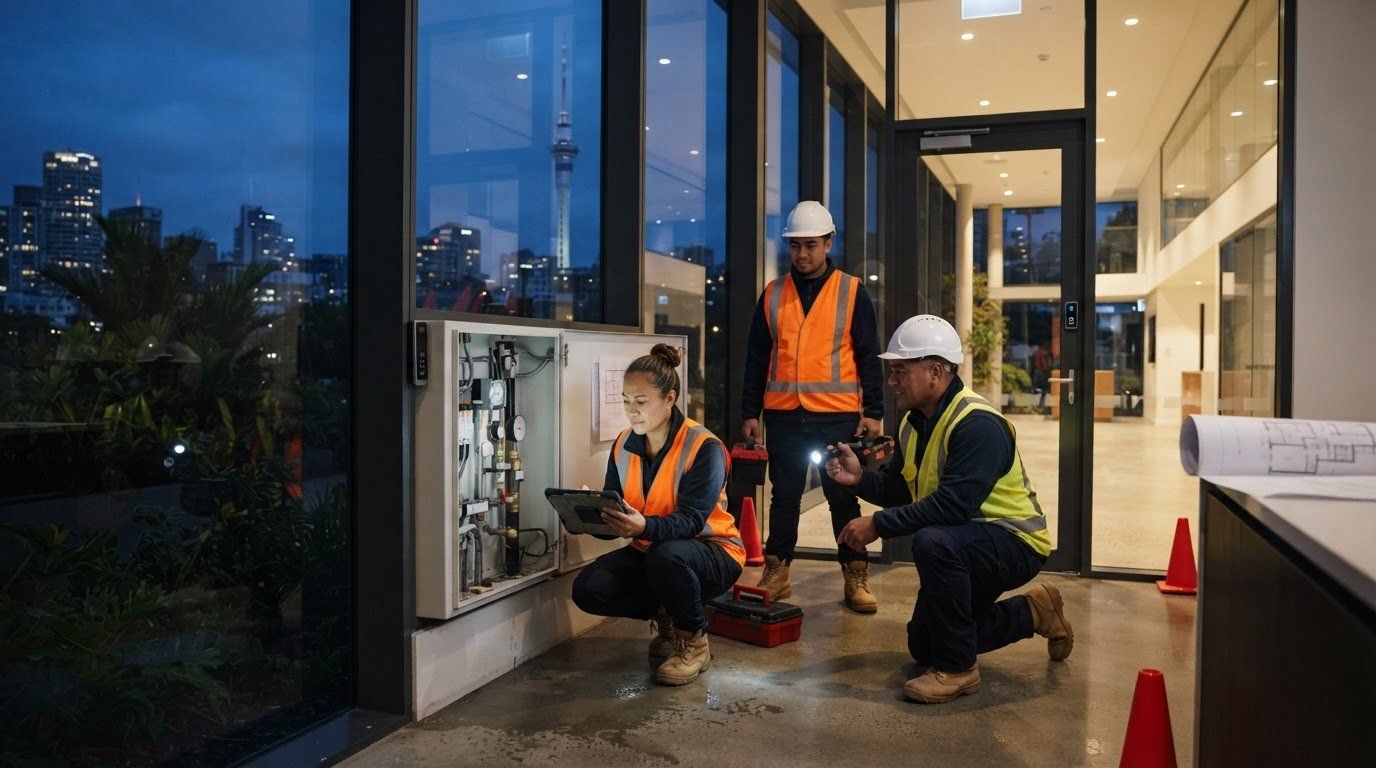
A leak can disrupt a commercial building before repair work even begins. Water may damage the premises, interrupt normal operations and leave you unsure whether the fault is in private pipework or the public network. Auckland commercial water leak repair starts with identifying the affected area and managing the site safely.
A clear scope makes it easier to plan the work. Access, the leak location, affected services and whether areas need to stay in use all shape the repair plan. Early details can also help establish who should report the issue and who should organise building work.
This guide covers immediate steps, how to distinguish an apparent public-network fault from a private-side leak, and what information helps define a practical repair scope. You’ll also learn how to plan around site disruption, record useful observations and organise next steps with clear responsibilities.
Key Takeaways
- Look for unexplained dampness, pooling water, staining, dripping or a sudden change in water pressure.
- Understand how Auckland commercial water leak repair can progress from initial observations to an agreed scope and follow-up.
- Distinguish an apparent public-network fault from a private-side leak or wider building damage.
- Use a practical sequence to secure the area, record what you find and escalate the issue without taking unsafe risks.
- See how commercial building repair and trade services can help coordinate work around your site’s operational needs.
Table of Contents
- Signs of a commercial water leak in Auckland and why prompt assessment matters
- How commercial water leak repair moves from assessment to reinstatement
- How Auckland businesses can compare leak repair routes and responsibilities
- What to do if you find a commercial water leak in Auckland
- Arrange Auckland commercial water leak repair with Service King Commercial
Signs of a commercial water leak in Auckland and why prompt assessment matters
When water appears where it shouldn’t, the priorities are protecting the building and keeping essential activity running. A prompt Auckland commercial water leak repair assessment helps establish what’s affected and what needs attention. Don’t wait for a large pool to form. Early clues can be subtle, particularly in busy premises where cleaning, deliveries and daily use can hide changes.
Look for unexplained dampness, pooling water, fresh or persistent staining, dripping or a sudden change in water pressure. A Watercare bill that is higher than expected can be a warning sign, as can wet ground near the building. Neither confirms a leak or identifies its source. Record what you’ve noticed and where it occurs instead of assuming one symptom points to a particular pipe or fault.
Signs that warrant prompt assessment:
- Damp patches or staining that return after the area has dried.
- Water pooling indoors or on ground near the building without an obvious explanation.
- Dripping sounds, visible drips or a sudden pressure change.
- A damp or musty odour in a room, cupboard or service area.
- An unexplained rise in water use or a higher-than-usual Watercare bill.
Which signs can point to a hidden leak in a commercial building?
Visible water is only one clue. Damp odours, bubbling or discoloured finishes, and recurring stains may indicate moisture behind a wall, below flooring or within a ceiling space. Underground pipework can leak without leaving an obvious surface pool. A single symptom doesn’t establish the cause. Note its location, when it appears and whether it changes, then share those observations during assessment.
What can a leak affect beyond the damaged area?
Water can restrict access to a room or route, affect staff, tenants and customers, and damage stored goods, flooring or wall finishes. Moisture may also spread beyond the point where it first appears. Water near electrical equipment needs careful handling. Keep people clear of the area, and don’t touch wet electrical fittings or attempt to access concealed equipment.
Consider how the site is used as well as the visible damage. A leak beside a customer entrance, stock area or shared corridor may affect more people than one in a low-use room. Note which spaces are affected, whether access has been restricted and what activity needs to continue. This gives the assessment a practical view of the site, not just the wet surface.
Prompt assessment helps identify the affected area and inform a repair approach that suits the building’s use. Keep a simple record of the signs and any changes. Clear observations help focus the next steps on the site’s actual needs, rather than guesswork.
How commercial water leak repair moves from assessment to reinstatement
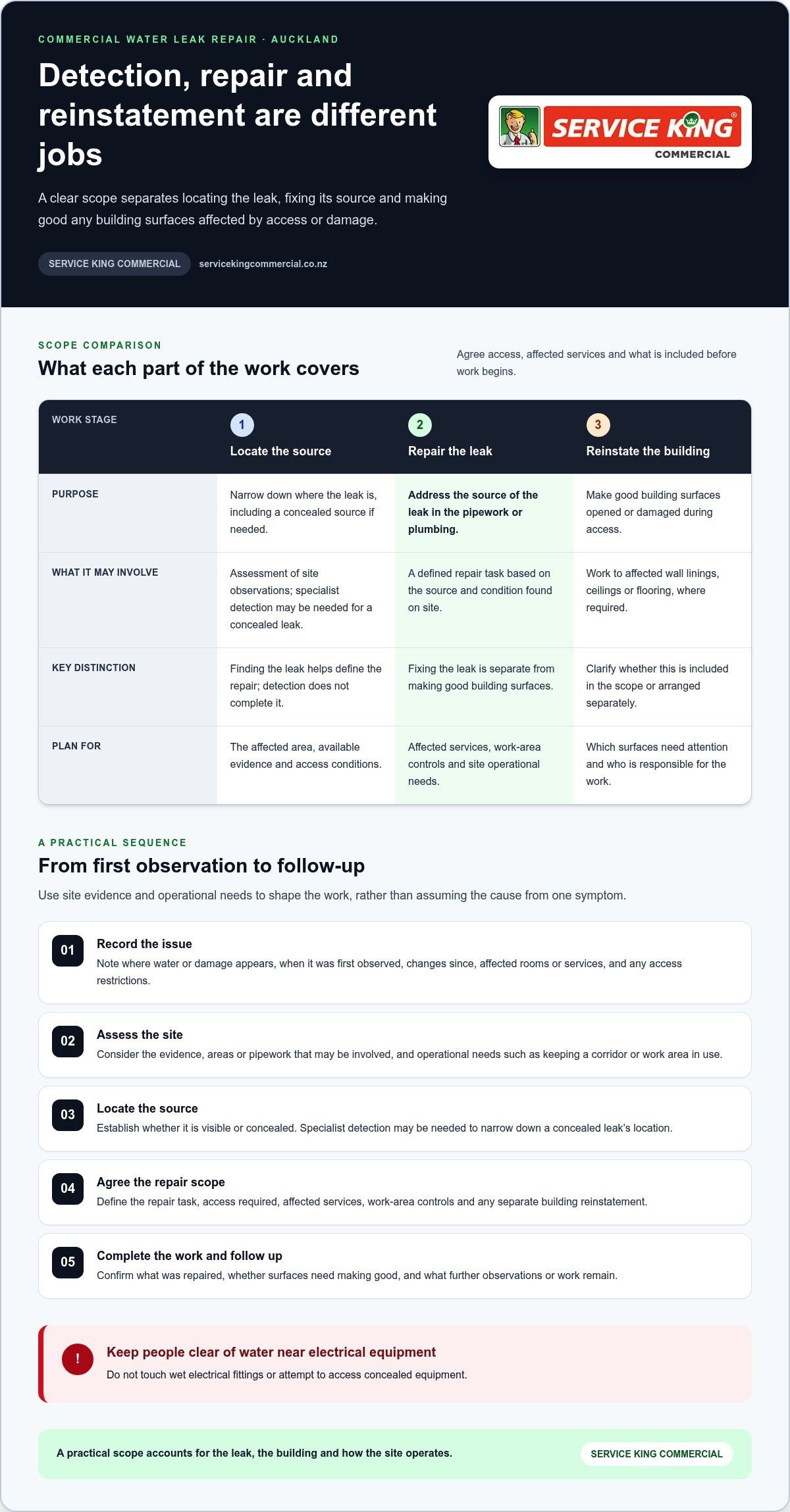
A clear repair process turns site observations into defined work. For Auckland commercial water leak repair, assessment identifies the affected area and helps determine a suitable response. Locating the leak and fixing it are separate tasks. A concealed source may need specialist detection before a trade can define the repair work required.
Use this sequence to keep the work organised:
- Record the issue. Note where water or damage appears, when it was first observed and any changes since. Include affected rooms, services and access restrictions.
- Assess the site. Consider the evidence, the pipework or building areas that may be involved, and operational needs such as keeping a corridor or work area in use.
- Locate the source. The leak may be visible or concealed. Depending on the site and available evidence, specialist detection methods may be needed to narrow down its location.
- Agree the repair scope. Define the repair task, required access, affected services, work-area controls and any separate building reinstatement.
- Complete the work and follow up. Confirm what has been repaired, whether affected surfaces need making good and what further observations or work remain.
What happens during commercial leak assessment?
Assessment brings site observations together with practical information. Photographs can show both the wider location and close-up evidence, while a marked site plan or room name can help identify the affected area. Record access conditions, nearby services and operational constraints, such as rooms that must remain available. The scope depends on the source and condition found on site, not on an assumption based on one symptom.
Detection helps locate the leak, but it doesn’t complete the repair. A traced or concealed leak may need further investigation before the right repair can be defined. This distinction matters when planning access and disruption. Separately, water-damaged commercial premises may need attention to moisture and mould. The EPA guidelines for mould remediation outline considerations for schools and commercial buildings.
How are repair and building reinstatement scoped?
Pipe or plumbing repair addresses the source of the leak. Reinstatement is separate work to make good building surfaces opened or damaged during access, such as wall linings, ceilings or flooring. The work plan should state which areas need access, how the work area will be managed and what reinstatement is included or arranged separately. Agree these points before work begins to clarify responsibilities and reduce uncertainty for building users.
For commercial premises, the scope should reflect how the site operates, not just where the leak is located. Service King Commercial provides Auckland building repair and trade services, with work tailored to site requirements. Commercial building repair support can help coordinate the repair work and related building needs.
How Auckland businesses can compare leak repair routes and responsibilities
The right response depends on which asset is affected and whether the issue is limited to pipework or has also damaged the building. A wet patch beside a footpath may look like a public fault, but water can travel before it appears. The visible location alone doesn’t establish who owns or controls the pipe. Confirm the relevant asset boundary before deciding who should investigate or arrange a repair.
Use this comparison to identify a sensible starting point, not to diagnose the source from appearance alone:
| What you observe | Possible route | Useful next step |
|---|---|---|
| Water on a street, footpath or other public land | There may be an issue involving a public network asset. | Record the location and symptoms, then follow Watercare’s current guidance for reporting public-network faults. |
| A leak within the property boundary or commercial building | The issue may involve private-side pipework or internal plumbing. | Arrange an appropriate trade assessment and establish which pipe or service is affected. |
| Water damage to walls, ceilings, flooring or stored items | The leak may have caused wider building damage as well as a plumbing issue. | Record the affected areas and include building repairs and reinstatement in the work plan. |
When should an Auckland commercial site report a fault to Watercare?
Watercare handles faults involving its public water and wastewater networks. A leak appearing on a street, footpath or other public land is a reason to use Watercare’s current reporting channels and guidance. Auckland Council manages the public stormwater network, so a suspected stormwater fault may need a different reporting route. Note the location and what you observed to help direct the report.
Some leaks appear close to a building but may involve infrastructure beyond the site. Others show on public land while the source is elsewhere. Don’t choose the route based on the wettest spot alone. If the boundary is unclear, record the exact location, visible symptoms and when they occur, then establish the relevant asset boundary before selecting a reporting route.
When does a commercial property need building repair support?
A leak within the premises, or damage to interior finishes and building elements, needs a property-side response. The plumbing repair addresses the source; building repair deals with resulting damage and reinstatement. The two workstreams may need coordination, especially if access to a pipe means opening a wall, ceiling or floor. Define responsibilities and affected areas so the repair plan reflects how the site operates.
Trade services give commercial property managers access to licensed tradespeople for site work. Service King Commercial coordinates Auckland building repairs and trade services around property requirements. Its commercial trade services in Auckland can support a coordinated response when a leak calls for trade work alongside building repairs. Keep public-network reporting and private-site repair as distinct actions until the asset boundary and work scope are clear.
What to do if you find a commercial water leak in Auckland
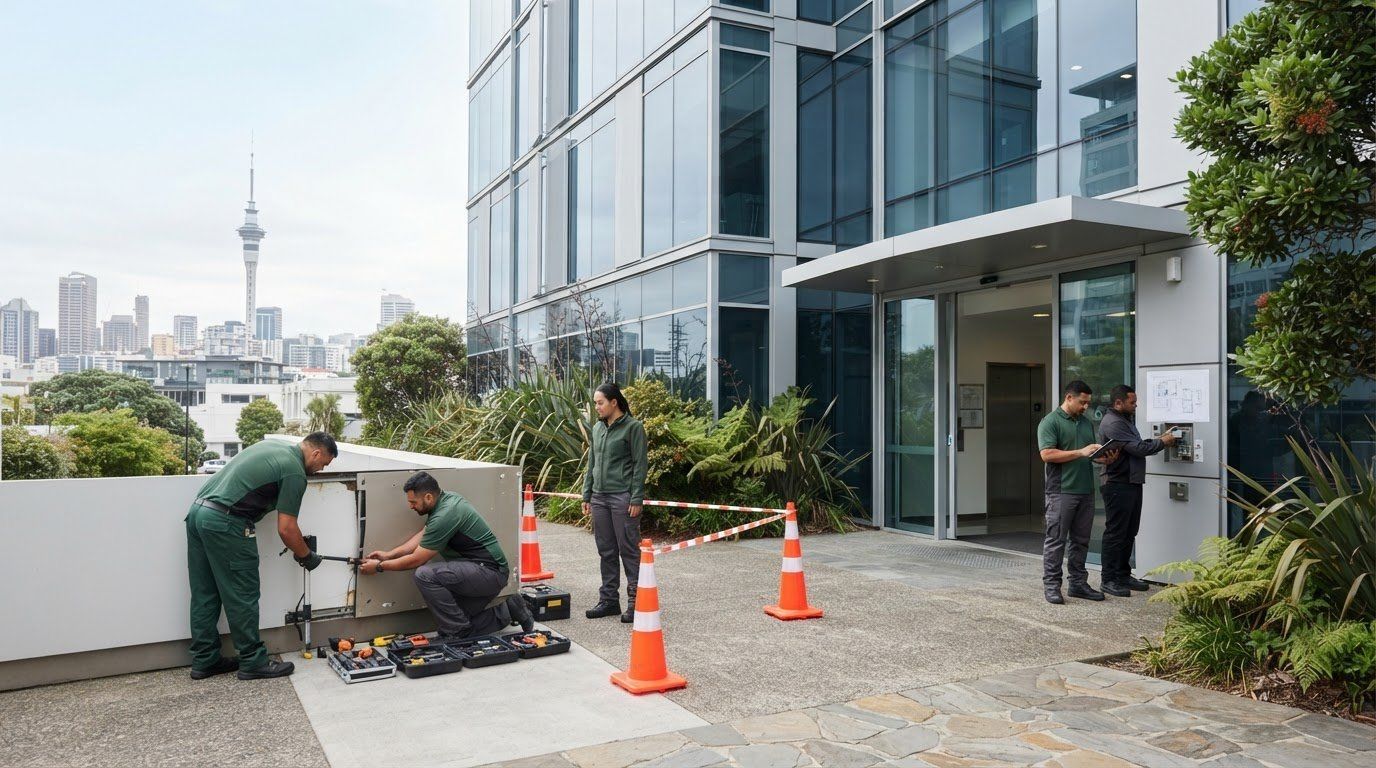
Follow a clear response sequence to protect people, limit further exposure and give the repair team useful information. For Auckland commercial water leak repair, the first priority is managing the site safely, not tracing pipes yourself. Follow your building’s emergency and facilities procedures throughout.
- Keep people clear of hazards. Restrict access to wet or affected areas, especially where water is near electrical equipment, stored goods or busy routes. Use your site’s normal process to notify staff, tenants and visitors.
- Follow site procedures for water shut-off. If stopping the supply is being considered, have an authorised person make and carry out the decision under the building’s procedures. Don’t enter service areas or operate valves if access or the equipment may be unsafe.
- Record what’s happening. Note when the leak was first seen, the precise location, affected rooms, visible changes and any effect on normal activity. Take close-up and wider photographs only if it’s safe to do so.
- Escalate through the right route. Use your facilities process to report the issue. If it may involve a public network, record the location and symptoms before using the relevant reporting channel. If it affects the building or private-side services, arrange an appropriate trade response.
- Keep updates together. Add new observations, access changes and decisions to the same record. This gives the people coordinating assessment and repair a consistent view of the site.
What should a facilities team record before arranging repair work?
Capture the room or external location, when the leak was noticed, visible symptoms and areas affected. Include any changes, such as a growing damp patch or water appearing in a new place. Photograph the wider area and close-up details when safe. Note access restrictions, affected occupants, nearby equipment and any change to site operations. These facts help explain the issue without guessing at its cause.
Facilities team checklist:
- Location and time first noticed
- Visible signs and changes observed
- Rooms, occupants, goods or services affected
- Safe photographs and access restrictions
- Site procedures followed and person notified
How can a business limit disruption while the leak is assessed?
Identify affected spaces and tell relevant site users about temporary access arrangements. Record operational limits, such as a room that must remain accessible or a service interruption that affects business activity. Share these constraints with the team arranging the work. The impact depends on the leak’s location, extent and the site’s needs, so don’t assume normal operations can continue unchanged.
Clear notes help shape a repair plan around the building and its use. For support coordinating commercial building repairs and trade work in Auckland, arrange commercial repair support with Service King Commercial.
Arrange Auckland commercial water leak repair with Service King Commercial
Once you’ve recorded the issue and established the likely reporting route, the next step is coordinating work for the building. Service King Commercial provides Auckland commercial building repair and trade services to support safe, operational premises. The repair scope is tailored to the site, affected areas and practical requirements of the business.
A clear request helps establish what needs attention and how the work may fit around building use. Share what you know, even if the source hasn’t been identified. Site observations and details help shape the next steps without treating an early assumption as a confirmed diagnosis.
What information helps scope a commercial repair request?
Include the location, when the issue was first noticed, the signs observed and which areas are affected. Add photographs if they can be taken safely. Note access conditions, operating constraints and whether the leak appears to be on a street, footpath or other public area. This information helps distinguish building repair needs from a fault that may require public-network reporting.
- Building address and precise location of the signs
- Time first noticed and any changes since
- Affected rooms, surfaces, services or site users
- Safe photographs and relevant access arrangements
- Operational requirements or temporary restrictions
- Whether the issue appears to involve a public area
Be specific about how the space is used. A leak near a shared entrance, work area or stored goods may affect access differently from one in an unused part of the building. Note which routes or rooms need to stay available, and any site procedures that apply to trade work. These details help tailor the scope to the premises rather than relying on a generic repair plan.
How can commercial repair support fit ongoing property maintenance?
A leak can leave work to do beyond the pipe repair itself. Building surfaces may need attention, and the affected area may need to be considered alongside wider property upkeep. Commercial building repairs, maintenance and trade services provide a practical way to coordinate this work. If exterior areas are also affected, include them in the site information so the required work can be scoped in the context of the building’s wider condition.
Service King Commercial delivers locally based facility maintenance solutions in Auckland. Its work is carried out by qualified personnel, with access to licensed tradespeople through trade services. The scope can reflect the site’s access, affected areas and operational needs, supporting an organised approach to Auckland commercial water leak repair without assuming a fixed method or outcome.
Bring together your site notes, photographs and access requirements, then discuss the repair support your premises need with Service King Commercial.
Turn the repair decision into a clear next step
A leak can be a prompt to review how repair work fits the wider property plan. Keep a record of the affected area, access needs and any follow-up work identified on site. This gives your team a practical reference if similar maintenance issues arise and helps keep responsibilities clear.
For Auckland commercial water leak repair, Service King Commercial supports building repair and maintenance at business premises. Its locally based facility maintenance solutions in Auckland include trade services that give commercial property managers access to licensed tradespeople. The scope can be tailored to the site and its operational requirements.
Set out the issue and the support your premises need. Discuss commercial water leak repair for your Auckland property with Service King Commercial and take the next step towards an organised repair plan.
Frequently Asked Questions
How much does commercial water leak repair cost in Auckland?
There isn’t one standard price for Auckland commercial water leak repair. The cost depends on where the leak is, how accessible it is, what repair is required and whether building surfaces also need reinstatement. A concealed pipe beneath a floor may involve different work from a visible fitting leak. A clear scope should distinguish source repair from related building work.
Can a commercial water leak be repaired while a business remains open?
Sometimes, but it depends on the leak location, the work area and which services need to be accessed or isolated. A repair in a plant room may affect operations differently from work beside a reception area or shared corridor. The site team can plan access controls and communicate temporary arrangements. Don’t assume every area can remain in use during the work.
How quickly should a commercial water leak be assessed?
Arrange assessment promptly, especially if water is spreading, affecting building materials or creating a hazard for people using the site. A slow, stable drip still deserves attention if it could damage a ceiling, stock or equipment over time. If the leak is active or conditions are unsafe, follow the site’s escalation procedures first. The appropriate response depends on the observed risk and affected area.
Can I keep using water if a pipe is leaking at my business premises?
It depends on the affected pipe and whether continued use could worsen the leak or create another risk. Avoid using a fixture or service known to be affected until an authorised person has considered the site procedures and situation. Don’t operate valves or access equipment unless you’re authorised and it’s safe. If the water supply serves essential business functions, include that in the repair request.
Does Watercare repair leaks inside commercial properties?
Watercare is responsible for faults in its public water network, including the water main and pipes up to and including the meter. Property-side pipework and leaks are the property owner’s responsibility. For a commercial site, establish which asset is involved rather than relying only on where water appears. If the boundary is uncertain, use Watercare’s current guidance to identify the correct reporting route.
Will water leak repair include fixing damaged walls, ceilings or flooring?
Not necessarily. Repairing the pipe and reinstating building finishes are distinct parts of the work, and the agreed scope should make clear what is included. For example, a leak repair may require opening a ceiling to reach pipework, followed by separate work to restore the ceiling surface. Identify damaged finishes early so building repair requirements can be considered alongside the plumbing work.
What information should I provide when arranging commercial leak repair?
Provide the site address, the exact location of the issue, when it was first noticed and what has changed. Include affected rooms, any service interruption, access limitations and whether the leak appears close to a public area. Safe photographs can help show the wider setting as well as the visible damage. Note who manages site access and any operating requirements that could affect the work plan.
Recent Posts