
November 29, 2026
A maintenance agreement should make expectations measurable, not vague. A commercial maintenance service level agreement sets out the work covered, service standards, response times, responsibilities, and how performance is reported or escalated. Its terms should reflect the property’s needs and the maintenance work involved.
An agreement should explain what happens when a fault is reported, who coordinates the work, and how completion is assessed. Clear definitions help the property team and maintenance provider follow the same plan.
This guide explains what a property maintenance SLA covers and how to review its scope, performance measures, and contractor coordination. It also outlines agreement types to help you assess which structure may suit different sites and service needs.
Key Takeaways
- Set out the work covered, service standards, responsibilities and escalation process so everyone understands how the agreement operates.
- Review performance and service needs regularly, then adjust terms when the property or maintenance requirements change.
- Coordinate planned and reactive work by clarifying contractor roles, schedules, reporting and how maintenance issues are handled.
- Compare agreement types by their scope and level of service to find a structure that fits the property’s operational needs.
Table of Contents
What is a Property Maintenance Service Level Agreement?
A commercial maintenance service level agreement sets out the work, service standards, and responsibilities agreed between a client and provider. It also defines how requests are prioritised, measured, and escalated.
Clear response and resolution terms help a facility team distinguish urgent risks from routine work and track the next steps.
Emergency and Resolution Timeframes
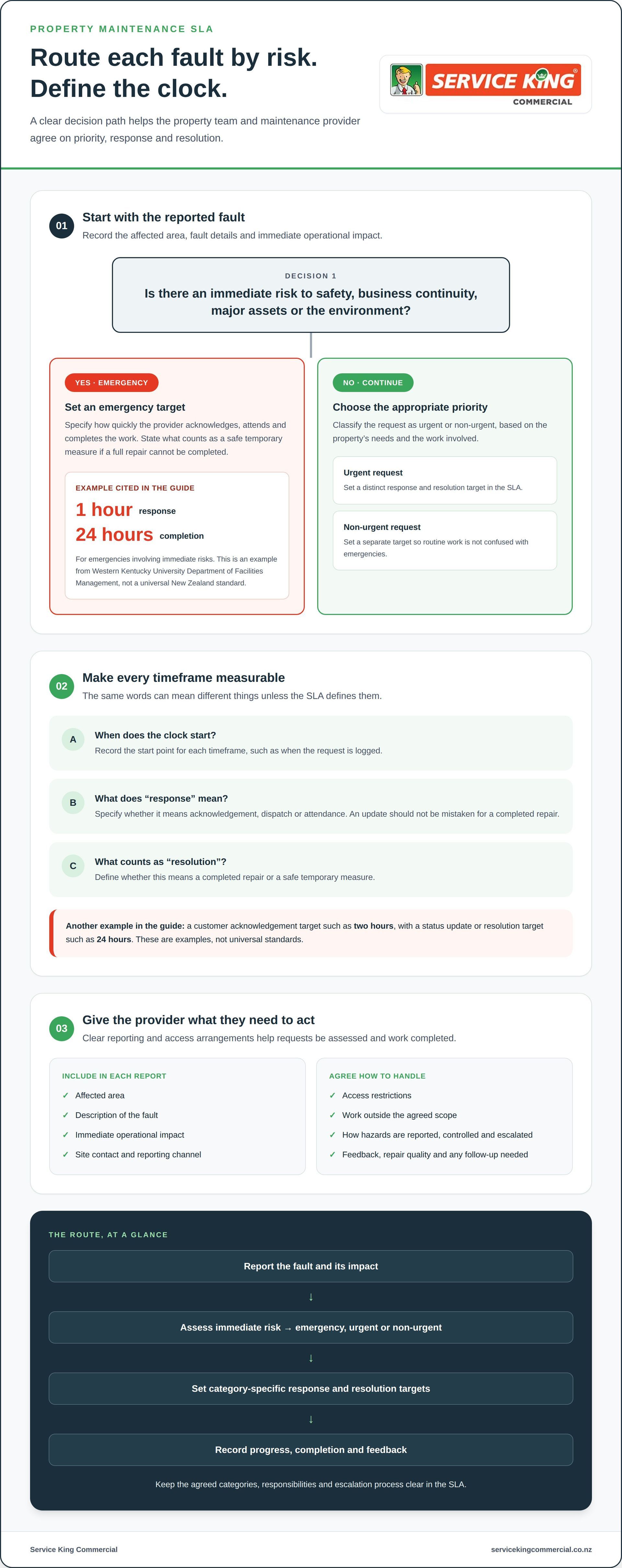
Emergency and resolution timeframes define how quickly a provider acknowledges, attends, and completes different categories of work. They matter because a leaking roof, equipment failure, and routine repair can affect safety and business continuity in different ways.
Set separate targets for emergency, urgent and non-urgent requests. The SLA sets a 1-hour response and 24-hour completion target for emergencies involving immediate risks to safety, business continuity, major assets or the environment, according to Western Kentucky University Department of Facilities Management. Treat this as an example, not a universal New Zealand standard.
Record when each timeframe starts, such as when a request is logged. Define whether “response” means acknowledgement, dispatch, or attendance, and whether “resolution” means a repair or a safe temporary measure. This prevents an update from being mistaken for a completed repair.
Customer Responsibilities and Feedback
Customer responsibilities explain what the client must provide for requests to be assessed and work to be completed. This matters because access delays or missing fault details can affect response and resolution.
Specify the reporting channel, required information and site contact for each request. For example, a report can identify the affected area, describe the fault and note any immediate operational impact. The agreement can also set an acknowledgement target, such as the example of two hours, and a status update or resolution target, such as 24 hours.
State how the client reports access restrictions and approves work outside the agreed scope. Feedback should record whether the repair met the service standard and whether follow-up is needed. This gives both parties a clear record for resolving repeat issues.
Safety Requirements and Maintenance Callouts
Safety requirements and callout rules explain how planned work and urgent faults are managed. They matter because maintenance can affect people, building operations, and essential equipment.
In New Zealand, the SLA should allocate the parties’ health and safety responsibilities and identify the legal and building-compliance requirements that apply to the site and work. It should also state how hazards are reported, controlled, and escalated.
Define planned preventive maintenance by asset, task, schedule, and completion record. For example, an SLA may schedule key asset maintenance every three months. Set emergency callout categories, contact routes, priority levels, and response targets separately. This helps the facility team distinguish scheduled checks from urgent repair requests and track each deliverable.
Reviewing and adjusting agreements
Review the SLA against actual maintenance records, operational changes, and the commercial property’s current needs. Quarterly reviews can identify where repairs, priorities, or service expectations need adjustment.
Periodic SLA Reviews
A periodic review compares agreed service levels with recorded delivery over a set cycle. It matters because repeated urgent requests or missed planned work may show that the current scope no longer suits the property.
Use each review to assess work orders, completion records, recurring faults, and feedback from building users. Separate isolated problems from patterns. For example, repeated repairs to one asset may point to a need for planned maintenance or a revised service scope. Record decisions, owners, and follow-up actions to support accountability.
Review Cycles and Updates
A review cycle sets when the parties assess performance and consider changes to the agreement. Quarterly SLA reviews are common practice, and an SLA can be revised every quarter based on performance, previous agreements, or service changes.
Annual or biannual reviews can provide a broader view of operational needs. Commercial maintenance contracts are usually reviewed and renewed after a year or more. Use scheduled reviews to consider changes to building use, recurring repairs, reporting requirements, and the balance between urgent and planned work. Keep the revised scope and responsibilities in writing.
Between formal reviews, log significant service changes and unresolved issues for the next assessment. Compare the records with the SLA’s measures, then agree which terms need updating and who will action each change. This links amendments to observed performance rather than assumptions about the commercial property’s needs.
For practical maintenance planning, keep the review record alongside the agreement and its service history.
Maintenance and contractor coordination
A useful SLA connects maintenance tasks with contractor roles, access arrangements, and measurable performance. Define the scope before work begins.
SLA Components and Contract Terms
Contract terms explain the service scope, performance measures, responsibilities, reporting, and escalation process. Clear terms help the client track delivery and address gaps without confusion.
Set a measure for each commitment, such as technician attendance or inspection documentation. An example SLA uses acknowledgement within 15 minutes and dispatch within 2 hours. If performance falls short, state the consequences, which may include corrective action, service credits or termination for repeated breaches. One example applies a 5% service credit for each percentage point below the agreed minimum.
Services and Assets Covered
The SLA should identify the maintenance services and building assets included, along with any work outside scope. This prevents uncertainty about which contractor handles a fault.
Possible areas include planned and reactive maintenance, electrical and lighting systems, HVAC, building management systems, lifts, and essential services coordination. For critical climate systems, specialised contractors such as gapmechanical.com are often engaged under defined service terms. Access control and electronic locking can also be covered. Define checks for readers, locks, control equipment, and door interfaces. State how scheduled inspections are recorded and how faults move into repair work. Where several contractors are involved, assign a lead contact and clarify handovers.
Risks and Common Exclusions
Risk and exclusion clauses explain where responsibility sits and what the agreement does not cover. They matter because unclear boundaries can delay repairs or leave work unassigned.
List exclusions in plain language and connect each one to an alternative process or decision-maker. Distinguish included maintenance from replacement work, project work, or damage-related repairs where the contract requires that distinction. Record access limits, dependencies, and escalation routes. Track downtime and repeat faults to make emerging service risks visible. Avoid broad phrases that leave the client unsure whether a specific asset or repair is covered.
Selecting and Monitoring a Provider
Select and monitor a service provider by matching its agreed scope, measures, and reporting to the commercial property’s operational needs. This makes accountability practical.
During negotiation, define response measures, completion criteria, reporting frequency, and how performance shortfalls are handled. Monitor work orders against those terms, including repeat faults and downtime. Give each contractor clear access instructions and a named site contact. Review performance records at agreed intervals, then document decisions and changes. For electronic locking, for example, record whether the fault affected a reader, lock, or control component.
For a consistent repair scope, consider commercial building maintenance support.
Types of service level agreements
The agreement type determines how maintenance work is organised, measured, and paid for. Choose a structure that matches the property’s assets, workload, and expectations.
In-house maintenance gives the property team direct control over priorities, inspections, and daily decisions. A fixed-price contract defines an agreed scope for a set fee, supporting predictable budgeting when tasks are clear. A time-and-materials agreement charges for labour and materials used, which can suit variable repair needs but requires careful work records.
These approaches can also be combined. For example, a commercial property might keep routine checks in-house and contract specialist repairs separately, such as engaging Independent Scale Service for industrial weighing equipment and digital displays. A provider may use a fixed call-out cost and hourly rate to help clients budget for maintenance and repairs.
Whichever structure you choose, define the service boundaries in writing. Identify included assets, inspection tasks, reporting duties, and the process for work outside scope. Set out how requests are prioritised and performance assessed. For example, an inspection record can identify the asset, observed issue, action required, and completion status.
Consider how predictable the work is. Repeated, clearly scoped tasks can suit a fixed-price arrangement. Irregular faults may fit time-and-materials terms, provided approvals and records are clear. In-house arrangements depend on the property team’s capacity to coordinate work and track outcomes. The right choice assigns responsibility without leaving urgent repairs or routine checks unowned.
Use the SLA to connect payment terms with service deliverables. State what triggers a callout, how additional work is approved, and which records support invoices. Review those terms against actual work orders and inspection findings. This gives the client a practical basis for monitoring contractor performance and adjusting the agreement as property needs change.
For building repair and maintenance support, discuss your maintenance requirements.
Service King Commercial
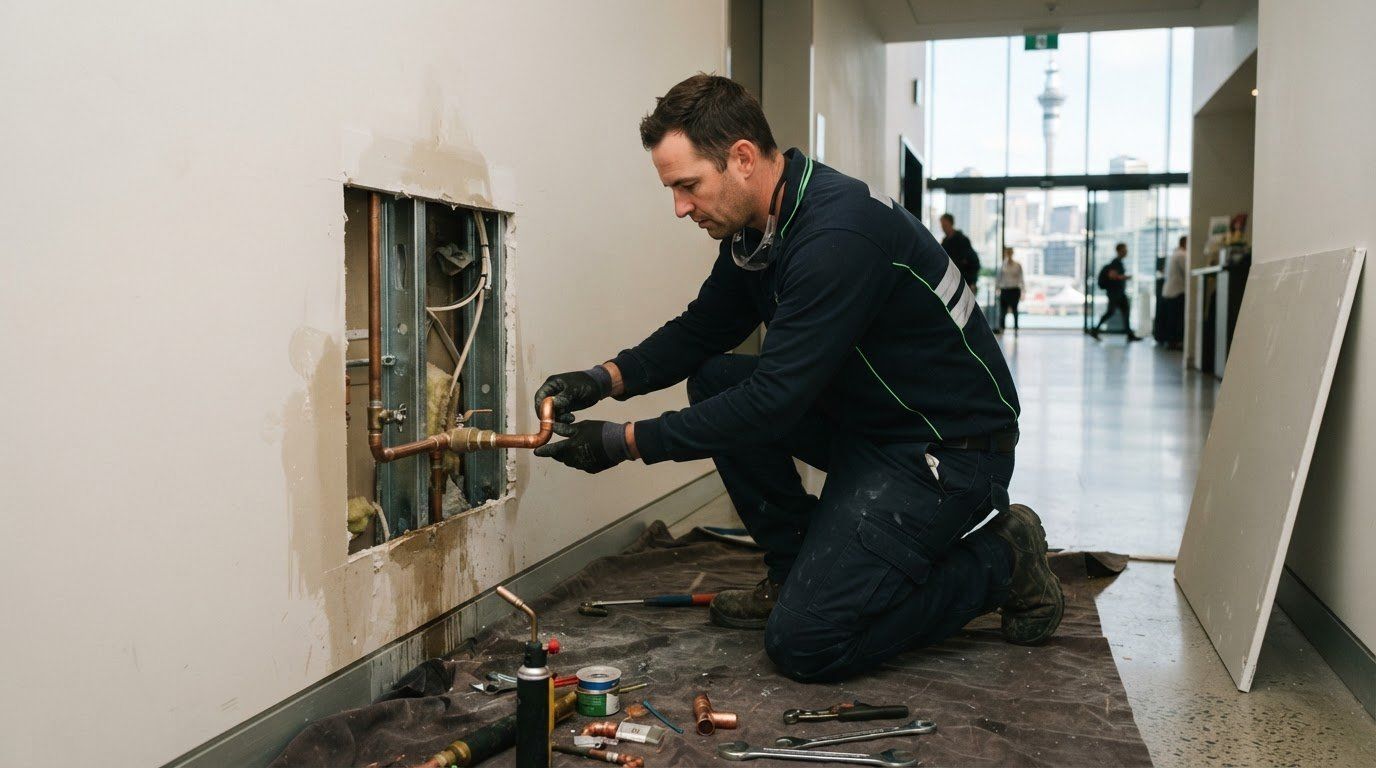
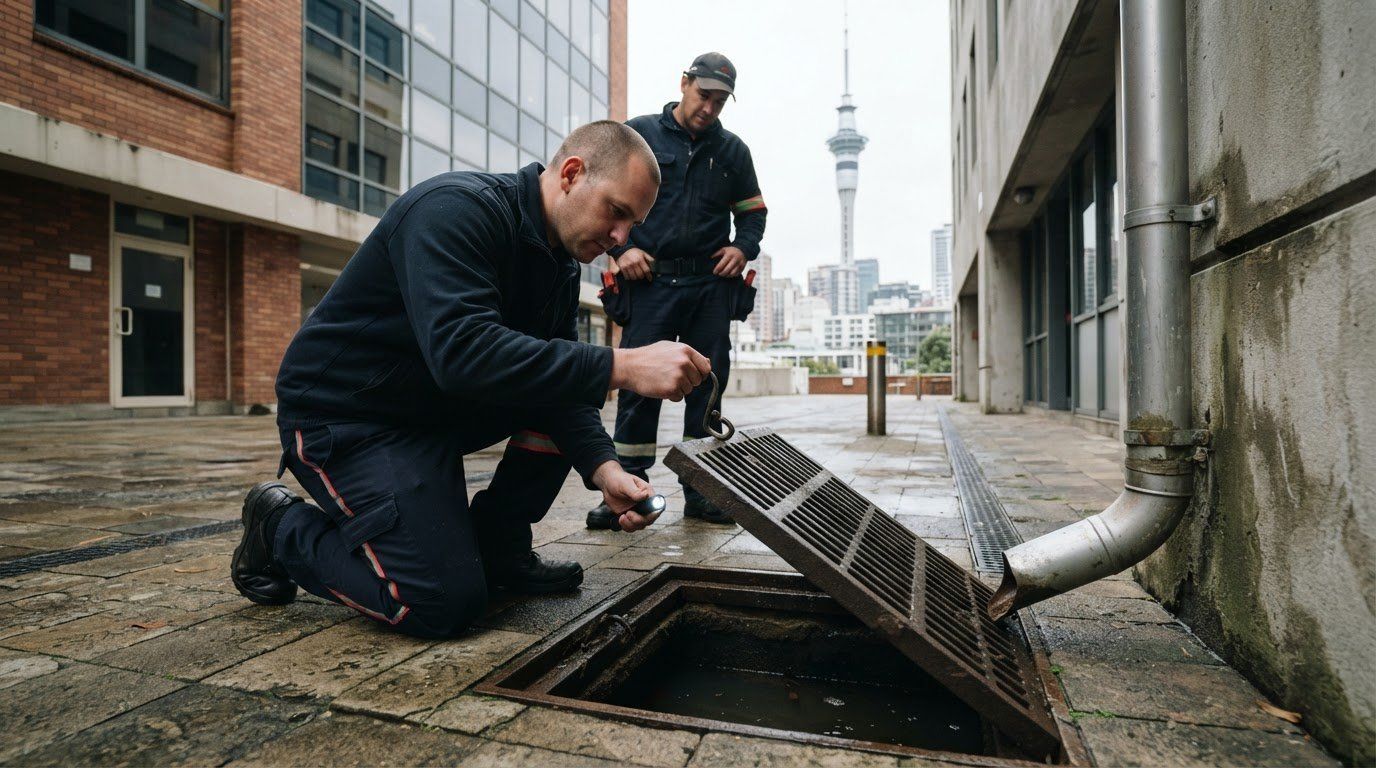
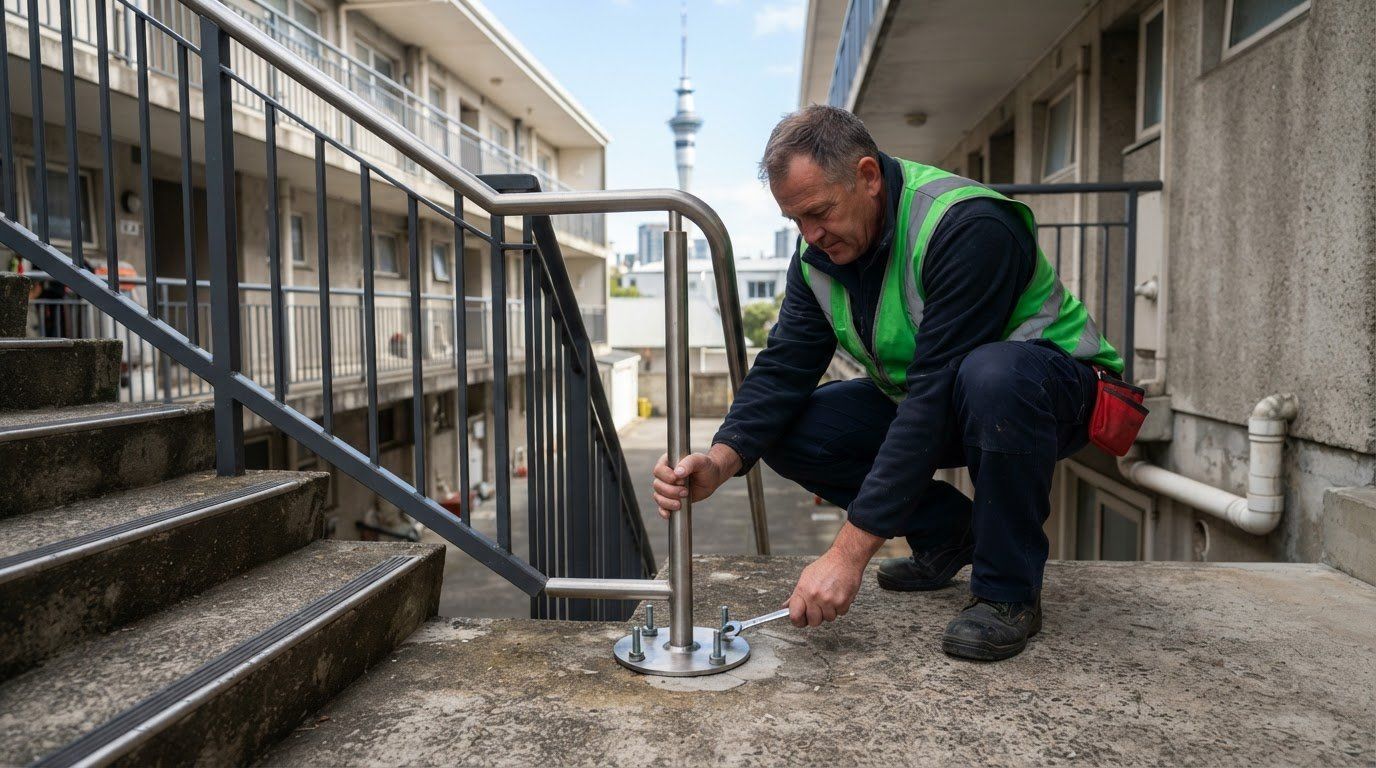
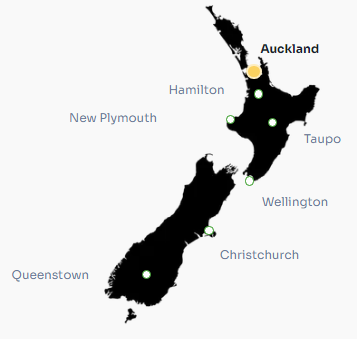
Service King supports commercial property teams in Auckland with building maintenance within a defined service scope. Its Building Repair and Maintenance and Exterior Building Maintenance services cover repair work and the upkeep of building exteriors. End of Lease Service can support maintenance tasks that form part of a commercial property handover.
Turn to Service King when you need practical maintenance work aligned with your site priorities and contractor arrangements. A defined SLA can clarify the work required, responsibilities, and reporting, connecting your maintenance needs with the appropriate service scope.
Contact Service King Commercial to discuss your commercial property maintenance requirements.
Put the agreement to work
Keep a commercial maintenance service level agreement connected to how the property operates. Test its terms against a likely maintenance scenario: who receives the report, how the issue is prioritised, and who records the outcome? Address any unclear handover or decision point before it causes confusion during live work.
Use that exercise to make the agreement useful to the people managing the site, rather than a document filed away. Clear responsibilities and workable terms help maintenance decisions fit day-to-day operations. As building needs change, keep the agreement aligned with the work required and the people responsible.
For support with commercial property maintenance, contact Service King Commercial. A clear next step can help you move forward with confidence.
Frequently Asked Questions
Can an SLA help reduce downtime and reactive maintenance costs?
Yes, an SLA can help reduce disruption by setting planned checks and clear fault-handling procedures. For example, inspection records may reveal a recurring equipment fault before it causes another interruption. Reviewing repeat callouts can also identify maintenance work that should be planned. An agreement cannot prevent every failure, but it gives the property team a structured way to manage maintenance.
Do SLA customers receive 24/7 support?
Not automatically. An SLA covers only the services and contact arrangements written into its terms. Check whether it defines out-of-hours reporting, who receives an urgent request, and how the provider communicates outside ordinary operating periods. If support is limited to stated hours, the agreement should say so clearly, allowing the building team to plan its escalation process.
How is an SLA formulated?
Formulate an SLA by agreeing the property’s service scope, responsibilities, and ways to measure delivery. Start with a practical example, such as a recurring plumbing fault, then define which work is included, how it is reported, and what records demonstrate completion. Add arrangements for access, approvals, and escalation. The signed document should give the client and provider the same expectations.
How often will my systems be serviced?
Service frequency depends on the system, its level of use, operating environment, and maintenance requirements. A heavily used access-control system may need a different schedule from a low-use building component. The SLA should identify each asset, the planned task, and the record produced after servicing. Inspection findings can then inform future scheduling if wear, defects, or operating conditions change.
What happens when companies breach a property maintenance SLA?
The agreement should state what happens after a breach. Options can include corrective action plans, service credits, or contract termination after repeated violations. Keep the relevant work order, service record, and communication so the issue can be assessed against the agreed measure. The provider and client can then follow the stated remedy and record actions taken to address the failure.
What are the benefits of an SLA facilities partnership?
An SLA facilities partnership gives the property team and provider a shared basis for coordinating work. It can clarify who supplies information, who approves work, and how changes are communicated. For a site with several maintenance needs, consistent records can help the team spot recurring issues and plan work across the building. The partnership works best when both parties follow the agreed process.
Recent Posts