
September 30, 2026
A blocked commercial gutter can quickly become an operational problem. Water may spill onto building entrances, cause leaks or affect tenants. A planned routine helps identify issues before they disrupt the site. This guide to gutter maintenance commercial property Auckland managers can use starts with safe inspections and practical follow-up.
It can be difficult to decide how often to check gutters, especially across a large site or several buildings. Access also needs to be planned safely and with minimal disruption for occupants. A consistent process makes these tasks easier to organise.
This guide explains what to look for, how to record blockages, leaks and drainage problems, and how to set a maintenance schedule that suits the property. It also outlines when an issue may need professional attention. For property managers coordinating wider exterior building maintenance, scheduled maintenance programmes can help organise recurring tasks around specific site requirements.
Key Takeaways
- Use a planned inspection to check gutters, downpipes and drainage for signs of blockages or leaks.
- Record each finding with its location, condition, date and required follow-up action.
- Match the task to the right capability, and escalate work that needs elevated access or defect assessment.
- Set inspection intervals using site exposure, roof layout, drainage performance and previous findings, rather than a fixed schedule.
- Use this guide to organise gutter maintenance commercial property Auckland sites need, and prepare a clear scope when arranging professional support.
Table of Contents
- Why gutter maintenance matters for commercial property in Auckland
- How to inspect commercial gutters and spot problems early
- Commercial gutter cleaning: routine upkeep or professional maintenance?
- How to set a commercial gutter maintenance schedule in Auckland
- When Auckland property managers should arrange gutter maintenance support
Why gutter maintenance matters for commercial property in Auckland
Commercial gutter maintenance involves planned inspections, debris removal, drainage checks and repair follow-up to help keep roof runoff moving through the building’s drainage path. For gutter maintenance commercial property Auckland managers should consider how each building’s roof and surroundings affect water flow, rather than relying on the same routine for every site.
Gutters and downpipes direct runoff away from the building fabric and entrances. Poor drainage may show as water overflowing the gutter, visible leaks or water staining on exterior surfaces. These are signs to investigate, not proof of a particular defect or a prediction of damage. Record what is visible and arrange further assessment where needed.
What commercial gutters do during rainfall
Rain runs from the roof catchment into the gutters, then towards outlets and downpipes. The downpipes carry it away from the roof edge and towards the site’s drainage system. A gutter is a component of a water discharge system, so a blockage at an outlet can affect flow beyond the section where debris is visible.
Look for leaves or other material near outlets, standing water, overflow, or water escaping at joints. A visible blockage is an observation, not confirmation of a leak, failed joint or other defect. Those findings may need closer inspection, particularly if water staining or repeated overflow is present.
Why Auckland sites need a property-specific approach
Assess the conditions at each site. Nearby trees may contribute leaves or other debris, while roof layout affects how runoff reaches gutters and outlets. Exposure and the building’s drainage arrangement also influence where issues may appear. Auckland properties don’t all face the same conditions, so base decisions on observations from the specific building rather than assuming a standard risk profile.
Compare inspection findings over time. If debris repeatedly gathers at one outlet, record its location and consider whether that area needs closer attention in the site schedule. Note where overflow or staining appears, too. This gives property managers useful evidence for setting inspection intervals and deciding when to seek repair assessment. A scheduled maintenance programme can help organise recurring exterior tasks around the requirements of a specific commercial site.
How to inspect commercial gutters and spot problems early
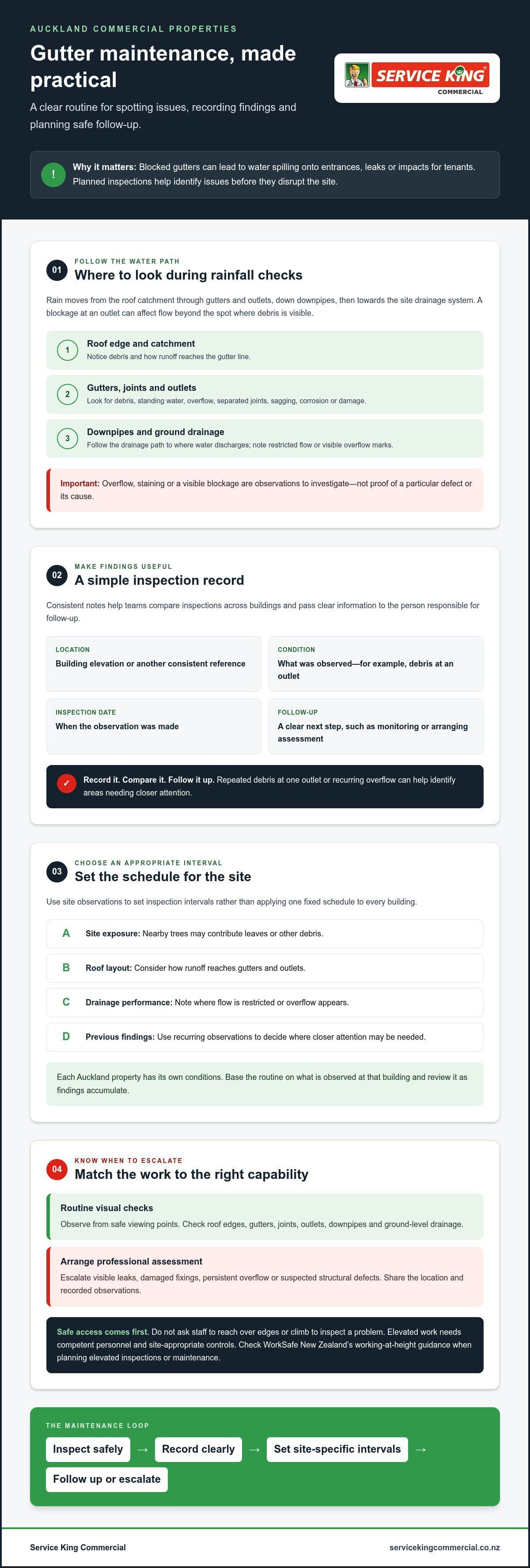
A consistent visual inspection helps site teams identify issues and pass clear information to whoever needs to follow up. Work from safe viewing points. Don’t access a roof or gutter unless the person doing so is competent and suitable site controls are in place. Check WorkSafe New Zealand’s working-at-height guidance before planning elevated inspections or maintenance.
Inspection checklist: Observe the roof edge, gutters, joints, outlets, downpipes and ground-level drainage for debris, sagging, damage, overflow, staining and restricted water flow. Record each finding and the follow-up action.
A practical visual inspection checklist
Start by viewing the roof edge and gutter line from a safe position. Look for debris, sagging sections, separated joints, visible corrosion and damage. Follow the drainage path to the outlets and downpipes, then check where water discharges at ground level. Note overflow marks or water staining below the gutter. These signs can indicate an issue, but a visual check alone won’t confirm its cause.
- Record the building elevation or another consistent location reference.
- Describe the condition observed, such as debris at an outlet or a separated joint.
- Add the inspection date and a clear follow-up action, such as monitoring or arranging assessment.
This record helps teams compare findings across inspections and buildings. It also makes gutter maintenance commercial property Auckland managers organise easier to track as part of routine site upkeep. A proactive strategy for building maintenance depends on recording observations and acting on them, rather than relying on memory.
When an observation needs professional assessment
Escalate visible leaks, damaged fixings, persistent overflow and suspected structural defects. Share the recorded location and observations so the person assessing the issue can identify the affected area. Don’t treat a ground-level view as confirmation that a gutter is sound, or as a substitute for technical assessment where a defect is suspected.
Keep staff away from unsafe access points. Don’t ask them to reach over edges or climb to inspect a problem. Elevated work needs competent personnel and controls suited to the site. Check current WorkSafe guidance before deciding how access risks will be managed.
Where inspection findings point to recurring exterior upkeep, property managers can review exterior building maintenance support and scheduled maintenance options for commercial sites.
Commercial gutter cleaning: routine upkeep or professional maintenance?
Site staff can help spot changes between planned maintenance visits. Keep their role to safe observation, photographs and reporting through the site maintenance process. Cleaning, working at height or assessing defects may need a suitable contractor, depending on the task and site conditions. Staff should not take on work beyond their training or the site’s safety procedures.
A gutter that looks clean from the ground isn’t necessarily working properly. Outlets or downpipes may be obstructed from view, and a visible defect may need closer assessment. Separate what staff can observe from the work needed to confirm or fix a problem. This helps property managers plan gutter maintenance commercial property Auckland sites need without treating routine checks as a substitute for specialist work.
Tasks for routine site checks
Ask staff to note visible overflow, staining, debris or changes to the gutter line from a safe position. A dated photograph and clear location reference can make a report easier to follow up. Route each observation through the usual maintenance process. Don’t ask staff to clear gutters or attempt repairs unless the task is within their competence and permitted by site procedures.
Tasks to assign to a suitable contractor
Consider contractor support where work requires elevated access, a blockage persists, or components appear damaged. Before arranging work, confirm the scope, affected areas, access arrangements and the report or follow-up information required. Check the proposed approach against site conditions and relevant safety procedures.
The table separates routine observation from work that may need additional capability. The right allocation depends on the task and the site.
| Task | Suitable capability | Access considerations | Escalation trigger |
|---|---|---|---|
| Observe gutter lines and record visible issues | Site staff, within their competence | Use safe ground-level viewing points | Overflow, staining, visible damage or recurring debris |
| Photograph and report a finding | Site staff following maintenance procedures | Do not reach or climb to improve a view | Unclear condition or a finding needing closer inspection |
| Clear a blockage or assess a defect | Suitable contractor for the agreed scope | Confirm access arrangements and site controls first | Elevated access, persistent blockage, damaged components or suspected defects |
For recurring tasks, a scheduled maintenance programme can help organise site checks and follow-up around the property’s requirements. Confirm whether the proposed scope covers the specific gutter work needed, and how findings and any further repairs will be reported.
How to set a commercial gutter maintenance schedule in Auckland
Set inspection intervals using evidence from the site, not a universal calendar rule. Nearby vegetation, roof layout, site exposure, drainage performance and previous findings can all affect how often a building needs review. A low-debris area with no recorded issues may need a different interval from a section where blockages or overflow keep recurring.
Inspection frequency should reflect documented site conditions and change as new findings emerge.
Set inspection intervals from site evidence
Start with a baseline inspection and note blockages, overflow, defects and areas that are difficult to observe. Use those findings to plan the next review. If the same outlet repeatedly collects debris, bring its inspection forward. If vegetation, roof layout or drainage conditions change, reassess the interval rather than assuming the existing schedule still fits.
A practical planning sequence for gutter maintenance commercial property Auckland sites can follow is:
- Establish a baseline. Record the condition of accessible gutter runs, outlets and downpipes.
- Set recurring checks. Use the baseline and site exposure to choose a review interval for each building or area.
- Observe after relevant events. Check for visible changes after conditions or events that may have affected drainage at the site.
- Follow up findings. Assign actions for blockages, overflow or defects, then adjust the next review based on the outcome.
Keep the plan flexible. Repeated issues can justify more frequent checks in a specific area, while a record of clear inspections can help managers review whether the current interval remains suitable.
Keep a usable maintenance record
A schedule only helps if people can see what was checked and what remains outstanding. Log inspection dates, findings, photographs and work completed. For every unresolved issue, name the person responsible and set a target review date. Use consistent location references so staff and contractors can identify the same gutter run or outlet each time.
Link gutter records to the wider building maintenance programme where appropriate. This gives property managers a single view of recurring exterior tasks and open actions. Scheduled maintenance programmes can be tailored to specific commercial site requirements, helping teams organise inspections and follow-up without imposing the same routine on every building.
For information about planned exterior upkeep, see scheduled maintenance options for your site.
When Auckland property managers should arrange gutter maintenance support
Arrange a professional assessment when blockages keep returning, gutters or outlets are difficult to access, or inspection records show leaks, damaged components or other defects. These findings need more than routine observation. A clear maintenance request helps the person assessing the work understand the issue and confirm what is within scope.
Keep the request focused on gutters and drainage observations. This section doesn’t cover roof repairs. If a finding appears to involve the roof or another building element, record it separately and request an appropriate assessment rather than assuming it is part of gutter work.
What to include in a maintenance request
Give the contractor practical information about the site and the work you need assessed. Include the building areas involved, visible symptoms, access constraints and preferred timing. Share relevant inspection records and photographs where available. Ask for findings, completed work and unresolved issues to be documented, so they can be reviewed and followed up through the site maintenance process.
- Location: building, elevation, gutter run or outlet affected.
- Observation: recurring blockage, overflow, visible leak or damaged component.
- Access: known restrictions or arrangements to confirm before work begins.
- Follow-up: the assessment or work requested, plus reporting expectations.
Confirm the scope before work is arranged. Gutter-related capability and access requirements should be checked for the specific site and task. Don’t assume that a general exterior maintenance request automatically includes gutter cleaning, repairs or roof work.
Coordinate gutter upkeep with wider exterior maintenance
Where practical, group gutter observations with other relevant exterior building maintenance findings in one site review. This can help property managers organise related tasks and keep outstanding items visible. Describe each issue clearly, especially where a gutter observation may need a separate repair assessment.
For gutter maintenance commercial property Auckland managers should prioritise a defined scope, safe access planning and useful records. Service King Commercial provides exterior building maintenance and scheduled maintenance programmes for commercial properties in Auckland. Confirm whether the specific gutter work required is within scope before arranging it.
Details about commercial maintenance requirements can help inform your site planning.
Put a practical maintenance routine in place
Reliable gutter care starts with a site-specific plan. Inspect from safe positions, record the location and condition of issues, and arrange further assessment for recurring blockages, difficult access or suspected defects. Set review intervals using the building’s exposure, roof layout and maintenance history, then update the plan as conditions change.
A consistent record gives property managers a clearer basis for deciding what needs attention and when. It also makes gutter maintenance commercial property Auckland sites require easier to coordinate with wider exterior upkeep.
Commercial exterior building maintenance and scheduled maintenance programmes tailored to site requirements are available from Service King Commercial. To discuss a suitable approach for your Auckland property, contact Service King Commercial about scheduled maintenance.
Frequently Asked Questions
How often should commercial gutters be cleaned in Auckland?
There’s no single cleaning interval that suits every Auckland commercial property. Set the schedule using a baseline inspection, nearby vegetation, roof layout, drainage performance and previous findings. If a section repeatedly collects debris or overflows, review it sooner and adjust its interval. Record the reason for each change. This evidence-based approach helps keep maintenance appropriate to the building rather than relying on a fixed frequency.
What are the signs that a commercial gutter is blocked?
Common visible signs include water overflowing the gutter, debris gathered near an outlet, water staining below the gutter, or standing water that can be observed safely. A downpipe may also show signs of restricted flow. These observations suggest an issue but don’t confirm its cause. Record the location and condition, then arrange closer assessment if the problem persists or there are signs of a leak or damaged component.
Can site staff clean commercial gutters themselves?
Site staff can make ground-level observations and report visible issues, provided they follow site procedures and stay within their competence. Cleaning or repair work is different. It may involve elevated access or assessing defects, so managers should confirm the task, worker capability and appropriate site controls first. Don’t ask staff to climb, reach over an edge or work beyond their training. Check current WorkSafe New Zealand guidance when planning work at height.
What happens if a commercial building’s gutters overflow?
Overflow means water isn’t following the intended drainage route at that point. It may run down an exterior wall, spill near an entrance or leave water staining. These are signs to investigate, not proof that damage has occurred or that the gutter itself is defective. Note where and when overflow happens, check for visible debris from a safe position, and arrange assessment if the issue recurs or water is entering the building.
Should gutters be checked after heavy rain or a storm?
Consider a safe visual check after heavy rain or a storm if there’s visible overflow, debris, staining or a change in drainage performance. Use ground-level views and keep people away from unsafe areas. Don’t climb to inspect during or immediately after adverse conditions. Record any observations and arrange follow-up where needed. The check can help identify issues, but it doesn’t replace a scheduled inspection or technical assessment.
What should a commercial gutter maintenance record include?
Include the inspection date, building and gutter location, condition observed, photographs where available, and any work completed. Record unresolved issues with a named person responsible and a target review date. For example, note an obstruction by the building elevation and outlet, rather than writing only “gutter blocked”. A consistent record helps property managers track repeat findings, assign follow-up and adjust the maintenance schedule using site evidence.
When should a property manager arrange professional gutter maintenance?
Arrange professional assessment for recurring blockages, difficult access, persistent overflow, visible leaks, damaged fixings or suspected defects. Provide the affected area, observations, access constraints, inspection records and requested follow-up. For gutter maintenance commercial property Auckland managers should confirm that the proposed scope covers the specific task before arranging work. Service King Commercial provides exterior building maintenance and scheduled maintenance in Auckland, but gutter-specific capability should be confirmed for the site and work required.
Recent Posts