
October 15, 2026
If you’re asking how much does a commercial make good cost NZ, the practical answer depends on the lease, the premises and the required handover standard, not floor area alone. Two tenancies of similar size can need very different work.
Budgeting is difficult when lease wording has not been translated into a clear work scope, or when quotes include different tasks. Unplanned reinstatement can also put pressure on your move-out schedule and handover.
This 2026 guide explains the main factors that shape a make-good quote, from the required reinstatement standard and tenant alterations to building services and waste removal. It also shows how to compare scopes fairly and plan the work around your handover date, so you have a clearer budget and fewer surprises.
Key Takeaways
- The answer to “how much does a commercial make good cost NZ” depends on the work required, not floor area alone.
- Use the lease and a site inspection to identify the removal, repair, reinstatement, cleaning and waste tasks that apply.
- Compare quotes using the same scope, quantities, access requirements, materials and exclusions.
- Plan the work in sequence, allowing time to resolve access, trade coordination and landlord approval requirements.
- Service King Commercial tailors make-good and end-of-lease work to the premises, lease requirements and handover needs.
Table of Contents
What determines a commercial make-good cost in NZ?
A commercial make-good is the work needed to return premises to the handover condition required by the lease. That condition sets the target. The work scope turns it into specific tasks, such as removing tenant-installed items, repairing surfaces or reinstating services.
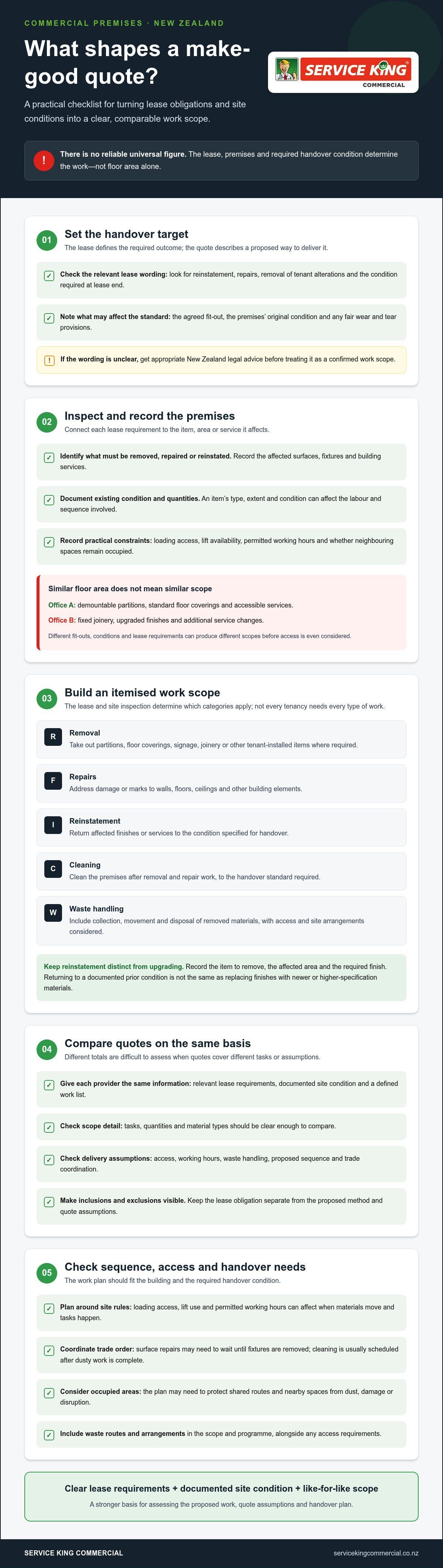
There’s no reliable universal figure for how much does a commercial make good cost NZ without reviewing the lease, inspecting the premises and defining the work. Floor area alone does not show how much needs removing or repairing. Tenancies of similar size can have different fit-outs, service layouts and conditions, and therefore different scopes.
Keep the lease obligation separate from the proposed method and quote assumptions. The lease describes the required outcome. A quote should explain how the work could be completed, the sequence and access required, and what is included or excluded. The method can vary, but it should address the same agreed handover condition.
To turn the obligation into a practical scope, note:
- What must be removed, repaired or reinstated.
- Which surfaces, fixtures and building services are affected.
- What access, working hours and waste handling the proposed work assumes.
How does the lease set the make-good standard?
Look for wording about reinstatement, repairs, removal of tenant alterations and the condition required at the end of the lease. The agreed fit-out, the premises’ original condition and any fair wear and tear provisions may affect the work expected. Lease terms vary, so don’t assume one standard phrase applies to every tenancy. If the wording is unclear, get appropriate New Zealand legal advice before treating it as a confirmed work scope.
Record each relevant clause alongside the item it affects. For example, a requirement to remove tenant alterations may apply to partitions or signage, while a repair clause could cover damage to walls or flooring. These examples do not replace interpretation of the actual lease. They help organise the questions to resolve before requesting a quote.
Why can two commercial make-good projects differ?
Consider two Auckland offices of similar size. One has demountable partitions, standard floor coverings and accessible services. The other has fixed joinery, upgraded finishes and additional service changes. If the lease requires different items to be removed or reinstated, the scopes will differ before access is even considered.
Site conditions matter too. Restricted loading access, limited lift availability, occupied neighbouring spaces or permitted working hours can affect how trades sequence tasks and move materials. These are quote assumptions, not changes to the lease obligation. Ask for them to be stated clearly so you can assess whether the proposed method and programme suit the premises and handover requirement.
Which work items drive a commercial make-good quote?
A quote is easier to assess when it breaks the project into specific tasks. The lease and site inspection determine which categories apply; not every tenancy needs every type of work.
Common scope categories include:
- Removal: Taking out partitions, floor coverings, signage, joinery or other tenant-installed items where required.
- Repairs: Addressing damage or marks to walls, floors, ceilings and other building elements.
- Reinstatement: Returning affected finishes or services to the condition specified for handover.
- Cleaning: Cleaning the premises after removal and repair work, to the standard required for handover.
- Waste handling: Collecting, moving and disposing of removed materials, with access and site arrangements included in the plan.
For anyone asking how much does a commercial make good cost NZ , an itemised scope is the useful starting point. Quantities, material types and existing condition affect the labour and sequence involved. Removing a few lightweight partitions differs from dismantling extensive fixed joinery. A worn surface may need a different repair approach from one that is sound but marked during removal.
How do fit-out removal and reinstatement affect scope?
Removal should be limited to items the lease requires the tenant to take out. These may include partitions, floor coverings, signage or fixtures installed during the tenancy. Removing an item can expose unfinished flooring, fixing holes or damage to adjacent surfaces, which may need separate repair tasks. The scope should distinguish this making-good work from any upgrade or improvement.
That distinction matters. Reinstating a documented prior condition is not the same as replacing finishes with newer or higher-specification materials. A clear scope records the item to remove, the affected area and the required finish. This keeps the work aligned with the handover requirement rather than expanding into unrelated refurbishment.
How do access, trades and waste affect the work plan?
Access arrangements shape the practical sequence. Building rules, loading access, lift use and permitted working hours can affect when materials move and which tasks can happen together. If parts of the site remain occupied, the plan may also need to protect shared routes and nearby areas from dust, damage or disruption.
Some tasks require different trade skills or must follow earlier work. Surface repairs, for example, may need to wait until fixtures are removed, while cleaning is usually scheduled after dusty work is complete. Waste volume, handling routes and disposal arrangements also belong in the scope. Commercial end-of-lease and make-good services can bring related work items and trades into one coordinated project plan.
How can you compare commercial make-good quotes fairly?
Give each quote the same information: relevant lease requirements, documented site condition and a defined list of work. If each quote covers a different scope, the totals will not show which one best fits the handover requirement. A consistent comparison reveals what is included, what is assumed and what sits outside the quoted work.
- Scope and quantities: Record the areas and items to be removed, repaired, reinstated or cleaned, including measured quantities where available.
- Materials and finish: Note specified materials, replacement details and the required finish for affected surfaces.
- Access and programme: Compare access arrangements, working-hour assumptions, task sequence and expected duration.
- Waste and protection: Check how waste handling is covered and whether protection for shared or occupied areas is included.
- Exclusions and GST: List excluded work and confirm whether each quoted total includes GST or states it separately.
What should a make-good quote specify?
A useful quote describes the work instead of relying on broad labels such as “make good”. Where applicable, look for separate items for removal, repairs, reinstatement, cleaning and waste handling. Check the assumptions behind access, materials and quantities. The quote should also explain how additional work will be handled if inspection reveals concealed damage or a condition that could not be assessed beforehand.
Compare those details against the same lease requirements and site records. A lower total may reflect a narrower scope, different materials or exclusions, rather than a more efficient way to complete identical work. Get unclear items described before comparing the overall figures.
How do coordinated and separate work scopes compare?
Separate trade quotes can suit a straightforward project with clearly divided tasks. They can also split responsibility across removal, repairs and cleaning, so you’ll need to align the sequence and clarify who manages overlaps. A coordinated scope can organise related tasks and trades together, which may help when a project involves several stages or access constraints. Compare the options based on project complexity, responsibilities and programme assumptions, not the delivery model alone.
Check who arranges site access, protects affected areas, coordinates trade timings and handles variations. These responsibilities can affect how smoothly the work fits the handover schedule, even if they do not change the lease requirement. For a joined-up approach to related work items, commercial make-good and end-of-lease services can bring the scope and trade tasks into one project plan.
To answer how much does a commercial make good cost NZ for your premises, compare like with like before focusing on the total. Keep the lease, site notes and quote assumptions together. That gives you a clearer basis for identifying scope gaps and planning the handover.
How should you plan and budget for make-good work?
Start early enough to resolve the scope before move-out pressure builds. Access arrangements, trade sequencing and landlord approval requirements can affect the work plan. A clear sequence also helps separate confirmed tasks from items still awaiting a decision, giving you a more useful basis for budgeting.
- Review the lease. Identify the relevant reinstatement, repair and removal requirements. If the wording is unclear, seek appropriate New Zealand legal advice before treating an interpretation as final.
- Assemble project information. Gather fit-out records, condition evidence and known landlord instructions. List tenant-installed items and areas that may need attention.
- Arrange a site inspection. Compare the documents with the actual premises. Record access rules, operational constraints and the required handover timing.
- Agree the work scope. Set out required tasks, assumptions, exclusions and any landlord approvals needed. Record decisions and changes in writing.
- Sequence the work and handover. Allow time for trades, access and final checks. Keep a record of completed work and agreed handover arrangements.
What information should you assemble before requesting a scope?
Bring together the lease, fit-out records, available condition reports or photographs, and any written landlord instructions. List tenant-installed items, such as partitions, signage or joinery, and note areas with damage or changes. Include building access arrangements, operational constraints and the handover date. Record the existing condition and agreed changes in a way that fits the lease and landlord instructions.
A commercial lease handover checklist can help keep documents and actions organised. Use it to track what’s known, what needs a decision and who is responsible for each item. This reduces the chance of losing a scope detail between lease review, inspection and the work plan.
When should you arrange a site inspection and agree the work?
Arrange an on-site review while there’s still time to resolve differences between the written requirements and the premises. An inspection can identify actual quantities, access constraints and visible repair needs. After the review, record the agreed tasks, exclusions, assumptions and changes. If it reveals additional work, document how that work will be assessed and approved before adding it to the scope.
Set a practical sequence working back from the handover date. Removal may need to happen before repairs, with cleaning after dusty work is complete. Include time for access arrangements, trade coordination and landlord approvals where required. To organise work around your premises and handover needs, arrange commercial make-good support.
For a clearer view of how much does a commercial make good cost NZ , base the budget on the agreed scope and distinguish confirmed work from unresolved items. Keep the lease, inspection notes, written decisions and work plan together. This gives everyone a consistent reference as the project moves towards handover.
How Service King Commercial can support a NZ make-good project
Service King Commercial provides commercial end-of-lease and make-good services for property handovers in Auckland and across New Zealand. The work is tailored to the premises, lease requirements and handover needs, rather than assuming every site requires the same tasks.
Where a project includes several work items, coordinating make-good tasks with relevant building repairs and trade services can help organise responsibilities and sequencing. The agreed work depends on the lease and site conditions. It may involve removing specified tenant-installed items, repairing affected surfaces or completing reinstatement tasks. These are examples, not a standard package for every tenancy.
What can a coordinated make-good service cover?
A coordinated scope can bring related tasks into one plan. If the lease requires partitions to be removed, for example, the scope may also need to address resulting surface repairs. If reinstatement is required, describe the relevant finish or building element. Cleaning can also form part of end-of-lease work when needed for the agreed handover.
Each task should relate to the lease, the premises and the agreed work requirements. Clear boundaries distinguish required make-good work from unrelated upgrades. They also give trades a practical reference for their responsibilities and how each task fits into the overall sequence.
For teams considering how much does a commercial make good cost NZ , a generic figure cannot account for a specific tenancy’s requirements. Discussing the premises and handover scope is a more useful first step. It helps establish what needs to be assessed without treating an indicative figure as a project price.
How can Auckland businesses take the next step?
Bring together the lease requirements you’ve identified, details about the premises, the lease-end timing and any known handover instructions. Note which areas or tenant-installed items may need attention, along with access arrangements or operational constraints. This information supports a practical discussion about the scope and work sequence.
Where several trades or work stages are involved, coordination can clarify how tasks relate and which need to happen first. A commercial trade services buying guide can also help frame what to consider when planning trade work. Start by defining the project requirements rather than relying on a generic price or assuming a particular handover result.
Service King Commercial can discuss commercial make-good and end-of-lease work in relation to your premises, lease requirements and handover needs. Discuss your make-good project with the lease-end timing and known requirements ready, so the conversation can focus on the work to be scoped.
Set up your next move with a clear handover brief
Before the move-out period gets busy, bring the lease requirements, site records and handover date into one working brief. Note what’s settled, what still needs a decision and who needs to approve changes. This gives your team a shared reference as the work is scoped and helps keep new requests visible.
The question of how much does a commercial make good cost NZ is easier to address when the discussion starts with the actual premises and a defined handover target. A prepared brief turns uncertainty into practical next steps without relying on a generic estimate.
When you’re ready to discuss the work, discuss your commercial make-good project with Service King Commercial. Bring a clear starting point to the conversation and move towards handover with better-organised decisions and a more manageable plan.
Frequently Asked Questions
Can a landlord require a commercial tenant to pay for make-good work?
It depends on the lease and the condition the tenant agreed to return the premises in. Review the relevant clauses alongside written approvals or records of fit-out changes. For example, an approved alteration may still have a removal requirement at lease end. If the wording is unclear or disputed, get advice from a qualified New Zealand property lawyer before agreeing to the work scope or accepting liability.
Can commercial make-good work be completed by the tenant?
A tenant may be able to arrange the work, subject to the lease, landlord requirements, building rules and type of work involved. Some tasks may need qualified trades or controlled access to building services. Before starting, agree in writing who will carry out the work, how completed items will be reviewed and what records to retain. Keep invoices, trade documentation and completion photographs together for the final inspection.
Does a make-good quote include GST?
Check the written quote, as totals may be shown inclusive or exclusive of GST. For a fair comparison, use the same basis and make sure allowances, exclusions and additional work are clearly stated. If you’re weighing up how much does a commercial make good cost NZ , a total without its GST treatment can make one quote appear lower than another. Have the quote basis stated clearly before comparing figures.
Can make-good requirements be negotiated before signing a commercial lease?
Yes, the parties can discuss make-good terms before signing, and the final wording depends on what they agree. Raise fit-out removal, reinstatement requirements and how the starting condition will be recorded before committing. A commercial property lawyer can explain the effect of proposed clauses. Make sure agreed changes appear in the signed lease, rather than relying on informal discussions or separate notes that may not reflect the final agreement.
What happens if make-good work is not finished by the lease handover date?
The outcome depends on the lease, agreed handover arrangements and the landlord’s response. An unfinished task can also affect access for remaining trades or the final inspection. Raise likely delays as soon as they become clear, then record revised dates or arrangements in writing. If the parties disagree about the obligation or possible liability, seek advice from a qualified New Zealand property lawyer before accepting a proposed resolution.
Should a tenant use the landlord’s contractor for make-good work?
Not necessarily. The lease or agreed handover process may set conditions for contractor approval, access or review of completed work. Before appointing anyone, establish who controls site access and how the landlord will assess the agreed scope. For example, confirm whether the landlord needs to inspect particular work before it’s covered or removed. If there’s disagreement over the required work or responsibility, get legal advice.
Recent Posts