
November 28, 2026
A repair rarely stays a single-trade job for long. Finding a new building maintenance provider in Auckland means looking beyond the immediate fault. You need a practical way to manage routine upkeep, arrange repairs and coordinate the trades involved across the property.
Organising building maintenance helps property owners and managers handle related jobs as a coordinated programme, rather than as isolated tasks. The right approach depends on the building, the repairs required and how trades need to work together.
This article explains what building maintenance can include, how trade coordination works and what to consider when choosing a provider for commercial property. It also covers how scheduled maintenance supports day-to-day upkeep and where Service King Commercial’s building repair, exterior maintenance and trade services fit.
Key Takeaways
- Identify which upkeep tasks affect shared property so maintenance can be planned around the building’s needs.
- Separate urgent repairs from make-good work and set out the scope before trades begin.
- Match commercial maintenance to how the property is used, including routine upkeep and exterior work.
- Coordinate trade visits, work sequences and updates through a clear process to keep repairs organised.
Table of Contents
Body corporate and common property upkeep
For Auckland body corporates, maintenance covers shared areas and building components. A clear scope distinguishes routine upkeep from repairs that need trade coordination.
Common property upkeep
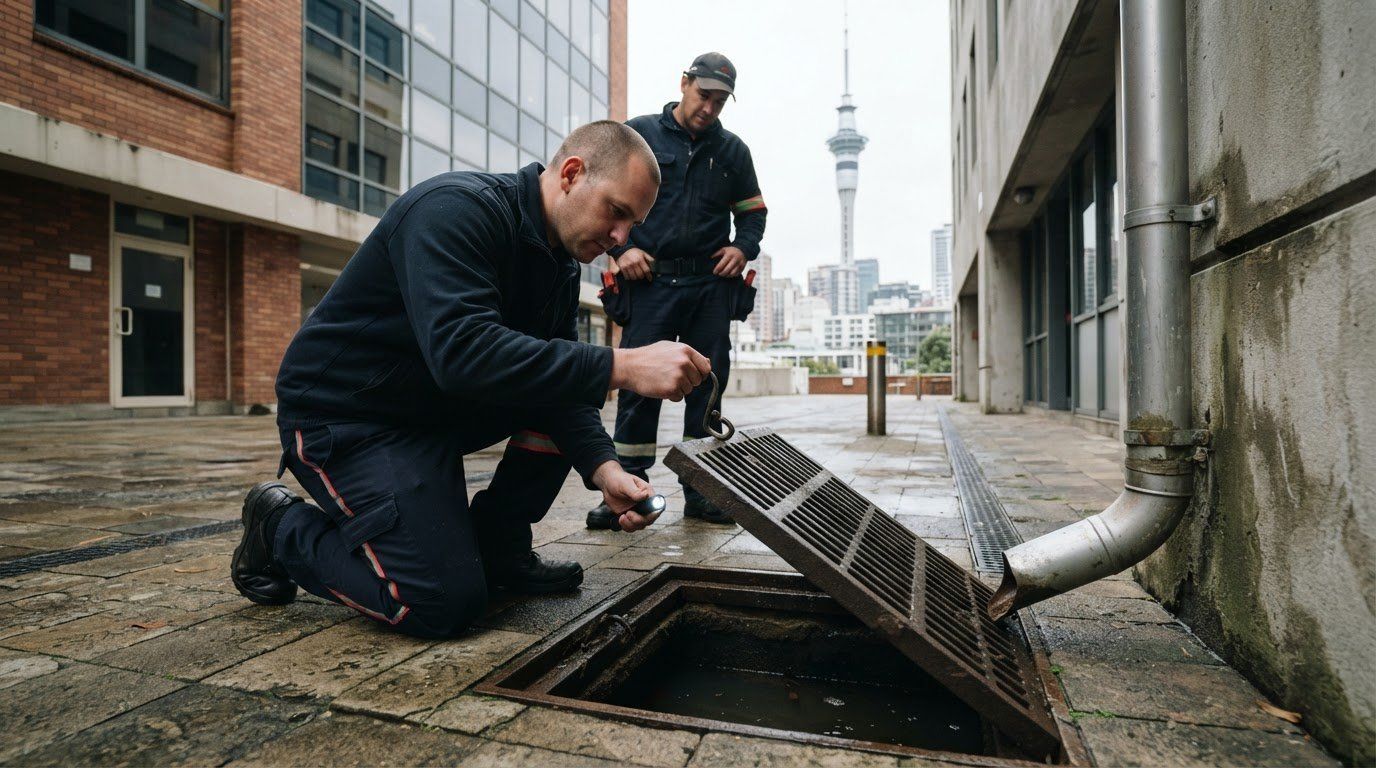
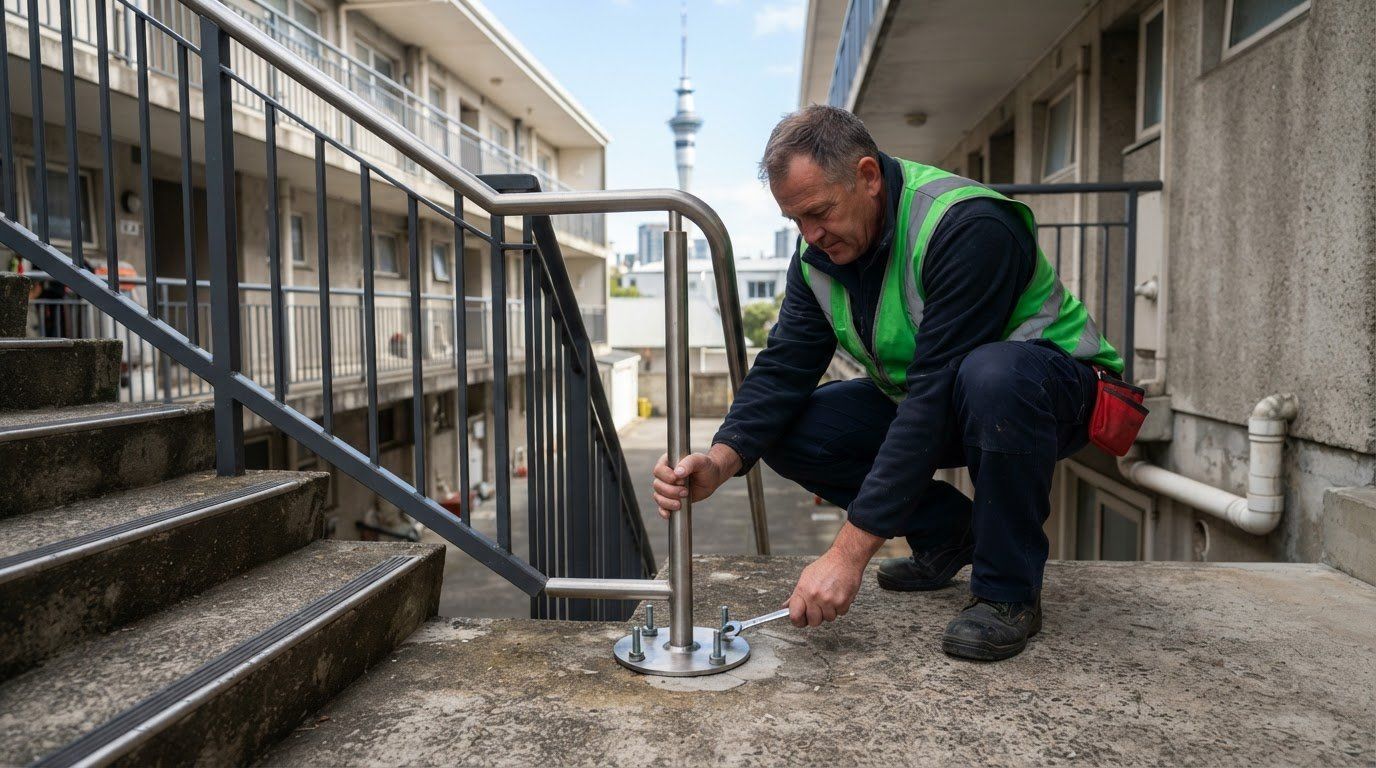
Common property can include shared entrances, corridors, stairwells, roofs, façades and grounds. List each area and the work it needs, such as clearing blocked gutters or repairing damaged handrails. This helps the body corporate distinguish work affecting shared access from issues within an individual unit.
Residential complexes with 30 or more units may benefit from building management services. Building managers may also oversee compliance with requirements such as a Building Warrant of Fitness (BWOF). These responsibilities make it useful to define how maintenance records, reported faults and follow-up work are managed.
Start with a property list, then record every issue with its location and priority. A leak above a shared corridor, for example, needs a defined repair scope and updates for the body corporate. This gives the committee a clear view of outstanding work and keeps separate reports connected to the same repair.
Checking provider credentials
When assessing a provider, look for experience relevant to comparable Auckland properties. Ask for specific examples and references that describe the building type, maintenance work and follow-up. Details of a job, such as coordinating a roof repair or maintaining shared access areas, are more useful than a general endorsement.
Read reviews for recurring, specific details rather than relying on an overall rating. Comments about communication, job records and trade coordination can show how a provider manages day-to-day work. Compare these details with the body corporate’s needs, including how committee members will be kept informed about repairs.
Experience should match the property’s actual demands. A provider familiar with multi-unit buildings may understand shared-area work, resident access and committee reporting. Clarify who records issues, organises follow-up and reports completed work. These responsibilities help you judge whether the provider’s experience suits the building.
Building repairs and make-good work
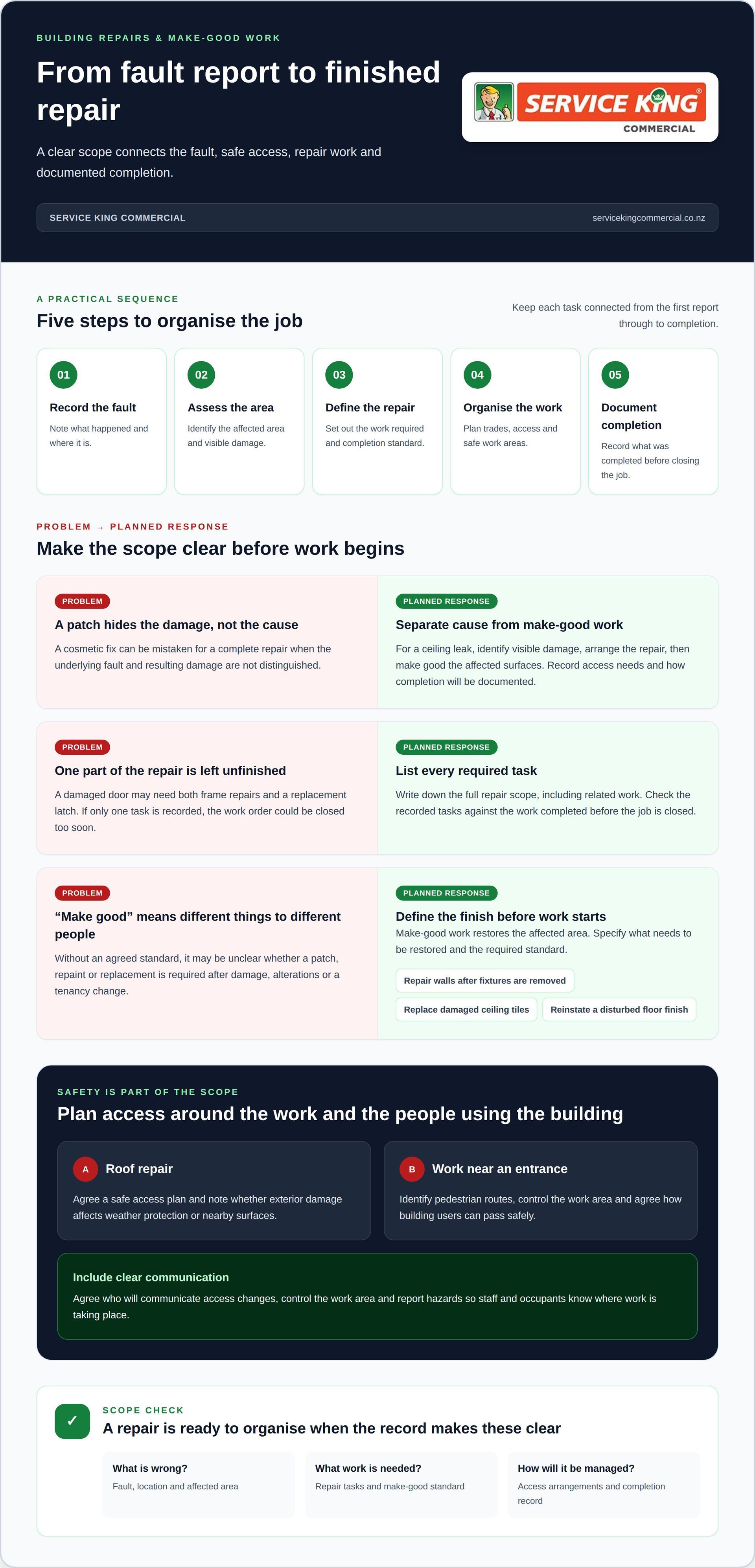
For maintenance work in New Zealand, plan tasks around site hazards and safe access. Before repairing a damaged entrance, for example, identify pedestrian routes, control the work area and agree how building users can pass safely. Clear communication helps staff and occupants understand where work is taking place.
A useful repair scope records the fault, its location and the work required. For a ceiling leak, this could include identifying visible damage, arranging the repair and making good affected surfaces. Distinguish the cause from the resulting damage so a cosmetic patch is not mistaken for a complete repair. Also record access needs and how completion will be documented.
Make-good work restores an area after damage, alterations or a tenancy change. Examples include repairing walls after fixtures are removed, replacing damaged ceiling tiles and reinstating a disturbed floor finish. Define the required standard before work starts. This gives the team a clear completion target and reduces disagreement about whether a patch, repaint or replacement is needed.
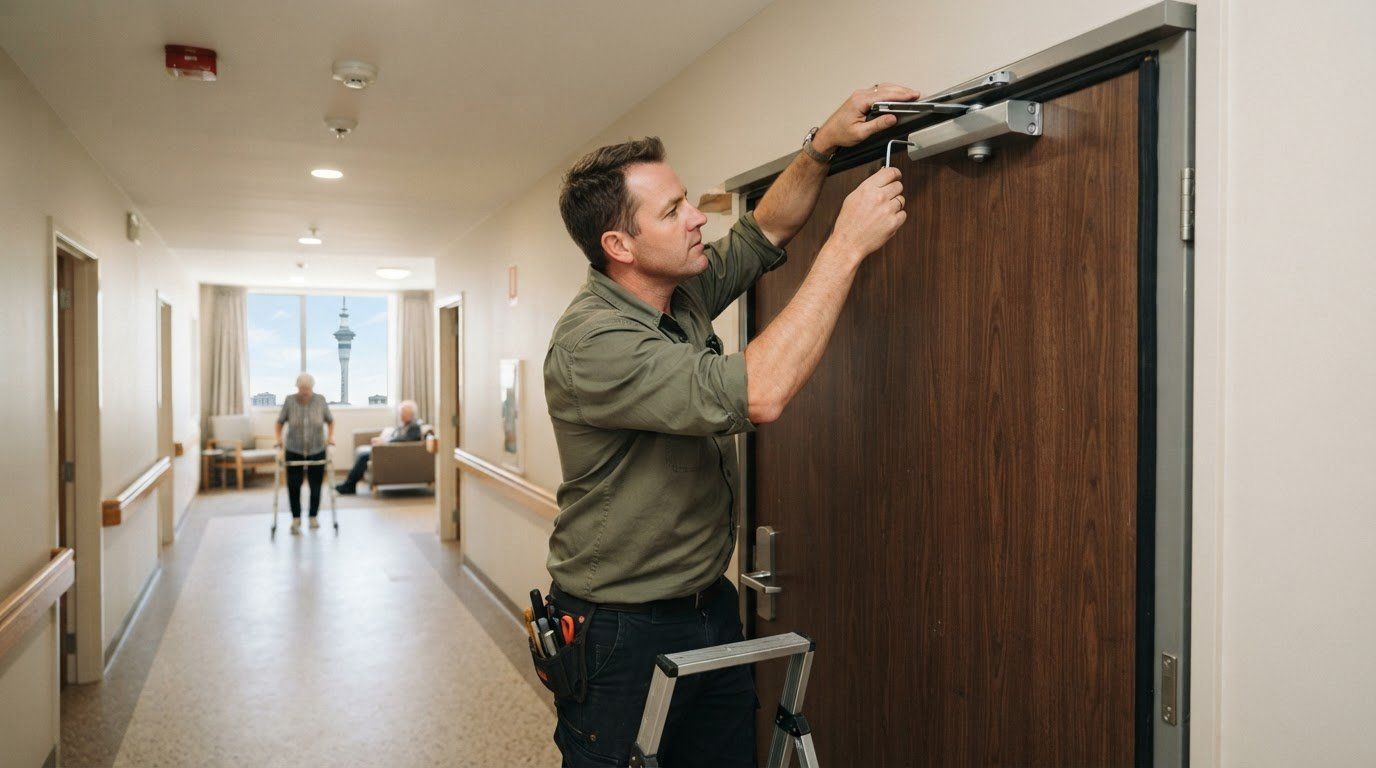
Use a consistent sequence for each job: record the fault, assess the affected area, define the repair, organise the work and document completion. A damaged door, for instance, may need both frame repairs and a replacement latch. Recording both tasks reduces the risk of closing the work order after only one is finished. For exterior damage, note whether the repair affects weather protection or nearby surfaces.
Make safety arrangements specific to the task. A roof repair needs a safe access plan, while work near an entrance needs clear routes for people using the building. Agree who will communicate access changes, control the work area and report hazards. This keeps safety integrated with repair planning.
Commercial property maintenance
Commercial maintenance combines planned upkeep, repairs and trade work. Set the scope according to the building’s use, condition and operational needs.
Provider credentials and insurance
Auckland property owners should assess a provider’s insurance coverage and experience managing similar properties. Match credentials to the work involved. For example, a provider arranging a specialist repair needs to identify who will carry out the task and what qualifications that work requires.
There is no single set of credentials for every maintenance task. List the work in scope, then confirm the relevant licences or certifications for those tasks. Ask for evidence of insurance and clarify what it covers. This keeps the assessment focused on the building’s actual needs, not a general claim of capability.
Contract terms and response times
Building maintenance can include scheduled upkeep, repairs, exterior work and trade coordination. Established exterior contractors, such as Sabrina's Window Cleaning, illustrate how specialised services like pressure washing and exterior glazing care can be integrated into wider upkeep programmes. Set out which tasks the agreement covers, how to report faults and who approves additional work. It should also explain how jobs are recorded and how updates reach the property manager.
Set response expectations according to the type of issue. A leak affecting an occupied area may take priority over a damaged finish in a low-use space. Agree how urgent and routine requests will be assessed, acknowledged and scheduled. Clear terms reduce uncertainty without promising a fixed completion time for every repair.
Changing maintenance providers
Plan the handover around active jobs and building records. List open work orders, recurring faults, access arrangements and scheduled tasks. Then agree which items transfer, who holds the relevant records and when the new service begins. For an unresolved roof leak, for example, document its status and the next action.
Keep communication with building users consistent during the change. Give the incoming provider relevant site information, including access procedures and known maintenance issues. A staged handover can help maintain continuity as outstanding work moves into the new process.
Risks of changing providers
Incomplete records can lead to missed follow-ups, duplicated work or uncertainty about unfinished repairs. Changes to access arrangements can also disrupt planned maintenance. Reduce these risks with a written handover list that gives each open task’s location, status and next step.
A service gap can affect building operations when a fault remains unresolved. Keep priority issues visible during the transition, assign responsibility for each one and record completed work. This gives property owners a clear view of outstanding tasks as the new arrangement begins.
Coordinating repairs and maintenance trades
A repair may involve several trades, each with a different task. A ceiling leak, for example, could require roof repairs, an assessment of drying needs and ceiling work. The sequence matters: completing interior work before fixing the roof can mean redoing finished surfaces. A coordinator maps dependencies and links each job to the original fault.
Begin with a clear work order. Record the affected area, visible damage, access arrangements and required outcome. Then identify the trade needed for each task; for residential property upkeep, homeowner platforms such as TradieLink demonstrate how online networks can simplify finding specific trade professionals. Repairing a damaged exterior wall, for instance, may involve assessing the surface, completing the repair and reinstating the finish. A specific scope makes clear where each trade’s work starts and ends.
Schedule trades in the order the building requires. A plumber should complete leak repairs before a painter fixes water-stained walls. Confirm access for each visit and share relevant site details. If a trade discovers additional damage, record it and agree how it affects later tasks before changing the schedule.
Coordination should also account for how the building is used. A noisy repair near reception may need a different work window from one in a vacant storeroom. Tell affected occupants which area is involved, what access changes apply and when the next trade is due. Keep progress, decisions and outstanding tasks in one job record, not scattered updates.
Close the work only after each task is recorded as complete. Compare the original scope with the finished work, note any remaining defects and assign a follow-up. For a leak repair, record both the source repair and reinstatement of damaged surfaces. This gives the property manager a useful history for future maintenance planning. For help organising repairs across trades, arrange coordinated building maintenance.
The European Union says the specification requires contractors to be insured for accidents during alteration and repair work. Include this requirement when assigning each trade and confirm it before work begins. Keep the insurance check with the job record, alongside the agreed scope, access arrangements and completion notes. This helps keep the requirement in view throughout the repair sequence.
Service King Commercial
Service King Commercial supports Auckland property owners with building repairs, exterior upkeep and related maintenance. Turn to the team when faults need a defined scope, several repair tasks need coordinating or the property needs scheduled maintenance.
For example, a damaged exterior surface may need repair and reinstatement. A clear scope helps organise the work and keep the property manager informed. Service King Commercial also provides end-of-lease services when a tenancy change leaves areas needing attention.
Share the building’s maintenance needs and the work requiring attention with Service King Commercial to discuss property repairs and maintenance.
Set a clear starting point for maintenance
When finding a new building maintenance provider in Auckland, treat the change as an operational handover, not simply a new agreement. Set out the property’s priorities, the work that must continue and the outcomes you need. A concise brief gives the next conversation a practical focus.
Think about what a useful working relationship should look like over time. Agree how updates will be shared, how new work will be raised and how completed tasks will be recorded. These arrangements connect day-to-day maintenance with the way the property is managed.
Service King Commercial can discuss your property’s maintenance needs and the work you want to organise. Contact Service King Commercial to start that conversation. A clear first step can make the transition easier to manage.
Frequently Asked Questions
How do I find and shortlist building maintenance providers in Auckland?
Shortlist Auckland providers by matching their work to your property’s needs. If you’re finding a new building maintenance provider in Auckland, first define the building type, recurring tasks and likely repairs. Then compare service scopes, relevant experience and references for similar properties. Note how providers record completed jobs and coordinate trades. This makes the shortlist reflect operational fit, not just a broad service description.
What questions should I ask before hiring a new building maintenance provider?
Ask how the provider scopes work, assigns responsibility and reports progress. Find out how they handle additional work uncovered during a repair and what information they need to begin. Request a sample job record or reporting format to see how tasks and follow-ups are documented. Clarify what the agreement includes and how changes are approved before extra work proceeds.
Recent Posts