
November 27, 2026
A maintenance plan earns its place by identifying building issues before they become disruptive repairs. For multi-site property maintenance in Auckland, that means planning preventative work across each site and having a clear process for reactive repairs when faults arise. Tasks should reflect each building’s use and condition.
Managing several commercial or industrial properties means balancing different needs, from roof drainage and exterior condition to heating, ventilation and plumbing. Regular gutter cleaning, HVAC servicing and plumbing inspections can help reduce the risk of costly repairs. Licensing and insurance are also important considerations when arranging maintenance work across multiple sites.
This article explains what commercial property maintenance covers and how planned and reactive work fit together. It outlines tasks for different building types, how routine upkeep can help identify repair needs, and what to consider when building a practical maintenance programme. It also explains how to coordinate work across sites without treating every building as identical.
Key Takeaways
- Map plumbing, electrical and other trade needs across each building so maintenance work reflects its condition and use.
- Use planned inspections to spot developing faults, then schedule repairs before they disrupt building operations.
- Include gutters, HVAC systems and plumbing in routine upkeep to help reduce the risk of costly repairs.
- Match maintenance plans to each commercial or industrial site, with a process for handling failures between planned visits.
Table of Contents
What does commercial property maintenance include?
Commercial property maintenance covers the building fabric, essential systems and trade work needed to keep each site functional. At an Auckland office, that can include roof and exterior checks, plumbing repairs, electrical work, HVAC servicing and general building repairs. The task list should reflect each property’s use, condition and equipment.
Plumbing work can address leaks, blocked drains and faulty fittings. For properties that rely on onsite wastewater or septic infrastructure, specialist providers like aero-stream.com offer remediation systems designed to restore and maintain drain field function. Electrical maintenance can cover reported faults, lighting and building systems. HVAC servicing focuses on heating, ventilation and air-conditioning equipment. Other building trades may handle doors, locks, roofing and exterior defects. For a portfolio, record each issue against its building and system so recurring faults are visible.
When organising maintenance, consider how each building will be assessed, how trades will be coordinated, and how work orders and completed jobs will be recorded. A clear process should show who receives a fault report, how the issue is prioritised and how follow-up repairs are documented.
Commercial maintenance risks include worsening leaks, electrical faults, blocked drainage and unsafe defects. Work should take account of relevant New Zealand requirements and site hazards. The trade skills and insurance needed depend on the work and the risks involved.
Multi-site maintenance costs depend on the building, its condition, access and the trades required. A clear scope for each site and job helps define the work and prepare a quote.
Auckland portfolio work is generally suited to commercial maintenance contractors that coordinate building trades across sites. Work orders can be logged by property, categorised by fault and assigned for inspection, repair and close-out, creating a record of outstanding and completed work.
To set up a maintenance programme, compile the site list, note building systems and known faults, agree the scope, then establish reporting and work-order procedures. This gives each property a defined plan without assuming every site needs identical work.
How can professional maintenance help prevent costly repairs?
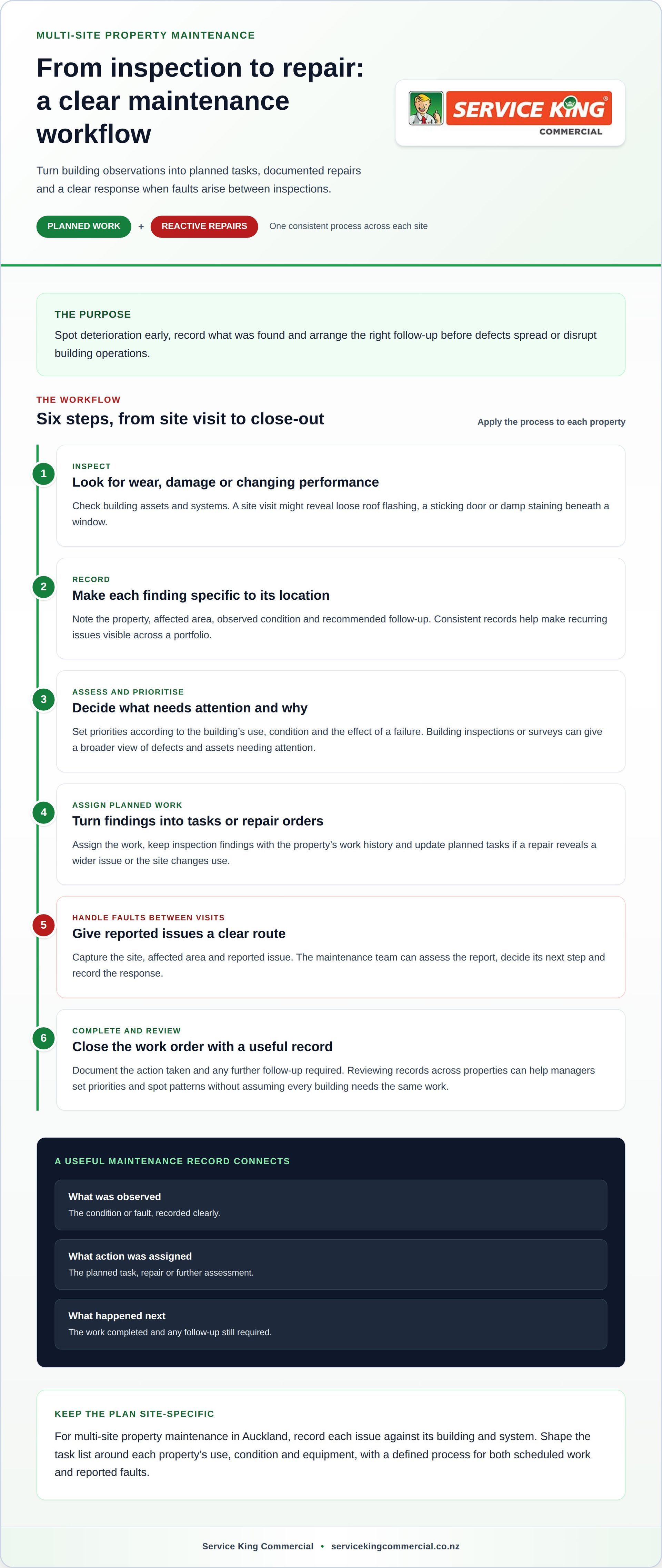
A planned approach to multi-site property maintenance in Auckland can help teams identify deterioration and arrange work before defects spread. Regular inspections create a record of condition, while a maintenance plan sets out how findings become scheduled tasks or repair orders.
Preventative Inspections
Inspections look for signs of wear, damage or changes in performance across building assets. A site visit, for example, may identify loose roof flashing, a sticking door or damp staining beneath a window. When dealing with water ingress and exterior wear, specialist contractors such as UEC Roofing demonstrate how prompt leak repairs and preventative tune-ups protect building fabric. Record the location, observed condition and recommended follow-up for each finding. For multi-site property maintenance in Auckland, consistent records also make recurring issues easier to identify.
Maintenance Plans and Building Surveys
A maintenance plan turns inspection findings into assigned work, with priorities based on building use, condition and the effect of a failure. Building inspections and surveys can help establish a broader view of defects and assets that need attention. Keep their findings with the property’s work history, then update planned tasks when a repair reveals a wider issue or a site changes use.
For instance, an inspection may identify deterioration around a loading-bay entrance. The maintenance team can assess whether it is isolated or linked to nearby exterior components, then define the follow-up work. This helps ensure the repair addresses more than the visible symptom.
Useful records connect each inspection to a decision. Note what was observed, what action was assigned and whether further assessment is needed. Reviewing these details across properties can help managers set priorities and spot patterns without assuming every building has the same needs.
Plans should also leave a clear route for faults reported between inspections. Staff can submit the site, affected area and issue, allowing the maintenance team to assess the report and record its next step. A scheduled maintenance programme can organise planned tasks and follow-up work across multiple properties.
General property maintenance tasks
Routine work covers visible building components and shared areas, not only mechanical systems. At an Auckland retail site, tasks may include checking door closers, window seals, exterior paint, signs and pedestrian paths. At an office, attention may shift to floor finishes, internal doors, ceiling tiles and shared kitchens. A site-specific task register makes these differences clear.
- Inspect exterior walls, cladding and sealants for cracks, loose sections or water marks.
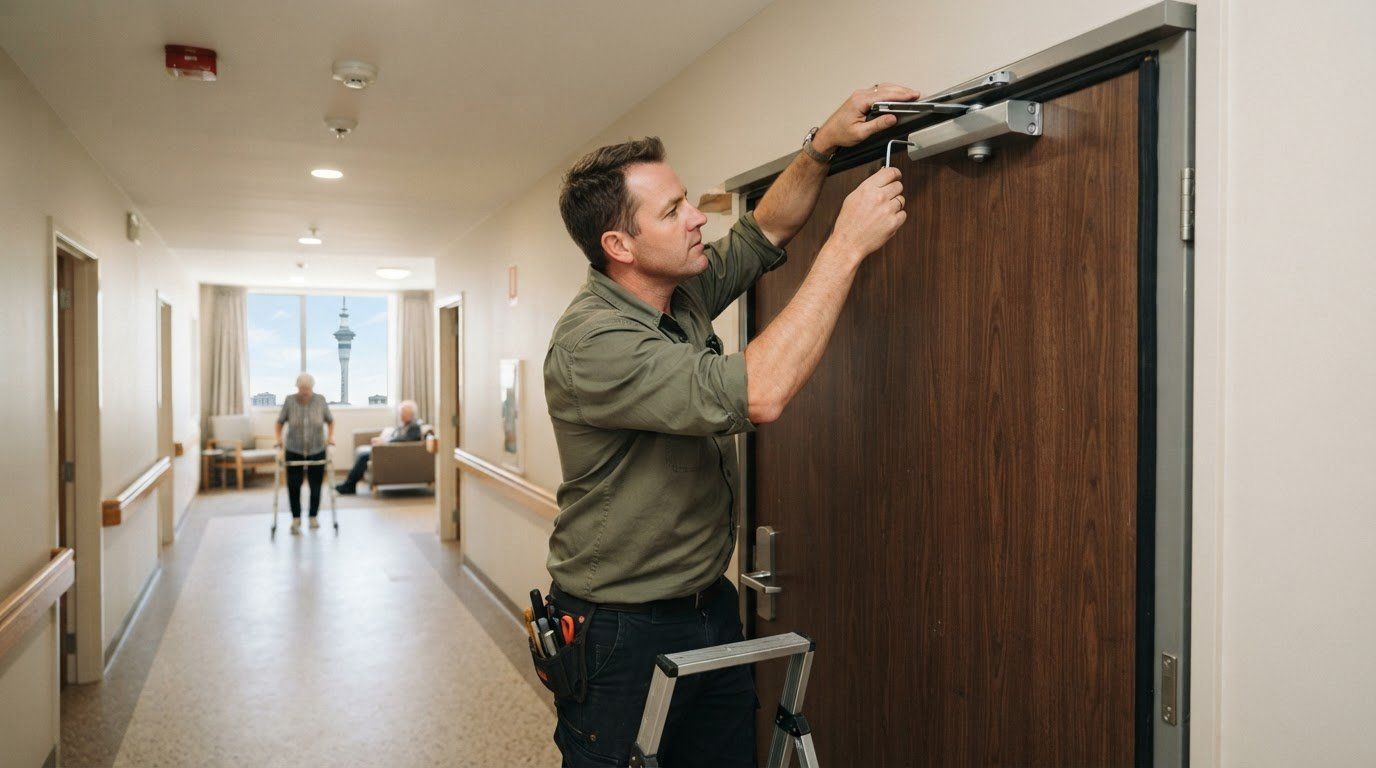
- Check doors, hinges, locks and window fittings for damage or poor operation.
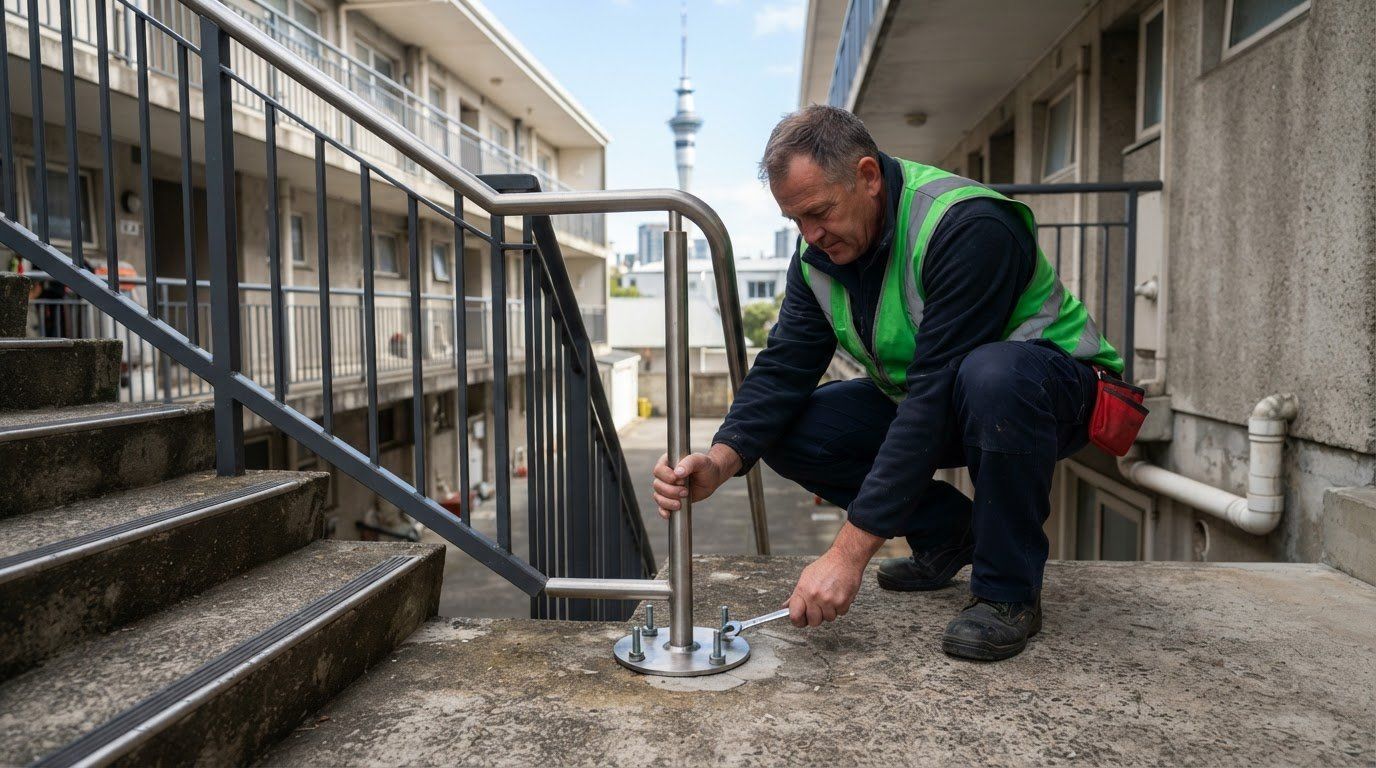
- Review paths, steps, car parks and line markings for surface wear or trip points.
- Replace damaged ceiling tiles, wall finishes or floor coverings in shared areas.
- Check signs, external lights and access points for damage or faults.
Record each task’s location and outcome. For example, note whether a loose door closer affects the main entrance or a staff-only room. This helps direct the repair and prevents a general work order from obscuring the affected area. Photographs can support the record when they clearly show the defect.
Portfolio managers can group repeat tasks by building type, then adjust the register for individual sites. A warehouse may need checks on loading-bay doors and marked vehicle routes. A customer-facing premises may need closer attention to entrances, signage and worn flooring. Grouping similar work helps organise site visits, while separate records preserve each building’s history.
Close each work order with the action taken and any follow-up required. If a damaged ceiling tile is replaced, for example, the record should identify the room and note whether the cause also needs attention. Clear close-out notes help maintenance teams distinguish completed repairs from outstanding work across properties.
A consistent task register gives property managers a useful view of building condition. Review it when a space changes use, such as when an office becomes a customer area. Update the relevant tasks, locations and priorities so the maintenance schedule reflects how the building operates now.
Maintenance for commercial and industrial buildings
Commercial and industrial properties place different demands on building systems and shared spaces. A retail site may depend on safe customer entrances, while a warehouse relies on loading areas, doors and clear vehicle routes. A portfolio plan should account for each building’s use, equipment and operational needs.
Commercial property managers can combine planned preventative maintenance with reactive maintenance for faults that arise between scheduled work. This gives routine tasks a place in the schedule while keeping a process for unexpected issues. For example, a planned inspection may identify wear on a warehouse roller door; a later fault report can be logged and assessed separately.
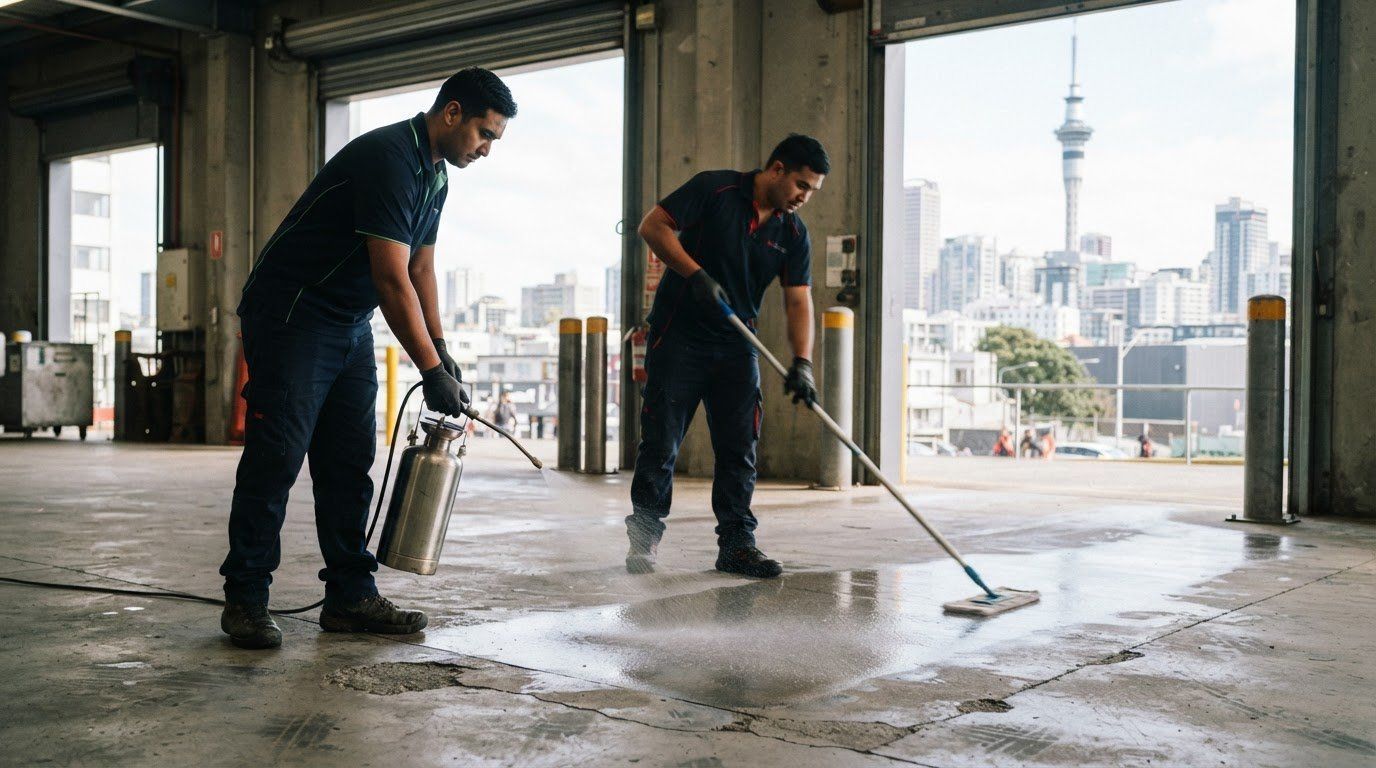
Industrial sites may need attention to loading-bay doors, roof drainage, exterior surfaces and areas exposed to regular vehicle movement. At an office or retail property, checks may focus on entrances, shared corridors, signage and finishes. The maintenance record should link each issue to its site, asset and operational impact.
Work order priorities should reflect what a fault affects. A damaged entrance door at customer-facing premises may need prompt assessment because it affects access. A cosmetic defect in a low-use storage area may follow a different schedule. Clear categories help maintenance teams assign work consistently across buildings.
Access also shapes how work is planned. Before a visit, a maintenance team may need site contacts, entry instructions and details about restricted areas. Keep those records alongside each property’s work orders so visits can be coordinated without confusing one site’s access arrangements with another’s.
Use a portfolio register to group common tasks, while keeping a separate asset and fault history for every building. This supports consistent reporting without treating a small retail unit and a large industrial site as identical. Review the register when a property changes use or new equipment is added.
For a coordinated approach to building repairs and exterior upkeep, discuss maintenance for your commercial sites.
Service King Commercial
Service King Commercial helps property managers coordinate building repairs and maintenance across commercial sites in Auckland. Turn to the team when defects need attention or exterior upkeep is part of your maintenance plan. Work is organised around each building’s condition and repair needs, rather than treating every site as identical.
For example, a portfolio may need exterior building maintenance at one property and building repairs at another. Clear site details and fault records help define the work and coordinate it across locations. Service King Commercial also provides trade services for commercial properties.
To discuss maintenance for your properties, contact Service King Commercial.
Set a clear direction for your property portfolio
A practical next step is to set a shared direction for the portfolio, rather than treating each new fault as a separate decision. For multi-site property maintenance in Auckland, align site priorities, access arrangements and reporting expectations with how each property is used.
Prepare a simple portfolio overview before planning the next stage. Include property locations, key contacts, current concerns and existing maintenance records. This gives the discussion a clear starting point and helps separate immediate needs from longer-term planning. Keep the process manageable: it should be straightforward for property teams to follow and flexible enough to reflect differences between buildings.
Agree who will coordinate decisions across the portfolio and how site teams will share updates. Clear ownership helps keep maintenance plans aligned with business priorities as buildings change or new needs arise. Service King Commercial can discuss the work required across your commercial properties and help identify a practical next step.
Arrange a conversation with Service King Commercial and move towards a maintenance approach that fits your sites.
Frequently Asked Questions
Are you licensed and insured to perform property maintenance?
Service King is Fully insured and provides access to licensed tradespeople through its trade services. For a multi-site contract, match each work order to the trade involved, such as assigning an electrical fault to an electrical specialist. Include the site details and a clear description of the issue so the appropriate person can assess the work.
How fast do you respond?
Service King promotes “Rapid response” and “7 days a week support” for urgent requests and ad-hoc services. To help the team assess a report, provide the Auckland site address, affected area, fault symptoms and any access constraints. State whether the issue is stopping normal use or affecting a specific room. These details support prioritisation without assuming every fault needs the same response.
How often should professional maintenance be scheduled for my property?
There is no single schedule that suits every commercial property. Set inspection intervals by considering the building’s condition, equipment, occupancy and the consequences of a failure. A high-use entrance may need more attention than a lightly used storeroom. Review the schedule after renovations, a change in tenancy or recurring defects, then adjust tasks to reflect the site’s current use.
Planned or reactive maintenance: which do I need?
Most portfolios need planned maintenance alongside a process for reporting reactive faults. Planned work suits repeat tasks, such as reviewing a building’s exterior condition. Reactive work addresses a newly reported failure, such as a door that no longer secures. Keep separate work-order categories for scheduled tasks and unplanned faults. This helps distinguish routine visits from repair requests and track outstanding actions.
What are the benefits of using professional services for property maintenance?
Professional maintenance gives property teams access to trade services and a consistent way to record work across sites. If a tenant reports a recurring leak, a maintenance professional can assess the affected area, define the repair task and record its status for the property manager. This can reduce the effort involved in coordinating separate jobs and make decisions and follow-up clearer.
What common property maintenance issues should I be aware of?
Common issues include water entering around roof edges or window seals, loose cladding, damaged door hardware and blocked surface drains. Look for signs such as staining after rain, doors that fail to latch or water pooling near an entrance. These defects can affect different parts of a property, including internal finishes and access routes. Record each issue’s location and impact when reporting it.
Recent Posts