
October 7, 2026
A longer list of services does not necessarily make a better maintenance contract. For Auckland property managers, the key is knowing what is covered, how routine upkeep differs from repair work, and who is accountable when an issue affects tenants or building operations. To assess a commercial building maintenance contract Auckland property managers can use, start with those practical details.
It is easy to compare prices or service lists and still miss important differences in scope, repair processes and reporting. This guide explains what to look for so you can compare arrangements consistently and set clear responsibilities from the outset.
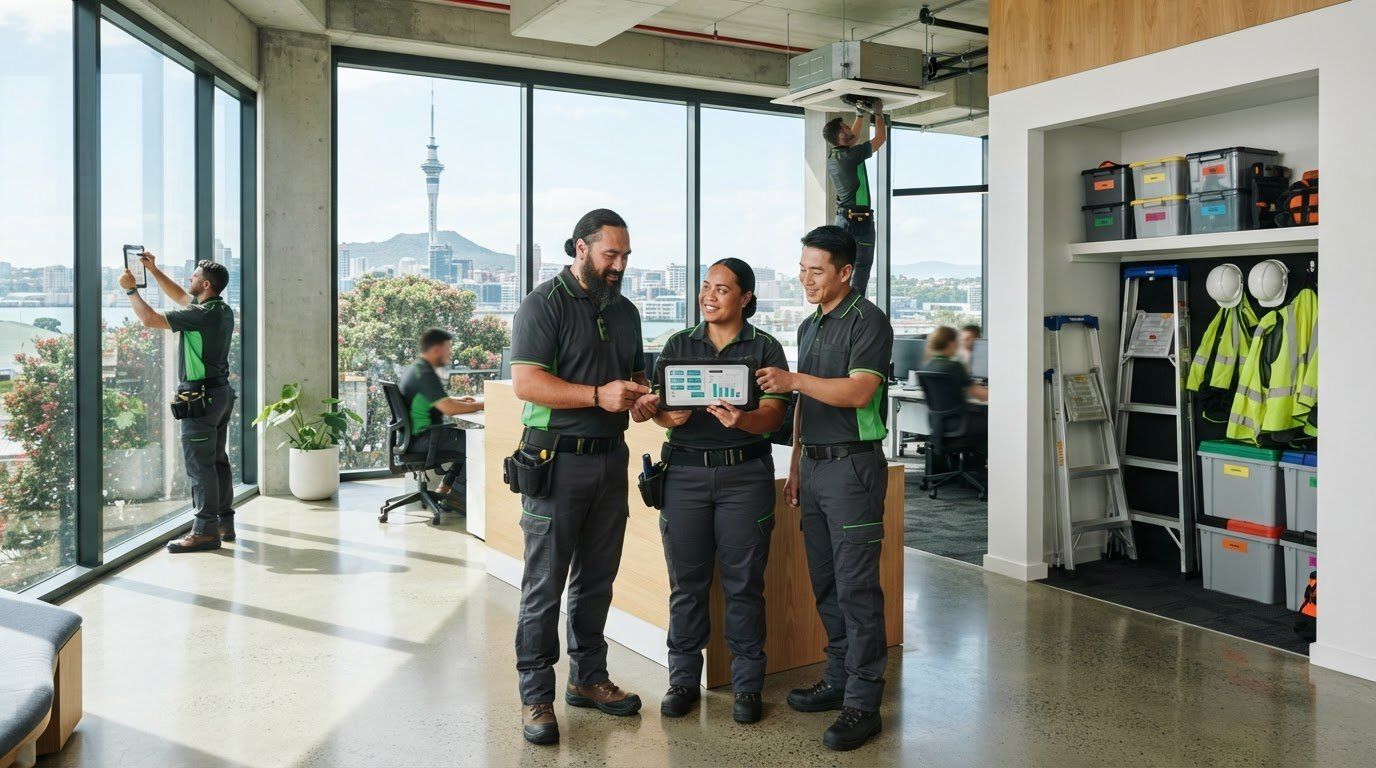
We cover contract scope, scheduled service routines, repair pathways, communication and reporting. You will also see how a site-specific programme can reflect a building’s needs and operating conditions. Service King Commercial provides scheduled maintenance, building repairs, exterior maintenance and trade services in Auckland, bringing planned upkeep and repair work into a coordinated approach.
Key Takeaways
- Define scheduled upkeep, repairs, exterior work and trade services as separate parts of the contract scope.
- Compare each commercial building maintenance contract Auckland option against the same criteria, including routines, repair processes, records and site coordination.
- Set out how maintenance requests are logged, assessed, approved and communicated to the site contact.
- Prepare site records, priorities, access details and communication arrangements before maintenance begins.
- Account for relevant Auckland conditions, such as coastal exposure, wind and heavy rainfall, when shaping a site-specific programme.
Table of Contents
- Why an Auckland commercial building maintenance contract needs clear boundaries
- What a commercial building maintenance contract in Auckland should define
- How to compare Auckland maintenance contract options fairly
- How to prepare an Auckland site for a maintenance contract
- Auckland commercial maintenance contracts with Service King Commercial
Why an Auckland commercial building maintenance contract needs clear boundaries
A commercial building maintenance contract Auckland property owners can use effectively sets out three things: the work covered, when scheduled tasks take place, and who is responsible for decisions and communication. This shared framework helps prevent routine upkeep from being confused with repairs or other property services.
Planned maintenance gives teams a repeatable way to attend to building components and record work. Addressing upkeep before a fault develops can help limit avoidable deterioration and reduce the chance of disruption, although it cannot prevent every defect or breakdown. The practical distinction is between scheduled tasks and work requested after a fault appears. For background, the broad types of maintenance include planned approaches that can inform how a programme is organised.
Set boundaries against related responsibilities. Property management commonly covers wider tenancy and property administration, while a maintenance contract focuses on agreed physical upkeep and repair responsibilities. A one-off repair addresses a particular fault rather than setting a continuing schedule. End-of-lease work prepares a space at the end of a tenancy, so treat it separately unless the agreement clearly includes it.
Owners, property managers, facilities teams and commercial tenants may all influence maintenance decisions. The owner or manager may approve work, a facilities contact may coordinate access, and tenants may report faults or need to plan around work. Naming the site contact and approval route helps everyone understand who receives updates and authorises work.
What does a building maintenance contract do?
It turns agreed tasks into a repeatable process. The contract can describe scheduled work, its timing, how requests are raised and how information is shared with the site contact. Recurring checks and upkeep follow a planned routine. A repair request begins when someone identifies a fault, then needs assessment and approval under the agreed process. The scope should reflect the building’s condition, use and operating requirements, rather than rely on a broad label such as “comprehensive”.
When does an Auckland property benefit from an ongoing arrangement?
Consider an ongoing programme if the same defects keep returning, building components are ageing, or maintenance records are spread across emails, invoices and staff handovers. A clear schedule and record-keeping approach helps the people responsible see what has been attended to and what still needs action.
Needs vary across offices, retail premises and industrial sites. Tenant access, business hours, equipment use and busy areas all affect when work can be organised. For example, access to a shared office area may need coordination with occupants, while work in an active industrial space needs to be planned around site operations. Planning around actual use makes the arrangement more practical and keeps responsibilities clear.
What a commercial building maintenance contract in Auckland should define
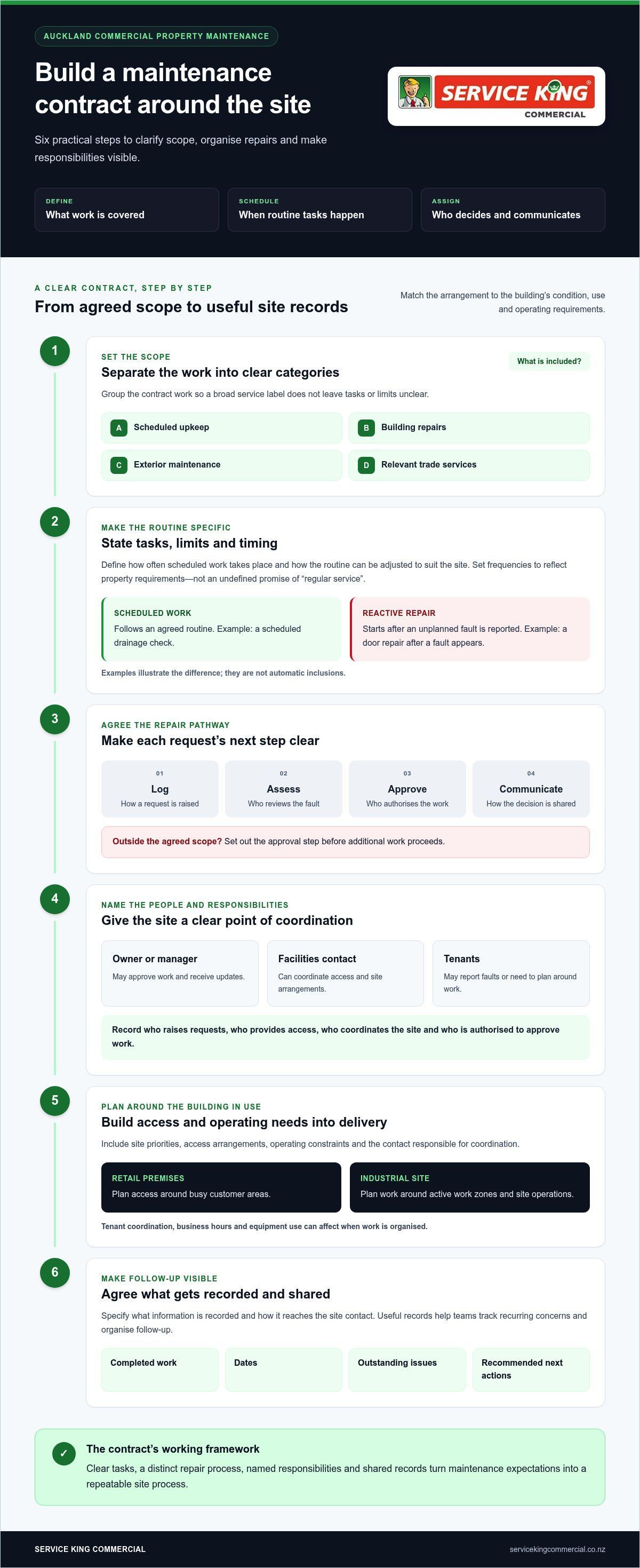
A useful contract turns a broad service description into a working scope. For a commercial building maintenance contract Auckland property teams can manage clearly, group the work into scheduled upkeep, building repairs, exterior maintenance and relevant trade services. For each category, state the tasks covered, any limits, how often scheduled work takes place and how the routine can be adjusted to suit the site.
Include the practical details that affect delivery: site priorities, access arrangements, operating constraints and the contact responsible for coordination. A retail premises with busy customer areas may need different access planning from an industrial site with active work zones. Set frequencies to reflect the property’s requirements rather than relying on an undefined promise of regular service.
Scheduled maintenance, reactive repairs and exclusions
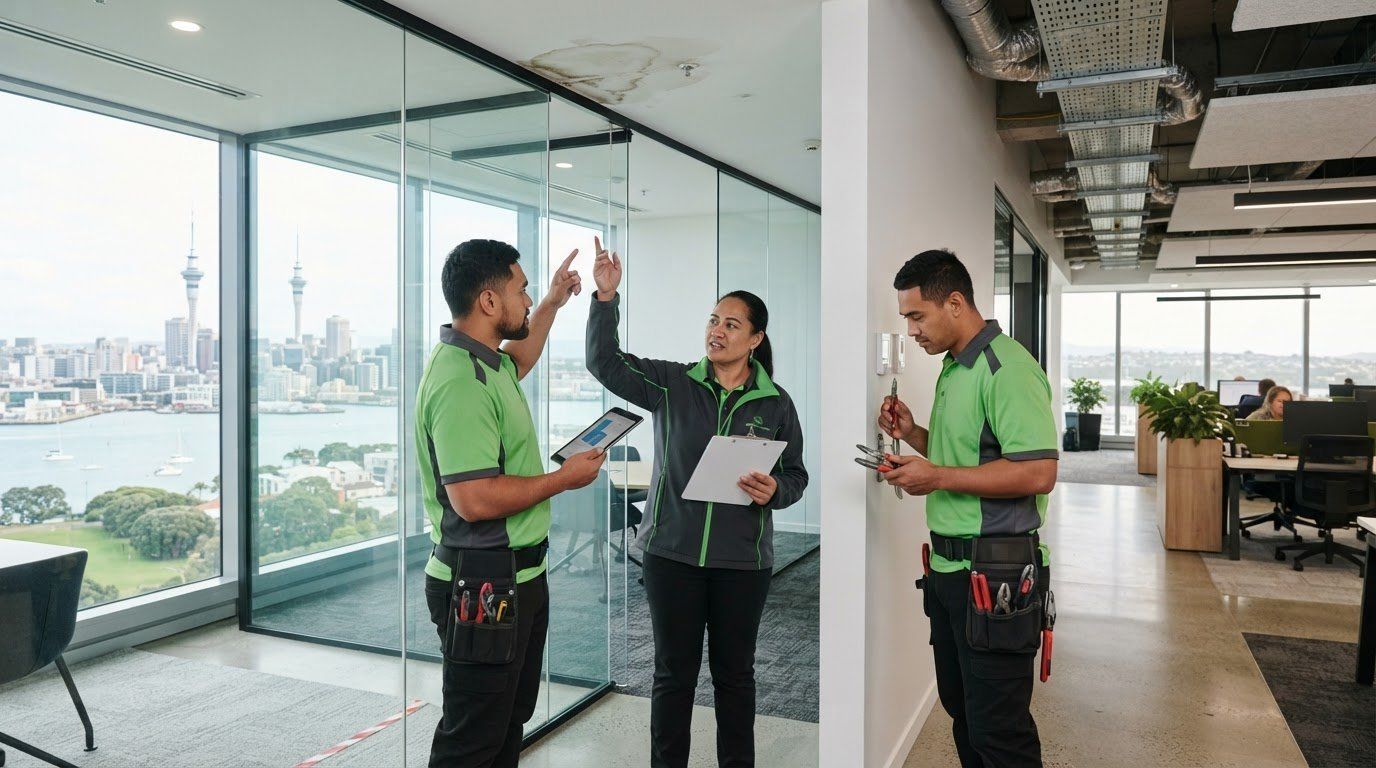
Scheduled work follows an agreed routine. Reactive repairs start after someone reports an unplanned fault. Keep these pathways distinct so the team knows which work is planned and which needs assessment or approval. A scheduled drainage check and a door repair raised after a fault appears illustrate the difference. These are examples, not automatic inclusions.
Write inclusions and exclusions in plain language. Explain how a request is logged, who assesses it, who can approve additional work, and how the decision is communicated. If a task sits outside the agreed scope, set out the approval step before work proceeds. This reduces uncertainty over responsibility and helps the site contact keep decisions visible.
Service records, communication and site responsibilities
Agree who raises requests, how they are submitted and who provides access. Record relevant access limits, tenant coordination needs and operating hours. Name the site contact and the person authorised to approve work. A straightforward communication route helps prevent reports from being missed or sent to the wrong person.
Set expectations for recording completed work, dates, outstanding issues and recommended next actions. These records help owners, property managers and facilities teams track recurring concerns and organise follow-up. Describe what information is recorded and how it is shared, rather than leaving reporting arrangements to assumption.
A documented scope turns maintenance expectations into clear tasks, approval steps and responsibilities.
Service King Commercial tailors scheduled maintenance programmes, building repairs, exterior maintenance and trade services to commercial site requirements. Review its commercial building maintenance services as you shape a scope around your property’s needs.
How to compare Auckland maintenance contract options fairly
Compare the work and processes, not labels such as “flexible” or “comprehensive”. Use the same categories for each option and record what is included, how it is scheduled and how decisions are handled. This makes differences visible before you agree to a commercial building maintenance contract Auckland property teams can put into practice.
Scope: List the scheduled upkeep, building repairs, exterior work and trade services covered. Note exclusions and how additional work is approved.
Scheduled frequency: Record the agreed routine for each task. Compare like with like, rather than treating an undefined phrase such as “regular maintenance” as a schedule.
Repair process: Compare how faults are reported, assessed and approved, and how the site contact receives updates. Separate stated response commitments from assumptions. There is no universal response standard to rely on.
Records: Check what details will be recorded, such as completed work, unresolved issues and recommended follow-up.
Site coordination: Compare how access, tenant communication and operating constraints are handled. Include relevant conditions at the Auckland property, such as coastal exposure, wind or heavy rainfall.
Use this matrix to compare equivalent tasks and arrangements. If one option includes exterior upkeep and another does not, mark the difference rather than treating both as the same scope. A clear comparison also shows where an arrangement leaves an operational gap.
Which maintenance arrangement fits your property?
Multi-tenant buildings need clear access procedures, communication routes and responsibility for coordinating with occupants. A single-site premises may need a simpler request process and a routine that reflects its core upkeep needs. Neither arrangement is automatically better. The right fit depends on the building’s condition, use and owner priorities, including areas where a fault could affect daily operations.
Questions to resolve before agreeing the scope
Map recurring work, known defects and operationally sensitive areas. Then define how each will be handled. Use these prompts to shape a practical agreement:
- Which tasks recur, and what timing suits the site?
- Which known defects need repair assessment or follow-up?
- How are access and tenant coordination arranged?
- Who approves additional work, and how are decisions recorded?
- How are recommendations and outstanding items communicated?
Keep the agreed requirements together. This gives you a consistent basis for comparison and helps align the maintenance arrangement with the way the property operates.
How to prepare an Auckland site for a maintenance contract
A clear site brief turns property knowledge into a workable maintenance programme. Gather the information already available, separate urgent known defects from recurring upkeep, map access and agree how updates will be shared. This gives the team a practical starting point for a commercial building maintenance contract shaped around the Auckland site.
Build a useful property and maintenance brief
Collect building information, previous work records and notes on recurring issues. List tenant schedules, restricted areas, access contacts and operating requirements. Then rank priorities by function, condition and the effect a fault or maintenance visit could have on daily operations. Keep urgent defects visible as separate items rather than burying them amongst routine tasks.
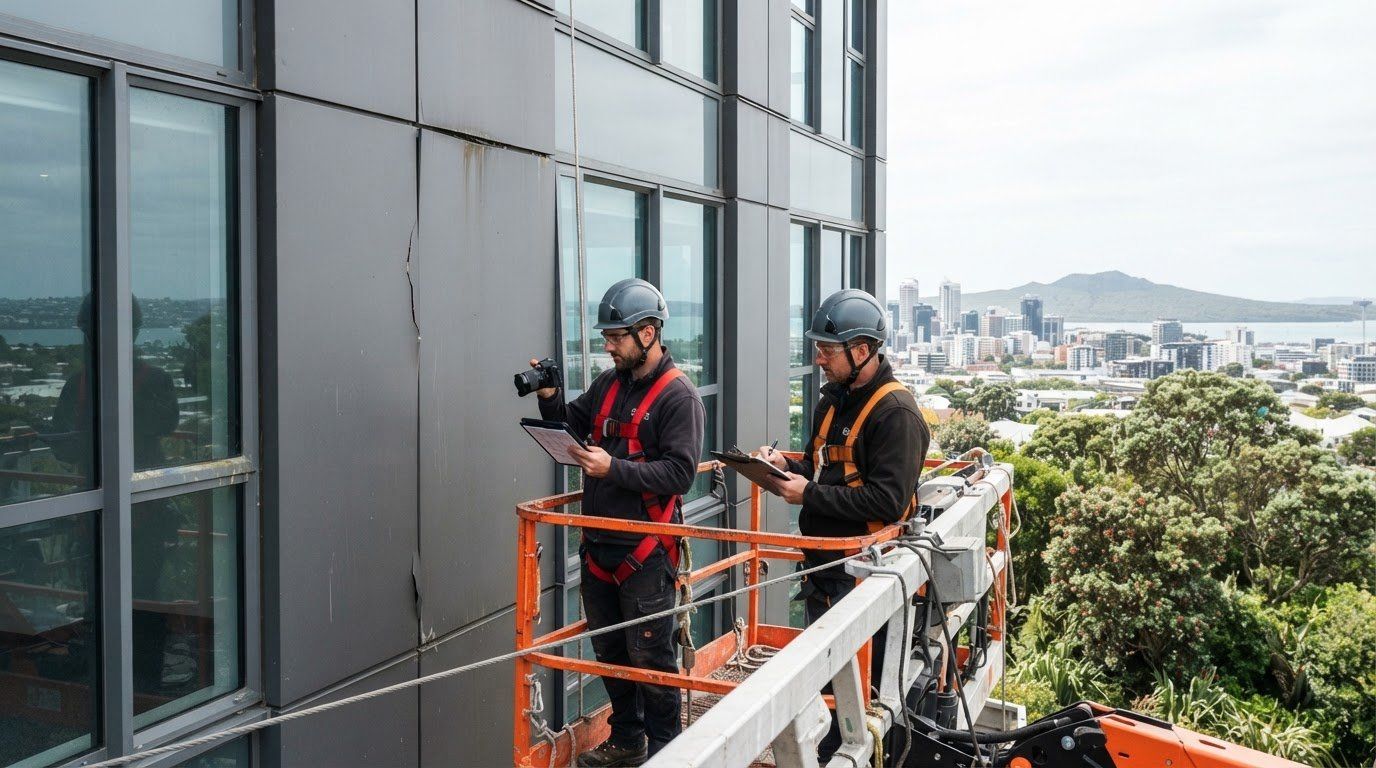
Include relevant exposure conditions. A coastal site may need attention to areas affected by salt air, while wind and heavy rainfall can inform exterior maintenance priorities. Conditions differ across Auckland, so record what applies to your building rather than relying on a generic checklist. For more on this part of the scope, refer to the exterior building maintenance guide.
Set up the first maintenance cycle
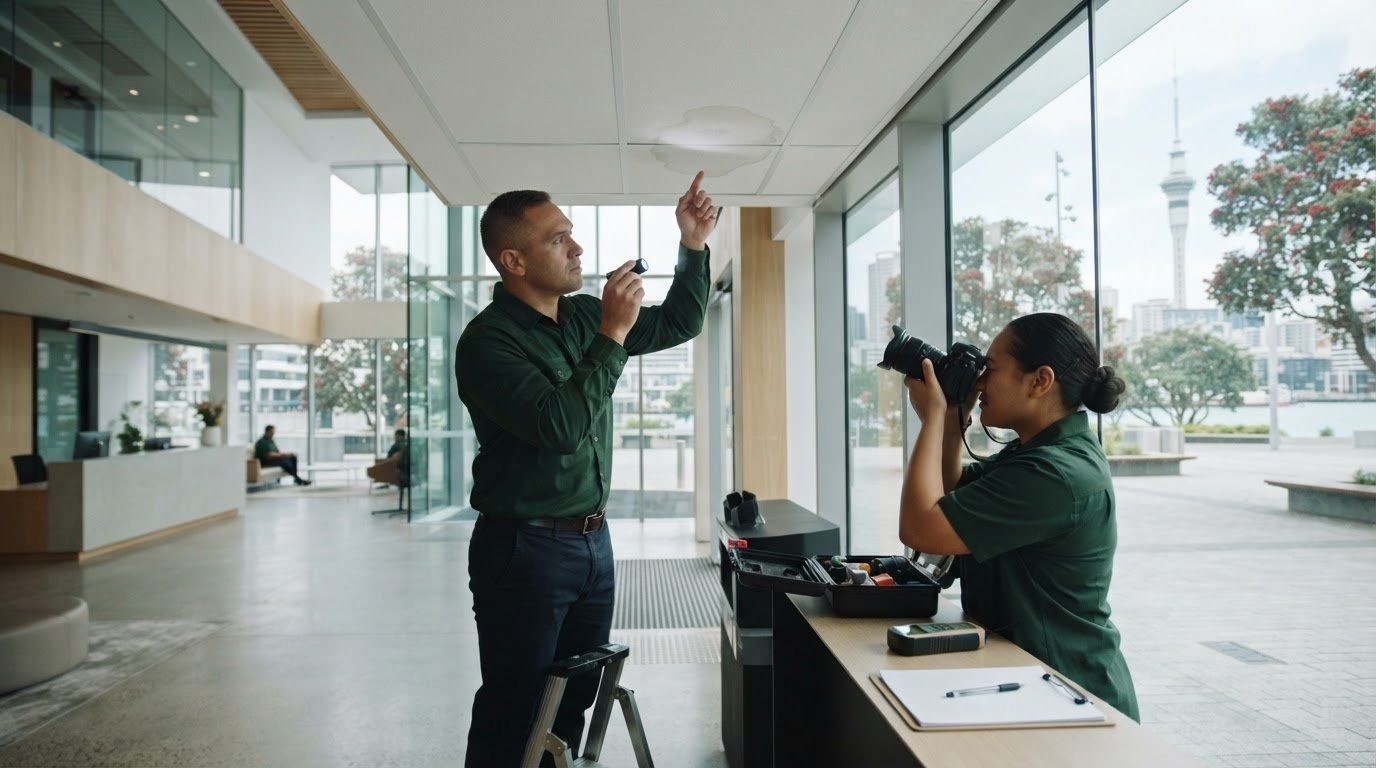
Agree how the initial site review will be arranged, which tasks begin the scheduled programme, and how findings will be recorded. Set a practical review point to discuss completed work, open items and maintenance needs identified during the first cycle. Keep the review focused on decisions and next actions.
Onboarding sequence
- Gather: Site details, previous work records and known issues.
- Prioritise: Separate urgent defects from routine maintenance needs.
- Coordinate: Confirm access, tenant arrangements and the site contact.
- Start: Agree the first review and scheduled tasks.
- Review: Record findings, outstanding items and next actions.
Use this sequence to organise the handover. A site-specific programme can then reflect the building’s requirements and operating conditions, with scheduled maintenance and repairs considered together. Discuss your Auckland site maintenance requirements with Service King Commercial.
Auckland commercial maintenance contracts with Service King Commercial
A clear comparison gives you a practical basis for discussing the right scope for your property. Service King Commercial provides commercial building maintenance in Auckland, including scheduled maintenance programmes and building repairs. Programmes are structured around each commercial site’s requirements, bringing planned upkeep and repair needs into the same discussion.
The right mix depends on the building and its agreed priorities. A site may need recurring attention to selected areas, a process for addressing reported defects, or exterior maintenance and trade services within its scope. Defining the work categories, site contact, access arrangements and communication process makes responsibilities easier to follow. It also gives the owner or property manager a clear framework for deciding what the arrangement needs to cover.
Service King Commercial is locally based in Auckland and supports commercial properties with scheduled maintenance, repairs and related services. Qualified personnel carry out the work. The scope is tailored to the property and its operating conditions, rather than relying on a standard contract label.
Next steps for arranging a maintenance discussion
Prepare a short site brief before discussing a commercial building maintenance contract Auckland property teams can use. Include the property type and location, site priorities, known maintenance issues, access requirements and operating constraints. Note recurring tasks separately from defects that need repair attention. This information helps shape a scope around the actual site.
Use the same decision points from your comparison: agreed work categories, service routines, repair processes, records and site coordination. A clear brief connects those criteria to the property’s needs and helps identify where scheduled maintenance, repairs, exterior work or trade services fit.
Discuss your Auckland site’s maintenance requirements with Service King Commercial.
Set up a maintenance arrangement that fits your site
A well-defined commercial building maintenance contract Auckland property teams can manage starts with clear scope, schedules and responsibilities. Separate planned upkeep from repair work, and record how requests, approvals and updates will be handled. These details make it easier to understand what the arrangement covers and how it fits the building’s day-to-day use.
Compare options against the same practical criteria, including work categories, service frequency, records and site coordination. Before maintenance begins, gather property information, identify urgent defects and recurring needs, and agree access and communication arrangements. A clear site brief helps shape a programme around the property rather than a generic contract label.
Service King Commercial provides Auckland-based commercial maintenance, with scheduled programmes tailored to site requirements. Building repairs, exterior maintenance and trade services can be coordinated around the agreed needs of your property. Discuss your Auckland building maintenance requirements and take the next step towards a clear, workable maintenance plan.
Frequently Asked Questions
What should a commercial building maintenance contract include?
A useful contract defines the property, work scope and scheduled tasks. It should explain how repair requests are raised, assessed and approved, and name the site contacts responsible for access and communication. Record how completed work and outstanding issues are documented. Set out which tasks are included, what counts as additional work, and how scope changes are agreed. The right level of detail depends on the building’s condition and operations.
How do I compare commercial building maintenance contracts in Auckland?
Compare the same categories in each proposal: scheduled work, repair handling, communication, records, access and scope boundaries. A commercial building maintenance contract Auckland property managers are considering should also reflect building use, tenant arrangements and relevant site conditions. Compare equivalent tasks rather than labels such as “comprehensive”. Separate stated service commitments from assumptions, since response processes and service frequencies can differ between arrangements.
Is a maintenance contract the same as a property management contract?
No. A building maintenance contract focuses on physical upkeep, repairs and related service processes. Property management may cover wider responsibilities, including tenant and lease administration. The boundary depends on the specific agreements in place. State which maintenance tasks are covered and who handles related communication. Clear divisions help owners, property managers and site teams avoid gaps between maintenance work and broader property responsibilities.
Can a maintenance contract cover both scheduled upkeep and repairs?
Yes, an agreement can include scheduled maintenance and a process for repair requests. Planned tasks follow an agreed routine, while reactive repairs arise after a fault or damage is reported. Define how each type of work is logged, assessed, approved and recorded. List any inclusions and explain how additional work is authorised. Set the scope and service commitments around the particular property rather than assuming every contract handles repairs in the same way.
How much does a commercial building maintenance contract cost in Auckland?
The cost depends on the property, its condition, location, access requirements, work scope and scheduled frequency. A routine programme covering selected tasks differs from a broader arrangement involving several work categories. For a useful comparison, set out the same tasks and service expectations for each proposal, then review what each total covers. Judge the maintenance scope against the needs of the commercial site, not on a headline figure alone.
How often should commercial building maintenance be scheduled?
There is no single frequency that suits every building. The schedule depends on the property’s condition, materials, use, occupancy and exposure to local conditions. Some tasks may suit routine checks, while others may need seasonal or condition-based attention. Use maintenance records and site priorities to set an appropriate programme. Review the schedule as building needs change instead of applying one fixed frequency across different properties.
What information should I prepare before arranging a maintenance contract?
Prepare the property type and address, available maintenance records, known defects, operating hours, access arrangements and site contacts. Note recurring issues separately from urgent defects, and identify areas where disruption could affect tenants or business operations. Include relevant site conditions, such as coastal exposure or heavy rainfall. This information gives the maintenance discussion a clear starting point and helps shape a practical scope and schedule for the Auckland property.
Recent Posts