
October 6, 2026
A calendar full of tasks can still leave a commercial building exposed to missed maintenance. Routine work is easy to overlook when it is managed informally, while a fixed checklist may not suit every site. A practical facility maintenance schedule commercial teams can use is a working plan shaped by the building, its equipment and the risks of disruption.
One clear place to track each task, its frequency, owner and records makes maintenance easier to manage. The challenge is setting frequencies that reflect asset instructions and site conditions, then adjusting priorities when condition or operational impact changes. Planned upkeep can also help teams identify building repairs and exterior maintenance before they become urgent.
This article provides a practical template for organising recurring tasks, responsibilities and records. You’ll learn how to prioritise work by condition, risk and operational impact, and how to review the schedule as your New Zealand commercial property changes. Use it as a working plan, not a static list of dates.
Key Takeaways
- Use an updatable facility maintenance schedule with clear tasks, owners, due dates and records.
- Set task frequencies around asset instructions, building use, condition and the impact of failure.
- Compare routine, seasonal, condition-based and event-triggered work to choose a suitable approach for each task.
- Start with a site walk-through and known maintenance issues, then assign planned tasks through work orders or calendar entries.
- Use scheduled maintenance support to coordinate recurring upkeep, trade work, building repairs and exterior maintenance around site requirements.
Table of Contents
- Why a Commercial Facility Maintenance Schedule Prevents Missed Upkeep
- Build a Commercial Facility Maintenance Schedule with This Template
- Choose Maintenance Frequencies by Asset, Use and Site Conditions
- Put the Schedule into Practice and Keep Records Current
- When to Use Scheduled Maintenance Support for a Commercial Property
Why a Commercial Facility Maintenance Schedule Prevents Missed Upkeep
A commercial facility maintenance schedule is a dated plan for recurring upkeep, inspections and follow-up. It shows what needs attention, when it is due and who is responsible. This turns maintenance from a collection of reminders into a practical part of site operations. Facility management covers the broader work of supporting buildings and their occupants. A usable schedule gives one part of that work a clear structure.
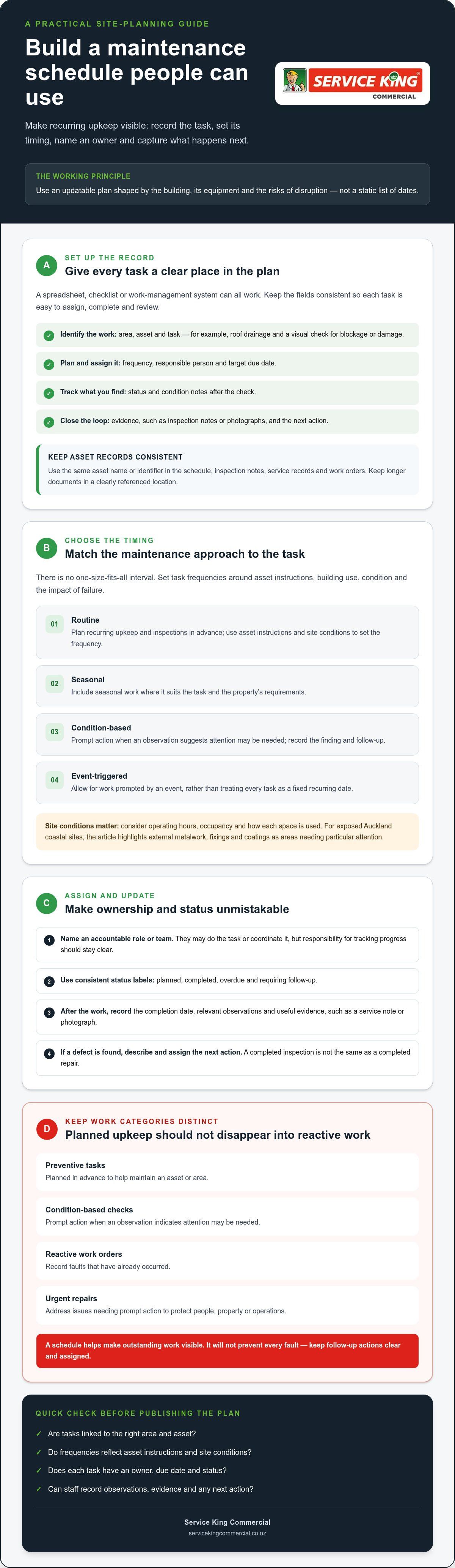
Build a facility maintenance schedule commercial teams can use by recording each task and what happens after it is completed. Planned checks help staff spot changes in condition and record them before a small defect disrupts daily operations. A schedule won’t prevent every fault, but it makes outstanding work easier to see and follow up.
Preventive tasks are planned in advance to help maintain an asset or area. Condition-based checks prompt action when an observation indicates attention may be needed. Reactive work orders record faults that have already occurred, while urgent repairs address issues that need prompt action to protect people, property or operations. Keep these categories distinct so reactive work doesn’t quietly replace planned upkeep.
What belongs in a commercial maintenance schedule?
Use clear entries that connect each task to a location and an owner. Include:
- Building area and asset, such as a roof, entrance or mechanical plant.
- Task, assigned owner and target date.
- Completion status, condition observations and any follow-up action.
- Supporting documents, such as inspection notes, service records or photographs.
Keep routine upkeep, condition-based checks and repair work identifiable in the record. A schedule supports site operations, but it doesn’t replace professional advice or site-specific checks of applicable compliance obligations. Confirm task requirements against asset instructions and the building’s circumstances.
Which commercial sites benefit from planned maintenance?
All types of commercial premises can use a schedule, but priorities differ. An office may need attention to shared areas and building services. Retail premises may prioritise entrances and customer-facing spaces. Industrial sites need tasks that reflect their equipment and work processes. Shared buildings also need clear ownership of common areas and assets.
Set priorities around operating hours, occupancy and how each space is used. A heavily used entrance may need closer observation than a low-traffic area. In Auckland, exposed coastal sites may need particular attention to external metalwork, fixings and coatings. Base the approach on the building’s actual exposure and condition. Tailored scheduled maintenance helps organise this work alongside building repairs and exterior upkeep.
Build a Commercial Facility Maintenance Schedule with This Template
Start with a spreadsheet, checklist or work-management system. The format matters less than having consistent fields that make each task easy to assign, complete and review. A facility maintenance schedule commercial teams can adapt should include these columns:
Area | Asset | Task | Frequency | Responsible person | Due date | Status | Condition notes | Evidence | Next action
Example row: Exterior | Roof drainage | Inspect for visible blockage or damage | Set according to asset instructions and site conditions | Facilities team | Enter target date | Planned | Add observations after inspection | Attach inspection notes or photographs | Record and assign any required follow-up
This example shows how to structure a record, not a recommended frequency. Set intervals to suit the asset, its instructions and the property’s conditions. The Commercial Property Inspection Association describes preventive maintenance strategy as a proactive approach involving regular inspections and service. Use the schedule to make planned tasks visible and trackable.
Set up the schedule fields and asset list
Begin with areas and assets that affect safety, access or daily operations, such as turnstiles, barriers and speed gates. For advanced access infrastructure, security specialists like Links Integrated Systems highlight the importance of logging manufacturer guidelines and usage cycles from the outset. Give each asset a consistent name or identifier, then use the same label in inspection notes, service records and work orders. This makes it easier to find the asset’s history and see whether an issue has occurred before.
Capture relevant manufacturer or service instructions, available service history and known condition issues alongside each task. Keep the working schedule concise and store longer documents in a clearly referenced location. For an Auckland commercial site, tailor asset records and checks to the property rather than copying another building’s plan.
Assign task owners and record completion
Give every task an accountable role or team. The owner may carry out the work or coordinate it, but responsibility for tracking progress should remain clear. Use consistent status labels such as planned , completed , overdue and requiring follow-up .
After completing a task, enter the completion date and relevant observations. Record evidence, such as a service note or photograph, where useful. If a check identifies a defect, describe and assign the next action rather than leaving the note unresolved. This separates a completed inspection from any repair work it prompts.
Keep the template usable for the people who update it. Scheduled maintenance programmes can be tailored to individual commercial site requirements, with building repairs and trade work recorded as follow-up where needed. See scheduled maintenance for commercial properties.
Choose Maintenance Frequencies by Asset, Use and Site Conditions
There’s no single interval that suits every building or asset. Set each task frequency using manufacturer guidance, service records, current condition, operating hours and the consequences of failure. A ventilation system serving a busy space may need closer attention than equipment used less often. Give higher priority to assets where a fault could affect safety, access or day-to-day operations.
A facility maintenance schedule commercial teams can rely on should show why each task has its chosen frequency. Use categories to organise the work, then set the actual timing for the asset and site.
| Task type | How it is planned | Example |
|---|---|---|
| Routine | Repeat at an interval informed by asset instructions and service history. | Planned checks of frequently used building equipment. |
| Seasonal | Schedule around relevant seasonal conditions or periods of likely exposure. | Review exterior areas before or after periods of heavy weather, where appropriate. |
| Condition-based | Set follow-up according to observed condition, changes or previous findings. | Monitor an area where an inspection recorded deterioration. |
| Event-triggered | Arrange a check after a change that could affect the building or its use. | Review affected areas after a fit-out or change in occupancy. |
How should a commercial property team set task intervals?
Start with manufacturer guidance and available service records. Compare these with the asset’s observed condition and how heavily it is used. If a fault could interrupt access or core operations, give the asset closer attention and record the reason in the schedule.
Review the interval after a repair, building change or repeated maintenance issue. A recurring defect may indicate that the task timing or scope needs adjustment. Record the change and its basis rather than shifting dates without explanation. This keeps the plan tied to evidence and site requirements.
Which tasks may need seasonal or event-based planning?
Exterior checks can be planned around periods of heavier weather where that suits the property and its exposure. Auckland sites vary. Coastal conditions may affect exposed exterior elements, while sheltered locations may have different needs. Set checks according to the building’s actual condition and surroundings, not a blanket calendar rule.
Occupancy changes, fit-outs and changes in building use can also prompt a review of affected assets and areas. For practical guidance on exterior upkeep, see the Auckland commercial exterior building maintenance guide. Update the schedule when a change affects how a space or asset is used.
Put the Schedule into Practice and Keep Records Current
A schedule only helps if tasks are completed and the results recorded. Start with a site walk-through, available maintenance and inspection records, and a list of known issues. This gives the team a practical starting point and helps identify gaps between planned work and current building needs.
A practical sequence for launching the schedule
- Identify priorities. List the areas and assets that affect safety, access or daily operations. Note their current condition and known maintenance history.
- Define the work. Add tasks, responsible roles and the evidence needed to close each task, such as an inspection note or service record.
- Assign dates and actions. Turn each planned task into a work order or calendar entry. Include a due date and a clear way to record completion or exceptions.
- Review what happens. Check overdue tasks, recurring faults and changes in site use. Adjust the plan when findings show that an asset or task needs a different approach.
Choose a review point that fits how the site is managed. Regular reviews help the team catch overdue work, identify repeat issues and account for building changes. Record why a task was delayed or altered, then assign any follow-up so it doesn’t disappear from view. A facility maintenance schedule commercial teams can keep current should reflect what is happening on site, not just the original plan.
Keep compliance records tied to the right assets
First identify which obligations apply to the particular building, its systems and intended use. Requirements can differ by site, so a generic checklist cannot establish that all applicable checks are covered. Verify New Zealand regulatory references and building-specific requirements before adding them as formal tasks.
Keep relevant inspection records, repair documents and building information in an accessible, organised location. Link each record to the relevant asset or system, and track applicable due dates alongside the schedule. This makes it easier to find supporting information during a review and understand the asset’s history. Limit access to people who need to update or refer to the records.
For commercial sites that need help coordinating planned upkeep and follow-up work, arrange scheduled maintenance support tailored to the property.
When to Use Scheduled Maintenance Support for a Commercial Property
Internal teams may know how to look after a property but still need extra capacity to coordinate recurring tasks and trade work. This can happen when routine upkeep competes with daily operational demands, or when maintenance records are spread across different people and systems. Scheduled maintenance support can help organise planned work around the property’s requirements and keep repairs visible alongside recurring tasks.
Signs your maintenance process needs more structure
Look for patterns that make it difficult to keep work moving or understand what has already been done:
- Faults keep returning, but previous repairs and follow-up actions are hard to trace.
- Tasks become overdue because no one is clearly responsible for tracking them.
- Coordinating maintenance across several areas or sites takes time away from other property responsibilities.
These signs don’t automatically mean the current approach has failed. They do show where clearer task ownership, records or coordination may help. A facility maintenance schedule commercial teams can maintain should fit their available resources without adding unnecessary administration.
How a tailored maintenance programme fits the schedule
Start with the building’s assets, operating needs and known maintenance priorities. A programme should reflect the site rather than apply the same task list to every commercial property. Organise planned upkeep around the property’s particular requirements, and keep recurring maintenance distinct from repairs prompted by an inspection or fault.
Service King Commercial provides scheduled maintenance programmes tailored to individual commercial site requirements. Building repairs, exterior maintenance and trade services can sit alongside recurring tasks where relevant. This gives property teams a practical way to consider planned upkeep and repair needs together, without treating every issue as the same kind of work.
For Auckland property teams, site exposure and building use can also shape the maintenance plan. Account for the property’s specific condition and needs, then review the programme as those needs change.
If your team is finding it difficult to keep recurring tasks, trade work and property repairs organised, Service King Commercial provides commercial building maintenance support. Discuss commercial building maintenance support for your property.
Make Your Maintenance Plan Work for Your Property
A useful facility maintenance schedule commercial teams can rely on is built around the site, not a generic calendar. Record the task, owner, due date and follow-up, then set frequencies according to asset instructions, condition, use and site exposure. Keep inspection and repair records accessible, and review overdue work, recurring faults and changes to the building.
Start with priority areas and known issues. A clear working schedule helps your team see what is planned, what needs attention and who is responsible. It also gives building repairs, exterior maintenance and trade work a place alongside recurring tasks.
Service King Commercial provides scheduled maintenance programmes tailored to individual commercial site requirements, including local Auckland property maintenance support. If you need help coordinating planned upkeep with repairs and trade services, discuss a practical maintenance programme for your commercial property.
Keep the plan simple, current and suited to your building. Consistent steps make proactive upkeep easier to manage.
Frequently Asked Questions
What is a commercial facility maintenance schedule?
A commercial facility maintenance schedule is a working record of planned upkeep for a commercial building. A facility maintenance schedule commercial teams can use typically lists areas or assets, tasks, frequencies, responsible people, due dates and completion evidence. Set it up around the site’s use and condition rather than copying another building’s plan. It helps organise work, but doesn’t replace professional advice or building-specific obligations.
How do I create a facility maintenance schedule for a commercial building?
Start with a site and asset list, then review available service records and known issues. Add each task, its purpose, a responsible person, a target date and a way to record completion. Prioritise assets by condition and the impact a fault could have on operations. Review overdue tasks regularly, and update the schedule after repairs or changes to the building or its use.
How often should commercial building maintenance be scheduled?
There’s no single interval that suits every building or asset. Use manufacturer instructions, service history, observed condition, operating hours and site exposure to set task frequencies. Some work may be routine, seasonal or prompted by an event or observed issue. For an Auckland property, consider the actual exposure of exterior assets, including coastal conditions where relevant. Check applicable inspection or maintenance obligations for the specific building and systems.
What should a commercial maintenance schedule include?
Include each building area and asset, the planned task, its frequency, the responsible role, due date and completion status. Add condition notes, follow-up actions and references to relevant inspection or service records. Keep the format straightforward so staff can update it consistently. Separate planned preventive tasks from reactive repairs. This makes it easier to see upcoming work and outstanding faults without confusing the two.
Can a maintenance schedule help reduce emergency repairs?
A schedule can make recurring tasks and follow-up more visible, helping teams respond to deterioration or repeated faults sooner. It can’t prevent every failure. Its usefulness depends on accurate records, suitable task frequencies and timely action. Keep a separate process for reporting defects and responding to urgent issues. Review recurring problems to see whether task timing, scope or follow-up needs to change.
Are there specific maintenance requirements for commercial buildings in New Zealand?
Requirements depend on the building, its systems, intended use and applicable rules. Some properties may have specific inspection, record-keeping or building-documentation obligations. A general schedule doesn’t establish that every duty is covered. Check current New Zealand requirements and relevant local authority information for the particular site, including Auckland properties, and verify technical or compliance details before relying on them.
Recent Posts