
October 8, 2026
A maintenance log isn’t a Building Warrant of Fitness. Building compliance maintenance NZ relies on planned upkeep and clear records to support formal checks, not replace them. When a defect is left unresolved or work isn’t recorded, building teams can lose track of what needs attention and who is responsible.
It’s easy to confuse routine repairs with statutory duties. For buildings with specified systems, the compliance schedule sets out inspection and maintenance requirements. The annual Building Warrant of Fitness is formal verification that those systems have been maintained, with checks completed by an Independent Qualified Person. General maintenance helps keep a building and its systems in serviceable condition, but it doesn’t replace those checks.
This guide explains how upkeep fits alongside compliance schedules, inspections and owner responsibilities. You’ll learn what to record, how to log defects and follow-up work, and when to involve the building owner, council or a qualified person. It also covers how planned repairs and maintenance can support day-to-day operations at commercial properties, including Auckland sites.
Key Takeaways
- Use building compliance maintenance NZ to plan upkeep and organise maintenance records, without treating those records as proof of statutory compliance.
- Keep routine repairs and defect follow-up distinct from formal inspections and compliance documentation.
- Review building documents, record issues, assign responsibility and track each action through to completion.
- Coordinate owners, tenants and contractors so maintenance concerns reach the right person promptly.
- Use planned maintenance to address deterioration early, while leaving formal compliance checks to the appropriate qualified people.
Table of Contents
- What building compliance maintenance means for NZ commercial properties
- How compliance schedules and building warrants of fitness fit into maintenance
- Routine maintenance is not a substitute for NZ building compliance checks
- A practical building compliance maintenance workflow for NZ property teams
- How planned commercial maintenance supports compliance readiness
What building compliance maintenance means for NZ commercial properties
For a commercial property, maintenance means caring for the building and its systems through routine checks, servicing, repairs and follow-up on reported defects. The aim is practical: keep assets in serviceable condition, address deterioration and give property teams a clear record of work completed.
Building compliance maintenance is planned upkeep that supports the safe, functional condition of a building and its systems. It does not, by itself, establish legal compliance or replace a required inspection or certification.
That distinction matters. The Building Act 2004 sets the framework for building control in New Zealand, and the Building Code sets performance requirements for buildings. Territorial authorities, usually local councils, have building-control functions under this framework. Maintenance helps a property team manage building condition, but completing a repair is not the same as formally assessing the building against applicable requirements.
Building compliance maintenance NZ therefore involves two connected but separate processes: organising upkeep and meeting relevant statutory or documented inspection requirements. A maintenance log can show what was reported, assigned and repaired. It doesn’t prove that a building or specified system has passed a formal check. The building’s records and applicable requirements determine which checks and evidence are needed.
Which building systems may need ongoing attention?
Ongoing attention might include keeping access routes clear, repairing damaged doors, checking visible exterior elements for deterioration and arranging maintenance for building services. These are general examples, not a standard checklist for every site. The building’s design, use and compliance documents determine which systems need particular attention and which checks apply.
Start with the building’s available records, then compare them with observed conditions and tenant reports. Log concerns such as a door that no longer closes properly or visible damage to an exterior surface, and assign follow-up work. Treat these as maintenance issues unless the relevant documents or a qualified person identify a specific compliance check or process.
Who uses a building compliance maintenance plan?
Commercial owners, property managers and facilities teams can use a plan to coordinate condition checks, repairs and records. Tenants can also help by reporting faults or damage through the agreed site process. Who arranges and pays for particular work can vary with ownership, occupancy, lease terms and applicable duties.
Set out who receives defect reports, who approves work and who maintains the records. Check responsibilities against current building documents and lease arrangements. For questions about statutory duties or formal compliance, refer to current council guidance or appropriate professional advice. Clear ownership of actions helps prevent reported issues from being overlooked.
How compliance schedules and building warrants of fitness fit into maintenance
A compliance schedule is a building-specific document for specified systems. It sets out the inspection, maintenance and reporting procedures that apply to those systems. Examples can include fire alarms, sprinklers and lifts, but the schedule depends on the building and its approved documentation.
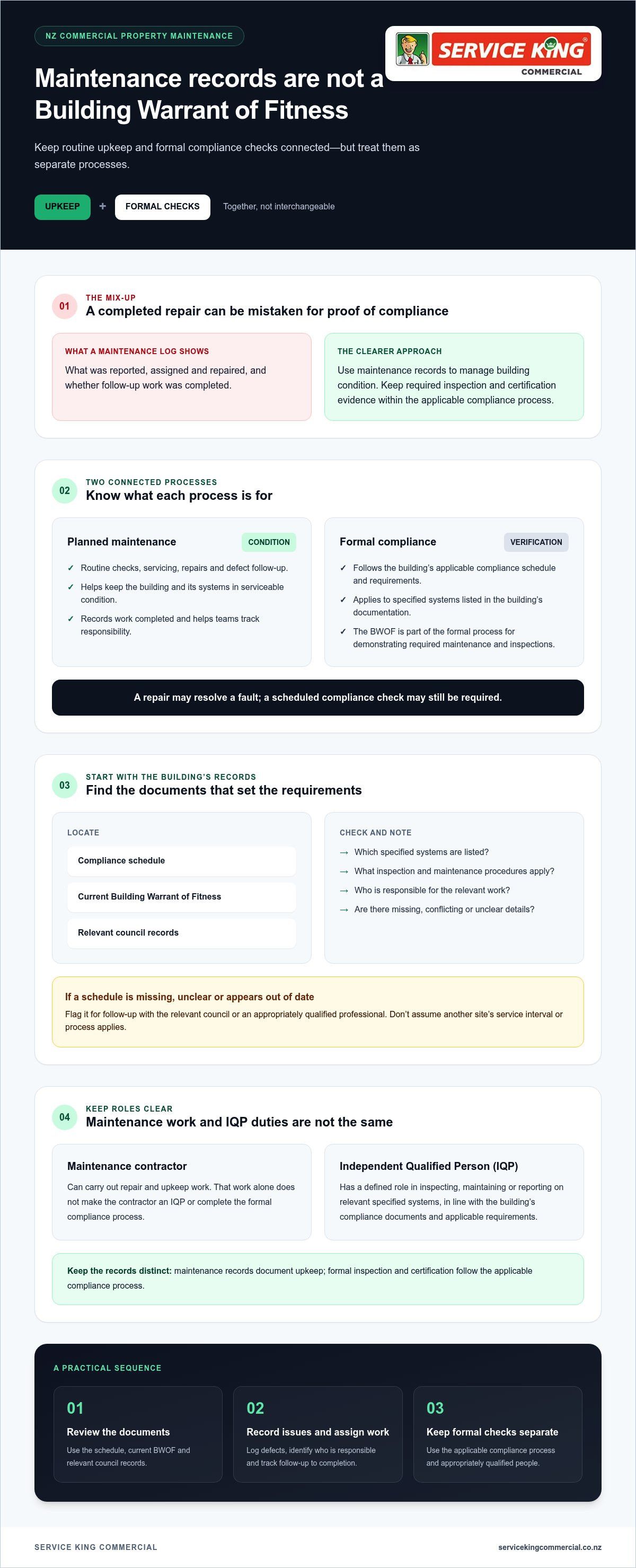
A Building Warrant of Fitness (BWOF) is part of the formal process for demonstrating that specified systems have been maintained and inspected in line with the compliance schedule. It is not a general maintenance log, and a record of repairs does not replace the required checks. Maintenance records show work carried out; formal inspection and certification follow the applicable compliance process.
For building compliance maintenance NZ, keep these activities connected but separate. A repair may resolve a fault, while a scheduled check may still be required under the compliance schedule. The applicable requirements and timing depend on the building’s documents and current rules. Refer to current Ministry of Business, Innovation and Employment (MBIE) and territorial authority guidance for relevant requirements.
What information should property teams locate first?
Start with the compliance schedule, current BWOF and relevant council records. Check which specified systems are listed, what inspection and maintenance procedures apply, and which people or organisations are responsible. Record document dates and note any gaps, conflicting details or systems that don’t appear to match the site.
If a schedule is missing, unclear or appears out of date, flag it for follow-up with the relevant council or an appropriately qualified professional. Don’t assume that a routine service interval or a process used at another site applies. Keep source documents accessible to the people coordinating maintenance and formal checks.
How do IQPs relate to a building’s compliance process?
An Independent Qualified Person (IQP) has a defined role in inspecting, maintaining or reporting on relevant specified systems, in line with the building’s compliance documents and applicable requirements. The role depends on the systems and duties involved. Use current MBIE and council guidance when assigning or describing this work.
A maintenance contractor can carry out repair and upkeep work, but that work alone doesn’t make the contractor an IQP or complete the formal compliance process. Keep separate records for maintenance jobs and IQP reports. This makes it easier to see which defects have been repaired and which formal checks or follow-up actions remain outstanding.
For practical upkeep alongside compliance coordination, commercial building maintenance can help property teams organise repairs and scheduled work. Keep the compliance schedule and formal inspection process as the reference for statutory checks.
Routine maintenance is not a substitute for NZ building compliance checks
A completed repair doesn’t automatically prove statutory compliance. Replacing a damaged door closer, for example, may fix a maintenance fault, but it doesn’t confirm that a specified system has passed its required inspection. The applicable duties and evidence depend on the building’s documents and current rules.
Keep these activities distinct in site records. They may relate to the same issue, but they have different purposes and may involve different people.
| Activity | Purpose | Typical record | Responsible role |
|---|---|---|---|
| Routine upkeep | Maintain general building condition | Checklist or service log | Facilities team or maintenance contractor |
| Defect repair | Resolve a reported fault or damage | Work order and completion notes | Assigned contractor, overseen by the manager or owner |
| Scheduled compliance inspection | Check a system against its applicable requirements | Inspection report or system record | Appropriately qualified person, where required |
| Formal compliance documentation | Record the relevant formal process or outcome | Building-specific compliance documents | Owner and other responsible parties under applicable rules |
This distinction is central to building compliance maintenance NZ. A contractor’s work order can show that a repair was completed. It isn’t, by itself, an inspection report, certification or formal sign-off. Use the compliance schedule and current guidance to identify the checks and records that apply to the site.
What maintenance records can and cannot demonstrate
For each maintenance job, record the date, location, reported issue, work completed and any outstanding action. Add relevant photos or supporting documents where useful, and note who completed or reviewed the work. If the issue remains unresolved, leave it open in the tracking system rather than marking the job complete.
These records help teams follow work and spot repeat defects. A work order demonstrates that work was recorded; it doesn’t necessarily establish that a compliance requirement has been met. Store maintenance records alongside, but separate from, compliance schedules, inspection reports and other formal building documents.
When should an issue be escalated beyond routine repair?
Escalate safety concerns promptly, as well as recurring defects and faults that may affect a specified system. Notify the owner or property manager, record the issue and assign follow-up to the relevant qualified person when formal assessment is needed. Use the site’s reporting process to keep tenants and facilities staff informed about actions that affect access or building use.
Don’t decide statutory compliance from photographs or brief maintenance notes alone. They can help describe a concern, but the appropriate assessment depends on the system, building documents and current requirements. Clear records make handover easier and help distinguish completed repairs from inspection or compliance actions that still need attention.
A practical building compliance maintenance workflow for NZ property teams
A repeatable workflow gives owners, managers, tenants and contractors a clear route from first report to completed action. For building compliance maintenance NZ, the key is to make routine jobs visible without confusing them with checks required by the building’s compliance documents.
Use the same sequence for each site:
- Review documents. Check current building records and identify the systems, maintenance tasks and formal checks relevant to the site.
- Inspect condition. Carry out routine condition checks and gather reports from tenants or site staff. Don’t treat these as formal compliance inspections.
- Log issues. Record the location, asset or system, date reported and a clear description of the issue.
- Assign work. Name the person responsible, set a suitable priority and identify any access or occupant coordination needed.
- Close or escalate. Record the work completed and any remaining action. Escalate unresolved or potentially safety-related concerns to the owner, manager or appropriate qualified person.
Keep routine maintenance tasks in a different category from scheduled compliance checks. Give each a status and due date based on its purpose and the applicable site documents. This helps prevent a closed repair job from being mistaken for a completed inspection or formal compliance action.
Set up a usable maintenance and evidence register
Choose a named record owner to maintain the register and monitor open actions. For each entry, track the asset or system, location, reported issue, priority, assigned party, planned action and completion status. Add links to related work orders, inspection reports, photographs and relevant compliance documents. Use consistent file names so another team member can find the right record.
Review access and responsibilities when property or facilities teams change. Keep the register practical: it should show what needs doing, who owns it and what evidence supports closure, without presenting an internal template as a mandatory form or assuming a retention period.
Coordinate maintenance across tenants and contractors
Set one clear channel for tenant reports and tell occupants who receives them. Before work begins, agree site access arrangements with the assigned contractor. Notify affected occupants if a job may disrupt access or normal operations, and update them if the plan changes. For Auckland sites, include exterior issues such as visible building damage in the same reporting route, then assign the repair and track its completion.
Service King Commercial provides scheduled commercial maintenance to organise site upkeep and follow-up work. Arrange commercial building maintenance to help keep repairs and planned tasks moving through the workflow.
How planned commercial maintenance supports compliance readiness
Planned maintenance gives property teams a way to address deterioration before it interferes with building use. A recurring leak, loose exterior fitting or damaged finish can be logged, assessed and assigned before it creates a wider operational problem. The value lies in noticing issues, arranging suitable work and keeping a clear record of the response.
For building compliance maintenance NZ, readiness means knowing the building’s condition and being able to locate relevant maintenance records. It doesn’t mean maintenance work certifies a building or confirms that every statutory requirement has been met. Formal inspections, reports and other compliance steps remain separate and must follow the applicable building documents and current rules.
What a maintenance partner can support
Service King Commercial supports commercial property upkeep through building repairs, exterior maintenance, scheduled maintenance and trade services. Work is organised around agreed tasks and site needs. Records can note the reported defect, action taken and any follow-up still required, giving the property team a practical view of progress.
The work may address a defect or maintain an exterior element within the agreed project scope. Trade services can also support the work needed to complete maintenance tasks. Keep this activity distinct from formal compliance responsibilities. A maintenance contractor’s job record is not an IQP report, inspection outcome or compliance certification.
Good coordination also makes unresolved items easier to see. If a repair identifies a further concern, record it as a separate action and assign it to the appropriate person. The owner or property manager can then decide whether it needs further assessment, formal checking or additional maintenance. This prevents a completed work order from concealing an issue that remains open.
What to prepare before arranging maintenance
Before arranging work, gather a concise site summary. Include the building location, affected areas, reported issues, any known operational impact and access arrangements. Add relevant building documents or records that help describe the task. Identify urgent concerns separately from planned upkeep so the property team can communicate priorities clearly.
Include outstanding actions too. Note what has already been tried, whether the issue has recurred and who is responsible for follow-up. This gives the maintenance discussion a clear starting point and helps keep repair work aligned with site needs. If a concern relates to a specified system or a formal check, flag it separately so its compliance pathway stays clear.
Service King Commercial provides commercial repair and maintenance support across New Zealand, with a local Auckland focus. If your property team needs to organise building repairs, exterior upkeep or scheduled work, discuss commercial building maintenance with Service King Commercial.
Make the next maintenance action clear
Choose one practical next step for your site: review an open defect, confirm who owns its follow-up, or make sure the current building records are accessible to the property team. A small, assigned action can turn maintenance information into a consistent operational practice.
Keep the distinction clear as your process develops. Building compliance maintenance NZ supports building condition and organised records, while formal compliance requirements remain tied to the building’s documents and applicable checks. Review your process when site responsibilities change or recurring issues show that follow-up needs to be clearer.
For commercial property upkeep in Auckland, discuss your building maintenance requirements with Service King Commercial. A clear brief about your site and current priorities is a useful place to start. With maintenance actions assigned, your team can move forward with greater clarity.
Frequently Asked Questions
Does building maintenance make a commercial building compliant in New Zealand?
No. Maintenance can address faults and help keep a building in serviceable condition, but completing a repair doesn’t establish that all applicable requirements have been met. For example, repairing a damaged component doesn’t confirm that a related system has passed its required formal check. Treat building compliance maintenance NZ as one part of site management, and use the building’s records and current council guidance to identify any separate compliance steps.
What is a compliance schedule for a commercial building in NZ?
A compliance schedule records the specified systems in a building and the procedures that apply to them. For a property manager, it helps identify which systems need attention and which records to locate before arranging work. Check that the schedule matches the systems installed at the site. If an asset appears to be missing or its description is unclear, raise the discrepancy with the owner and seek guidance from the relevant territorial authority.
Is a building warrant of fitness the same as a maintenance record?
No. A maintenance record documents work or observations, such as a repair visit or a reported fault. A Building Warrant of Fitness (BWOF) is formal documentation in the building compliance process for applicable specified systems. Keep the documents filed separately so a completed work order can’t be mistaken for a BWOF or formal inspection evidence. In Auckland, property teams can refer to Auckland Council guidance for current local processes.
Who is responsible for building compliance maintenance in a leased commercial property?
Responsibility depends on the lease, the building documents and the duties that apply to the property. A lease may set out who reports faults, arranges repairs or manages access, but those arrangements don’t necessarily settle every statutory responsibility. Owners and tenants can review the relevant clauses together, record who handles each action, and obtain legal or council guidance where responsibility for a compliance matter is uncertain.
What should a commercial building maintenance log include?
Include enough detail for someone who wasn’t present to understand the issue and its status. Record the site and exact location, date reported, description, priority, assigned person, action taken and whether follow-up remains. Add a reference to supporting photos, invoices or reports where relevant. For recurring faults, link earlier entries so the property team can see the history and decide whether the same area needs further assessment.
Can a maintenance contractor carry out work on specified systems?
A maintenance contractor can carry out agreed repair or upkeep work on a specified system where the task fits their role and capability. That work doesn’t automatically fulfil any separate inspection, reporting or IQP function required by the building’s compliance process. Before arranging work, identify the affected system and task in the site records. Keep the contractor’s work documentation with the job file and route formal checks through the appropriate process.
What should a property manager do if maintenance reveals a compliance issue?
Record the observation, location and immediate effect, then notify the building owner or the person responsible for compliance coordination. If there’s a safety concern, follow the site’s safety and escalation procedures without waiting for routine administration. Keep photographs and job notes as supporting information, but don’t use them alone to decide compliance status. Refer the issue to the relevant qualified person or territorial authority and track any resulting actions until they’re resolved.
Recent Posts