
October 29, 2026
Small building faults can disrupt daily operations when upkeep is left until something fails. Commercial property upkeep in Auckland brings together timely repairs, facilities maintenance and planned preventative work to keep buildings serviceable. A coordinated approach can also bring multiple trade requirements under one maintenance plan.
Keeping a commercial property in good order takes more than responding to visible damage. Regular inspections help identify maintenance needs, while clear repair priorities make it easier to plan work around how the building is used. The right approach depends on the site, its condition and the work required.
This guide explains what commercial building repairs and facilities maintenance can cover, how planned preventative programmes work, and when coordinated multi-trade site care is useful. It also outlines the factors that shape maintenance planning and how Service King’s building repair, scheduled maintenance and trade services can support the process.
Key Takeaways
- Prioritise building defects by their impact on safety, access and day-to-day operations.
- Use facilities maintenance to keep essential building systems and shared areas in working order.
- Build a preventative programme around each property’s condition, use and maintenance needs.
- Coordinate trade work through clear priorities and scheduling to reduce disruption across the site.
Table of Contents
Commercial building maintenance and repairs
Commercial upkeep covers repairs, exterior washing and checks of essential building systems. Set priorities by condition, building use and the effect of a fault on daily operations.
Building and roof washing
Building and roof washing removes accumulated grime from exterior surfaces, roof areas, pathways and windows. At Spark Arena in Auckland CBD, roof areas and pathways were soft washed, both sides of the canopy were cleaned, and front-facing windows were water blasted. Before work begins, identify the surfaces and access requirements, then select a method suited to each area. Include exterior washing in the upkeep plan when the property’s condition calls for it.
Roof, HVAC, plumbing and fire system upkeep
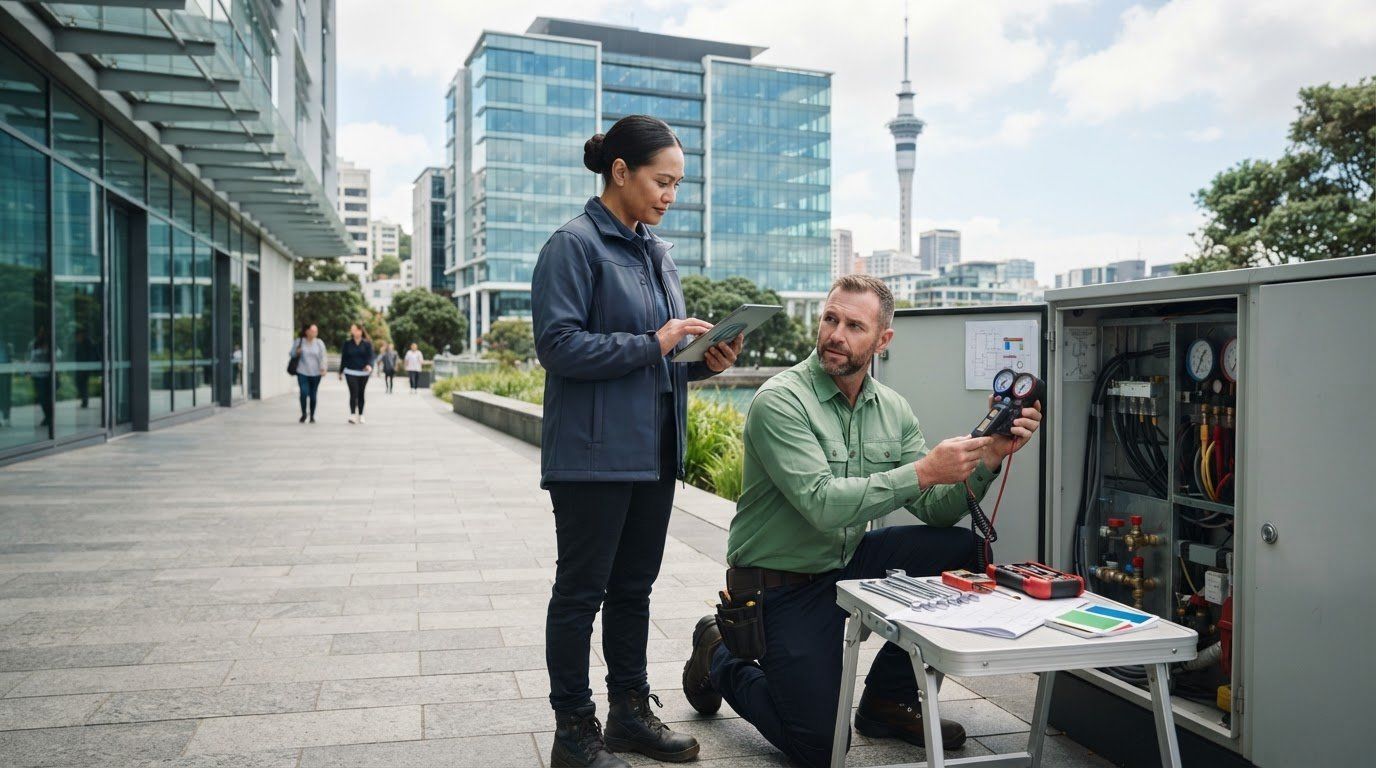
Inspect roofs for visible damage, blocked drainage and signs of water entry. For HVAC, plumbing and fire systems, record faults, arrange appropriate servicing and keep maintenance records current. The work required depends on the equipment, building use and its condition. Auckland Council requirements also vary with the property and proposed work, so identify applicable consent and compliance steps before altering building elements. In New Zealand, landlord and tenant responsibilities depend on the lease and the work involved. Define repair responsibilities in the agreement.
Contractor comparison and selection
When comparing commercial maintenance contractors in Auckland, consider the work they cover, their trade capabilities, reporting and how they plan repairs around site operations. The right choice depends on the property’s needs. Match the required work to relevant experience, a clear scope and practical scheduling. A contractor able to coordinate several trades can help manage related repairs. Check that the work plan sets out priorities, access requirements and how completed work will be recorded.
Maintenance costs and neglect risks
Commercial property maintenance costs in Auckland depend on the building’s size, condition, access requirements, materials and repair scope. The cost is established after assessing the work and requesting a quote. Neglected faults can spread: a roof leak, for example, may damage interior finishes and disrupt occupied areas. Log defects, assess their impact and address urgent issues before routine work. This gives property teams a practical basis for prioritising repairs and planning expenditure.
Facilities maintenance
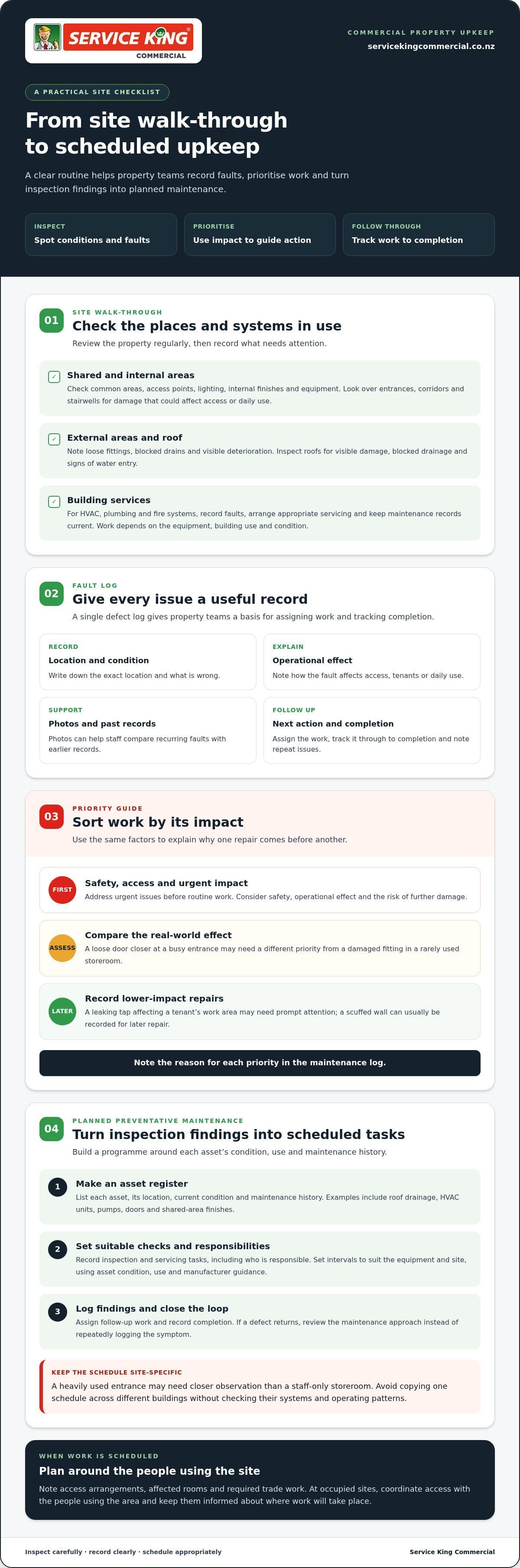
For commercial property upkeep in Auckland, facilities maintenance helps keep shared spaces, fixtures and building services usable between major repairs. Start with a site walk-through, then record each issue by location, condition and operational effect. A loose door closer at a busy entrance, for example, may need a different priority from a damaged fitting in a rarely used storeroom. A single defect log gives property teams a clear basis for assigning work and tracking completion.
Include common areas, access points, lighting, internal finishes and equipment in the property’s maintenance plan. Check entrances, corridors and stairwells for damage that could affect access or daily use. Review external areas for loose fittings, blocked drains and visible deterioration. Each inspection should record the problem, its exact location and the next action. Photos can help staff compare recurring faults with earlier records.
Prioritise work according to safety, operational impact and the risk of further damage. A leaking tap may need prompt attention if it affects a tenant’s work area, while a scuffed wall can usually be recorded for later repair. Note the reason for each priority in the maintenance log so property staff can explain decisions and avoid treating every request as equally urgent.
Turn repeated observations into practical tasks. If the same entrance fitting fails again, record the recurrence and arrange a repair that addresses the cause. Note access arrangements, affected rooms and any required trade work before scheduling the job. At occupied Auckland sites, coordinate access with the people using the area and keep them informed about where work will take place. Clear records also help staff review open jobs at regular maintenance meetings.
- Log each fault with its location and operational effect.
- Assign a priority and record the reason.
- Track work through to completion and note recurring issues.
A commercial property upkeep plan in Auckland can use these records to organise inspections and follow-up tasks. For buildings that need consistent follow-up, scheduled maintenance planning can help organise work around site needs.
Planned Preventative Maintenance programmes
A planned preventative maintenance programme turns inspection findings into scheduled tasks. Start with a register of building assets, their condition and maintenance history. Include items such as roof drainage, HVAC units, pumps, doors and shared-area finishes. For critical machinery like pumps and HVAC units, remote monitoring from inTouch R&B can provide real-time status alerts between scheduled inspections. Use the register to identify recurring faults and assets that need closer attention. This gives property teams a working schedule instead of relying only on tenant reports.
Build the programme around each asset’s condition, use and manufacturer guidance. Set inspection intervals to suit the equipment and site, and record the reason for them. A heavily used entrance, for example, may need closer observation than a staff-only storeroom. Avoid copying one schedule across different buildings without checking their systems and operating patterns.
- List each asset, its location and current condition.
- Record inspection and servicing tasks, including who is responsible.
- Log findings, assign follow-up work and record completion.
An inspection may reveal a loose roof fitting before water enters an occupied office. Record the finding, assess its effect and schedule the repair. If the same defect returns, review the maintenance approach instead of repeatedly logging the symptom. Clear records help staff identify assets that generate recurring work and show where the programme may need to change.
Plan maintenance at occupied commercial sites around the people using the building. Where practical, group work by area, agree access arrangements and notify affected tenants before disruptive tasks begin. At an Auckland office, for example, a corridor repair could be scheduled when that section can be safely accessed, while another route remains available. Record the work area, access method and expected disruption in the job plan.
Review the programme after completed work and reported faults. Update asset records when equipment changes, repairs alter its condition or issues recur. A maintenance log linking inspections to completed jobs helps managers plan future work and explain priorities. Scheduled maintenance is most useful when its tasks reflect actual site conditions, rather than a generic calendar.
Site care and multi-trade coordination
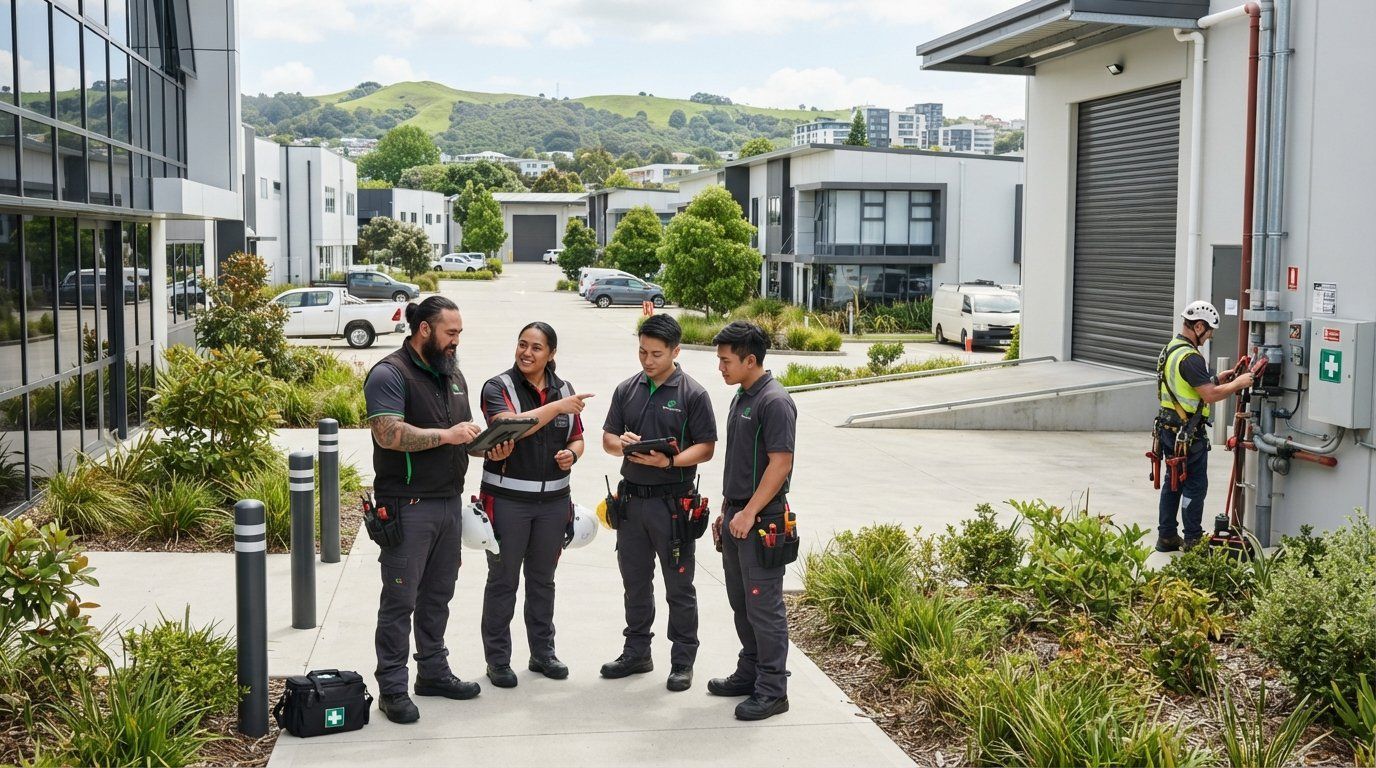
Multi-trade site care brings related building tasks into one coordinated work plan. Start by grouping faults by location, trade and operational impact. A leak above an office, for example, may require plumbing repairs and ceiling work. Coordinating those tasks helps teams plan access and avoid completing one repair before the related work is ready.
Prepare a clear work brief for each site visit. Record the affected area, observed fault, access arrangements and nearby activity. A commercial unit with a damaged entrance, for instance, may need a repair scheduled around staff and visitor access. Sharing these details before work begins gives trades a defined scope and helps them understand how the site is used.
- Group related tasks by building area and trade.
- Identify access routes and spaces affected by work.
- Record the assigned task and completion status.
Sequence tasks when one trade depends on another. A plumber may need to repair a pipe before a builder restores the surrounding wall. The site coordinator can confirm which work must happen first, then arrange access for the next trade. Keep the job record current so property staff can see what remains open and who is responsible for follow-up.
Occupied Auckland sites also need clear communication. Tell affected staff which rooms or access points will be involved, and share any changes to the work plan. If a repair moves from a service area into a tenant’s workspace, update the access arrangements before the trade arrives. Clear site instructions help reduce avoidable interruptions and keep tasks focused.
After each visit, record completed work, outstanding actions and any new defects found. This creates a useful handover between property staff and trades, especially when work spans several areas. A concise record also supports planning for the next site visit and helps prevent unresolved tasks from being lost between work orders.
For coordinated commercial trade work, arrange multi-trade site care around your property’s repair and maintenance needs.
Service King Commercial: Commercial Cleaning Services
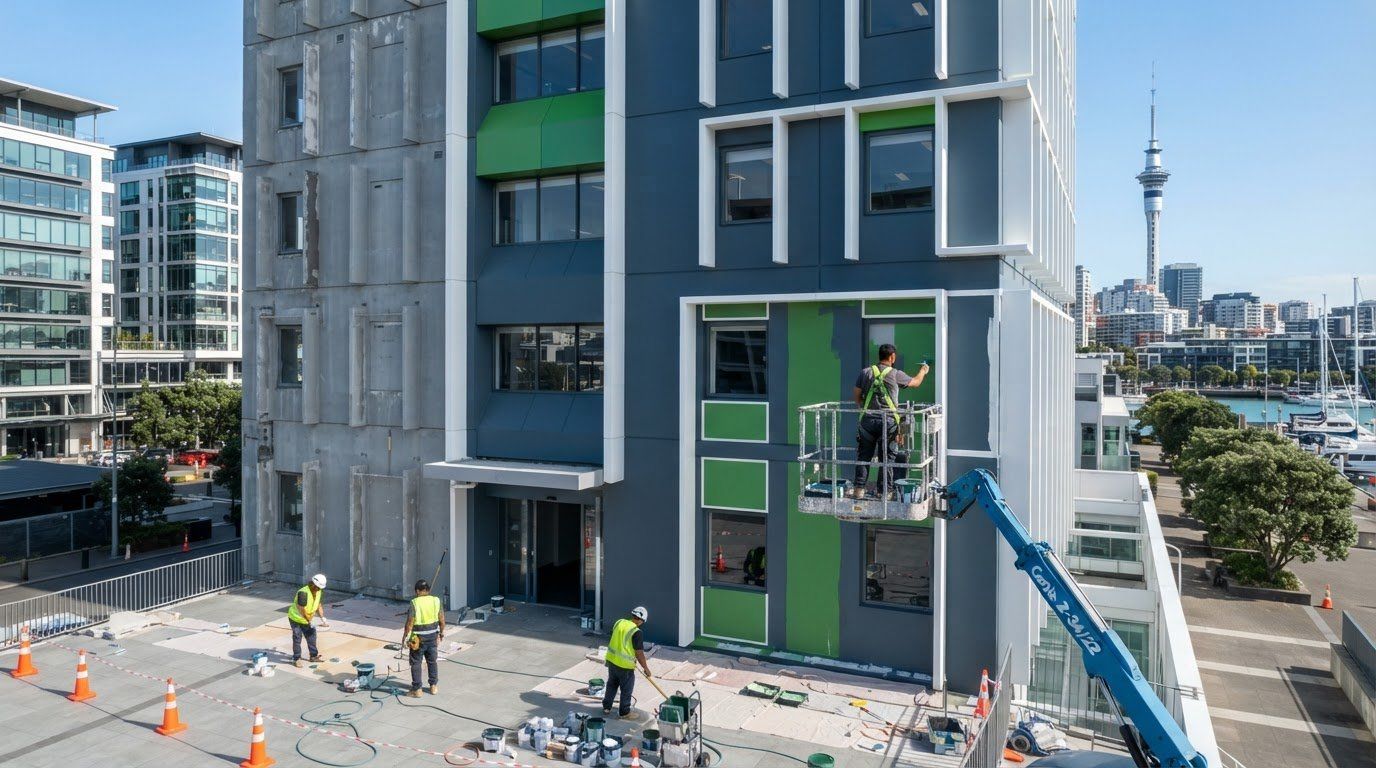
Service King provides building repairs and exterior maintenance for commercial properties. Its Building Repair and Maintenance service addresses building faults, while Exterior Building Maintenance covers work on the outside of the property. For a vacated tenancy, its End of Lease Service supports the handover and make-good process.
Choose the relevant service according to the work required: building repairs for faults, exterior maintenance for outside areas, or end-of-lease support during a tenancy change. A clear description of the site issue helps define the next step and keep the request focused.
Contact Service King to discuss your property’s maintenance or repair needs and arrange a Free site assessment.
Set the next maintenance step
Make your next maintenance decision specific. Identify the property issue that most affects daily use, then note its location, condition and the action needed. This gives your property team a clear starting point and keeps follow-up work focused. For commercial property upkeep in Auckland, keep site records current as work is completed or conditions change. Those records can guide future planning without relying on memory or scattered messages.
When you’re ready to discuss a building maintenance requirement, contact Service King Commercial with a concise description of the property and work involved. A clear brief helps frame the conversation around the site’s actual needs and the next practical step.
Contact Service King Commercial to discuss your property’s maintenance needs and move forward with a clear plan.
Frequently Asked Questions
What services are included in commercial property maintenance in Auckland?
Commercial property maintenance can include building repairs, exterior care, scheduled upkeep and trade work. The right mix depends on the premises and its current needs. A tenancy change may call for handover work, such as property contamination checks by Methamphetamine Testing Services NZ Limited, while a damaged exterior may need repair and maintenance. Define the required outcome first, such as restoring an area for use or preparing it for a new occupant.
How often should Auckland commercial buildings be inspected and maintained?
Inspection timing should reflect the building’s systems, condition, use and recent changes. Review inspection records after severe weather, building alterations or a change in how a space is occupied. A newly fitted system, for example, may need its own maintenance instructions added to the site records. Use those records to adjust future checks instead of applying the same timetable to every part of the property.
What is a commercial property maintenance plan and how do you create one?
A commercial property maintenance plan sets out how building work is managed, assigned and reviewed. Alongside listing tasks, name the person responsible for approving work and the process for reporting new faults. Keep key documents, such as equipment instructions and contractor reports, with the relevant site records. Review the plan when the property changes, then update responsibilities and tasks to match.
Which Auckland companies provide commercial property maintenance, and how do they compare?
Service King Commercial offers building repairs, scheduled maintenance and trade services. Access offers 24/7 urgent maintenance support where required and reports building and roof washing work. Compare providers by trade capabilities, relevant experience, scope, reporting and how they schedule work around site operations.
Recent Posts