
October 10, 2026
A commercial premises can be handed over on schedule and still be unready for the next occupier’s needs. Incoming tenant property preparation NZ works best when checks, repairs and access are planned around the agreed use of the space, rather than left until the last minute.
Before move-in, it helps to know exactly what needs attention. Lease requirements, existing defects, tenant needs and access for trades can all affect the order of work. If a site issue is missed or a repair is left until access becomes difficult, the handover can be harder to coordinate.
This guide sets out a practical sequence for preparing a commercial property: inspect the space, record defects and agreed requirements, prioritise repairs, organise trade work, then confirm access and handover arrangements. It also explains how building maintenance and end-of-lease support can bring readiness tasks together. Use these steps to prepare a premises for its intended use and reduce avoidable delays between the outgoing occupier and the new tenant. The examples are relevant to commercial properties in Auckland and across New Zealand.
Key Takeaways
- Define the agreed preparation scope first, keeping building readiness separate from tenant fit-out and make-good work.
- Inspect the premises area by area, record visible damage and check key features such as doors, windows, lighting and plumbing.
- Tailor incoming tenant property preparation NZ to the business’s planned use, site access and shared-area needs.
- Follow a clear sequence from scope review and inspection through to work planning, completion checks and handover.
- Coordinate building repairs and trade work around access and fit-out plans to help prevent avoidable clashes.
Table of Contents
- Incoming tenant property preparation NZ: define the starting point
- Check commercial building condition before the new tenant moves in
- Prioritise preparation around the incoming tenant’s planned use
- Plan a practical pre-occupation property preparation sequence
- Get commercial premises ready with coordinated maintenance support
Incoming tenant property preparation NZ: define the starting point
Begin by defining what “ready” means for the premises. Incoming tenant property preparation NZ involves checking the commercial space and organising agreed work before the incoming business takes occupation. The scope depends on the lease, handover records, known site issues and how the tenant plans to use the space.
Commercial property readiness means confirming that the premises and agreed building items are in the required condition and working order for handover, separately from the incoming tenant’s fit-out or the outgoing tenant’s make-good obligations. It is not a residential rental checklist applied to a business space. Commercial premises vary in layout, services, access arrangements and intended use.
What does commercial property preparation cover?
Preparation can cover the condition and function of agreed building elements, access to the premises and specific handover requirements. It may include identifying a repair, arranging the relevant trade work and recording whether the task is complete. It does not automatically include negotiating lease terms or installing the tenant’s equipment, partitions or branding.
Use the lease and handover records to map responsibilities. The landlord, property manager and incoming tenant may each have tasks, but the division can differ between sites. Establish who is arranging each item and keep disputed or unclear work separate from the agreed preparation scope until responsibilities are settled.
Auckland office example: The incoming business may need to install its own workstations and data equipment. Separately, agreed property-readiness work could include addressing a recorded door fault or arranging a check of existing lighting. Listing these as separate workstreams clarifies which tasks relate to the building and which belong to the tenant’s fit-out.
Set the readiness standard before work begins
Agree the intended use and handover date, then review available records and known site issues. These may include previous inspection notes, outstanding repair requests and items recorded at the outgoing handover. The aim is not to promise that every part of the premises will be renewed. Instead, define a practical, shared standard for the work being organised.
Record each item under a clear status. A short register can distinguish:
- Ready: checked and accepted for the agreed handover scope.
- Needs attention: a repair or other agreed task remains to be completed.
- Outside scope: tenant fit-out, a separate make-good matter or another item not included in the preparation plan.
Be specific. “Check unit” is difficult to action; “record the reported issue with the rear entry door and agree the next step” gives the responsible people a defined task. Note who is coordinating each item and what access is needed. This baseline helps prevent assumptions from becoming last-minute work and gives the next inspection a clear reference point.
Check commercial building condition before the new tenant moves in
A structured inspection turns general concerns into specific work items. For incoming tenant property preparation NZ, check the premises area by area and record what you observe. This helps distinguish a surface mark from a fault that could affect access or how the space functions. Keep observations factual. An inspection record is not a substitute for a specialist assessment where one is needed.
Inspect interior areas and shared facilities
Walk through the premises in a consistent order, such as from the entrance through work areas, meeting rooms, storage spaces and amenities. Note the location and condition of floors, walls and ceilings. Look for visible damage, staining, loose fittings or signs of wear. Open and close doors and windows where access allows, noting sticking, damaged handles or glazing concerns. Check that lighting operates and record any fittings that appear damaged or do not switch on.
Include shared corridors, entry points and amenities that matter to the tenant’s planned use. A retail unit may depend on a clear customer entrance, while an office may need usable shared facilities. Record observations with a precise location, a short description and photographs where appropriate. Date the record and distinguish reported issues from anything directly observed.
Review building services and the exterior
Note visible issues around plumbing fixtures, such as a persistent drip or a tap that does not operate as expected. Record obvious concerns with ventilation, heating or cooling controls, and visible electrical fittings. Avoid dismantling equipment or making assumptions about hidden systems. Describe what you observed and arrange a suitable assessment if the issue needs investigation.
Check the approach to the building as well as the premises itself. Look for obstructions on access routes, visible damage to the façade and signs of blocked gutters or poor drainage, such as water pooling near an entrance. These details can affect access, usability and presentation. For exterior upkeep, the Auckland commercial exterior building maintenance guide provides relevant maintenance context.
Recorded observations help prioritise pre-occupation work by showing what needs attention, where it is located and how it relates to access or day-to-day use. Group items by area, then mark their status and any follow-up needed. This gives the people coordinating work a usable list rather than a set of broad impressions.
Lease terms and handover records help define the agreed scope. For wider legal context, refer to the New Zealand Property Law Act 2007, alongside the specific documents for the premises. Keep the condition check focused on visible facts and agreed tasks, rather than treating it as a compliance assessment.
Once observations are grouped, building repairs and trade work can be organised around the items that matter for occupation. Commercial building repair and maintenance support can help coordinate agreed readiness tasks across the site.
Prioritise preparation around the incoming tenant’s planned use
A defect or unfinished task matters most when it affects how the incoming business will use the space. Prioritise work against the agreed use, handover date and site conditions, rather than applying the same checklist to every unit. Separate essential readiness tasks from presentation improvements and tenant-specific fit-out. The lease and handover arrangements help establish who will organise each item.
How preparation priorities differ by premises type
Use the business activity to decide what needs attention first. For an office, check that access, lighting, shared facilities and workspace condition support the intended layout. A retail tenant may place more weight on a clear customer entrance, usable display areas and the visible condition of the shopfront. At a light industrial site, vehicle and pedestrian routes, service areas and the points where tenant operations meet building services may take priority.
- Office: Resolve access or lighting issues in work areas before considering minor presentation changes.
- Retail: Plan work affecting the customer entrance and display areas before arranging tenant-specific signage or fixtures.
- Light industrial: Check access routes and operational interfaces before coordinating equipment installation or fit-out.
Shared areas, tenant operating hours and trade access can change the order of work. A task in a common corridor may need coordination with other occupiers. Work that requires a clear floor area should be scheduled before the tenant brings in equipment.
Rank tasks by impact and dependency
Start with issues that present a safety concern or prevent the agreed use, then schedule work that other tasks depend on. Specialist trades, materials, approvals or restricted access can affect timing, so identify these dependencies early. Cosmetic improvements can follow if they will not delay essential work or conflict with the tenant’s fit-out. MBIE’s guidance on managing buildings provides broader New Zealand building information; it does not replace a site-specific assessment.
Priority | Example and dependency | Responsibility and target
Essential before use | An issue affects safe access or the agreed activity. Arrange any assessment or repair needed before occupation. | Assign the organiser according to the lease and handover arrangements; set completion before the handover date.
Dependent work | A trade task needs clear access, materials or another task completed first. | Confirm access and sequencing with the relevant parties; set a target that leaves time for follow-up.
Presentation | A visible finish can be improved but does not prevent the agreed use. | Include it only if it is within scope; schedule it after essential and dependent work.
Tenant fit-out | Workstations, display fixtures or operational equipment are tenant-specific. | Coordinate with the tenant’s fit-out plan and agreed access arrangements.
Use this as a planning tool, not a fixed allocation of landlord or tenant duties. The lease, site conditions and agreed scope determine who arranges each task. Record the responsible party and target completion for every item. For building repairs that form part of the agreed readiness work, commercial building repair and maintenance support can help organise practical tasks around the site and handover plan.
Plan a practical pre-occupation property preparation sequence
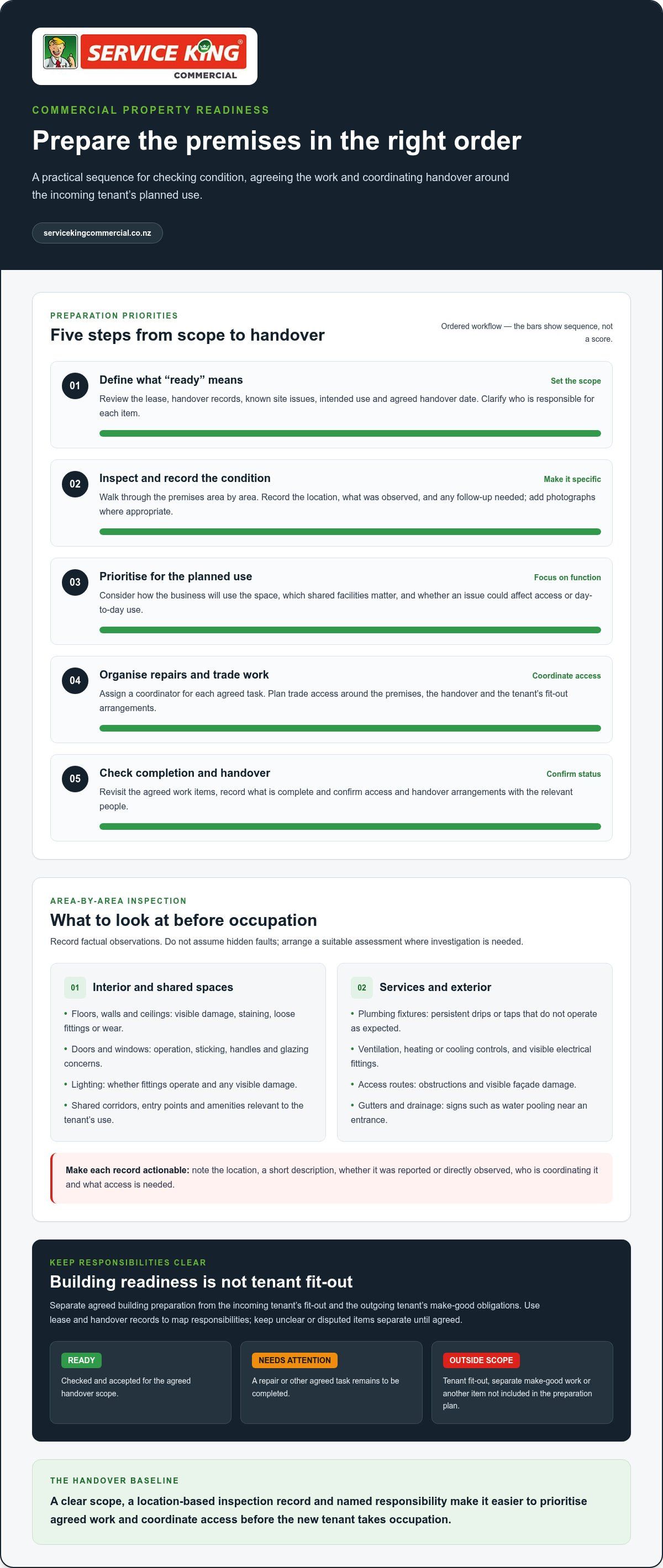
A written workflow keeps inspections, repairs and handover tasks moving in a clear order. For incoming tenant property preparation NZ, use the agreed scope and handover date as the controls. Track each task in one live list, with an owner, dependencies, status and agreed target date. Update the list as site conditions or access arrangements change.
Sequence inspections, repairs and access
- Review the scope. Confirm the agreed handover requirements, intended use and date. Gather relevant property and service records, previous inspection notes and known issues.
- Inspect and record. Walk through the premises and shared areas. Describe each issue by location, add photographs where useful, and group tasks by work area or trade.
- Assign and sequence work. Name a coordinator for each task. Note what must happen first, such as clearing an area before a repair or completing building work before tenant equipment is installed.
- Coordinate access. Agree how trades will enter the site, which areas they need and when the space will be available. Align this with the incoming tenant’s fit-out plan and any shared-area restrictions.
- Check completion. Review the agreed work, record its status and note any remaining item or follow-up action before handover.
- Prepare handover information. Organise relevant access details, operating instructions, site contacts and the current task record for the incoming occupier.
Grouping trade work can make coordination clearer, particularly where several tasks rely on the same access window or work area. The commercial trade services buying guide offers further context for planning trade tasks. Keep the task list live rather than relying on separate emails or verbal updates. Simple statuses such as “not started”, “under way”, “complete” or “follow-up required” show what still needs attention.
Close out work and prepare handover records
At close-out, compare completed work with the agreed scope. Keep remaining items visible, with an owner and next action, rather than marking the whole programme complete. Handover records should reflect the state of the premises and pass on practical information the new occupier needs to use the agreed space.
- Confirm the scope, intended use and handover date are recorded.
- Keep inspection findings and task locations together.
- Record task owners, dependencies, status and agreed dates.
- Coordinate access and work sequencing with tenant fit-out plans.
- List completed work, open items, access details, instructions and site contacts.
Tailor this checklist to the premises and agreed requirements. Service King Commercial can organise building repairs and trade work around a site’s preparation plan. Arrange coordinated commercial maintenance support for agreed readiness tasks.
Get commercial premises ready with coordinated maintenance support
Once preparation tasks are agreed, building repairs, exterior maintenance and trade services can move them from inspection notes into a workable programme. Incoming tenant property preparation NZ may involve several types of work at one site, such as repairing a damaged door, addressing an exterior maintenance issue and arranging other trade tasks before the tenant’s fit-out begins.
Coordination matters. A repair may need clear access to a work area, while another task may depend on the tenant moving equipment or completing fit-out work first. Grouping tasks by area or trade helps set a sensible sequence and makes access requirements easier to plan. The programme should reflect the site, agreed scope and handover arrangements, rather than assume every unit needs the same work.
Where maintenance and trade services fit
Use inspection findings to identify the right type of work. A recorded building defect may call for building repair and maintenance; an issue affecting the outside of the premises may suit exterior maintenance; other agreed tasks may need trade services. Scheduled maintenance can be arranged around site access and task dependencies. The property’s condition and agreed requirements shape the programme, including what is completed before occupation and what is handled separately.
For example, if a repair requires a clear entry area, coordinate access before the incoming business installs fixtures or equipment. If exterior work affects an approach to the building, include the access route in the sequence. Keep the task owner, access details and dependencies visible so the property stakeholder, trades and tenant can work from the same plan. Service King Commercial provides building repairs, exterior maintenance, scheduled maintenance and trade services for commercial properties, with a local Auckland focus and coverage across New Zealand.
Arrange support for an incoming tenant handover
For efficient planning, bring together the site address, intended use, handover timing, inspection findings and known tasks. Identify site contacts and how access will be arranged. Keep communication organised between the property stakeholder, incoming tenant and people coordinating the work. Share changes to access or sequencing promptly, especially if they affect tenant fit-out or another task already in progress.
A clear scope also helps keep building maintenance separate from tenant-specific fit-out and any outgoing-tenant make-good work. Record which tasks are agreed, who is arranging them and what remains open. The work programme can then be tailored to the property’s needs without assuming a fixed timeframe or treating every task as part of the same handover package.
If you have identified preparation work and want practical support to organise it, discuss commercial property preparation with Service King Commercial. A clear outline of the site, intended use, handover timing and known tasks gives the conversation a useful starting point.
Set the next occupier up for a clear start
Handover is also a useful point to establish how the premises will be looked after once the new business is operating. Keep a record of completed work, outstanding items and relevant site contacts. This gives property stakeholders and the occupier a shared reference as day-to-day maintenance needs emerge. A practical approach to incoming tenant property preparation NZ supports an organised transition without treating handover as the end of property care.
Service King Commercial supports commercial property stakeholders with building repairs, exterior and scheduled maintenance, end-of-lease handover support and trade services. Work programmes are tailored to the site and agreed requirements, with a local Auckland focus and coverage across New Zealand.
If you’re planning a commercial handover, share the site details and known preparation tasks to start a practical discussion. Discuss commercial property preparation with Service King Commercial and take the next step with a clear plan for the premises.
Frequently Asked Questions
How far ahead should incoming tenant property preparation begin?
Begin as soon as the handover date and intended use are known. The time needed depends on the tasks, access arrangements and whether specialist trades, materials or further assessments are involved. For an Auckland premises with a tight move-in date, identify dependencies early, such as repairs that must be completed before equipment can be installed. Build the work plan around confirmed dates, then update it if the scope or site conditions change.
Who is responsible for preparing a commercial property for a new tenant?
Responsibility depends on the lease and any agreed handover arrangements. The landlord or property manager may coordinate building work, while the incoming tenant may organise its own operational set-up. Some tasks need shared planning, particularly where tenant access or fit-out affects building work. For a commercial unit in Auckland, list each task alongside the person who has agreed to arrange it. This makes gaps and overlaps easier to resolve before they delay the move.
Can an incoming tenant request changes before moving into commercial premises?
Yes, an incoming tenant can raise requests, but the work should be agreed before it is added to the preparation programme. Describe the change, where it is needed and how it supports the intended use. For example, a retailer might request an alteration to a display area. Record who will arrange the work, how it relates to the lease and whether it affects access, timing or other planned work.
Can preparation work take place while a commercial building remains occupied?
Work can often be planned around an occupied building, but access, noise, dust and disruption need to be considered. Identify affected areas and occupants before setting a work sequence. A repair in a shared corridor, for instance, may need temporary access arrangements and clear communication with nearby businesses. Some tasks may be unsuitable during normal operations or may require restricted access. Let the site plan and type of work guide scheduling.
What records should be kept after commercial property preparation?
Keep a dated record of the work completed, the areas affected and any items still open. Retain relevant work records, photographs, instructions provided at handover and details of follow-up actions. If a repair remains outstanding, for example, note its status and who is coordinating the next step. Store the handover information with the property’s existing records so the property stakeholder and tenant can refer to the same account later.
Should the incoming tenant arrange its own fit-out during property preparation?
The incoming tenant will usually plan fit-out work for its business, subject to the lease and any agreed arrangements. Keep it distinct from building preparation, then coordinate the schedules. A tenant installing shelving, for example, may need a wall repair completed first. Agree access and sequencing with the relevant parties before work starts. This helps avoid trades working in the same area at once or completed building work being disrupted by fit-out.
Recent Posts