
October 30, 2026
Building care is more than fixing faults as they appear. Facility management trade services in Auckland can cover cleaning, routine maintenance, repairs and longer-term planning, with the right mix shaped by the building and its occupants. A facilities management company can also help owners and residents coordinate the practical work involved in keeping a property running.
It’s easy to see these tasks as separate jobs, but they often affect one another. This guide explains what cleaning and maintenance can involve, how repair work is arranged, and what long-term planning adds. You’ll also find a comparison of service approaches and a simple decision guide to help match support to your building’s needs.
Key Takeaways
- Match cleaning and routine maintenance to the building’s size, use and occupants’ needs.
- Clear repair processes help building managers identify faults, arrange trades and keep work moving.
- Facilities management can coordinate day-to-day building needs alongside specialist maintenance and repair work.
- Plan ahead by prioritising building needs and scheduling maintenance before issues disrupt normal use.
Table of Contents
Cleaning and maintenance
In Auckland, cleaning and maintenance support both the presentation of a property and the condition of its building components. The building’s size, use and occupants help determine the right approach. A shared office, for example, may need attention to reception areas, meeting rooms, kitchens and corridors, alongside maintenance of doors, lights and fixtures.
Set the scope by listing each area, how it is used and the work it needs. First identify busy or shared spaces, then record recurring cleaning tasks and building items that need inspection or upkeep. This separates presentation tasks from maintenance, such as repairing a damaged door closer or dripping tap. Clear task descriptions help staff understand what needs doing and make follow-up easier.
A cleaning plan should reflect flooring, furnishings and how people use each space. A carpeted meeting room may need vacuuming, while a kitchenette needs surface cleaning and bin removal. Maintenance planning can cover shared fittings and exterior areas, scheduled around access and building use. Record completed work and outstanding faults in one log so the building manager can track recurring needs and unresolved issues.
Management models differ in how work is organised. Compare the options against the building’s requirements:
| Option | Cleaning approach | Maintenance approach | Useful when |
|---|---|---|---|
| In-house coordination | Tasks assigned to on-site staff | Faults recorded and arranged internally | Staff can manage routine work |
| Scheduled external support | Regular tasks planned by area | Recurring upkeep is organised in advance | Work needs a consistent schedule |
| Combined coordination | Cleaning and upkeep tracked together | Tasks prioritised across the property | Several spaces share maintenance needs |
Choose the model that fits the building’s size, occupancy, shared areas and capacity to coordinate work. For properties adopting scheduled external support, commercial providers such as Advance Cleaning Services Inc. show how dedicated cleaning programmes can be structured to handle routine sanitation alongside wider facility upkeep.
Review the scope when a space changes use. A newly occupied floor, for example, may need different cleaning priorities and closer tracking of shared fixtures. Keep task records specific: name the area, describe the issue and note the action required. This makes upkeep manageable and helps distinguish routine cleaning from repairs requiring a trade specialist.
Engaging tradespeople for repairs
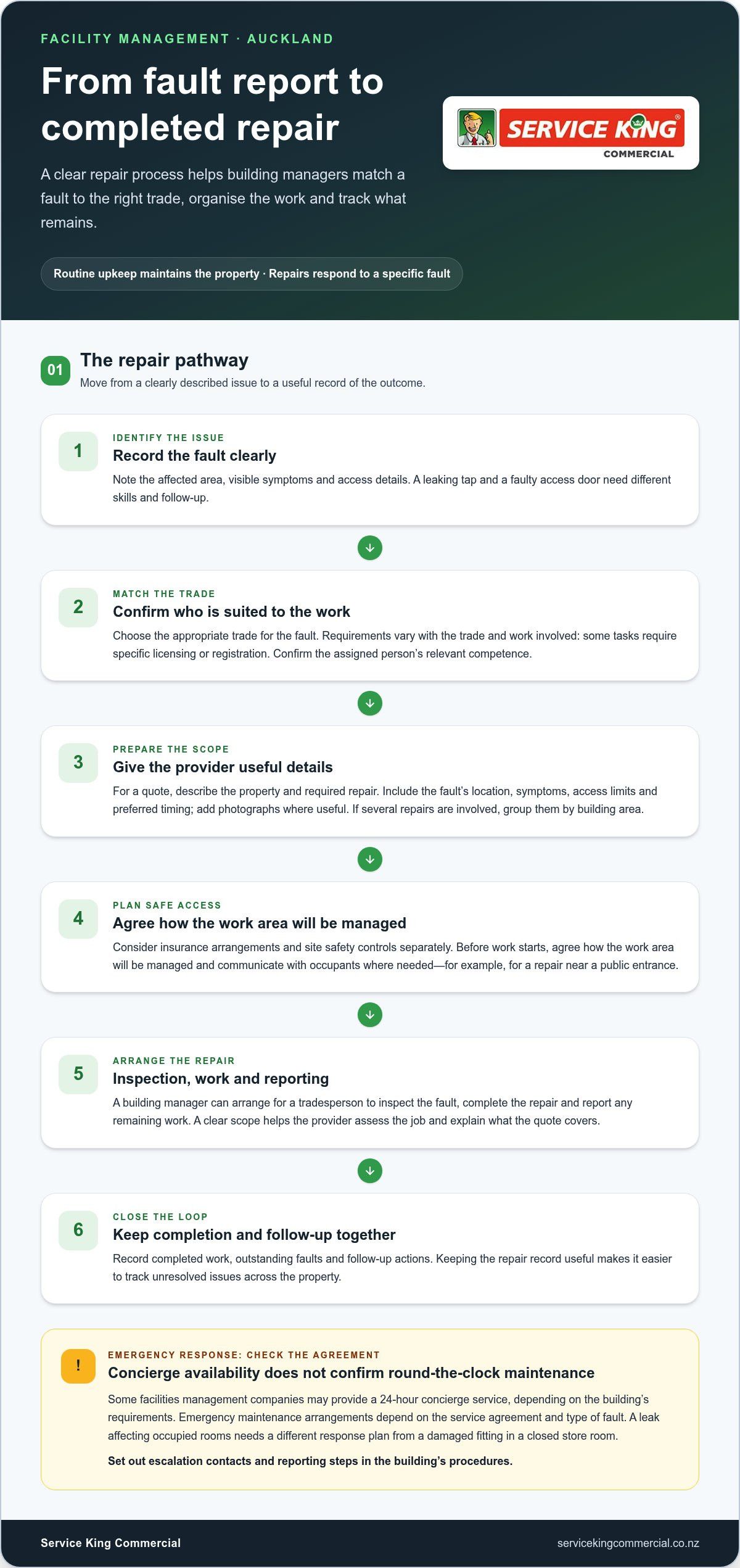
Repair work needs a clear fault description, an appropriate trade and a way to record completion. A leaking tap and a faulty access door, for example, require different skills and follow-up.
Repair tradespeople
A building manager can arrange for a tradesperson to inspect a fault, complete the repair and report any remaining work. Unlike routine upkeep, this responds to a specific problem, such as a broken door closer or damaged wall fitting. Before assigning the job, record the affected area, symptoms and access details. This helps the tradesperson assess the task and keeps the repair record useful.
Licensing, insurance and safety checks
Requirements depend on the trade and work involved. Some tasks require specific licensing or registration, while insurance arrangements and site safety controls need separate consideration. Before work starts, identify the task, confirm the assigned person’s relevant competence and agree how the work area will be managed. A repair near a public entrance, for example, may require access controls and clear communication with building occupants.
Requesting service quotes
When requesting a quote in Auckland, describe the property, the repair or service required and any access limits. Include the fault’s location, visible symptoms, preferred timing and photographs where useful. A clear scope helps the provider assess the work and explain what it covers. If there are several repairs, group them by building area to make the scope easier to review.
Emergency maintenance availability
Some facilities management companies may provide a 24-hour concierge service, depending on a building’s requirements. That does not establish that emergency maintenance is available around the clock. Emergency response arrangements depend on the service agreement and the type of fault. For example, a leak affecting occupied rooms needs a different response plan from a damaged fitting in a closed store room. Set out escalation contacts and reporting steps in the building’s procedures.
What Services Can a Facilities Management Company Provide?
Facilities management can coordinate building operations, ongoing maintenance and specialist trade work. The scope depends on the property’s use, condition and occupants.
Auckland building compliance and maintenance
For facility management and trade services in Auckland, start with the building’s compliance documents and asset records. Unlike arranging a single repair, this approach tracks maintenance needs across the property. Review scheduled tasks against recorded assets, such as access systems, shared doors and building services. Keep inspection notes, faults, completed work and follow-up actions together.
When comparing service arrangements, assess the scope, reporting process and approach to coordinating work. Ask for a clear outline of scheduled tasks, repair handling and records provided after each job. Auckland businesses can use an integrated facilities partner or engage trade services for specific work. The right arrangement depends on whether the building needs coordinated support or help with a particular task.
Building requirements vary according to the property and its documented obligations. Plan maintenance against those records rather than relying on a generic checklist. An office and a warehouse, for example, have different assets, access arrangements and upkeep priorities. Review the records when the building’s use changes, so the maintenance schedule stays relevant.
Trades in maintenance contracts
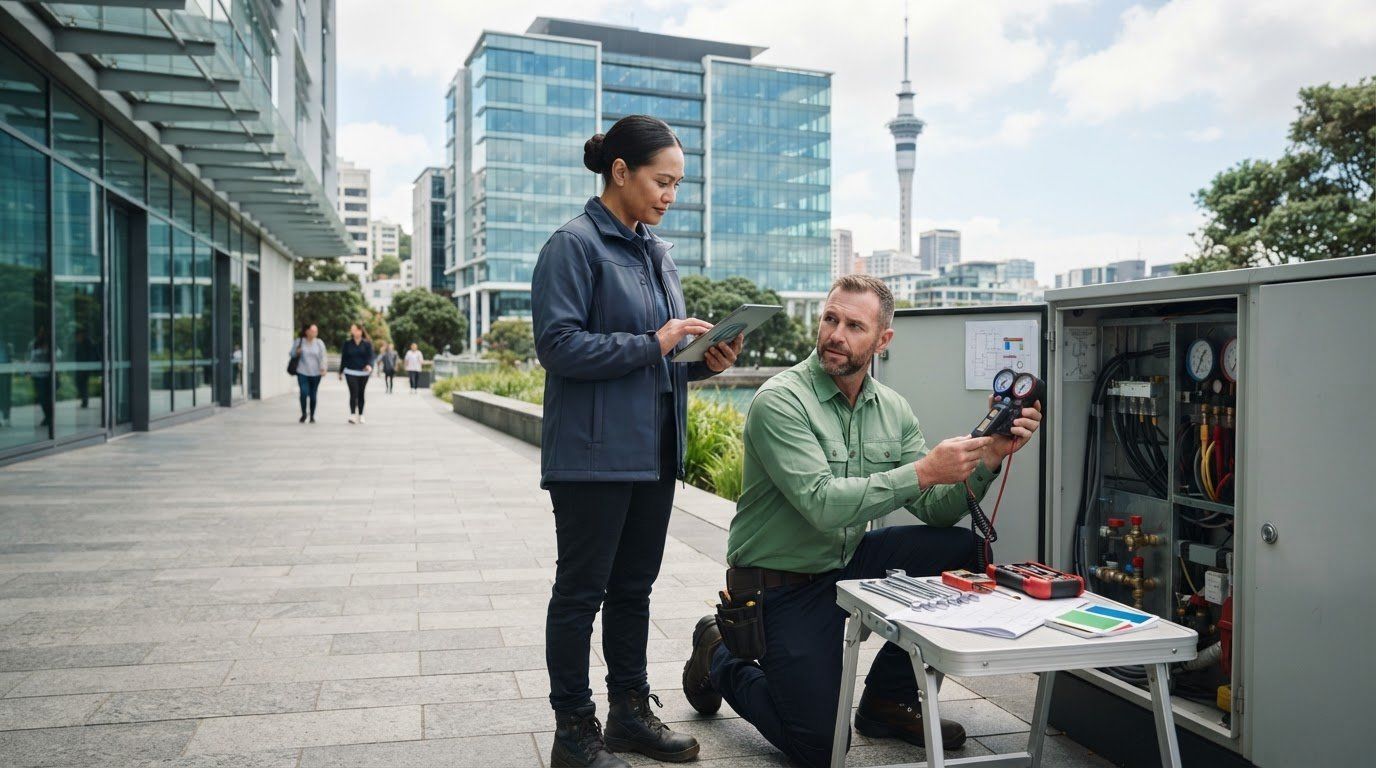
Trade work can include plumbing, electrical services, appliance repairs and pest control, depending on the building’s needs. This differs from general facilities coordination, which organises work across a property rather than performing every specialist task directly. For property managers seeking dedicated drainage and facility management services, resources such as chenviro.com demonstrate how specialised trade support integrates into overall building care. Define which trades are included and how each type of fault will be assigned.
For facility management and trade services in Auckland, define the scope by work type and building area. Tasks might include lighting faults, plumbing repairs, door hardware or damaged paintwork. Clear boundaries help distinguish routine upkeep from larger projects. Compare how each service arrangement coordinates trades, records completed work and communicates with building occupants.
Long-term maintenance planning
Long-term planning turns building records and observed condition into a practical programme of work. It helps Auckland property owners distinguish urgent faults from renewal projects, such as recurring roof leaks or worn floor finishes. Professional building management companies may provide expertise in health and safety, long-term maintenance planning and project management.
Start with an asset register. Record each system or component, its location, condition and maintenance history, including exterior cladding, roof areas, lifts, doors and shared lighting. Then note known defects and recurring work. Repeated water ingress, for example, may point to a wider maintenance need rather than another isolated repair.
Prioritise work by considering each asset’s condition, the effect of failure on occupants and the impact of work on daily operations. A faulty shared entrance may need attention before a cosmetic upgrade because it affects access. A larger project, such as exterior repairs, may also require planning for access, trade coordination and disruption to building users.
A useful plan brings these decisions together:
- Record: Keep asset details, inspection notes and completed work together.
- Assess: Compare condition, recurring faults and the impact of failure.
- Prioritise: Separate immediate repairs from planned renewals and upgrades.
- Schedule: Set work around access needs, building use and project dependencies.
Review the plan when the building changes. A new tenant, a different use for a floor or a completed refurbishment can alter maintenance priorities. Update the asset record after significant work, then adjust scheduled tasks to reflect the current condition. This keeps future decisions grounded in the building’s actual needs.
For practical support with planned upkeep, explore scheduled maintenance services for commercial properties.
Where a live-in building manager is part of the arrangement, include those responsibilities in the maintenance plan. Live-in building managers may be responsible for general security and engaging tradespeople to maintain common areas and carry out general repairs. Make the scope of that role clear in the building records, including which common-area tasks need trade support and how repair needs are passed on for action. This can help owners connect day-to-day oversight with planned maintenance, while keeping responsibility for security, trade engagement and repairs visible when priorities or scheduled work are reviewed.
Service King Commercial: Commercial Cleaning Services
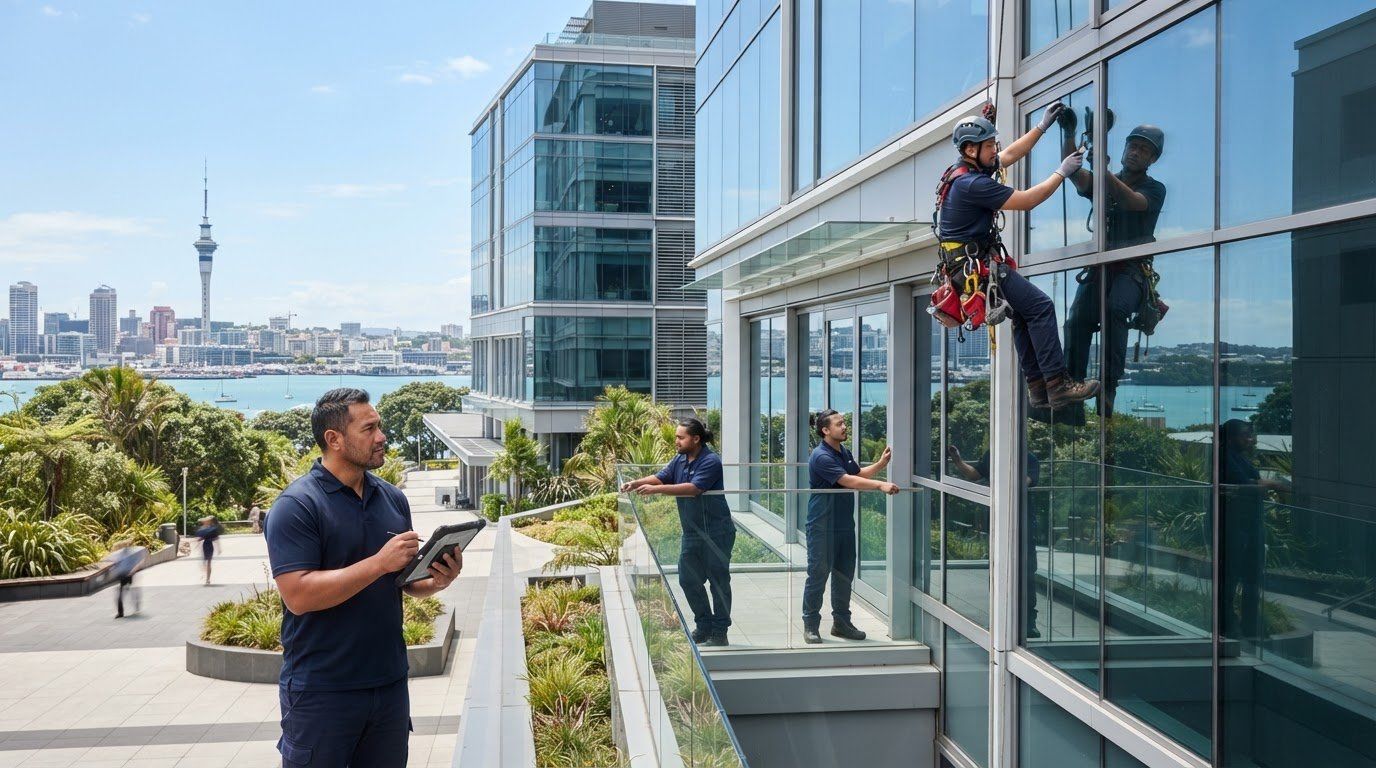
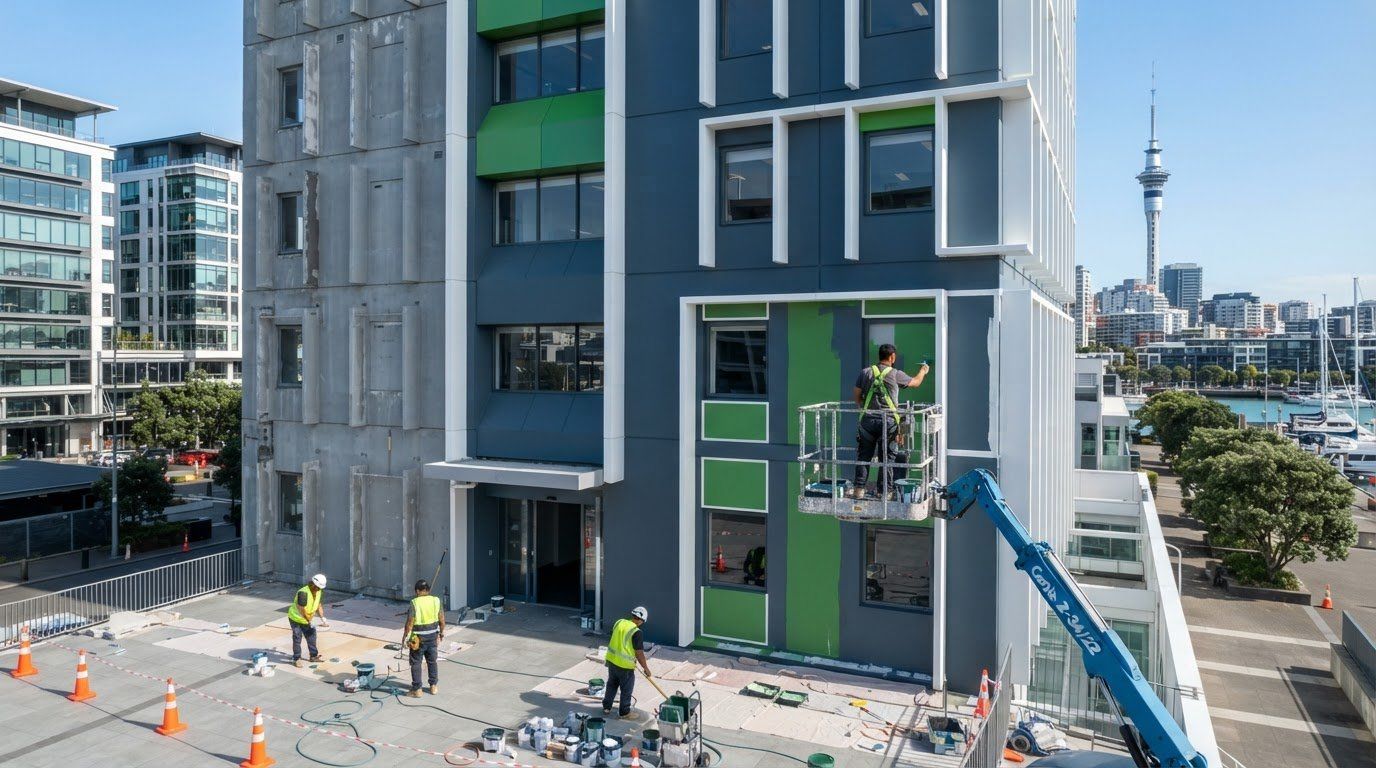
Service King Commercial supports Auckland commercial properties with building repairs, exterior building maintenance and end-of-lease services. These services address different stages of a property’s maintenance cycle: building repair and maintenance tackles faults, exterior building maintenance looks after the building’s exterior, and End of Lease Service supports commercial property handovers.
Use the earlier planning steps to identify the work required, its location and how it affects building use. This gives a clear starting point when discussing the right service. For property repair or exterior upkeep, contact Service King Commercial to discuss the work.
Set a clear next step for your building
Use your building’s current priorities to define the next practical action. Decide which issue needs attention first, who will coordinate it and what information should be recorded after the work. A clear scope keeps decisions connected to how the property is used, rather than treating each task in isolation.
For facility management trade services in Auckland, start with a concise description of your property and operational needs. Note the areas involved, the work required and any constraints affecting access or occupants. This gives the conversation a clear focus without requiring a lengthy plan upfront.
Service King Commercial can discuss building requirements and relevant property services. Contact Service King Commercial to discuss the next step for your facility. A well-defined starting point makes it easier to move from building needs to practical action.
Frequently Asked Questions
What facility management services do Auckland providers offer?
Auckland businesses can coordinate building maintenance, repairs, trade work and longer-term upkeep through an integrated facility services partner. Service King Commercial provides building repair and maintenance, exterior building maintenance, scheduled maintenance, trade services and commercial end-of-lease support. The scope should reflect the building’s operation, condition and management requirements.
Recent Posts