
November 4, 2026
Fewer repair requests should come from preventing avoidable problems, not delaying necessary repairs. In Auckland homes, landlords must keep the property in a reasonable state of repair and fix items that break through normal use. A practical approach to how to reduce tenant repair requests in Auckland is to make responsibilities clear, record issues properly and act promptly when damage is reported.
It’s reasonable to want fewer repeat calls and clearer maintenance records. Worn flooring is usually fair wear and tear, while carpet burn marks or drink stains are not normally treated the same way. Tenants should report repair issues in writing, with a clear description and photos or notes where useful. If a repair is urgent, they should say so straight away.
This guide explains what counts as a repair, how to document problems and communication, and when to report damage promptly. You’ll also learn how clear processes and building maintenance can prevent avoidable issues while keeping essential repairs on track.
Key Takeaways
- Separate normal wear from damage so repair responsibilities are clearer.
- Record problems with dated photos, notes and written updates.
- Report damage promptly, and make urgent issues clear in your message.
- Use building repair and maintenance support when property issues need practical attention.
Table of Contents
Documenting repair problems and communications
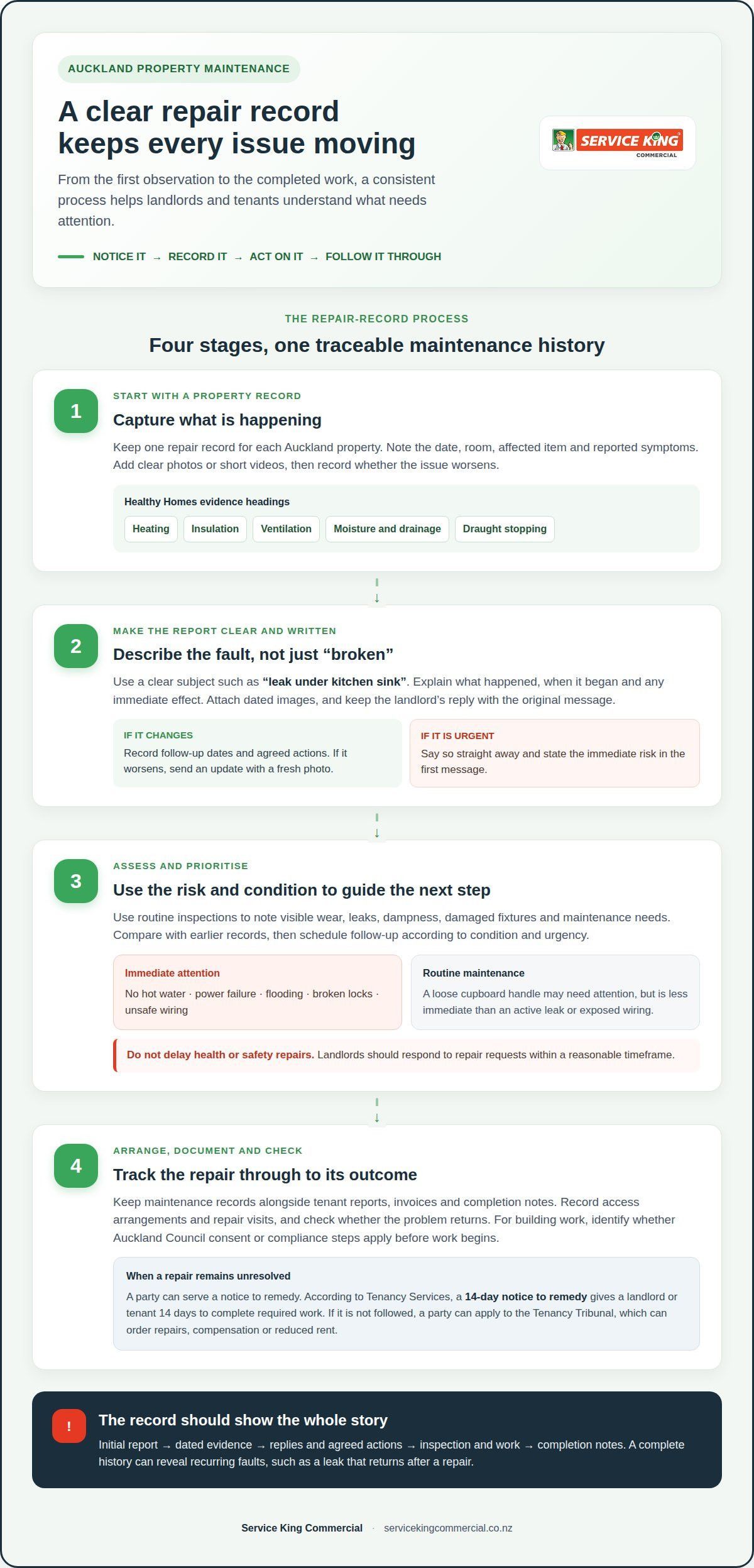
- Keep one repair record for each Auckland property. Note the date, room, affected item and reported symptoms. Add clear photos or short videos, then record whether the issue worsens. For a Healthy Homes Standards working checklist, organise evidence under heating, insulation, ventilation, moisture and drainage, and draught stopping. This gives landlords and tenants a clear record of conditions requiring attention, without confusing maintenance notes with repair updates.
- Send repair reports in writing, using a clear subject such as “leak under kitchen sink”. Describe what happened, when it began and any immediate effect. Attach dated images and keep the landlord’s reply with the original message. If the issue remains unresolved, record follow-up dates and agreed actions. According to Tenancy Services, Ministry of Business, Innovation and Employment, a 14-day notice to remedy gives a landlord or tenant 14 days to complete required work.
- Use routine property inspections to record visible wear, leaks, dampness, damaged fixtures and maintenance needs. Compare each record with earlier notes, then schedule follow-up work according to each item’s condition and urgency. Keep maintenance records alongside tenant reports, invoices and completion notes. Consistent records can reveal recurring problems, such as a leak that returns after a repair, before they generate further requests.
- For repairs involving building work, identify whether Auckland Council consent or compliance steps apply before work begins. Keep relevant council correspondence with the repair file. Landlords should respond to repair requests within a reasonable timeframe and must not delay repairs affecting health or safety. If a repair dispute remains unresolved, a party can serve a notice to remedy and apply to the Tenancy Tribunal if it is not followed. The Tribunal can order repairs, compensation or reduced rent.
Reporting damage or repairs promptly
- Tell the landlord as soon as you notice a fault. A slow drip beneath a sink can damage cabinetry and flooring if ignored. Describe the location, what is happening and when you first noticed it. Send the report in writing, even if you have already called. A clear first message helps the landlord understand the problem and arrange the next step.
- Make urgent risks clear in your first message. No hot water, power failure, flooding, broken locks and unsafe wiring need immediate attention. State the immediate risk, such as water spreading across a hallway or a door that cannot be secured. Keep people away from danger and avoid attempting repairs that could worsen the fault. Contact the landlord promptly and explain how to access the affected area safely.
- Separate urgent faults from routine maintenance. A loose cupboard handle may need attention, but an active leak or exposed wiring presents a more immediate concern. Explain whether the issue is ongoing, whether it affects a room’s use and whether the condition is changing. This gives the landlord useful information to prioritise work without treating every repair as an emergency.
- Keep communication moving after the initial report. If the problem worsens, send an update with a fresh photo and a short description. Record replies, access arrangements and repair visits. Landlords should respond within a reasonable timeframe, and repairs affecting health or safety must not be delayed. If urgent damage remains unresolved, state the risk and previous contact attempts clearly in writing.
- For landlords managing repeated faults, arrange repairs based on the reported cause, not just the visible symptom. A recurring ceiling stain, for example, needs attention to the source of the water as well as the damaged surface. Keep the tenant updated on agreed work and access. For practical help with property faults, building repair and maintenance can address repair needs and ongoing upkeep.
Examples of repair issues
Classify each fault by its location, effect and likely cause. For landlords looking at how to reduce tenant repair requests in Auckland, identifying shared causes can guide effective property upkeep.
-
Identify common repair issues
Inspect doors, windows, supplied appliances, power outlets, steps, decks and railings. Check whether each item works safely and as intended. A window that will not close can affect security, while a loose deck railing creates a fall risk. Note pests or vermin linked to the property’s condition. Describe the affected item and its specific fault, rather than simply saying something is “broken”.
-
Prevent leaks, dampness and mould
Check taps, plumbing connections, window edges, gutters and visible drainage points for water entry. Look for staining, peeling paint, damp patches or musty smells around bathrooms and kitchens. These signs can indicate moisture or ventilation problems. Address the source rather than covering the marks with paint.
To reduce tenant repair requests in Auckland, include ventilation and water entry in routine upkeep. Keep extractor fans and windows usable, clear debris from drainage areas, and arrange repairs for damaged seals or leaking fittings. Ask tenants to report fresh damp patches promptly, before moisture spreads into walls or flooring.
- Match each repair response to the affected part of the home. A supplied appliance needs an assessment of the appliance, while a damaged step needs attention to safe access. Record whether the fault creates a hazard or affects normal use. For pests, consider whether gaps, dampness or another property condition may contribute—approaches used by specialists like Hughes Termite Control
demonstrate how tackling structural repairs alongside pest management addresses the root cause. Do not treat recurring symptoms as unrelated faults without checking for a shared cause.
After work, record what was repaired and whether the problem returns. A repaired window should close properly; a cleared drain should not continue backing up. Follow-up notes can reveal incomplete work and recurring maintenance needs.
Fair wear and tear
- Compare the reported condition with ordinary use. Rental properties change over time, and flooring becoming worn is usually fair wear and tear in New Zealand. A worn carpet does not, by itself, show careless damage. Consider the item’s condition and the nature of the change before deciding what repair is needed.
- Separate gradual wear from specific damage. Burn marks or drink stains on carpet are not normally considered fair wear and tear. A single mark differs from general flattening caused by people walking across a room. Record what is visible and where it appears. Avoid treating all carpet deterioration as tenant-caused damage.
- Use inspection records to make a fair comparison. Note existing marks, worn surfaces and damaged fittings at the start of a tenancy. Add dated photographs and compare them with later records. For example, a new burn mark can be assessed against an earlier image of the same carpet. Clear records help distinguish a new incident from gradual change.
- Consider the cause before discussing responsibility. Landlords must keep rental properties in a reasonable state of repair and fix things that break through normal use. Tenants are liable for careless damage they or their guests cause. According to Tenancy Services, Ministry of Business, Innovation and Employment, that liability is up to 4 weeks’ rent or the landlord’s insurance excess, if applicable, whichever is lower.
- Explain the finding with evidence, not assumptions. Identify the item, describe the change and refer to relevant inspection photographs. If the evidence shows ordinary wear, arrange the repair as property maintenance. If it indicates careless damage, share the recorded details and discuss the next step. For practical support preparing a property between tenancies, use an end-of-lease service.
Look at the whole surface rather than treating one area in isolation. Describe whether the change is spread across the floor or concentrated in one spot, and keep the description tied to what is visible. This keeps the assessment focused on the flooring’s condition and avoids drawing conclusions from appearance alone. Use neutral wording and distinguish observations from views about how the change occurred.
Service King Commercial: Building Repair and Maintenance
Service King Commercial provides building repair and maintenance for property repair needs that go beyond routine tenant reporting. Use this service when a fault needs practical attention or recurring maintenance issues call for a broader repair response. Clear records of the problem and its history can help define the work needed and keep the repair focused on the underlying issue.
For landlords and property managers, a consistent maintenance approach can help address faults before they become larger problems. Contact Service King Commercial to discuss building repair and maintenance for your property.
Build a more manageable maintenance routine
For landlords looking at how to reduce tenant repair requests in Auckland, use recurring issues to improve property upkeep. Look for patterns, such as the same component failing again or wear appearing in similar areas. These can help set maintenance priorities and identify building issues to address before they disrupt a tenancy.
Fewer requests should never depend on tenants staying quiet about faults. A sound process makes it easier to raise concerns and helps landlords arrange practical repairs. When maintenance needs go beyond an isolated repair, Service King Commercial provides building repair and maintenance to support property upkeep.
Contact Service King Commercial to discuss your property’s repair needs. A clear, consistent approach can make maintenance easier to manage for everyone involved.
Frequently Asked Questions
What Counts as a Repair?
A repair restores a property feature that is broken, unsafe or no longer working as intended. Repainting a room a different colour is usually a proposed change, not a fault repair. In New Zealand, tenants need written landlord consent before changing the property. Landlords must agree to minor reversible changes, though they may set reasonable conditions.
What repairs and maintenance must Auckland landlords handle under New Zealand tenancy law?
Auckland landlords must keep rental homes in reasonable repair and fix items that fail through normal use. That includes addressing a supplied appliance that stops working, even if the rest of the kitchen remains usable. Landlords generally give tenants 24 hours’ notice before entering, except in an emergency. They must prioritise faults affecting tenants’ health or safety.
Which repairs must tenants handle themselves under New Zealand tenancy rules?
Tenants should report faults rather than attempt repairs that could alter the property or cause further damage. Written landlord consent is needed before making changes; landlords must agree to minor reversible changes and may set reasonable conditions. According to Tenancy Services, Ministry of Business, Innovation and Employment, tenants can be liable for careless damage they or their guests cause.
How can landlords distinguish routine maintenance requests from urgent repairs?
Assess immediate risk, loss of an essential service and whether damage is spreading. A loose cupboard hinge can usually be scheduled as routine work, while a fault that makes a room unsafe needs urgent attention. Ask whether the issue is worsening or preventing normal use. Record the details, then prioritise the response according to its effect on the home and its occupants.
Which Auckland council services or local requirements affect rental property repairs and maintenance?
Before building work begins, check whether Auckland Council consent or compliance steps apply, and keep relevant council correspondence with the repair records.
Recent Posts