
November 1, 2026
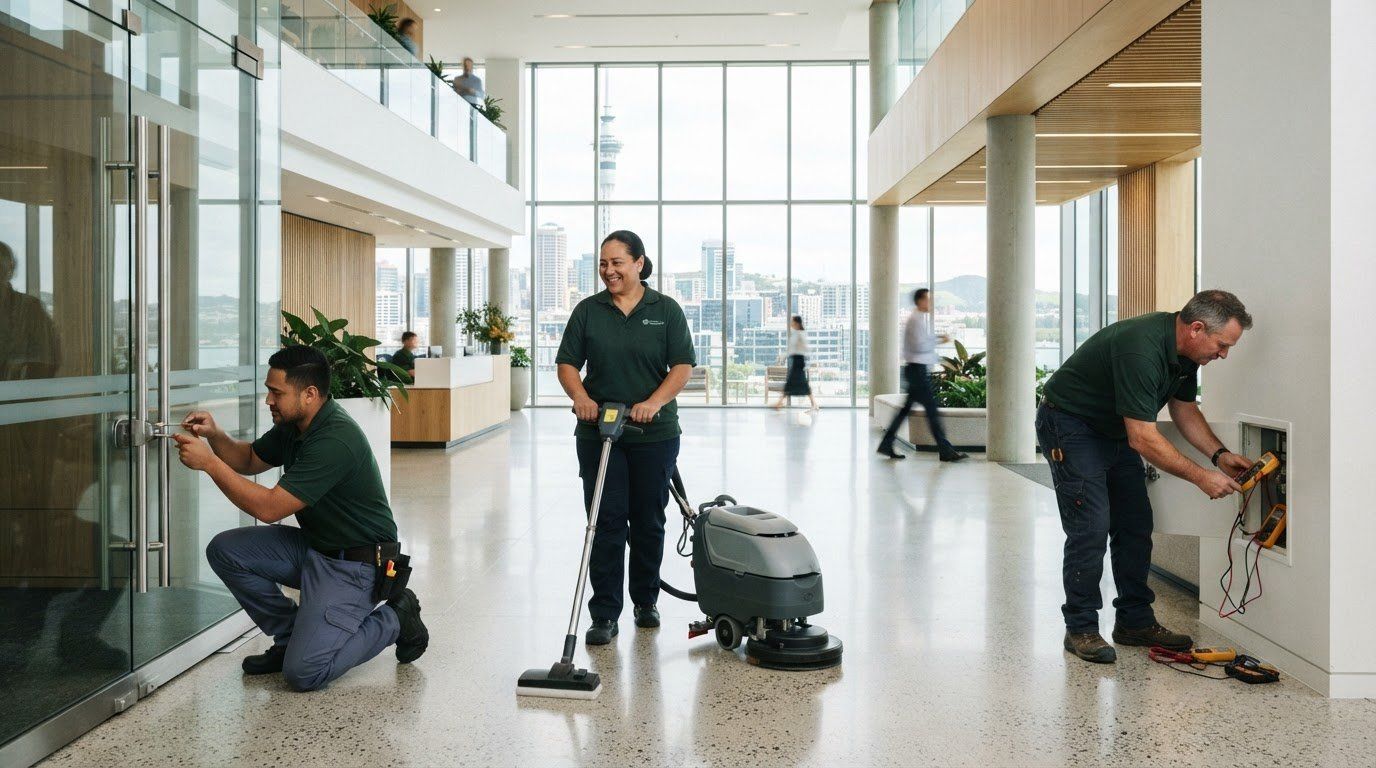
A maintenance issue can disrupt work before it becomes obvious to everyone in the building. Office building maintenance in Newmarket can cover planned upkeep, repairs, exterior work and trade services, as well as responses to reported faults. The right approach depends on the building, its condition and the work taking place inside it.
Clear arrangements make maintenance easier to manage. When making an enquiry, describe the site, the issue or work required, its location, and any access or timing constraints. This gives the maintenance team a practical starting point for scoping the work.
This guide explains what commercial and industrial maintenance can cover, what to include in an enquiry and how planned and reactive work fit together across the region. It also outlines the factors that shape a maintenance plan, so you can identify the support your building needs and take the next step with a clear brief.
Key Takeaways
- Match maintenance tasks to the building’s use, condition and operating needs to create a practical scope of work.
- Make an enquiry easier to assess by describing the issue, its location, access requirements and any timing constraints.
- Separate routine inspections and planned upkeep from urgent repairs so each issue can be handled appropriately.
- Use a clear regional service brief to identify where building repairs, trade work or exterior maintenance may help.
Table of Contents
Commercial and industrial property maintenance
Commercial maintenance covers work that keeps a property’s exterior, structure and operating spaces serviceable. In Newmarket, the scope should reflect how the building is used and the condition of its components.
Choosing a Reliable Maintenance Provider
Match the work scope to the building’s actual needs. A site requiring roof repairs and interior trade work needs a different scope from one that needs scheduled upkeep alone.
Compare written scopes, reporting methods and how planned tasks connect with repairs. Ask for clear records of completed work and outstanding issues. Service King Commercial provides building repairs, exterior maintenance, scheduled maintenance and trade services for commercial properties in Auckland, including Newmarket.
Building Compliance and Maintenance Requirements
Commercial offices in Auckland need maintenance that reflects their use, installed systems and building documentation. Identify the requirements that apply to your property and assign responsibility for each relevant maintenance task.
Keep maintenance records organised by asset, location and work completed. For example, log an identified fault, the action taken and any follow-up needed. This creates a practical record for managing ongoing work and reviewing the building’s condition.
Office Maintenance Costs
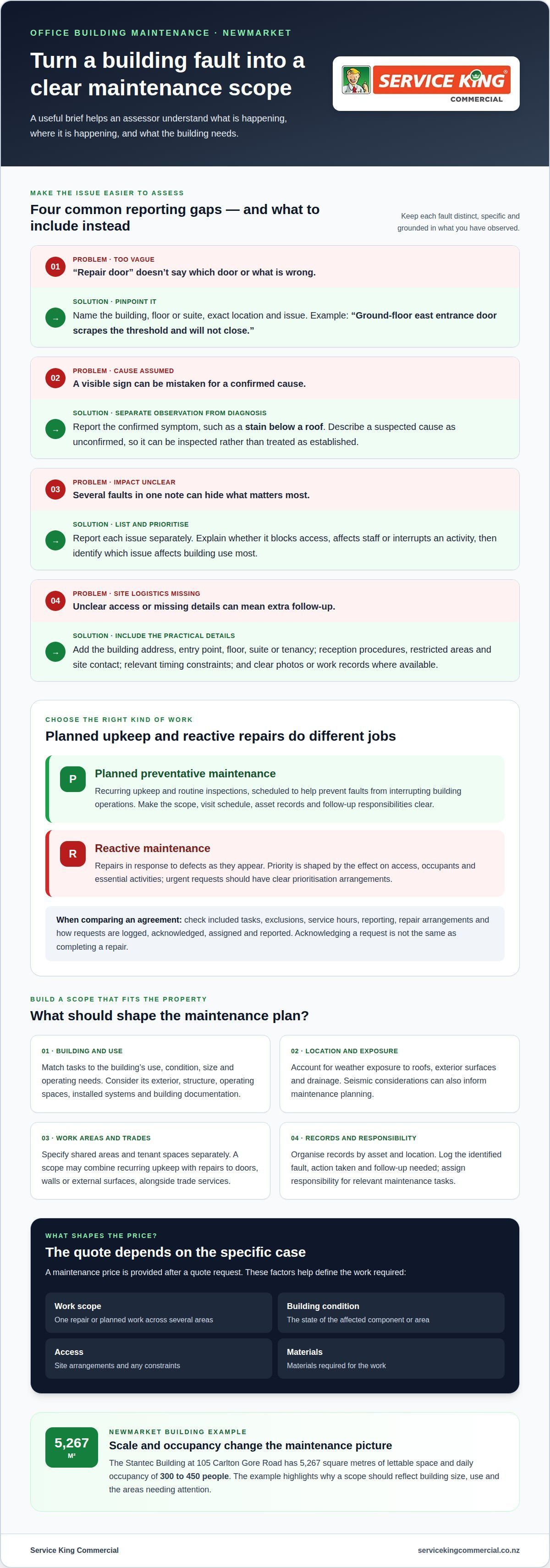
A maintenance price depends on the case and is provided after a quote request. The main cost factors are the work scope, building condition, access, materials and whether the request covers one repair or planned work across several areas.
For a useful assessment, describe the affected area and the task required. A leaking roof and a damaged internal door involve different work. Include site access details and known constraints so the scope can reflect the job accurately.
Available Maintenance Services
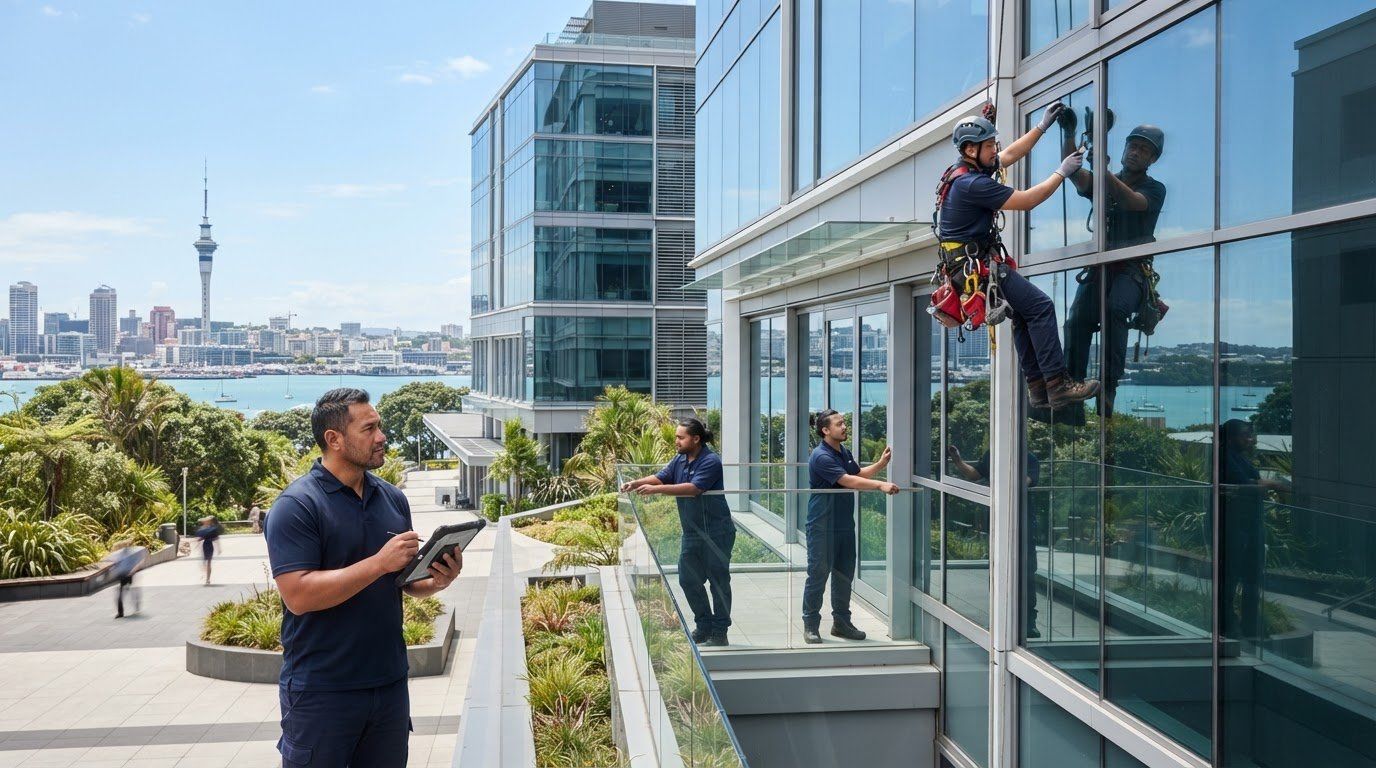
Office building maintenance in Newmarket can include building repairs, exterior upkeep, scheduled maintenance and trade services. The right combination depends on the property’s condition and issues identified during an assessment or reported by occupants.
For example, a maintenance plan may combine recurring upkeep with repairs to doors, walls or external surfaces. A commercial building may need different tasks across shared areas and tenant spaces, so specify the location and work area in each request.
Weather exposure can affect roofs, exterior surfaces and drainage, while seismic considerations can also inform maintenance planning. Record visible damage, water entry or movement, then describe its location and impact when arranging an assessment.
Newmarket has varied commercial buildings. The Stantec Building at 105 Carlton Gore Road has 5,267 square metres of lettable space and daily occupancy of 300 to 450 people. Its scale shows why maintenance scopes should account for building size, use and the areas requiring attention.
Information needed for maintenance enquiries
A useful maintenance enquiry gives the assessor enough detail to understand the site, the fault and the required outcome. For office building maintenance in Newmarket, include the building address and exact location of the issue. “Ground-floor east entrance door scrapes the threshold and will not close” gives clearer direction than “repair door”.
- Site details: Give the building name, entry point, floor and suite or tenancy.
- Exact location: Identify the room, shared area or exterior feature, such as a loading-bay door.
- Issue description: Describe what has changed, such as a leaking ceiling tile or damaged handrail.
- Impact: Explain whether the fault blocks access, affects staff or interrupts a specific activity.
- Access arrangements: Note reception procedures, restricted areas, site contact and any access requirements.
- Supporting material: Attach clear photographs and relevant work records where available.
Separate observed symptoms from your suggested repair. A stain below a roof may indicate water entry, but the visible ceiling mark is what you have confirmed. This distinction helps the assessor understand what needs inspection without treating a suspected cause as established.
For office building maintenance in Newmarket, list each issue separately when reporting several faults. State which one affects building use most. Record whether the fault is recurring, any temporary action taken, and whether the condition has changed. For example, note a jammed entrance separately from a cracked office-wall panel.
Before sending your enquiry, check the address, contact details and access notes. Include a preferred time for a site visit if relevant, and name a building representative who can explain the issue. These details help organise the next step and avoid unnecessary follow-up.
For requests covering several building areas, set out the scope clearly in a building maintenance enquiry, matching each issue to its location and impact.
Planned preventative and reactive maintenance
Planned work addresses recurring upkeep to help prevent faults from interrupting building operations. Reactive work responds to defects as they appear, with priority shaped by their effect on access, occupants and essential activities.
Maintenance Contracts and Service Levels
Newmarket maintenance agreements can differ in included tasks, visit schedules, reporting and repair arrangements. Compare the written scope, exclusions, service hours and how urgent requests are prioritised.
Look for clear service definitions explaining how requests are logged, acknowledged, assigned and reported. Acknowledging a request is not the same as completing a repair. For example, exterior inspections may be scheduled separately from reactive internal repairs. Check that asset records and follow-up responsibilities are covered too.
Urgent and After-Hours Repairs
For an urgent fault, follow the incident process and contact route set out for the property. Give the exact location, describe the immediate effect, and state whether access or building operations are affected.
After-hours arrangements depend on the agreement’s stated coverage and contact process. Set out who receives the report, how access is arranged and what information the attending trade needs. For a leaking pipe near electrical equipment, identify both the leak location and the affected area.
Planned preventative work uses an asset list, inspection findings and maintenance history to organise tasks. For example, record a recurring roof-water issue with its location, observed condition and previous repair details. This helps managers plan follow-up work and identify repeat faults.
Reactive work starts with a report, an assessment of its impact and a repair scope. A jammed entrance may need prompt attention because it affects access, while a minor cosmetic defect can be logged for later work. Record the action taken and any remaining issue after the repair.
Keep planned and reactive work visible in one maintenance record. Separate routine tasks from reported faults, assign responsibility and review open items regularly. This gives the building manager a practical view of upcoming work, completed repairs and issues needing further assessment.
Regional service coverage
For a Newmarket property, regional planning starts with the site address and work location. Auckland buildings can be close together yet have different entrances, access rules and operating schedules. Give each property a clear site contact and explain where technicians should report on arrival.
For a portfolio across Newmarket, Epsom, Grafton or Parnell, group requests by address rather than sending one broad list. Separate each site’s faults, planned tasks and access notes. This helps distinguish a repair at one building from a recurring issue across several properties.
- Newmarket: Identify the building entrance, floor and tenancy for each job.
- Epsom: Record any site-specific entry instructions and the relevant contact.
- Grafton: Note which shared or tenant areas need attention.
- Parnell: Keep separate records for each property and open task.
For linked sites, state whether work can be coordinated in one visit or needs separate access arrangements. For example, a property manager overseeing offices in Newmarket and Epsom can label each request by address and assign a contact for each location. Keep each building’s task list distinct, even when the same issue occurs at both.
Regional requirements also depend on how each building is used. A busy reception area, a tenant office and an exterior service entrance have different access patterns. Describe the work area and operating constraints so the maintenance scope reflects each site’s practical conditions.
Before sending a regional request, prepare a concise record for each property. Include the address, task, location, access details and preferred work timing. For a portfolio across Auckland, an address-based list makes outstanding work easier to track and review.
Share your Auckland site requirements through a maintenance enquiry with each property and task clearly identified.
Service King Commercial: Commercial Cleaning Services
Service King Commercial provides building repairs, exterior upkeep, scheduled maintenance and trade services for commercial properties in Auckland, including Newmarket. These services can help building managers address a specific fault, maintain external areas or coordinate repairs across a site.
In your enquiry, describe the affected area, the issue and any access arrangements. This helps define the required work, whether it concerns a damaged building component or an exterior maintenance task. Service King Commercial also provides end-of-lease services for commercial property handovers.
Choose the service that matches the building’s current needs. To discuss repairs, exterior maintenance or another commercial property requirement, contact Service King Commercial.
Set a clear next step for your building
Turn the maintenance information you have gathered into a working plan for the people responsible for the site. Identify the main operational priority, who will approve work and how completed tasks will be reviewed. This gives your team a clear route from an identified need to an agreed next action.
For office building maintenance in Newmarket, a focused scope keeps decisions tied to the property’s actual requirements. Start with the issue that needs attention, then identify related work that can be considered alongside it. Keep future reviews practical: note what has changed and what still needs action.
Service King Commercial provides building maintenance, exterior building maintenance and end-of-lease services for commercial properties in Auckland. Share your site details and the work required to discuss the next step.
Contact Service King Commercial today to discuss the next step for your property.
Frequently Asked Questions
What maintenance tasks should an office building maintenance plan include?
An office plan should cover key building assets and recurring wear points. Include checks of doors, windows, seals, lighting, plumbing fixtures, ventilation equipment and shared-space fittings where present. For critical infrastructure, commercial maintenance providers like Synergy Trades Group emphasise routine plumbing and electrical servicing to prevent minor faults from escalating. Record each asset’s condition, location and maintenance history, then assign responsibility for follow-up. For example, log a loose door closer for adjustment before it affects everyday access.
Recent Posts