
November 3, 2026
Unplanned repairs are not a maintenance strategy. A preventative maintenance plan for commercial property in Auckland sets out the inspections, routine upkeep and repair priorities a building needs, with tasks scheduled around its condition and use. It gives property teams a practical way to coordinate work and record what has been completed.
Keeping a commercial building operational takes more than reacting when something breaks. Planned maintenance helps teams organise work across buildings, coordinate access and keep clear records of completed tasks and follow-up needs.
This article explains what to include in a plan, how to coordinate maintenance across a property portfolio and what affects the programme and its cost. It also covers reporting and how facilities maintenance, building repairs and scheduled maintenance can support commercial properties in Auckland.
Key Takeaways
- Use each building’s condition and day-to-day use to set maintenance priorities and organise routine tasks.
- Coordinate portfolio work through a shared schedule, while keeping each property’s needs and access arrangements visible.
- Track trade tasks, progress and follow-up actions in clear records so outstanding work is easier to manage.
- Build planned programmes around recurring upkeep and repair priorities, then adjust them as property needs change.
Table of Contents
Facilities maintenance
A facilities maintenance plan turns building needs into scheduled inspections, upkeep and repair priorities. In Auckland, start with each property’s condition, use and existing maintenance records.
Choose a commercial maintenance contractor whose work matches your building’s needs. Define the tasks, access arrangements and reporting process before work begins. A site with external cladding, for example, may need a different inspection focus from one with shared internal spaces, often requiring dedicated exterior trade specialists such as Premier Plastering for targeted stucco patching and facade repairs. Agree how findings, repair recommendations and completed tasks will be recorded. Clear records help property teams track outstanding work and set priorities.
Owner maintenance and safety obligations
For legal and safety obligations, begin with the building’s compliance schedule, maintenance records, lease arrangements and identified hazards. These documents help clarify which systems and areas need attention, and who is responsible for arranging it. A building warrant of fitness relates to specified systems recorded on the property’s compliance schedule. Maintenance work does not automatically require one: the schedule identifies the relevant systems and inspection requirements.
Use these records to brief the maintenance team. Identify a scheduled system, note its required inspection or maintenance tasks, then record completed work and follow-up actions. This links the property’s obligations to its maintenance activity.
Commercial maintenance costs
The cost of commercial property maintenance in Auckland depends on the building’s condition, size, access, work types and service frequency. A property needing roof or exterior repairs has different requirements from one needing routine checks across shared areas. The price depends on the case and is given after a quote request. A defined scope, access details and known repair priorities help show what the work covers and which factors shape the cost.
For a practical review, group tasks by location and urgency. Separate routine upkeep from repairs requiring trade work. Then compare the proposed scope with the building’s inspection records and compliance schedule. This makes gaps easier to spot and keeps planned work tied to actual property needs.
Access offers 24/7 urgent maintenance support where required for commercial buildings. Its Spark Arena project included soft washing roof areas and pathways, cleaning both sides of the canopy, and water blasting front-facing windows.
Maintenance for body corporates and portfolios
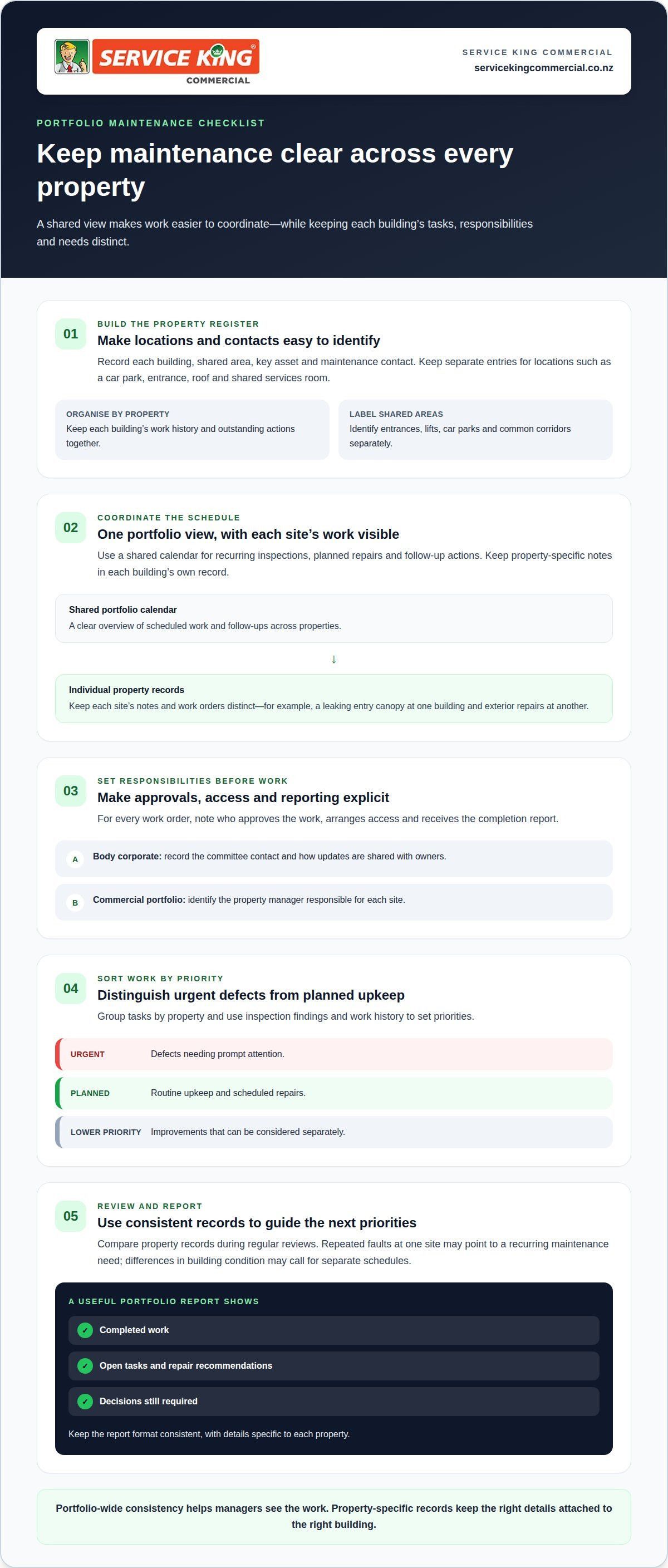
Body corporates and portfolio managers need a consistent view of work across properties. Start with a property register that records each building, shared area, key asset and maintenance contact. For example, create separate entries for a car park, entrance, roof and shared services room. This makes responsibility and task locations easier to identify.
Use one portfolio schedule while keeping each property’s tasks visible. A shared calendar can show recurring inspections, planned repairs and follow-up actions, while each property record holds its own notes. If one Auckland building has a leaking entry canopy and another needs exterior repairs, separate work orders keep the issues distinct.
Set clear responsibilities before scheduling work. Record who approves it, who arranges access and who receives completion reports. For a body corporate, note the committee contact and how updates are shared with owners. For a commercial portfolio, identify the property manager responsible for each site. These details help avoid delays when access or approval is needed.
- Group tasks by property: Keep each building’s work history and outstanding actions together.
- Mark shared areas: Identify entrances, lifts, car parks and common corridors separately.
- Set priorities: Distinguish urgent defects from planned upkeep and lower-priority improvements.
- Track approvals: Record decisions, responsible contacts and the next action for each work order.
Compare records across the portfolio during regular reviews. Repeated faults at one site may point to a recurring maintenance need, while differences in building condition may call for separate schedules. Use work history and inspection findings to adjust priorities instead of applying the same programme to every property.
A useful portfolio report gives managers a practical snapshot of completed work, open tasks, repair recommendations and decisions still required. A committee can use it to review a common-area repair, while a portfolio manager can see which building needs follow-up first. Keep the format consistent and add details specific to each property.
Multi-trade coordination and reporting
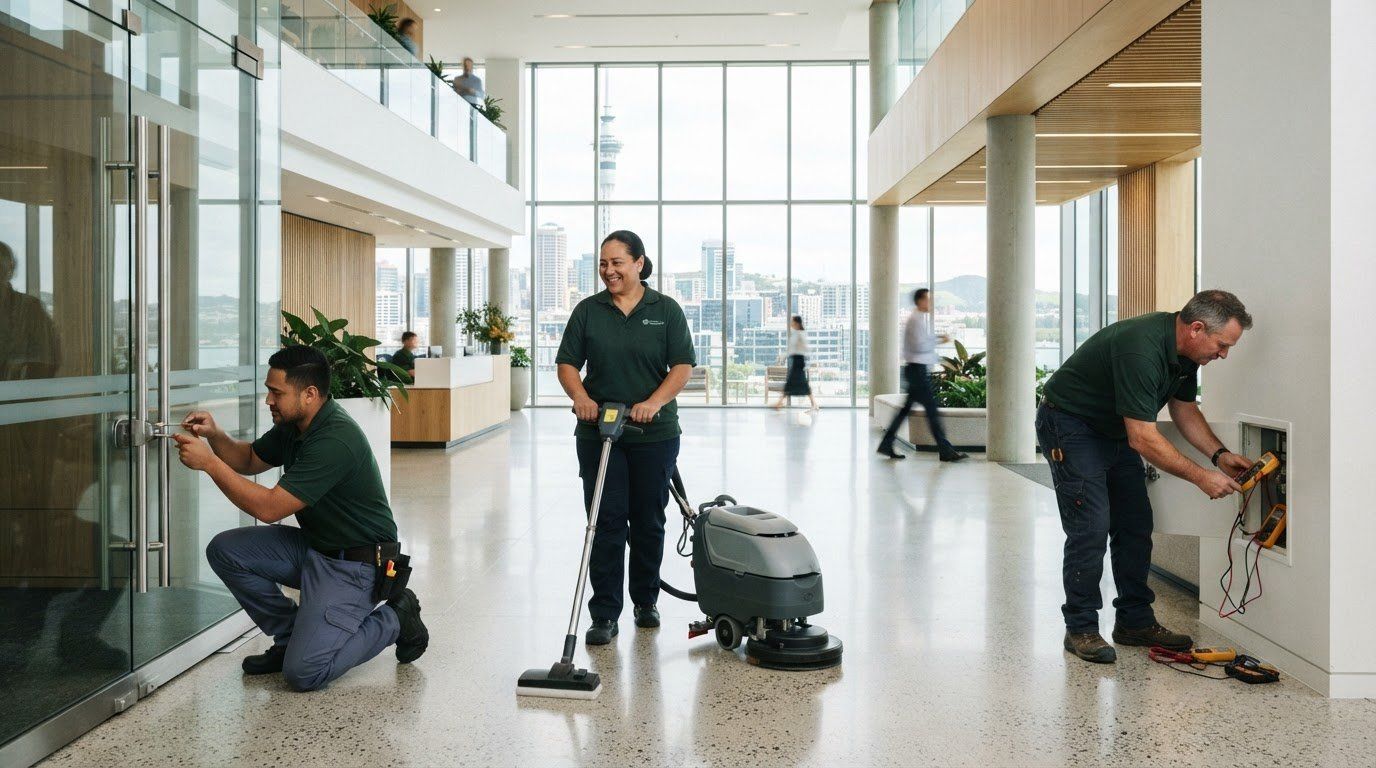
Commercial property maintenance can involve several trades, shared access and linked tasks. A clear sequence helps managers coordinate site activity and track decisions.
Multi-trade coordination
Start each work order with the affected area, reported issue and required outcome. Then identify which trade needs access first. A roof leak, for example, may need inspection before ceiling repairs can proceed. Schedule dependent tasks in order and tell each trade what must happen beforehand.
Record site access arrangements, relevant contacts and any areas that need to remain clear. If electrical work affects a tenant’s office, coordinate timing with the property manager and communicate access requirements. Keep scope changes visible: a newly identified defect may alter the next task or require approval before more work proceeds.
Assign one person to track open actions across trades. They can record who is responsible, the next step and whether another task depends on it. For example, note when a repair cannot be completed until a damaged component is replaced. This keeps the links between separate work orders clear.
Maintenance records and inspections
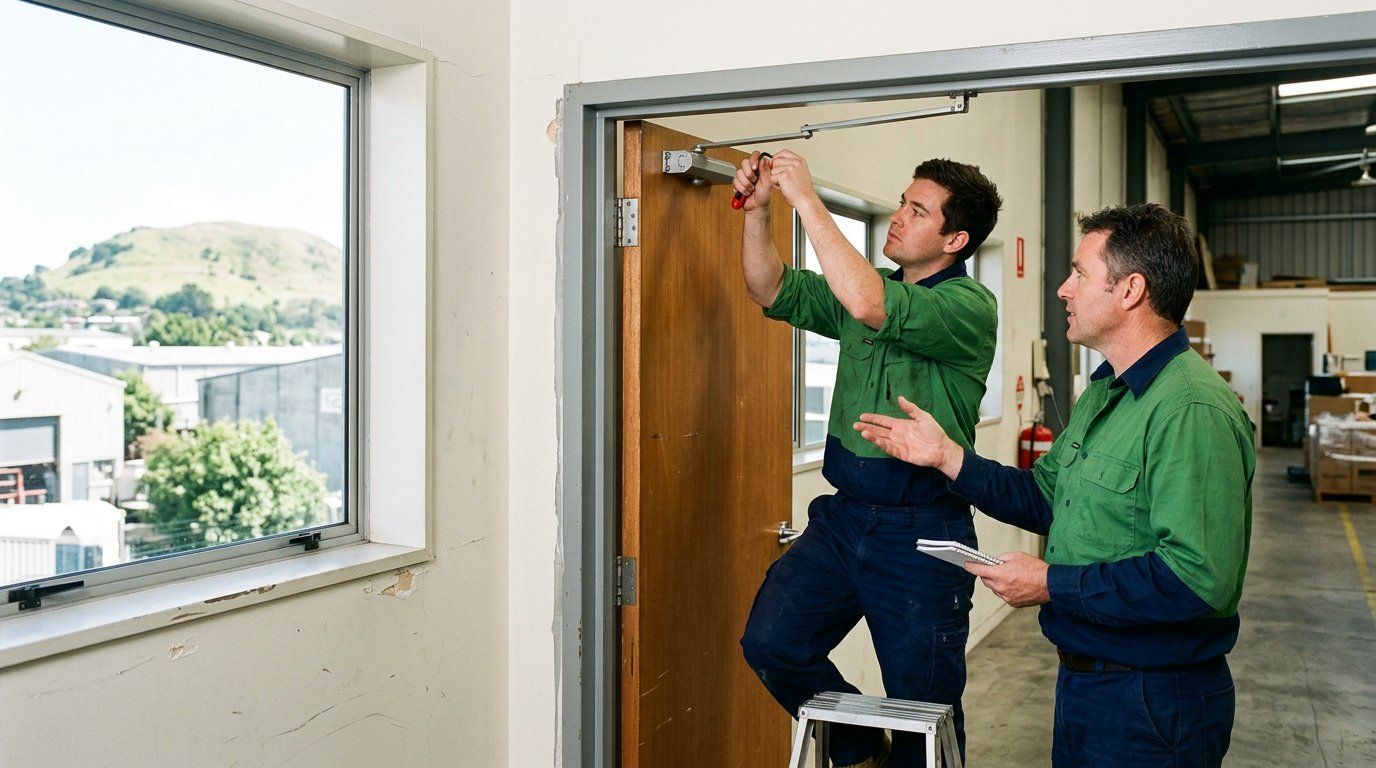
Keep inspection notes, work orders, repair reports and completed-task records together for each property. Each entry should identify the location, defect or task, action taken, responsible trade and any follow-up required. A report about a damaged door closer, for example, should name the entrance and state whether further adjustment is outstanding.
Inspection notes should record the observed condition, access limitations and changes since the previous visit. Attach photographs when they clarify a location or condition. Link each finding to a work order, then update the record when the work is complete. This creates a traceable history instead of a collection of notes with no clear outcome.
Use a consistent reporting format across sites. Separate completed work, unresolved defects and recommended next actions so managers can review outstanding items, assign responsibility and identify decisions needed. Keep compliance-related inspection records with the relevant building documents, making maintenance activity easy to find during a review.
Planned preventative maintenance programmes
Planned maintenance schedules inspections and upkeep before faults disrupt building operations. Reactive maintenance begins after a defect or failure appears. A preventative maintenance plan for commercial property in Auckland helps managers schedule work around asset condition and site use.
Inspection frequency for systems and equipment
There is no single inspection interval for every commercial building system in New Zealand. Set frequency according to the building’s compliance schedule, system requirements, condition, use and exposure. Follow requirements for specified systems, and factor in manufacturer guidance and previous findings. Equipment showing wear, for example, may need closer attention than a recently serviced asset.
Review intervals when building use changes or an inspection identifies a new concern. Record the reason for each frequency and update the programme when the evidence changes. This keeps an Auckland commercial property preventative maintenance plan relevant to the site, rather than applying the same pattern to every asset.
Preventative plan inclusions
A useful plan identifies each asset or area, its location, required tasks, timing and responsible person. Include inspection steps, planned upkeep, known repair priorities and the records needed after each task. For an Auckland office building, list roof drainage, exterior surfaces and entry seals where they apply.
Prioritise exposed areas that collect debris or show weather-related wear. In coastal locations, include checks for surface deterioration and corrosion, and record findings for follow-up. Add access needs and tenant considerations so work can be arranged with minimal disruption. Keep a clear path from inspection finding to approved task and completion record.
Risks of neglected maintenance
Unresolved defects can affect connected building components. A blocked roof drain, for example, can allow water to damage nearby surfaces. Delayed repairs may also disrupt occupants, restrict access or expand the scope of work. Record each defect, its location and the next action so it does not disappear into informal notes.
Prioritise work by condition, potential impact and how quickly the defect may worsen. For Auckland properties, review exterior areas after heavy weather and include coastal exposure in inspection planning. Planned programmes help teams identify changes early, while reactive work addresses faults after they occur. Use scheduled maintenance support to organise recurring property upkeep.
Service King Commercial: Commercial Cleaning Services
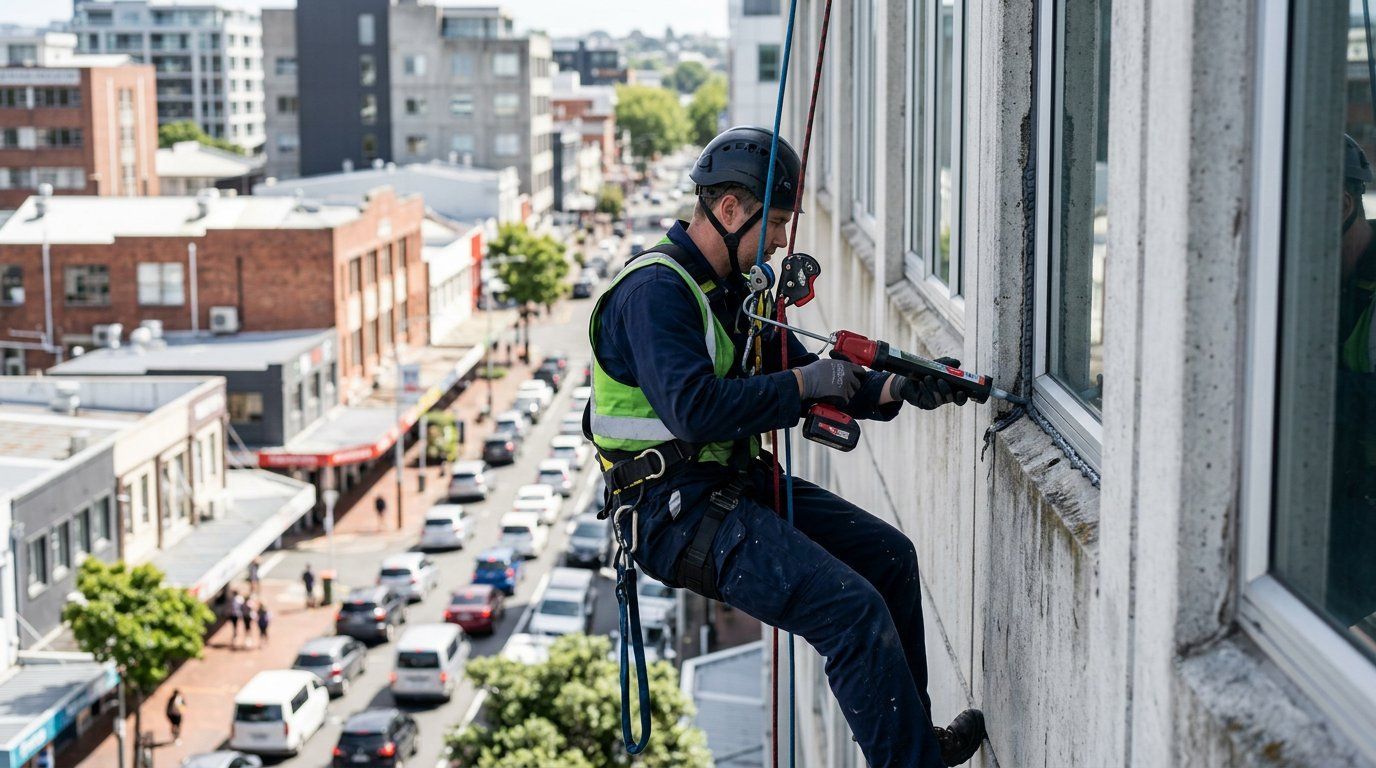
Service King Commercial supports Auckland property teams with exterior building maintenance and building repair and maintenance. Use these services when inspections identify exterior wear, defects or repair work to organise alongside planned upkeep.
For example, a maintenance schedule may flag a damaged exterior area for repair or identify work requiring trade support. Bringing these tasks into a clear scope helps property managers connect inspection findings with the next action. End of Lease Service can also support building handovers when a tenancy ends.
When arranging work, describe the affected area, the issue and any access requirements. This gives the job a clear starting point and keeps it aligned with the property’s maintenance priorities. Contact Service King Commercial to discuss building maintenance or repair needs.
Put your next maintenance priorities into action
A preventative maintenance plan for commercial property in Auckland is most useful when it reflects how each building operates. At the next review, identify the work needing a decision, the areas needing attention and the person responsible for progressing each task. This gives property teams a practical starting point for their next maintenance cycle.
Service King Commercial supports commercial property maintenance, including exterior building maintenance and building repair and maintenance. Describe the property issue and the work required to start a straightforward discussion about the next step.
Contact Service King Commercial today to discuss your property maintenance needs. A clear starting point makes it easier to move planned work forward.
Frequently Asked Questions
How do Auckland commercial property managers create a preventative maintenance schedule?
Start with an asset list and map each task to a responsible person, suitable timing and required access. For an Auckland office building, schedule roof and drainage checks around site conditions, then coordinate internal work with tenant activity. Add reminders to the property calendar, record completed tasks and review open actions at each planning meeting. Adjust the schedule when building use or condition changes.
Recent Posts