
November 8, 2026
A handover can stall when the scope is unclear and cleaning, repairs and trade work are left to organise separately. A clear plan matters when arranging office defit services Auckland-wide, particularly when work needs to fit around other building users.
It’s understandable to be unsure what must be removed, what needs repair and what belongs in the final clean. The lease and handover requirements help define the scope. This article explains the difference between a defit, make-good work and end-of-lease cleaning, and shows how to sequence tasks before handover.
You’ll also learn how Service King Commercial’s End of Lease Service can support the process with relevant cleaning, building repairs and maintenance, and trade services. First, set out the required work, its order and any site constraints. This gives you a practical basis for coordinating tasks and preparing the office for handover.
Key Takeaways
- Use the lease, agreed condition and landlord instructions to define what needs to be addressed before handover.
- Separate removal, reinstatement, repairs and cleaning in the scope so each task has a clear place in the plan.
- For office defit services Auckland projects, factor in building access, loading arrangements and nearby occupants when scheduling work.
- Service King’s End of Lease Service can support handover cleaning, repairs, maintenance and relevant trade requirements.
Table of Contents
What an Auckland Office Defit Involves Before Lease Handover
An office defit is the work required to clear or alter a tenancy before it is handed back. The scope depends on the lease, the condition agreed for handover and the landlord’s instructions. It may involve identifying tenant-installed items to remove, areas to reinstate and repairs needed before the space is presented.
In brief: an office defit covers agreed physical changes to a tenancy; end-of-lease cleaning prepares the space for presentation but does not remove or reinstate fixtures. This distinction turns broad handover expectations into separate, manageable tasks. “Make-good” refers to returning specified areas to the required condition. For broader background on commercial lease dilapidations and make-good obligations, see the general discussion of dilapidation.
Office defit, make-good, and cleaning: what is the difference?
Strip-out describes removing or altering tenancy items within the agreed scope. Depending on the project, this might include taking out a partition or removing a tenant-installed fitting. These are possible project tasks, not a default checklist. Make-good work addresses specified reinstatement or repairs, such as patching a surface where an item was removed or repairing subfloors when floor coverings are lifted—an area where commercial specialists like Polished Concrete Atlanta highlight the professional standards required for concrete surface restoration. Cleaning is a separate finishing task. It can prepare floors, surfaces and rooms for presentation, but it cannot replace physical removal or repair work.
What should Auckland tenants establish first?
Start with the lease wording and any written handover instructions. Record what the landlord expects to be removed, retained, repaired or reinstated. If an item’s status is unclear, resolve the scope before scheduling work rather than treating every tenant alteration as automatic removal.
Survey the office and record its existing condition. Note visible damage and identify items such as partitions, fittings or surface finishes that may need attention. A clear record helps distinguish existing conditions from proposed handover work. For businesses arranging office defit services Auckland-wide, this documented scope gives cleaning, repair and trade tasks a defined basis without treating them as a full strip-out.
What an Auckland Office Defit Scope Can Include
A useful scope separates physical changes from the work that prepares the office for handover. The agreed lease scope determines which tasks belong in a defit. Not every tenancy needs every task, and the examples below are possible project tasks rather than a standard package.
| Scope category | What it may cover |
|---|---|
| Removal | Removing tenant fixtures, partitions or selected finishes where the agreed scope requires it. |
| Reinstatement | Returning specified areas or altered services to the agreed condition. |
| Repairs | Addressing surface damage or other identified defects, with painting where required. |
| Cleaning | Preparing floors, surfaces and rooms for presentation after relevant physical work. |
Which tasks belong to strip-out or reinstatement?
Use the documented lease and agreed handover scope to set boundaries. One office may need a partition removed; another may retain its layout but require a specific alteration to be reinstated. Identify each service, fixture and finish as remove, retain or reinstate. Assign any electrical disconnection or reinstatement to appropriately qualified electrical tradespeople. Don’t assume the same work or sequence applies to every tenancy.
Where do cleaning and maintenance fit?
Cleaning is usually planned after the removal and repair work that applies to the tenancy, so completed areas are less likely to be affected by later tasks. It remains separate from repairs, painting and trade work. Those activities address physical condition or services; cleaning addresses presentation. For supporting trade requirements, use this commercial trade services buying guide to help define the work involved.
For office defit services Auckland handovers, Service King’s End of Lease Service supports cleaning, repairs, maintenance and relevant trade requirements. A Service King site assessment can help translate the agreed handover scope into an itemised plan for these support tasks.
How to Plan an Office Defit and Handover Across Auckland
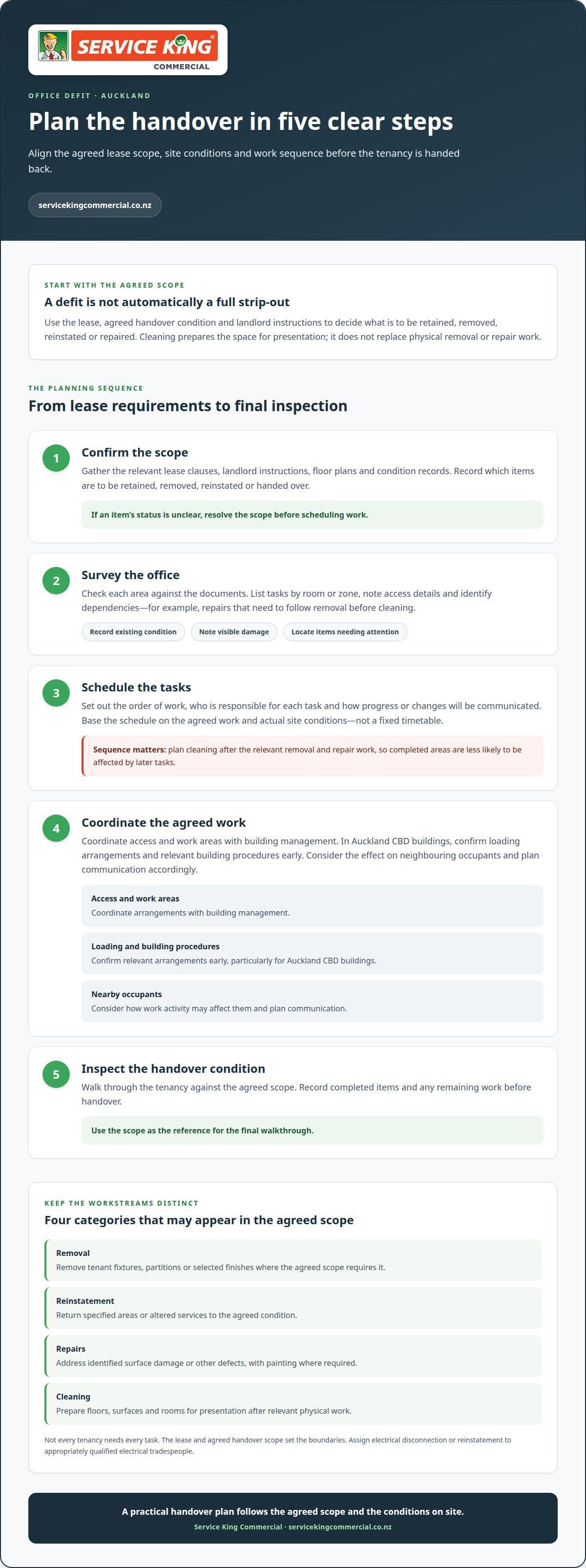
A clear sequence helps keep lease requirements, site logistics and handover tasks aligned. For office defit services Auckland projects, plan around the agreed scope and actual site conditions rather than assuming a fixed timetable. Use this order to organise the work:
- Confirm the scope. Gather the relevant lease clauses, landlord instructions, floor plans and condition records. Record which items are to be retained, removed, reinstated or handed over.
- Survey the office. Check each area against the documents. List tasks by room or zone, note access details and identify dependencies, such as repairs that need to follow removal before cleaning.
- Schedule the tasks. Set out the order of work, who is responsible for each task and how progress or changes will be communicated. The schedule depends on the agreed work and site conditions.
- Complete the agreed work. Coordinate access and work areas with building management. In Auckland CBD buildings, confirm loading arrangements and relevant building procedures early. Consider how activity may affect neighbouring occupants, and plan communication accordingly.
- Inspect the handover condition. Walk through the tenancy against the agreed scope. Record completed items and any remaining work before handover.
What information helps define the project scope?
Keep the source documents together with the site survey and task list. Note the location of each item and any work that depends on another task being finished first. For example, schedule cleaning after relevant repairs so the finished areas are ready for presentation. Clear responsibilities and a shared communication channel help tenants, property management and trades keep decisions visible.
How can tenants coordinate work around an occupied Auckland building?
Agree access arrangements, work areas and any service interruptions with property management before scheduling work. Where exterior work is part of the handover, consult this Auckland commercial exterior building maintenance guide for relevant planning considerations.
Service King can plan relevant cleaning, repairs and trade requirements through a Free site assessment and itemised proposal.
How Service King Supports Auckland Office Defit Handovers
Service King’s End of Lease Service supports commercial property handovers and make-good work. It brings relevant cleaning, building repairs, maintenance and Facility Support & Trades into a site-specific proposal. The scope is tailored to the office and project requirements, keeping support focused on the agreed handover tasks.
For businesses arranging office defit services Auckland-wide, this provides a practical way to plan support around the required work. Service King helps coordinate relevant facility tasks, while the defit scope defines any physical removal and reinstatement work.
What Auckland businesses can expect from the first step
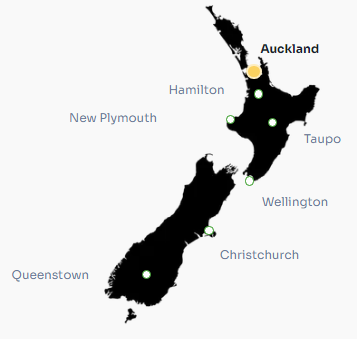
A Free site assessment and detailed, itemised proposal provide a starting point for identifying the support required at the premises. In-house service management supports communication, quality control and issue resolution. Service delivery teams are located across Auckland , with Fully insured service delivery and Health & Safety Compliance . Service King’s approach includes Quick Remedies & Resolutions when issues need attention.
This joined-up support helps clarify which cleaning, repairs, maintenance or trade tasks fit the handover plan. Each remains distinct from removal work, so the proposal can focus on the services relevant to the site.
When to bring in end-of-lease support
Start planning once the handover requirements and site access arrangements are known. This gives the project scope a clear basis and helps identify where cleaning, repairs or trade tasks may be needed. The proposed work can then be aligned with the office and its access conditions.
Set out the handover scope and discuss the relevant support with Service King. Arrange a Free site assessment to begin planning the services required for your office handover.
Set Your Handover Plan in Motion
A well-defined handover scope gives you a practical starting point. Use the lease requirements and site notes to make decisions early, then shape the remaining work around the building’s access arrangements and handover date. This keeps the focus on the tasks that apply to your tenancy, rather than assuming every office needs the same defit work.
For office defit services Auckland tenants can plan with confidence, Service King can assess the site and prepare a detailed, itemised proposal for relevant end-of-lease cleaning, repairs, maintenance and trade support. Its teams are located across Auckland, with Fully insured service delivery and Health & Safety Compliance. That gives you a clear basis for progressing handover requirements with a local facility support partner.
Take the next step with the scope and access information you’ve gathered. Plan your office handover with Service King through a Free site assessment.
Frequently Asked Questions
What is an office defit?
An office defit is the agreed work to remove or alter tenant-related items before a commercial tenancy is handed back. It isn’t automatically a full strip-out. A project may involve only selected rooms or fittings. For office defit services Auckland tenants should distinguish physical tasks from repairs and presentation work, then use the handover scope to set clear boundaries.
Does an office defit include cleaning?
Cleaning may be included as a separate handover task, but it doesn’t make up the physical defit. For example, a vacated office may need floor and surface cleaning after specified repair work is complete. Whether cleaning is required, and which areas it covers, depends on the handover expectations. Keep it as a distinct scope item so it isn’t confused with removal or reinstatement.
Who is responsible for office defit work at the end of a lease?
Responsibility should be determined from the commercial lease and the handover arrangements agreed between the outgoing tenant and landlord or property manager. Identify which tasks are assigned to the tenant and record any agreed changes to the expected condition. If wording is unclear, raise the specific item with the property manager before booking work, so task ownership and access arrangements are settled.
How should I prepare an Auckland office for defit?
Before work starts, remove personal belongings and separate equipment moving with the business from items covered by the handover scope. Label retained items and keep routes to work areas clear. Share a current site-access contact and note any rooms that remain in use. These steps reduce confusion on site and help tradespeople and cleaners work in the intended areas.
Can office defit work be planned around an occupied Auckland building?
Yes. Work can be organised in defined zones while other parts of a building remain occupied. Agree which areas are accessible, how affected occupants will be notified and who manages access changes or shared services. In a CBD building, confirm loading and lift arrangements with management. Include these practical constraints in the plan rather than leaving them to be resolved on the day.
Recent Posts