
November 7, 2026
There is no single set price for commercial roof repair in Auckland. The cost to repair a commercial roof in NZ depends on the roof’s size and material, access conditions and the severity of the leak. An inspection is usually needed to define the work and provide a reliable quote.
A leak may look small inside even when water is entering elsewhere on the roof. A ceiling stain can appear away from the source, and ongoing leaks can damage building materials or disrupt business. Understanding the likely repair work helps you decide what to do next.
This article explains what affects repair costs and what information to provide when requesting a quote. It also covers how urgently to address a leak, common causes of roof problems, and when repeated or extensive damage may make replacement worth considering.
Key Takeaways
- Look beyond the indoor stain: damaged flashings, fixings, roof sheets and blocked gutters can all contribute to leaks.
- Share the roof material, approximate area, access limits and leak history to help define the work needed for a quote.
- Act on ongoing leaks early, as water can travel and affect building contents, finishes and operations.
- Roofing material influences the repair approach, so identifying it helps clarify the likely scope of work.
Table of Contents
What are common causes of commercial roof leaks?
Commercial roof leaks often begin at joins, roof edges or drainage points. Damaged flashing can let water in around skylights, vents and parapets. Loose or corroded fixings may leave gaps where roof sheets meet. Rust can weaken metal roofing, while cracked or damaged sheets leave the building exposed to rain.
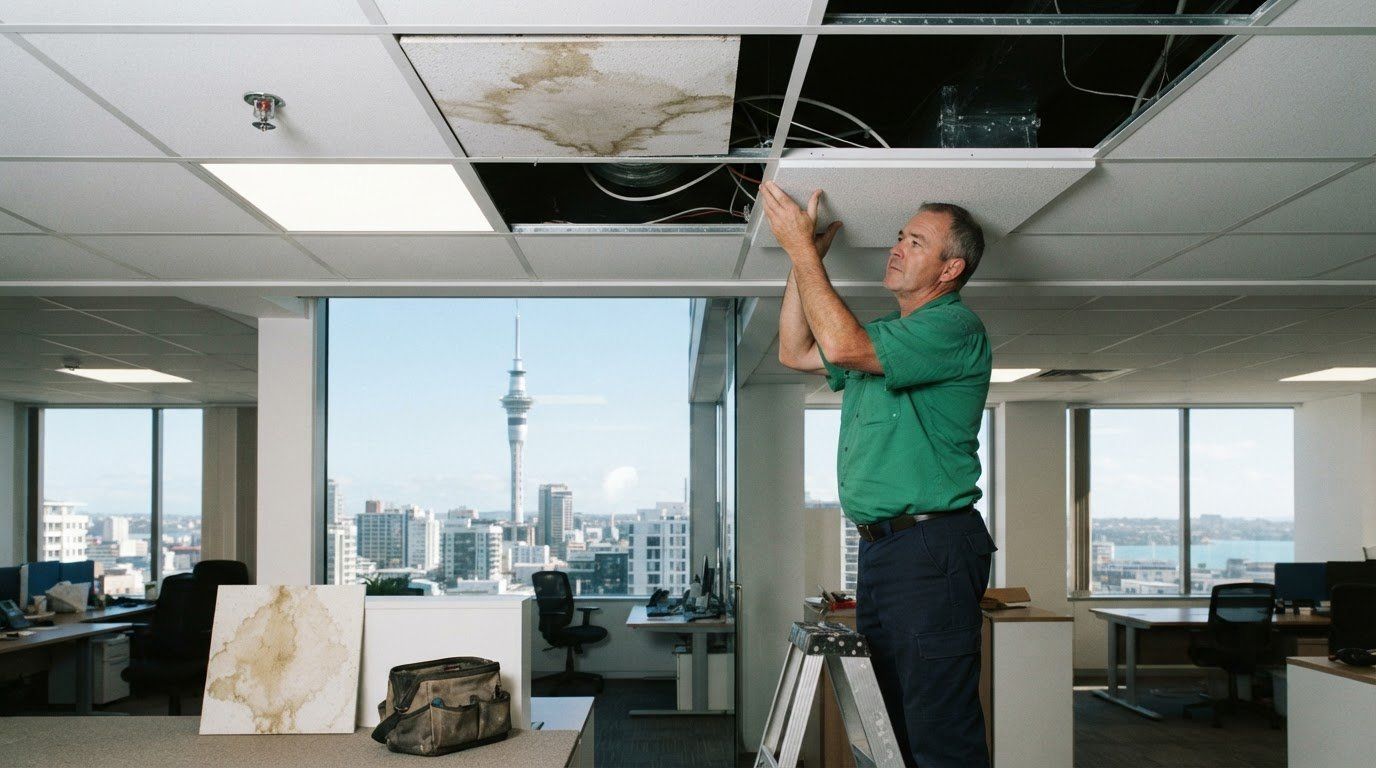
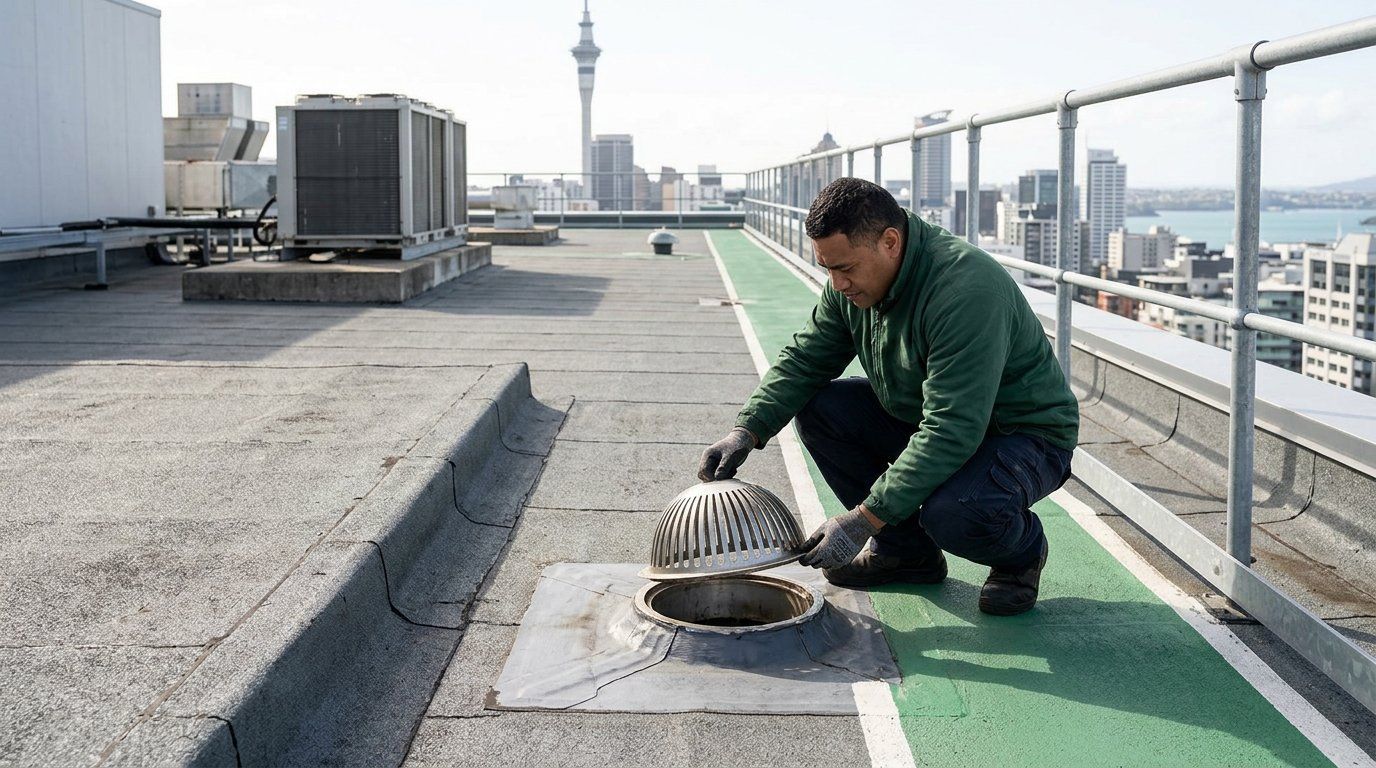
Blocked gutters are another common cause. Leaves and debris restrict drainage, allowing water to build up and find a path beneath the roof covering. Weather-related wear can worsen existing weaknesses, particularly around flashings and fixings. A ceiling stain may not sit directly below the leak: water can travel along roof layers or structural members before appearing inside.
These faults call for different repair scopes. A localised flashing defect may need a focused repair, while corrosion across several sheets can require broader work. A leak that returns after earlier repairs may point to a wider roof problem. Repeated leaks, heavy corrosion, ageing materials or a roof that no longer suits the building can make replacement worth considering.
Replacing a roof is usually a larger project than repairing one damaged section, so the work and cost can differ substantially. There is no reliable fixed comparison: the roof’s condition, size, material and required scope all affect the assessment. Repair may suit an isolated fault, while widespread deterioration can shift the decision towards replacement.
Whether commercial roof repairs need building consent or council approval depends on the work involved. The scope and effect on the building matter, so identify any planned structural work or broader roof changes before starting. Do not assume a minor repair and a substantial alteration have the same approval requirements.
Tax treatment depends on the project. According to the Inland Revenue Department (IRD), repairs included in an overall project to change a building’s character are not deductible.
For an accurate assessment, note the likely water entry points and the affected roof area. Look for damaged sheets, rust, loose fixings, gaps around flashings and blocked gutters. These observations help distinguish a local defect from broader deterioration and inform whether repair or replacement may be more suitable.
Information to provide when requesting a quote
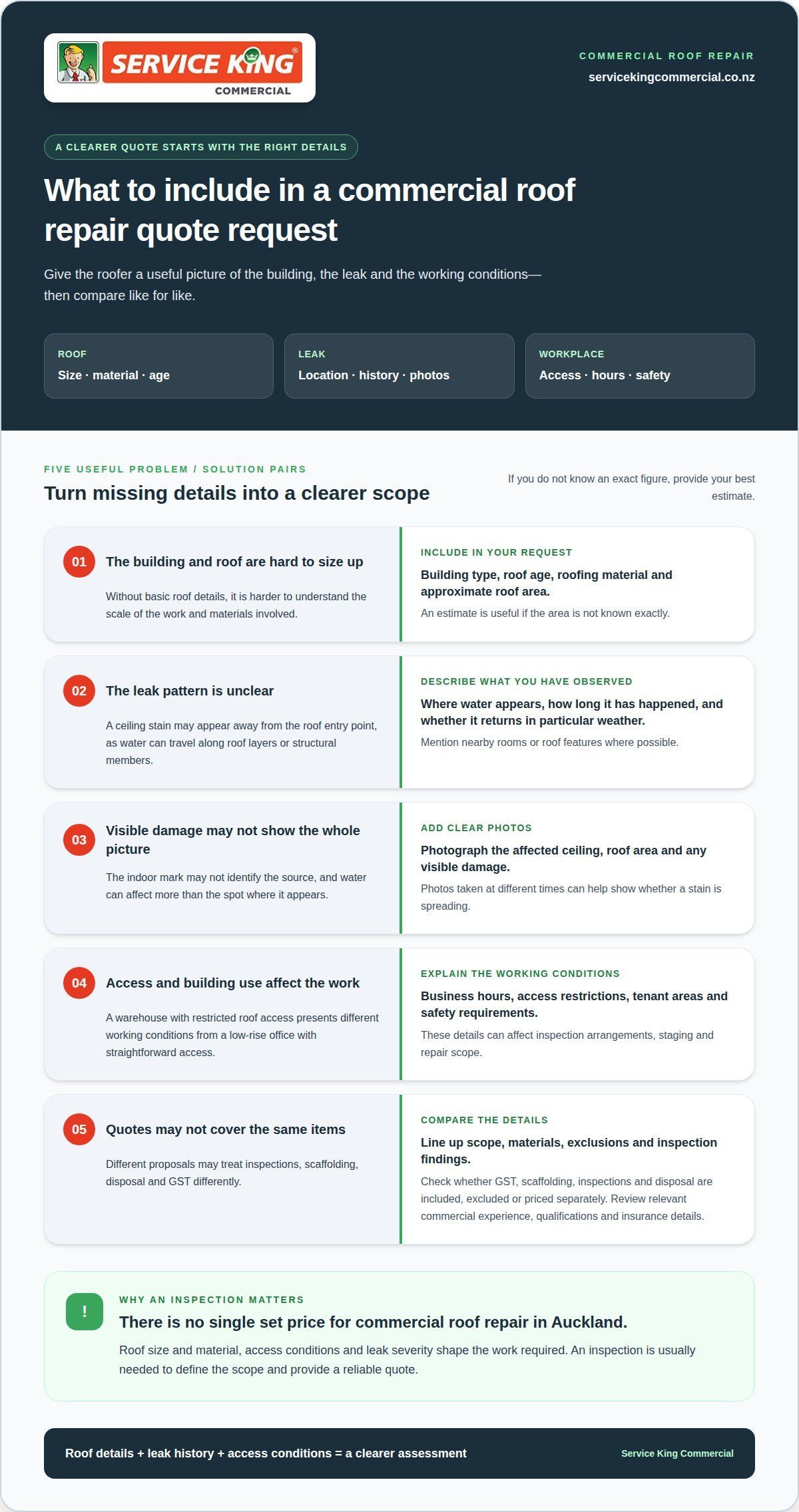
A useful quote request starts with a clear picture of the building and roof. Include the building type, roof age, roofing material and approximate roof area. These details help explain the scale of the work and materials involved. If you are unsure of the area, provide your best estimate.
Describe where the leak appears and how long it has been happening. Note whether it returns in particular weather, and attach clear photos of the affected ceiling, roof area and visible damage. The indoor stain may be away from the entry point, so include nearby rooms or roof features where possible.
Explain how the building operates, including business hours, access restrictions, tenant areas and safety requirements. A warehouse with restricted roof access presents different working conditions from a low-rise office with straightforward access. These details can affect inspection arrangements, work staging and the repair scope.
Commercial roof work is best assessed through an inspection because the roof’s size, material, access and leak severity shape the work required. When comparing quotes, line up the proposed scope, materials, exclusions and inspection findings. Review the roofer’s relevant commercial experience, qualifications and insurance details; professional roofing resources such as irwilsonroofing.com provide useful examples of how experienced contractors outline their expertise across flat and pitched roof systems.
Quotes may treat GST, scaffolding, inspections and disposal differently. Check that each proposal states whether these items are included, excluded or priced separately. This makes the scope easier to compare and helps avoid overlooking work. The roof’s size, material, access and leak severity shape the estimate, with the price provided after a quote request.
For a clearer scope, share the roof details, photos and operating constraints together. Commercial roof repair information can help frame the details needed for a practical assessment.
Leak severity and urgency
Even a small, isolated drip needs prompt attention. Water can travel through roof layers before appearing inside, so a ceiling mark may not identify the entry point. Early assessment can help trace the source before moisture affects more of the building. A stain that grows after rain or returns in the same area also signals an ongoing leak.
Urgency increases when water reaches business assets or occupied areas. Leaks can damage insulation, stock, ceilings, electrical systems and internal finishes, often requiring comprehensive recovery work from specialists such as TBC Restoration to limit building deterioration. Water entering a tenant area may also interrupt normal building use. If the leak affects electrical systems or creates a hazard, keep people clear of the affected area and arrange an urgent assessment.
Look at the pattern, not just the visible drip. A single wet patch after heavy rain is different from repeated water entry across several rooms. Ongoing leaks can contribute to rust, degraded fixings and repeated disruption. Damp insulation or damaged ceiling finishes may also indicate that water has spread beyond where it first appeared.
Share clear observations during the assessment. Note where water appears, whether it continues in dry weather, and which rooms or assets are affected. Photos taken at different times can show whether a stain is spreading. This information helps identify the source and establish whether the repair is localised or involves wider roof damage.
Commercial roof repairs may need to be staged around weather or business hours. Work above an active workspace, for example, may need a different sequence from work over an unoccupied area. The roof’s condition, the spread of the leak and building use all shape the scope. Addressing a leak early can limit further water damage and disruption while the fault is assessed.
How do commercial roof repair costs vary by material?
Roofing material affects the repair method, materials and labour involved. A commercial roof quote should identify the covering and damaged area. Metal, membrane and tile roofs have different joins and failure points, but the material alone does not determine the full repair scope.
For a metal roof, the assessment may focus on sheets, fixings, flashings and corrosion. A loose fixing or isolated sheet defect can require different work from rust affecting a wider area. The condition of adjoining sheets also matters. The repair needs to address the water entry point, not just the visible indoor stain.
Membrane roofs rely on a continuous covering and sealed joins. Damage near a seam or roof penetration may need a different repair from a tear in an open section. The affected area, membrane condition and access to the defect shape the work. Any repair also needs to suit the existing roof system.
Tile repairs involve individual tiles and the roof areas beneath them. A cracked or displaced tile may be a localised fault, but nearby damage or water beneath the covering can broaden the inspection. Roof pitch and access can also affect how the repair is carried out. Matching the repair to the existing tiles and adjoining details helps define the scope.
For any roof material, the quote should explain the affected area, repair method, replacement materials and access requirements. A visible defect may sit within a larger area of wear, while a contained fault may need only limited work. Ask for the proposed scope to distinguish repairs to the covering from related work around flashings, fixings or drainage. This makes it easier to understand why similar-looking leaks can require different repairs on different roofs.
Share the roof material and any available photos to support a practical assessment. Request a commercial roof repair assessment to discuss the repair scope.
Service King Commercial: Building Repair and Maintenance
Service King Commercial provides building repair and maintenance for commercial properties, including roof repair work. Contact the team when a leak needs assessment, roof damage is affecting building use, or repairs need to be considered alongside wider maintenance.
Share the roof material, affected area, leak history, photos and any access or operating constraints. These details help establish the issue and shape the repair scope. Where roof problems involve the building exterior, exterior building maintenance may also be relevant. The work can be considered as part of the property’s wider repair and maintenance needs.
For a commercial roof repair assessment in Auckland, contact Service King Commercial and describe the issue affecting your building.
Plan the next step for your building
Use the roof assessment to support wider property planning. A clear record of the repair scope can help facilities teams track recurring issues and plan future maintenance around building use. It also gives property managers a reference point when reviewing later roof work.
The cost to repair a commercial roof in NZ depends on the work the building needs. Discuss the specific issue and its effect on operations to define the next step. A repair assessment can turn a roof concern into a clear scope of building work, considered alongside the site’s day-to-day requirements.
If a commercial roof needs attention, contact Service King Commercial to discuss the building and the repair required. A clear conversation is a straightforward starting point for getting the issue addressed and keeping your property plans moving.
Frequently Asked Questions
How Much Does Commercial Roof Repair Cost in Auckland?
There is no fixed Auckland price for commercial roof repair. The cost to repair a commercial roof in NZ depends on the roof system, the fault and site conditions. An inspection establishes the work required, and the price is provided after a quote request. Photos and a clear description of the leak help explain the issue.
What is the average cost to repair a commercial roof in New Zealand?
Commercial roof repairs are priced according to the work required, not a universal average for every building. Repairing one isolated defect differs from working across several damaged areas or dealing with difficult access. Roof size, material and leak severity shape the scope. A site inspection provides the information needed to assess the building and prepare a useful quote.
How much does commercial roof repair cost per square metre in NZ?
A per-square-metre figure alone cannot describe the full scope of a commercial roof repair. Roof area matters, but so do the location and type of fault. A small repair near a difficult-to-reach roof feature, for example, may need a different approach from work across an open section. Material and access conditions also inform the assessment.
What are typical prices for repairing leaks, flashing, gutters, and roof membranes in New Zealand?
There is no single typical price for leak, flashing, gutter or membrane repairs. Each is a different task, and the work depends on the condition and extent of the affected area. A gutter issue may involve more than the visible blockage, while membrane work depends on the damaged section and its joins. The quote should clearly set out the proposed scope.
What factors affect the cost of commercial roof repairs in NZ, including roof size, access, and damage severity?
Roof size, access and damage severity all affect the repair scope. A larger area can involve more inspection and repair work, while restricted access can change how the roof is reached and how work is staged. A localised fault differs from deterioration across adjoining sections. Roof material, building use and operating constraints also inform the work required.
What are the risks of delaying commercial roof repairs in New Zealand?
Delaying a repair can allow water to affect more of the building and increase disruption. A leak above a work area, for example, may damage stored stock, ceiling finishes or tenant spaces as water spreads. Moisture can also contribute to rust or degraded fixings. If water reaches electrical systems or creates a hazard, it can affect safe use of the area and business operations.
Recent Posts